


More news on this day
Airline passengers in the United States endured the worst combination of delays, cancellations and long tarmac waits in more than a decade last year, according to new analysis that suggests 2025 was a low point for on-time performance just as demand for travel surged.
Get the latest news straight to your inbox!
New report shows sharp drop in on-time arrivals
A nationwide review of government data by a consumer advocacy group finds that U.S. airlines’ on-time arrival rate in 2025 fell to its lowest level since 2014. The findings, summarized in a report widely cited by outlets including ConsumerAffairs and regional broadcasters, indicate that nearly one in four flights was delayed, canceled or diverted during the year.
The analysis, published under the title “The Plane Truth 2026,” uses figures from the Department of Transportation’s Bureau of Transportation Statistics to track reliability trends over the past decade. It concludes that performance deteriorated meaningfully in 2025 compared with the previous several years, erasing much of the progress airlines had made since the pandemic-era disruption of 2020 and 2021.
Separate coverage drawing on Bureau of Transportation Statistics records notes that from 2018 through 2023, roughly 20 percent of domestic flights arrived at least 15 minutes late. By contrast, the 2025 data suggest a higher share of disruptions and a growing number of very long delays, including those that keep travelers confined on aircraft for hours.
Trade-press summaries of preliminary 2025 statistics also show that average on-time performance for major carriers between January and November slipped to about 76.8 percent, down from just over 78 percent a year earlier. While those changes may appear modest, they translate into hundreds of thousands of additional passengers experiencing missed connections, disrupted vacations and late arrivals.
Long tarmac waits surge to highest levels since rules began
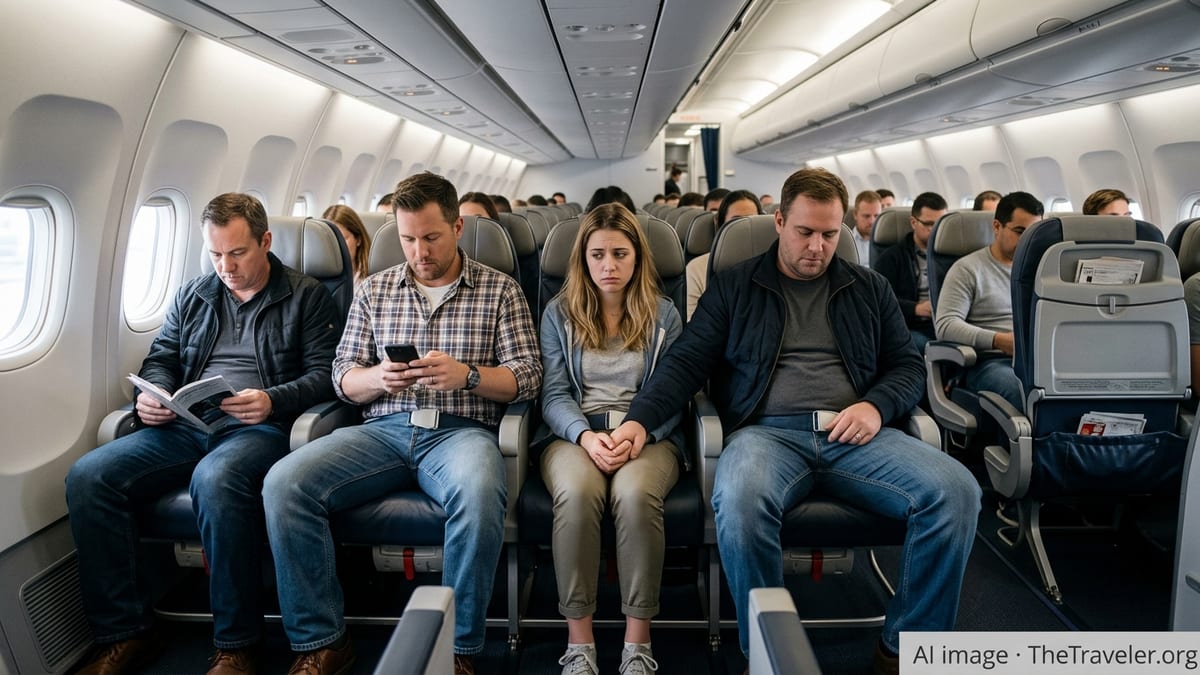
Beyond late arrivals and cancellations, the new report underscores a steep rise in extended tarmac delays, one of the most frustrating experiences for travelers because passengers are on board but unable to exit the aircraft. According to published coverage of the advocacy group’s findings, domestic tarmac delays lasting more than three hours in 2025 reached their highest level since federal tarmac rules were first introduced in 2010.
Those rules limit how long airlines can keep passengers on a plane during ground delays without giving them a chance to disembark, and they were credited with sharply reducing extreme incidents in the early 2010s. Recent Bureau of Transportation Statistics tables tracking tarmac times, updated through early 2026, show a clear uptick in both domestic ground holds beyond three hours and international delays beyond four hours.
One television news segment on the report, circulated by InvestigateTV and other local outlets, highlighted figures indicating that tarmac delays increased by roughly 63 percent in 2025 compared with the previous year. While such events remain rare relative to the total number of flights, the scale of the spike has renewed concern among consumer advocates who argue that airlines and airports are relying too heavily on keeping passengers on planes while they work through scheduling and congestion problems.
Analysts note that long tarmac waits typically occur at peak times, when bad weather, air traffic restrictions or runway closures create a bottleneck and there are few open gates. In those conditions, carriers sometimes choose to keep passengers on board in the hope of a quicker takeoff or arrival, a strategy that can backfire when disruptions stretch longer than expected.
Multiple causes: weather, staffing shortages and crowded skies
Published commentary on the “Plane Truth 2026” report points to a convergence of factors behind the worsening statistics. Industry analysts and consumer groups cite persistent shortages of air traffic controllers, increasingly crowded airspace and ongoing airline staffing and scheduling challenges as major contributors to delays.
Severe and disruptive weather has also played a key role. A series of powerful winter storms during the 2025 travel season brought snow, ice and high winds to major hubs from Washington and New York to Atlanta and Dallas, leading to mass cancellations and multi-day backlogs. Earlier coverage by national business outlets documented days in which thousands of flights were delayed or scratched across the country due to a single large system.
At the same time, demand for air travel continued to climb. Forecasts ahead of the 2024 and 2025 summer seasons from aviation researchers and airline trade groups anticipated record passenger volumes and more flights than in prior years. As aircraft and crews were scheduled more tightly to meet that demand, the system’s ability to absorb any disruption decreased, increasing the likelihood that a thunderstorm, equipment issue or airspace restriction in one region would ripple across multiple airports.
Academic work examining long-term aviation trends has similarly found that certain types of delays, including those related to airport congestion and security procedures, have become more prone to spreading throughout the network since the pandemic. This dynamic helps explain why even travelers flying on clear days from uncongested airports can still experience holds, missed slots and, in the worst cases, extended tarmac waits.
Passengers bear the brunt despite new refund protections
For travelers, the deteriorating performance has translated into more time spent in terminals and on aircraft, as well as higher costs when disrupted trips require overnight stays or rebooked itineraries. Consumer advocates say the latest figures confirm what passengers have been reporting anecdotally for several peak seasons: more frequent delays, less predictable travel days and a growing sense of frustration.
Regulators have sought to strengthen protections. In 2024, the federal government finalized new rules that will require airlines, starting later in 2024, to automatically issue refunds when flights are significantly delayed or changed, rather than requiring customers to navigate lengthy claims processes. The rules also clarify that for domestic trips, a delay of three hours or more generally qualifies as a significant change.
However, the tarmac statistics and 2025 punctuality data suggest that policy changes have yet to translate into a smoother day-of-travel experience. While automatic refunds can help passengers recover some of their costs when plans fall apart, they do not reduce time spent sitting in crowded departure halls or waiting on board for a gate to open.
Advocacy organizations behind the new report argue that airlines and policymakers should treat the 2025 numbers as a warning sign and push for more robust staffing, infrastructure investment and operational buffers so that delays and tarmac waits are less likely to compound into systemwide disruptions.
What the trend means for summer travelers in 2026
The findings arrive just as the 2026 summer travel season gets underway, raising concern that another round of record passenger volumes could collide with an already strained system. Recent airline and airport punctuality snapshots show some improvement at individual hubs, but travel analysts caution that structural issues, such as controller shortages and tight aircraft utilization, remain unresolved.
Travel platforms and aviation forecasters continue to describe summer as the “high season” for delays, given the combination of heavy leisure demand, afternoon thunderstorms and limited slack in airline schedules. With the latest report indicating that long tarmac waits and missed on-time targets have already reached their worst levels in years, passengers may be wise to build extra time into connections and consider earlier departures, when operations tend to be less backed up.
Despite the sobering statistics, industry observers note that most flights still arrive close to schedule, and many airports and carriers are investing in new technology and procedures to improve throughput. The question raised by the 2025 data is whether those improvements can keep pace with growing traffic and increasingly volatile weather.
For now, the numbers offer a clear message: the era of relatively steady gains in airline punctuality has stalled, and without significant operational changes, long lines, delayed departures and occasional hours-long waits on the tarmac may remain a defining feature of peak-season travel in the United States.