


More news on this day
A recent cruise through Alaska’s Inside Passage turned sour for dozens of travelers when a gastrointestinal illness outbreak affected more than 13 percent of passengers and a notable share of crew aboard a U.S.-flagged expedition vessel, according to publicly available federal data.
Get the latest news straight to your inbox!
Small Alaska Expedition Cruise Records Significant Illness Rate
Publicly available information from the Centers for Disease Control and Prevention indicates that the outbreak occurred on a small U.S.-flagged cruise ship operating a five-night itinerary in Alaska. The vessel, carrying 66 passengers and several dozen crew members, reported that 13.6 percent of guests experienced symptoms consistent with gastrointestinal illness during a voyage that ended in late May.
The ship, which offers expedition-style cruises focused on wildlife viewing and remote coastal communities, was sailing in Alaska’s Inside Passage when cases began to mount. The elevated illness rate triggered mandatory reporting requirements to federal health authorities and led to the incident being logged on the agency’s Vessel Sanitation Program outbreak list.
While the specific pathogen has not been definitively identified in publicly available summaries, gastrointestinal outbreaks on cruise ships are most commonly associated with norovirus or similar agents that spread quickly in close quarters. The size of the vessel means that even a relatively modest number of cases can translate into a high percentage of those on board.
The affected sailing was completed as scheduled, and no diversion to port was reported in public records. However, online accounts and secondary coverage suggest that onboard routines were significantly disrupted as crew implemented enhanced cleaning and isolation protocols.
Federal Threshold for Outbreak Reached on U.S.-Flagged Ship
Under guidance for ships calling at U.S. ports, cruise lines are required to report gastrointestinal illness when 3 percent or more of passengers or crew exhibit symptoms such as vomiting or diarrhea during a single voyage. In this Alaska case, the passenger illness rate exceeded that threshold by more than fourfold, placing it firmly within the category of an official outbreak.
Publicly accessible Vessel Sanitation Program materials describe the initiative as a cooperative effort between federal health officials and the cruise industry aimed at preventing and controlling the spread of gastrointestinal illness at sea. Ships that meet certain size and itinerary criteria undergo routine sanitation inspections and must submit real-time illness reports when cases rise.
The program’s online outbreak list shows only a limited number of gastrointestinal events for 2026 that meet its publication criteria, which heightens attention when a small expedition vessel experiences a proportionally large cluster of cases. Industry-focused outlets note that such events remain rare compared with the total number of cruises operating from U.S. ports each year.
In addition to passenger cases, publicly available summaries indicate that more than one in ten crew members reported compatible symptoms during the same voyage. Crew infections can place additional strain on operations, particularly on smaller ships where staffing levels are lean and individuals often perform multiple roles.
Potential Causes and How Gastrointestinal Illness Spreads at Sea
Cruise health experts and medical organizations broadly describe gastrointestinal outbreaks at sea as the result of highly contagious pathogens that can spread rapidly in shared dining rooms, lounges, and cabins. Norovirus, in particular, is known for its ability to persist on surfaces and require only a small infectious dose to cause illness.
Public guidance from medical centers emphasizes that transmission typically occurs through contact with contaminated surfaces, food, water, or from person to person in close proximity. Once a virus is introduced into the semi-enclosed environment of a ship, the combination of shared facilities and frequent social interaction can accelerate its spread without prompt control measures.
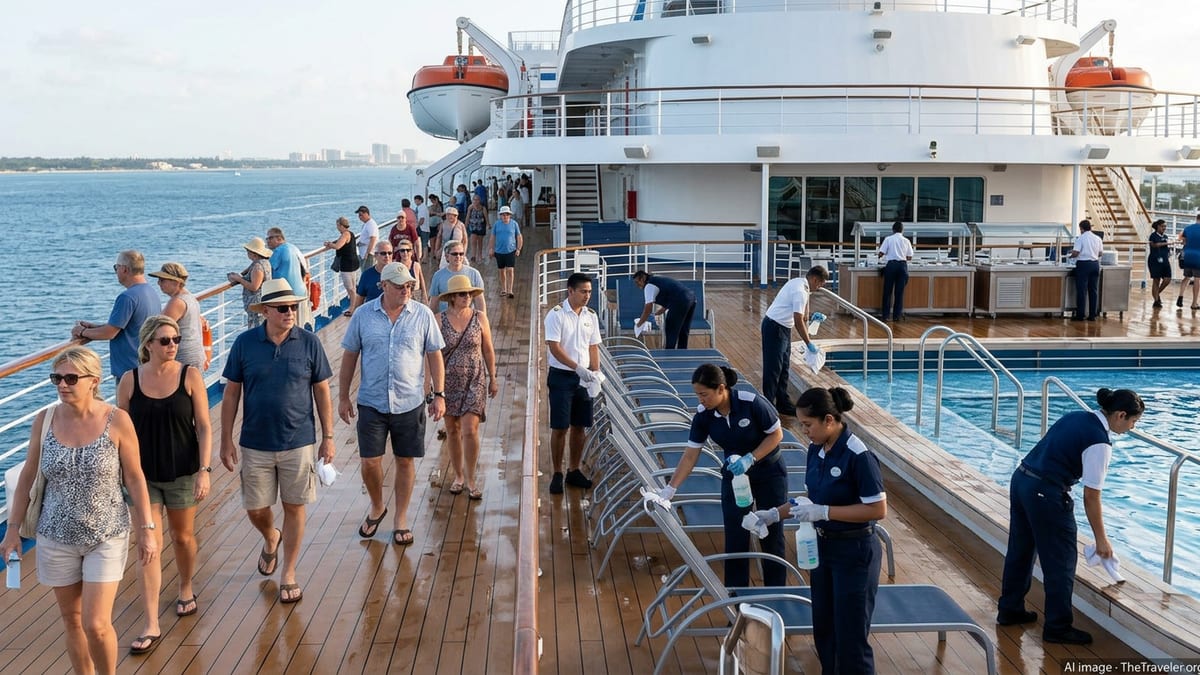
Reports on cruise ship sanitation highlight the role of rigorous hand hygiene, regular disinfection of high-touch areas, and prompt isolation of symptomatic individuals in reducing transmission. When an outbreak threshold is reached, operators generally increase cleaning frequency, restrict self-service dining, and may adjust onboard activities to limit crowding.
In the Alaska incident, secondary descriptions from passengers suggest an uptick in visible cleaning and communication about handwashing and reporting symptoms, in line with those commonly recommended practices. The short duration of the itinerary may also have limited the overall length of the outbreak window.
What Travelers Should Know About Health Risks on Expedition Cruises
The Alaska outbreak underscores that small expedition ships, despite carrying far fewer guests than mainstream mega-cruise vessels, are not immune to communicable illness. The intimate scale that appeals to wildlife enthusiasts and adventure travelers can also mean passengers spend extended time together in lounges, dining rooms, and on small excursion craft.
Travel medicine specialists generally recommend that cruise passengers practice frequent handwashing with soap and water, use alcohol-based hand sanitizer when sinks are not immediately available, and avoid touching the face with unwashed hands. Individuals who feel unwell before embarkation are often urged to consider postponing travel to reduce the risk of introducing illness into a closed setting.
Prospective cruisers can review publicly available sanitation scores and outbreak summaries, where listed, for ships that operate from U.S. ports. While such databases do not capture every mild illness at sea, they offer a snapshot of how frequently individual vessels experience reportable clusters of gastrointestinal cases and how they perform on health inspections.
Expedition operators that market to nature-focused travelers often highlight their environmental credentials and small-group experiences. The recent Alaska incident is likely to renew traveler interest in how these companies manage public health risks in remote regions where medical evacuation can be logistically complex and weather dependent.
Cruise Industry Response and Ongoing Monitoring
Cruise lines operating from U.S. ports are expected to maintain illness surveillance systems and report case counts during each voyage when thresholds are reached. Publicly available industry and government commentary suggests that the sector continues to frame gastrointestinal outbreaks as relatively infrequent events set against millions of passenger days at sea each year.
Travel trade coverage indicates that, in response to past outbreaks, many operators have invested in upgraded sanitation protocols, redesigned buffet service, and enhanced crew training. Some lines also share pre-boarding health information with guests, encouraging them to disclose recent symptoms and to report any illness that develops on board.
Monitoring of cruise-related illness is likely to remain under scrutiny in 2026, as the Alaska outbreak coincides with heightened public sensitivity following other high-profile maritime health events this year. Public-health oriented analysts note that transparent reporting and clear communication can help maintain traveler confidence even when voyages are affected by illness.
For now, federal outbreak logs list the Alaska gastrointestinal incident as resolved with the completion of the voyage. However, ongoing tracking of sanitation scores and illness reports across the fleet will continue to inform how travelers, regulators, and operators assess risk as the busy summer cruise season in Alaska gets underway.