


Riyadh’s airport story is in transition, and that is starting to confuse travelers. Airline tickets, news articles and even government announcements increasingly mention King Salman International Airport, yet when you land in Riyadh today you still see signs for King Khalid International Airport and the familiar RUH code on your boarding pass. With construction advancing on what is planned to become one of the world’s largest airport hubs, many passengers are asking a simple question: which airport am I actually flying to, and will that change before my next trip?
Get the latest updates straight to your inbox!
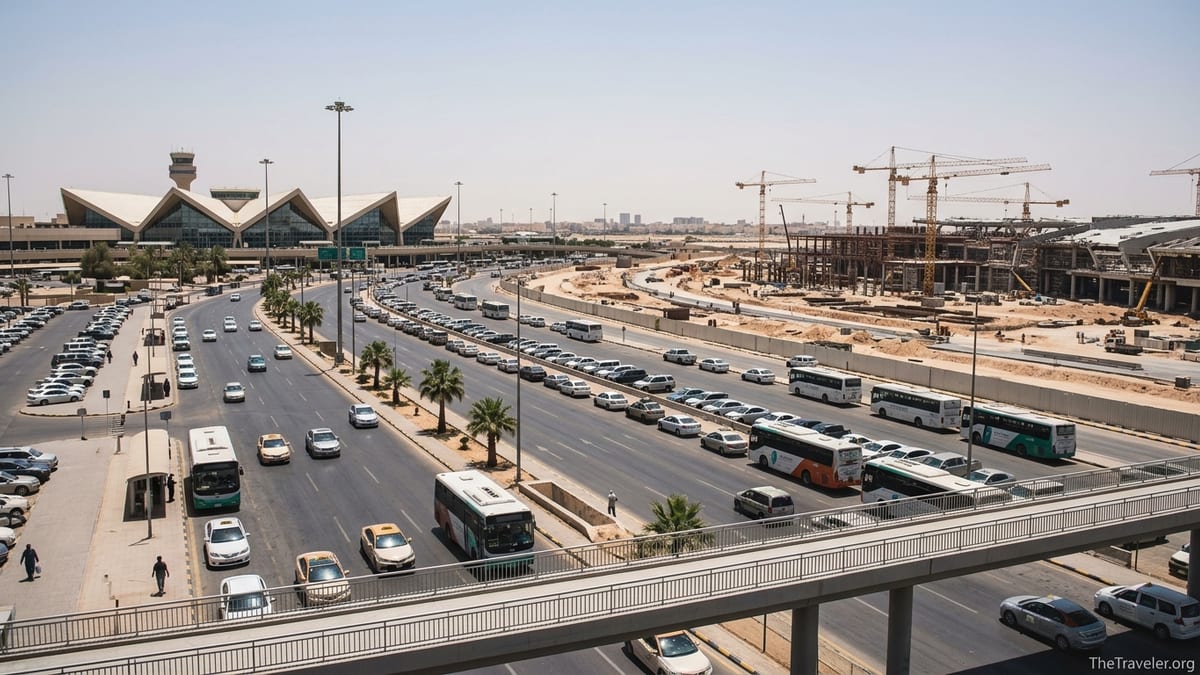
Riyadh’s Airports in 2026: What Actually Exists Today
For anyone flying to Riyadh right now, the practical reality is straightforward: all commercial passenger flights to and from the Saudi capital currently use King Khalid International Airport, which carries the IATA code RUH and sits about 35 kilometers north of central Riyadh. The airport opened in 1983 and today operates five passenger terminals plus a royal terminal, handling both domestic and international traffic for airlines such as Saudia, Flynas, Flyadeal, Qatar Airways, Emirates, Lufthansa and many more.
On a typical day in July 2026, a traveler flying from London to Riyadh with British Airways, from Dubai with Emirates, or from Jeddah with Saudia will all arrive at the same place: King Khalid International Airport. Your itinerary, booking confirmation, and airline app will show “Riyadh (RUH),” and your driver in Riyadh, whether booked via Careem, Uber, or a hotel car service, will head to the existing airport complex northeast of the city. There is no separate, second commercial airport in operation for Riyadh today.
This is important because the name King Salman International Airport has started to appear in official Saudi communications and media coverage, sometimes without clear context. Travelers may reasonably imagine a new, separate facility, like how Dubai has both DXB and Dubai World Central, or how Istanbul shifted operations from its older Atatürk Airport to the new Istanbul Airport. In Riyadh’s case, however, King Salman International is better understood as a massive expansion and transformation of the current RUH site rather than a completely different location you would taxi to on your next trip.
In practice, if you are flying to Riyadh next week, next month, or even realistically over the next few years, you should still expect to use King Khalid International Airport as it stands today, albeit one that will be evolving via renovation, terminal shuffles and construction on its periphery. The future King Salman International branding reflects a long-term megaproject that will be delivered in stages through to the end of this decade rather than an overnight switch.
What Is King Salman International Airport and How Is It Related to RUH?
King Salman International Airport is the flagship airport project announced by Saudi Arabia’s Public Investment Fund as part of the Vision 2030 strategy to turn Riyadh into a major global hub. Official statements describe a multi-runway, multi-terminal complex designed to handle up to 120 million passengers per year by 2030, with long-term ambitions to eventually reach 185 million passengers annually and incorporate extensive commercial and residential development around the airport site.
Critically for travelers, the project is not being built on an entirely new site far from the current airport. Government communications and recent agreements with real estate developers describe King Salman International as located on the existing King Khalid International Airport land, incorporating the current terminals and adding three new terminals, six runways, logistics facilities, and mixed-use districts. In other words, the RUH airport area is being transformed and dramatically enlarged, not abandoned.
Think of it as Riyadh following a similar pattern to other major hub upgrades. When Jeddah expanded King Abdulaziz International Airport with its giant Terminal 1, the city did not open a completely new airport with a fresh code; it built onto the existing site and then shifted traffic into the new facilities as they became ready. Likewise, when Salt Lake City rebuilt its main airport in the United States in phases, passengers still used the same SLC code while old concourses were demolished and new ones opened. Riyadh’s plan with King Salman International is comparable in scale but even more ambitious in its combination of aviation, urban development, and commercial real estate.
Because the new project is formally branded King Salman International Airport, you will increasingly see that name on government presentations, real estate brochures, and Vision 2030 reports. However, airlines and booking systems are still listing RUH and King Khalid International for actual flights because the physical runways and terminals in use remain those of the existing airport. Over time, once significant new infrastructure comes online, the branding is expected to shift fully to King Salman International, but that will happen in coordinated phases rather than as a surprise change one weekend.
Current Operations at King Khalid International (RUH) in 2026
Even as the King Salman International project moves ahead, King Khalid International Airport continues to function as Riyadh’s main air gateway, with some notable changes in how its terminals are used. The airport currently deploys five terminals, historically split between domestic and international operations. In early 2026, Riyadh Airports Company oversaw a large-scale terminal relocation exercise, moving airlines between terminals over a ten-day period to improve passenger flows and prepare for future growth. That reshuffle, described by local authorities as the largest operational transformation since the airport opened, caused short-term confusion but has now largely bedded in.
In practical terms, this means that a traveler who last flew via Riyadh in 2019 or 2020 might find their usual airline now operating from a different terminal. For example, Saudia and Flynas domestic flights are typically concentrated in Terminal 5, while many international carriers are distributed across Terminals 1, 2, 3 and 4. An Istanbul-bound passenger on Turkish Airlines might now depart from a different hall than before, and a Paris-bound Air France passenger may find improved check-in facilities and more modern security screening equipment compared with their last visit.
The day-of-travel experience at RUH reflects these shifts. Arriving from Europe in the evening, you can expect newly organized immigration queues with dedicated lanes for GCC nationals, e-visas, and premium passengers, followed by a consolidated baggage reclaim area serving multiple international terminals. On the landside, ride-hailing pick-up zones and taxi ranks have been re-marked, and new signage in Arabic and English helps direct passengers to inter-terminal shuttle services and long-term parking areas, which are being progressively upgraded to handle higher volumes.
Despite intermittent regional security tensions that occasionally affect Gulf airspace, King Khalid International is open and operating, with flights generally running on schedule. When disruptions do occur, they tend to manifest as short-notice delays, reroutings, or airspace avoidance measures rather than long-term shutdowns. For a practical example, a Riyadh to Bahrain evening flight may depart 30 minutes late due to an air traffic flow restriction, or a connection from Riyadh to Beirut might be rescheduled to a different time or aircraft type with limited notice. Travelers are therefore advised to monitor airline apps and SMS alerts closely, but they should still plan around RUH as the functioning, real-world airport they will use.
Timeline and Expectations for the King Salman International Megaproject
While construction activity and investment commitments are already underway, King Salman International Airport is planned as a multi-year project extending through 2030 and beyond. Public project summaries list the airport’s development as being in the construction phase, with key enabling works such as mechanical, electrical and plumbing infrastructure packages currently being executed by local and international contractors. Recent memoranda of understanding with Saudi real estate developers support the creation of airport-city style mixed-use districts, indicating that the vision goes well beyond runways and terminals.
However, that sheer scale translates into a phased rollout rather than a single grand opening date. Industry documents and project trackers generally reference 2030 as the target for initial full-phase operations, aligned with Riyadh’s bid to host major global events around the end of this decade. Before that, it is likely that individual components, such as a new terminal pier, an additional runway, or a dedicated cargo area, will become operational step by step, feeding into the existing RUH ecosystem. Travelers may first encounter these changes as new check-in halls or revamped security zones rather than as a completely different airport name on their boarding passes.
Compare this to other mega-airports that have come online in recent years. Istanbul’s new airport initially opened with limited flights and then incrementally took over nearly all traffic from Atatürk during a carefully planned migration period. In Beijing, the new Daxing Airport launched while Capital Airport remained active, leading airlines to gradually realign their operations. Riyadh’s situation is slightly different because King Salman International is not a separate, distant field, but the pattern of phased infrastructure openings and airline realignments is likely to be similar.
For the average traveler planning trips in 2026, 2027 or 2028, it is therefore safest to treat the King Salman International project as a background upgrade to the Riyadh airport you already know. You may notice more construction cranes around the perimeter, temporary hoardings in parking areas, or new signage appearing inside terminals hinting at “Future King Salman International expansions,” but your fundamental experience will still be that of flying into RUH, passing through passport control, and stepping into the Riyadh taxi queue or metro system just as before.
Why the Names Cause Confusion and How to Read Your Ticket
The biggest source of traveler confusion at the moment is the coexistence of three related names: King Khalid International Airport, King Salman International Airport, and simply “Riyadh Airport.” Airline booking engines, global distribution systems, online travel agencies and metasearch platforms like Skyscanner or Google Flights all rely heavily on the IATA airport code, which in Riyadh’s case is RUH. That code has not changed and still points to King Khalid International on all major systems, from airline boarding passes to baggage tags.
At the same time, Saudi officials and local media increasingly talk about King Salman International Airport when describing Riyadh’s future as a global aviation hub. A business traveler reading about a new investment deal in the financial press might see references to “mixed-use districts at King Salman International,” while their corporate travel booking shows “Riyadh – RUH (King Khalid Intl).” Without context, it is reasonable to ask whether those are different places, and whether a meeting voucher or car service booked to “Riyadh Airport” might end up at the wrong location.
In practice, travelers should treat RUH, King Khalid International, King Salman International, and “Riyadh Airport” as different labels on the same evolving airport complex. The key detail to check is the three-letter code on your ticket: as long as it shows RUH, you are flying to the existing airport north of the city. A hotel concierge will understand “Riyadh airport pickup” as RUH, and a car booked in a ride-hailing app will use the same pin. When King Salman International facilities open gradually, it is expected they will still be accessed via the RUH area, even if some signage on the ground starts using the new name first.
For real-world peace of mind, look at what airlines themselves are doing. Major carriers still list their Riyadh destination as RUH in booking tools and route maps, and timetables published for upcoming seasons show no separate airport entry for Riyadh beyond that. If there were to be a significant shift, such as a change of airport code or a parallel operation from a new field, it would trigger extensive communications from airlines and travel agents. Until such notices appear, passengers can safely interpret talk of King Salman International as future-focused branding rather than an instruction to look for a different airport on arrival.
How the Future Airport Will Change the Passenger Experience
Although its full impact lies several years ahead, the King Salman International vision is ultimately about changing what it feels like to arrive in and depart from Riyadh. Plans describe an airport with six runways, expanded terminal capacity, and integrated urban development, designed to handle well over 100 million passengers a year. For travelers, that level of capacity typically translates into more non-stop routes, more competitive fares, and a broader range of airlines and alliance options to choose from.
Imagine, for instance, a traveler from Dallas heading to Riyadh on business in 2030. Instead of connecting in Europe or the Gulf, they might book a non-stop Riyadh flight operated by a Saudi or partner carrier, landing at a large, modern terminal with high-capacity immigration halls, automated e-gates for eligible nationalities, and a cluster of lounges run by both airlines and independent operators like Plaza Premium or similar brands. Baggage reclaim carousels would handle simultaneous arrivals from multiple widebody aircraft, and landside concourses would flow directly into a rail station for Riyadh’s metro and regional trains, as well as integrated bus and taxi hubs.
Within the broader airport city, travelers on longer layovers could check into an on-site hotel connected to the terminal via walkways, spend time in retail districts featuring international brands, or visit business centers for meetings without entering central Riyadh. The development agreements already being signed sketch out these kinds of facilities, echoing models seen at airports like Dubai, Doha, or Singapore, where the airport is also a destination and commercial node in its own right.
Importantly, the project is also positioned around sustainability and technology, with expectations of advanced baggage systems, energy-efficient terminal designs, and extensive digital services. That could mean more reliable real-time information screens, app-based wayfinding, and biometric boarding processes for certain routes. While the details will evolve, the direction is clear: the name King Salman International signals a significantly upgraded hub experience compared with today’s RUH, one that aims to support Riyadh’s role as a business, tourism and events capital for the wider region.
Practical Advice: Which Airport to Use and How to Plan Your Trip Now
For trips you are booking today, the most important takeaway is that you should always select Riyadh (RUH) as your airport. If you are on an airline site and see “Riyadh – King Khalid International (RUH),” that is the correct choice. If a travel article mentions “Riyadh’s future King Salman International Airport,” you do not need to search for a separate code or new location; all current commercial flights and ground transport planning should be based on RUH.
When arranging ground transportation, tell your driver, hotel or chauffeur service that your flight arrives at “Riyadh airport, RUH, King Khalid.” Since the new project is being built on the same overall site, nobody will take you somewhere different, but including RUH and King Khalid in your wording helps avoid misunderstandings with people who might have heard about the future King Salman International but not yet seen it reflected in airline operations.
It is also wise to pay extra attention to terminal information on your day of travel. Because RUH is undergoing reorganizations as part of the wider project, airlines can and do change terminal assignments. For example, if you are flying from Cairo to Riyadh on Saudia in November 2026, you might find your flight arriving at a different terminal than the one used on the same route earlier in the year. Check your airline app or confirmation email within 24 hours of departure for up-to-date terminal and gate details, and allow a little extra time at the airport in case you need to use inter-terminal shuttles.
Finally, monitor potential changes over the coming years with a calm, practical mindset. If and when a significant operational milestone arrives, such as the opening of a new terminal block branded as part of King Salman International or an airline announcing a move into newly completed facilities, you will hear about it in concrete terms: updated terminal maps, gate information, and check-in location instructions. Until then, the safest and simplest plan is to treat all travel to Riyadh as travel to RUH, at the evolving airport currently known as King Khalid International.
The Takeaway
Riyadh’s airport landscape is in the middle of a long-term transformation, and the language around it can sound more dramatic than the day-to-day reality for travelers. At present, there is one commercial airport in operation for Riyadh: King Khalid International Airport, code RUH. That airport is being expanded, modernized and wrapped into a larger development project known as King Salman International Airport, which aims to turn the Saudi capital into a major global hub by the end of this decade.
For the foreseeable future, your flights, tickets and baggage tags will continue to show RUH, and your car or metro ride will still take you to the same airport site north of the city. The most noticeable changes over the next few years are likely to involve terminal assignments, new check-in areas, and construction activity around the complex, rather than a sudden shift to a different airfield with a new code. Keeping an eye on your airline communications and verifying terminal information before you travel will go a long way toward ensuring a smooth journey.
Looking ahead, the emergence of King Salman International as a fully realized megahub should bring more route options, improved facilities, and a richer range of services for visitors and residents alike. For now, though, the practical advice is simple: book Riyadh as RUH, arrive a little early to navigate any evolving terminal layouts, and treat “King Salman International” as the name of the ambitious future airport city that is gradually taking shape around the runways you already use.
FAQ
Q1. Is King Salman International Airport already open for passenger flights?
The King Salman International Airport project is under construction and planning, but as of mid-2026 all regular passenger flights to Riyadh still use King Khalid International Airport (RUH).
Q2. What is the difference between King Khalid International Airport and King Salman International Airport?
King Khalid International Airport is the existing, fully operational airport serving Riyadh, while King Salman International refers to the long-term expansion and redevelopment of the same overall site into a much larger, multi-runway hub.
Q3. Which airport code should I use when booking flights to Riyadh?
You should always use RUH, which is the IATA code for Riyadh’s current airport. There is no separate commercial airport code in use for King Salman International at this time.
Q4. Could my flight suddenly be moved to a different airport in Riyadh?
Abrupt moves to a completely different airport are highly unlikely. What may change are terminal assignments within RUH as new facilities open or existing ones are renovated, so it is important to check your terminal before travel.
Q5. How will I know if airlines start operating from new King Salman International facilities?
Airlines and airports typically communicate major changes well in advance through email, apps, and travel agent bulletins. You would see updated terminal names, check-in locations, and possibly revised maps in your booking confirmation.
Q6. Will King Salman International Airport be far from central Riyadh?
No. The project is based on the current King Khalid International Airport site, about 35 kilometers north of the city, so journey times by car or public transport should remain broadly similar, even as new access roads and rail links improve connectivity.
Q7. Should I change my hotel or meeting plans because of the future airport project?
For trips over the next few years, there is no need to change hotel or meeting plans solely because of the King Salman International project. Continue planning around RUH’s current location and travel times unless your airline issues specific new instructions.
Q8. How might the new airport affect ticket prices and routes in the future?
As capacity grows, airlines may add more non-stop routes and increase competition on key corridors, which can lead over time to more choice and potentially more competitive pricing, especially on long-haul business and leisure routes.
Q9. Will transit passengers notice the changes before local travelers do?
Transit passengers may be among the first to notice new terminals, lounges or connection facilities if airlines consolidate connecting banks into upgraded areas. However, both transit and origin/destination passengers will experience changes as new infrastructure opens.
Q10. What is the safest approach for travelers monitoring these developments?
The safest approach is to keep using RUH for bookings, follow airline and airport communications closely, double-check terminal information before each trip, and treat references to King Salman International as a sign of long-term upgrades rather than an immediate change in where you fly.