


More news on this day
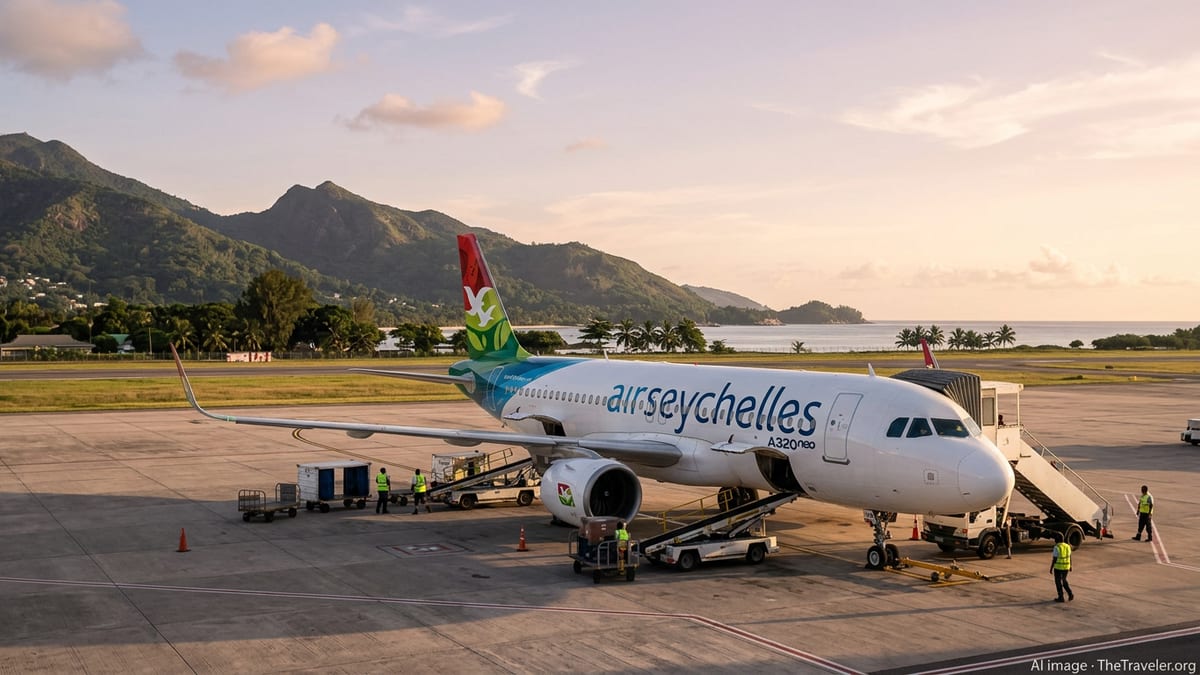
The widening security crisis in West Asia and the Red Sea is now reshaping travel across the Indian Ocean, with Seychelles turning to India for strategic support to protect tourism, connectivity and vital fuel supplies as global travelers and cruise operators rethink how they reach the idyllic archipelago.
Get the latest news straight to your inbox!
Red Sea Turmoil Ripples Across Indian Ocean Tourism
Instability linked to Houthi attacks on commercial vessels in the Red Sea and Gulf of Aden has pushed many shipping lines to reroute around the Cape of Good Hope, lengthening voyages between Asia, the Middle East and Europe. Published analyses show that container and tanker traffic through the Suez corridor has fallen sharply since late 2023, while costs and insurance premiums on remaining sailings have risen steeply.
These shifts are not confined to freight. Cruise itineraries that once threaded through the Red Sea and along East Africa have been repeatedly adjusted, shortened or cancelled, affecting ports from Egypt and Jordan to India’s Kochi and island states across the western Indian Ocean. Publicly available information from trade bodies indicates that cruise calls in the wider region have dropped or been reconfigured as operators avoid high-risk waters.
For Seychelles, whose economy is heavily dependent on international visitors, the disruption comes just as global tourism has been approaching pre pandemic levels. Travel industry coverage notes that the archipelago’s hoteliers, tour operators and aviation partners are watching Red Sea developments closely, as longer ship routes, higher bunker fuel prices and altered air corridors feed into overall travel costs.
Industry observers stress that although Seychelles itself remains far from the main conflict zone, its reliance on imported fuel, food and goods carried by sea across the Indian Ocean means that any prolonged crisis in West Asia can quickly translate into higher prices and pressure on tourism margins.
India–Seychelles Partnership Deepens In A Time Of Crisis
India and Seychelles have built a steadily expanding security and economic partnership over the past decade, centered on maritime safety, capacity building and development support. Government reports highlight joint military exercises, coastal surveillance cooperation and Indian assistance for infrastructure and humanitarian needs across the archipelago.
According to India’s latest foreign affairs reporting, exercise LAMITIYE, a bilateral army drill hosted in Victoria in March 2024, underscored the defense link between the two countries and their shared interest in a secure Indian Ocean. Earlier arrangements have included Indian provision of patrol aircraft, helicopters and training that enhance Seychelles’ ability to monitor its vast Exclusive Economic Zone.
Travel and tourism media now indicate that this long running partnership is being leveraged to help Seychelles navigate the fallout from the Red Sea shipping crisis. Coverage describes India as a strategic lifeline, supporting the island nation’s efforts to safeguard supply chains, stabilize fuel access and reassure visitors that the region’s main tourist zones remain safe and well monitored.
Analysts point out that India’s growing naval presence across the wider Indian Ocean, including anti piracy patrols and humanitarian deployments, has indirect benefits for tourism by reinforcing perceptions of stability along key sea lanes used by cruise ships and supply vessels that service island destinations.
Impact On Air, Sea And Cruise Connectivity To Seychelles
Commercial data and airline statements tracked by aviation analysts show that carriers have adjusted routings between Asia, the Gulf and East Africa in response to the evolving threat environment. While most long haul flights to Seychelles avoid the most volatile zones, the broader reshaping of regional networks can influence fares, schedules and connection patterns for international travelers.
On the maritime side, shipping intelligence indicates that many cargo vessels serving the western Indian Ocean are now taking longer routes around southern Africa, increasing voyage times and bunker consumption. Higher logistics costs can ultimately filter through to airline fuel prices and to the cost base for hotels, cruise operators and tour companies.
Cruise lines, particularly those planning repositioning voyages between Europe, the Middle East and Asia, have been among the most visibly affected. Industry updates describe a wave of itinerary changes, with some voyages skipping the Red Sea entirely and others reorienting toward southern African and Indian Ocean loops that may include Mauritius, Réunion and Seychelles instead of Suez transits.
For travelers, the practical consequence is a more dynamic and sometimes less predictable schedule environment. Specialists recommend that visitors headed to Seychelles in the current season check cruise and airline updates regularly, allow extra margin for connections via Gulf hubs, and be prepared for fare fluctuations tied to fuel and insurance costs.
How India’s Security Role Shapes Travel Confidence
India has significantly expanded its maritime security role under initiatives focused on safeguarding sea lanes of communication across the Arabian Sea and central Indian Ocean. Publicly available briefings on Indian naval operations describe regular patrols, anti piracy missions and coordinated responses to distress calls from merchant ships targeted in or near the Red Sea corridor.
Analytical coverage notes that Indian naval deployments have assisted vessels linked to a variety of flag states and operators, reinforcing India’s image as a security provider in the wider region. The presence of Indian warships, long range maritime patrol aircraft and surveillance assets contributes to early warning and rapid response capacity along routes that eventually connect to island destinations such as Seychelles.
For the travel sector, this layered security environment is increasingly seen as part of the destination’s appeal. Industry commentators point out that while most tourists will never directly encounter naval activities, the underlying stability they help ensure is reflected in airline route planning, cruise scheduling and the risk assessments of international insurers and tour operators.
In Seychelles itself, cooperation with India on coastal surveillance and information sharing supports efforts to keep territorial waters free from piracy and illicit activities. This framework provides additional reassurance for yacht charters, diving expeditions and inter island ferries that are central to the visitor experience.
Practical Guidance For Global Travelers Heading To Seychelles
Travel planners suggest that visitors bound for Seychelles in the current climate approach their trip with careful preparation rather than alarm. The archipelago remains open for tourism and continues to welcome visitors from Europe, Asia, the Middle East and beyond, with key air routes operating through Gulf and African hubs.
Prospective travelers are encouraged to monitor airline and cruise communications for any schedule adjustments linked to evolving security or fuel cost conditions. Flexible booking options, travel insurance that covers delays or rerouting, and allowing extra time for connections can help mitigate the knock on effects of broader disruptions in West Asia and the Red Sea.
Observers also recommend paying attention to official travel advisories issued by home governments, which are updated as the situation in the Red Sea and surrounding waters changes. These advisories typically distinguish between the conflict affected shipping zones and stable tourism destinations further south in the Indian Ocean.
Within Seychelles, publicly available information from tourism authorities continues to highlight strong health and safety standards, reliable local transport links and a diversified set of experiences across Mahé, Praslin, La Digue and outer islands. For many travelers, India’s visible role in underpinning regional maritime security adds another layer of confidence when choosing Seychelles as a long haul escape amid a period of elevated geopolitical risk.