


More news on this day
Uzbekistan and Kazakhstan are quietly recasting Central Asia’s tourism story, shifting the focus from romantic Silk Road imagery to conscious travel, sustainability and community-based experiences that invite visitors to look beyond the postcard cities of Samarkand and Almaty.
Get the latest news straight to your inbox!
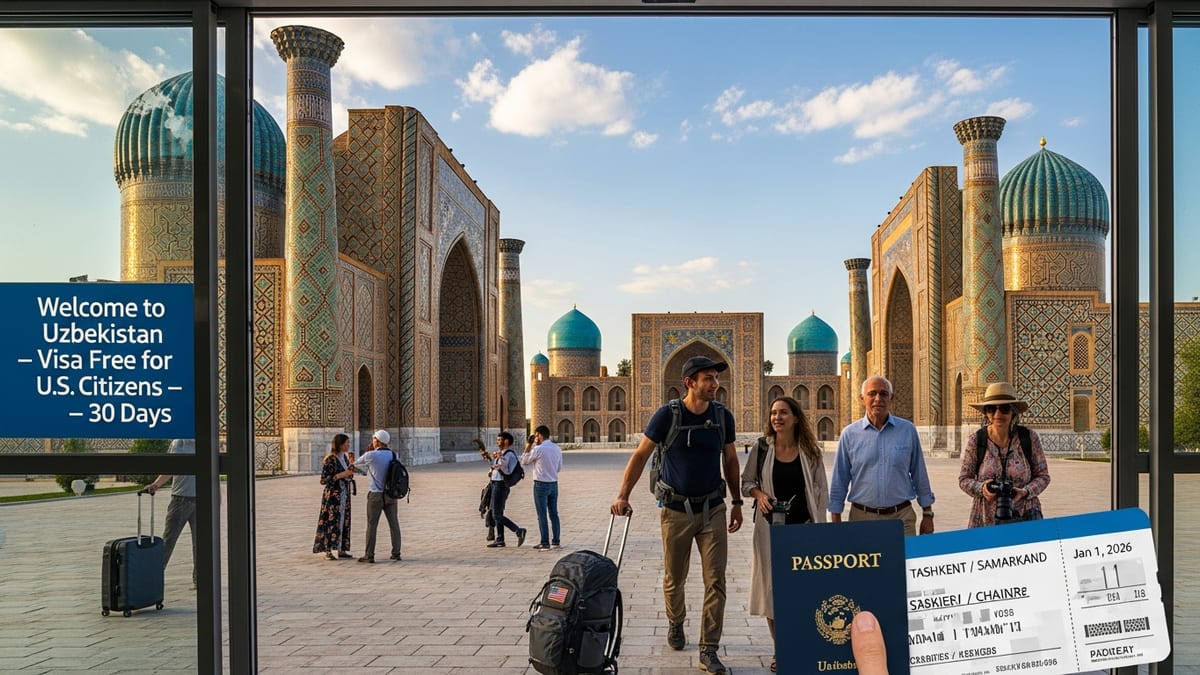
From Silk Road Mythology to Modern Conscious Travel
For years, tourism campaigns in Central Asia leaned heavily on the caravan routes of the Silk Road and the mosaicked madrasas of Samarkand and Bukhara. Today, publicly available policy documents and industry coverage suggest a deliberate pivot toward sustainability, accessibility and year-round travel that spreads benefits beyond a few headline sites. The new narrative emphasizes living cultures, fragile ecosystems and the people who inhabit them, rather than only their architectural backdrops.
Uzbekistan has positioned itself as a champion of sustainable tourism at the multilateral level, including initiatives linked to the designation of 2027 as an International Year of Sustainable and Viable Tourism. This diplomatic role is mirrored at home by measures that tie tourism growth to greener infrastructure, inclusive access and regional cooperation, indicating an ambition to align visitor flows with wider development goals.
Kazakhstan, long promoted as a land of wide steppes and adventure travel, is similarly reframing its offer. National strategies now highlight nature protection, regulated access to parks and transparent licensing for tour operators as key tools for managing a rise in both domestic and international visitors. Rather than simply increasing numbers, the emphasis is on the quality and impact of trips, a message that resonates with travelers seeking lower-footprint experiences.
For visitors, this evolving mindset means Central Asia is no longer just a place to retrace ancient trade routes. It is becoming a region where choices about where to stay, how to move and whom to buy from are central to the experience, turning trips into collaborations with local communities and landscapes rather than passive consumption of history.
Uzbekistan’s New Routes: Communities, Culture and Green Standards
Recent government resolutions in Uzbekistan outline a tourism system built around equal opportunities, inclusive travel and environmental criteria for accommodation. Public information on new regulations describes incentives for “green” tourism facilities, including competitions that reward properties using low-impact products and services that meet environmental requirements. The aim is to nudge hotels, guesthouses and tour providers toward cleaner operations while giving travelers clearer signals about where their money goes.
Alongside regulatory tools, Uzbekistan is experimenting with new forms of tourism beyond the classic city circuit. Policy papers describe support for agro-tourism, rural homestays, pilgrimage and industrial heritage routes, backed by digital platforms that allow travelers to design personalized itineraries and access them via QR code. This digital layer is intended to push visitors into lesser-known regions, extending the season and creating income in villages that previously saw little tourism.
On the ground, community-based tourism networks are taking shape in areas such as the Fergana Valley, where recent regional gatherings have focused on codes of conduct for responsible travel and training for small guesthouse owners. Cultural initiatives like Art Station in Samarkand, which promotes contemporary art and inclusive programming in a historic railway building, show how heritage destinations are adding new creative narratives to familiar skylines, appealing to travelers interested in present-day Central Asia rather than only its past.
Conscious travelers can already engage with these shifts by seeking out certified or award-winning green properties, booking locally run guesthouses in regions beyond the main Silk Road corridor, and looking for experiences that pair visits to architectural icons with time in living neighborhoods, farms or workshops. Choosing rail over short flights within the country, and using emerging digital tools to cluster visits in specific regions rather than zigzagging, can further reduce the footprint of an Uzbekistan itinerary.
Kazakhstan’s Ecotourism Standards and Protected Landscapes
Kazakhstan’s tourism authorities have introduced a national ecotourism standard that draws on criteria from the Global Sustainable Tourism Council and international certification schemes. Public descriptions of the framework indicate that it sets out expectations around waste management, energy efficiency, community engagement and nature conservation for operators positioning themselves as eco-friendly. This kind of benchmark is designed to give travelers more confidence that “eco” labels in marketing materials reflect real practices on the ground.
The country’s vast network of national parks has seen a sharp rise in domestic visitation in recent years, with published figures indicating that arrivals to protected areas nearly doubled between 2021 and 2024. Sites such as Kolsai Lakes, Charyn Canyon and the Assy-Turgen plateau are now central to domestic travel patterns, pushing Kazakhstan to balance access with conservation through visitor caps, zoning and improved interpretation.
At the same time, reports from tourism forums in Almaty and Astana highlight growing interest in lesser-known landscapes such as Ulytau and the deserts and plateaus of Mangystau. These areas are being framed as destinations for slow travel, where small-scale guesthouses, guided hikes and cultural encounters can be developed with local participation. For visitors, this opens possibilities for trips that move beyond the standard Almaty and Nur-Sultan axis into regions where Kazakh nomadic heritage and contemporary rural life intersect.
Conscious travelers heading to Kazakhstan can support this approach by prioritizing certified ecotourism operators, joining small-group or community-based tours in national parks, and allowing time for multi-day stays in one region rather than racing between photogenic viewpoints. Engaging local guides who are trained in park regulations and safety standards helps ensure that rising interest in canyons, glaciers and steppe ecosystems translates into funding and advocacy for their protection.
Regional Cooperation and the Rise of a “Single Destination” Central Asia
Beyond national reforms, Uzbekistan and Kazakhstan are increasingly positioning Central Asia as a shared tourism space. Publicly available coverage of regional initiatives notes Uzbekistan’s bid to chair a key European commission within the United Nations tourism system, with stated priorities that include cross-border routes, digital technologies and joint promotion of Central Asia as a single destination. Such efforts mirror a broader shift toward coordinated visa, transport and marketing schemes that could make multi-country itineraries more seamless.
For travelers, this emerging cooperation means that conscious travel plans can be designed at the regional scale. Journeys that once followed a narrow Silk Road corridor from Tashkent to Samarkand and onward to Almaty are now being supplemented by routes that loop through borderland valleys, steppe communities and shared mountain ranges. When itineraries are planned to minimize backtracking and use rail or long-distance buses between hubs, the environmental impact of a multi-country trip can be significantly reduced.
Cross-border projects also create opportunities to link thematic experiences. Rural tourism initiatives in the Fergana Valley, for example, can be combined with ecotourism in Kazakhstan’s national parks, forming a chain of homestays, hiking routes and cultural workshops that distribute spending across multiple communities. As regional actors experiment with joint digital platforms, travelers may gain access to integrated maps, booking tools and codes of conduct that span national boundaries.
However, observers also note that the rapid rollout of new infrastructure and resort projects around Central Asia poses risks if standards are not rigorously enforced. Conscious travelers can play a role by favoring operators and accommodations that are transparent about their environmental and social commitments, asking questions about land use and community partnerships, and being prepared to skip experiences that appear to strain water resources or rely on exclusionary development models.
What Conscious Travelers Should Look For Now
As Uzbekistan and Kazakhstan pivot toward more responsible tourism models, visitors have a growing toolkit for aligning their trips with these goals. One practical step is to look for accommodations and tour operators that reference national green tourism competitions, ecotourism standards or partnerships with organizations working on conservation and community development. While independent verification varies, these signals can help distinguish genuine efforts from superficial branding.
Travelers can also prioritize routes that bring them into contact with everyday life rather than only major monuments. In Uzbekistan, this might mean spending time in secondary cities, agricultural villages or contemporary cultural centers that showcase crafts, music and art in present-day contexts. In Kazakhstan, it can involve staying in guesthouses near national parks, visiting small museums curated by local historians or joining workshops with herders adapting traditional livelihoods to modern realities.
Equally important is pacing. Slow travel that concentrates on one or two regions, uses public or shared transport where possible and builds in rest days allows for deeper engagement and lower emissions. Choosing shoulder seasons can ease pressure on fragile sites and spread income more evenly across the year. Simple actions such as carrying refillable bottles, respecting dress codes and photography norms, and learning basic Uzbek, Kazakh or Russian phrases further signal respect for host communities.
Central Asia’s tourism story is still evolving, but recent moves in Uzbekistan and Kazakhstan show that the next chapter is likely to be written as much by sustainability benchmarks and community networks as by images of blue-tiled domes. For travelers willing to look beyond Silk Road nostalgia, the region is emerging as a laboratory for conscious travel, where decisions at the booking stage can have tangible effects on landscapes, livelihoods and cultural expression.