


More news on this day
Indianapolis International Airport experienced a sharp spike in cancellations and delays over the weekend, as regional carriers Republic Airways, PSA Airlines, and Endeavor Air scrubbed scores of flights, disrupting carefully timed hub connections and triggering ripple effects across airline networks.
Get the latest news straight to your inbox!
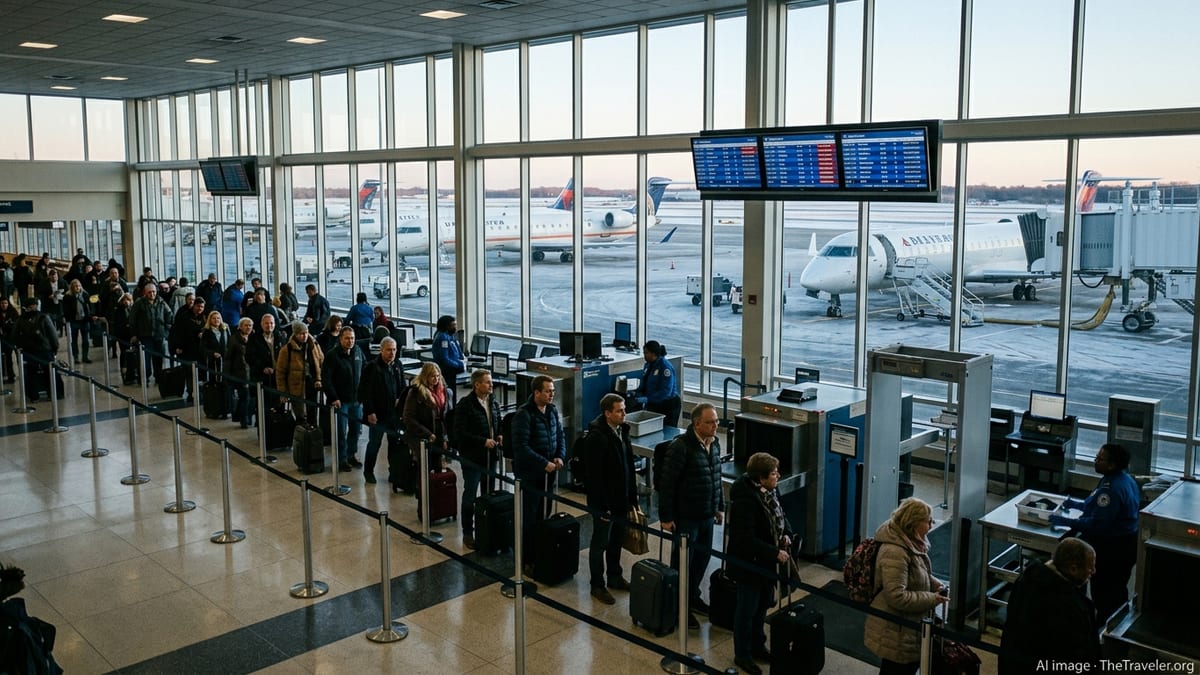
Sudden Spike in Cancellations Hits Key Midwestern Hub
Publicly available flight-tracking data for June 13 and June 14 indicates that inbound and outbound operations at Indianapolis International Airport were heavily affected by regional airline disruptions, with Republic Airways, PSA Airlines, and Delta-affiliated Endeavor Air among the hardest hit. Services operating under the American Eagle, Delta Connection, and United Express brands saw an outsized share of cancellations compared with some mainline flights, concentrating the impact on shorter regional routes that funnel passengers into larger hubs.
Published coverage of the weekend’s disruption points to a sharp cluster of failures on Saturday, June 13, when Indianapolis saw a surge in inbound cancellations by regional operators. Reports describe a “massive inbound meltdown,” with regional jets failing to arrive from key hubs such as Chicago, Detroit, Charlotte, and Atlanta, leaving aircraft and crews out of position for subsequent departures and forcing airlines to preemptively cancel additional services.
While specific tallies vary by data source and time of day, matrices compiled from real-time tracking platforms show multiple waves of cancellations concentrated among regional operators rather than ultra-low-cost or point-to-point carriers. The result was a patchwork of gaps in the schedule that left some concourses visibly quieter than usual even as other gates were crowded with displaced travelers seeking rebooking options.
The episode came at the height of a busy early-summer travel weekend, magnifying the disruption for leisure travelers and connecting passengers who rely on Indianapolis as a mid-continent link. With many seats already sold out across the system, same-day recovery options were limited, especially for travelers whose itineraries depended on a sequence of regional legs.
How Republic, PSA, and Endeavor Became Central to the Meltdown
Republic Airways, headquartered in the Indianapolis area, plays a significant role at the airport as a large regional operator for several major U.S. carriers, flying Embraer 170 and 175 jets across a wide network of short and medium-haul routes. According to published route and operations databases, Republic serves dozens of destinations from Midwestern and Eastern hubs, making it a critical connector for passengers traveling through Indianapolis on tickets issued by larger brand-name airlines.
PSA Airlines, a wholly owned subsidiary of American Airlines Group, and Endeavor Air, a Delta Connection carrier, also contribute heavily to the regional feed into and out of Indianapolis. Recent federal performance summaries list all three airlines among the most active regional operators in the United States, underscoring how dependent hub-and-spoke systems have become on these contracted carriers to maintain schedule integrity across smaller markets.
Operational scorecards released in recent months highlight the delicate balance regional operators must manage between tight aircraft utilization, crew availability, and external constraints such as air traffic flow programs and weather. Data compiled by federal transportation regulators shows that all three carriers have historically recorded relatively high completion factors, but also that cancellations and delays at regional affiliates tend to spike when national aviation system constraints or staffing gaps emerge.
In the Indianapolis episode, publicly available statistics and independent analysis circulating among aviation observers emphasize that regional flights bore a disproportionate share of cancellations compared with longer mainline segments. Industry watchers note that airlines often target shorter regional sectors first when they need to trim schedules quickly, because those routes can be cancelled with fewer cascading impacts on international operations, even though the effect on local passengers can be severe.
Passengers Face Missed Connections, Long Lines, and Limited Options
The disruption translated into long queues at service desks and crowded gate areas, as passengers attempted to salvage weekend trips or reach onward connections through major hubs. With many of the affected flights serving as feeders into larger airports, a single cancellation at Indianapolis often meant missed transcontinental or international services later in the day, compounding frustration for travelers whose journeys included multiple segments.
Anecdotal reports from social media and traveler forums describe families stranded overnight, business travelers scrambling to rebook on competing carriers where seats were available, and some passengers opting to drive several hours to alternate airports in Chicago, Cincinnati, Louisville, or Columbus in search of workable alternatives. Others reported being reprotected onto itineraries involving significant detours, including backtracking via distant hubs or accepting next-day departures when same-day options were no longer available.
For passengers booked on regional legs operated by Republic, PSA, or Endeavor under major airline codes, the branding distinction between mainline and regional carriers provided little comfort. Under federal rules and established contract-of-carriage policies, compensation or accommodation for cancellations depends on a complex mix of factors, including whether the disruption is categorized as within the airline’s control or attributed to broader air traffic or weather issues. Travelers posting their experiences online highlighted the difficulty of understanding those distinctions in real time while standing in lines that sometimes stretched across concourses.
Travel advisors note that such events tend to expose the vulnerability of itineraries with tight connection windows and multiple regional segments. When a key feeder flight is removed from the schedule, downstream options can narrow quickly, especially during peak travel periods when load factors are already high, leaving many customers with only next-day or multi-stop alternatives.
Operational Strains Expose Wider Industry Fragility
Aviation analysts observing the Indianapolis disruptions point to broader structural pressures bearing down on the regional airline sector. Industry reports in recent years have documented ongoing pilot and crew shortages, high training and retention costs, and an aging regional jet fleet that can be more maintenance-intensive than newer narrowbody aircraft. These factors can combine to produce sudden spikes in cancellations when any additional stress, such as localized weather or flow-control programs, enters the system.
Data from historical federal on-time performance tables show that Republic, PSA, and Endeavor operate tens of thousands of flights per year, with completion rates that generally track the wider industry. At the same time, those same reports show that regional operators are responsible for a large share of flights categorized as cancelled due to carrier-controlled or national aviation system reasons, reflecting their exposure to tight turn times and hub congestion.
Recent incidents elsewhere in the country, including previous periods when clusters of regional jets were temporarily grounded for inspections or when weather snarled operations at key hubs, have underlined how quickly irregular operations at a handful of bases can translate into nationwide disruption. The Indianapolis event appears to fit this pattern, with a sudden convergence of constraints at a mid-continent airport translating into systemwide knock-on effects for passengers as far away as the coasts.
Industry observers say that as airlines rebuild their networks around strong demand and constrained capacity, reliance on regional affiliates in cities like Indianapolis will remain high, keeping the system vulnerable to similar meltdowns unless staffing, fleet, and scheduling buffers are strengthened.
What Travelers Can Do During Future Regional Disruptions
For travelers planning summer itineraries that involve Indianapolis or other airports heavily served by regional carriers, aviation consumer advocates emphasize preparation and flexibility. Publicly available federal guidance highlights passengers’ rights in cases of cancellations and long delays, and independent experts often recommend that travelers review airline policies before departure, especially for tickets involving multiple regional segments operated by affiliates like Republic, PSA, or Endeavor.
Travel specialists commonly advise building longer connection windows when possible, particularly when connecting from a regional jet to long-haul flights, and considering early-morning departures that are less exposed to knock-on delays that accumulate later in the day. Monitoring flight status through airline apps and flight-tracking services before leaving for the airport can also give travelers an earlier chance to rebook if signs of widespread disruption emerge.
In light of the Indianapolis disruptions, some analysts expect airlines to reassess how aggressively they schedule regional fleets relative to available crews and maintenance capacity. While demand for travel through Midwestern hubs remains strong, the weekend’s events demonstrate that the system’s resilience can be tested quickly when regional operations stumble, leaving passengers to navigate the fallout with limited options and little warning.