


More news on this day
Passengers travelling from the UAE today are being urged to check their flight status before leaving for the airport, as Etihad Airways, flydubai and Air Arabia continue to adjust schedules, cancel selected services and reroute flights in response to ongoing regional tensions and operational constraints.
Get the latest news straight to your inbox!
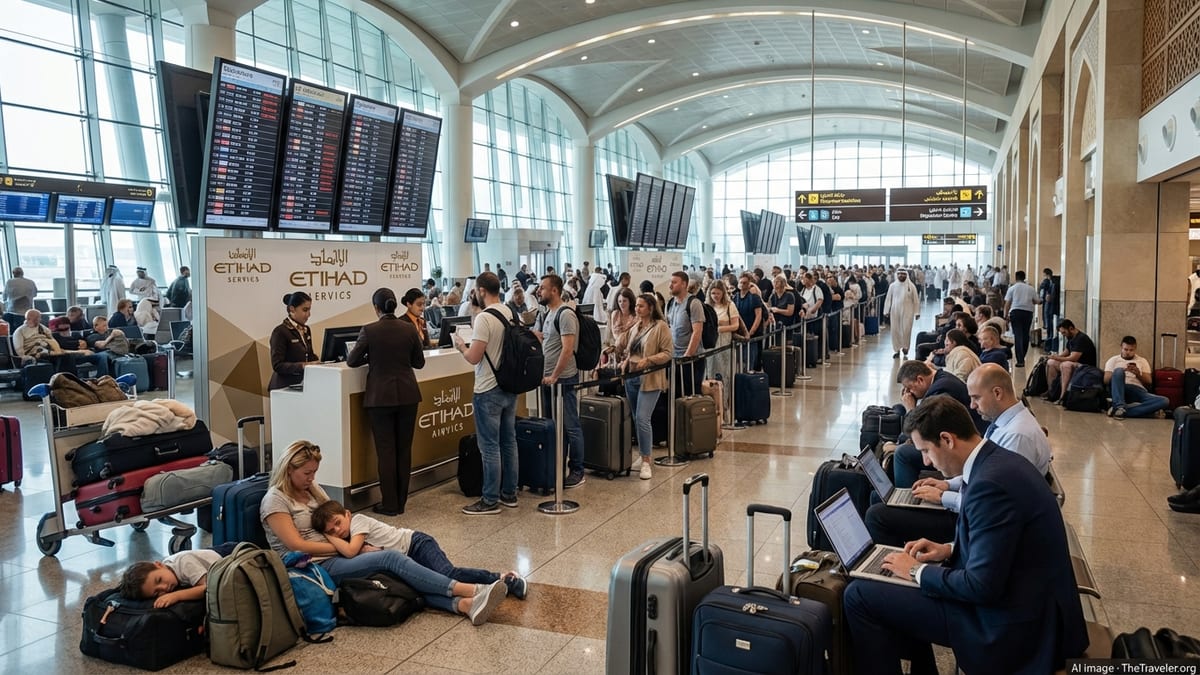
Overall flight situation across UAE airports
Publicly available airport and flight-tracking data indicate that departures from Dubai International, Abu Dhabi’s Zayed International and Sharjah International are largely operating, but with pockets of disruption affecting certain destinations. Recent weeks have seen a pattern of short-notice cancellations and extended delays rather than a blanket shutdown of operations.
Reports from regional news outlets and aviation tracking platforms show that flight schedules remain sensitive to airspace restrictions around parts of the Middle East and to changing security assessments. This has resulted in some last-minute changes to departure times, aircraft routings and, in limited cases, full flight cancellations on short- and medium-haul routes.
Travel advisories circulating since the spring of 2026 continue to recommend that passengers reconfirm bookings on the day of travel. For those flying today, the most consistent guidance across airlines and airport operators is to monitor mobile apps and official channels closely, as schedules may evolve during the day.
Etihad Airways: targeted cancellations and rolling delays
Etihad Airways services from Abu Dhabi have broadly stabilised since the widespread disruption that followed regional missile and drone incidents in late February and March 2026. Publicly available information indicates that the carrier has moved into a phased return to a fuller network, but remains prepared to trim frequencies or suspend individual rotations at short notice when airspace conditions require it.
Recent passenger accounts shared on travel forums over the past week describe isolated same-day Etihad cancellations and significant delays on some long-haul services, with rebooking and hotel accommodation offered in affected cases. These disruptions are not system-wide, but they underline that travellers leaving from Abu Dhabi today should treat their flight status as fluid until boarding is confirmed at the gate.
Etihad’s published waiver policies earlier this year gave customers on certain tickets the flexibility to rebook or seek refunds when schedules were heavily reduced. While current operations are closer to normal, similar disruption-management measures may be applied on a route-by-route basis when necessary. Travellers are being advised in public guidance to use the airline’s online “manage booking” tools and to ensure contact details are up to date for any short-notice notifications.
flydubai: Dubai departures under close operational review
Departures operated by flydubai from Dubai International continue to run on a largely regular timetable today, according to live departure boards and route-monitoring services, but the airline remains exposed to sudden changes on routes crossing sensitive regional airspace. Earlier this year, published coverage highlighted waves of cancellations on flights between Dubai and several Iranian cities during spikes in regional tension, illustrating how quickly schedules can be adjusted.
In the most recent round of disruptions cited by regional media and traveller reports, flydubai has tended to prioritise core trunk routes while temporarily suspending or thinning out frequencies to a smaller number of destinations considered higher risk or operationally complex. This pattern appears to be continuing, with most passengers able to depart as planned but some facing retimed departures or rerouting through alternative paths.
For passengers flying flydubai today, aviation tracking data and airport information screens suggest that the main risk is delay rather than outright cancellation on the majority of routes. Nonetheless, those booked on services to conflict-adjacent destinations are being encouraged by publicly available advisories to verify their flight status repeatedly on the day of travel and to arrive at the airport with additional time to accommodate longer security and check-in processes.
Air Arabia: Sharjah schedule stable but selective cuts persist
Air Arabia’s operations from Sharjah and Abu Dhabi have been gradually rebuilt after a period earlier this year when the carrier temporarily suspended a number of UAE flights and halted services to several Levant and Iraqi destinations. Travel-industry coverage in March noted a complete suspension of some routes for several days, followed by a phased resumption as operational conditions improved.
Current departure lists for Sharjah International indicate that most Air Arabia flights are running, including those to popular South Asian and regional leisure markets. However, some routes that experienced repeated suspensions in the first half of 2026 remain on limited frequencies or are still shown as unavailable on booking channels, reflecting a cautious approach to capacity deployment.
Passenger reports over the past week referencing Air Arabia flights into and out of the UAE suggest occasional short-notice cancellations on select regional services, particularly where connecting traffic relies on tight turnarounds. Travellers flying with the carrier today are advised, according to public guidance, to monitor booking references closely and be prepared for schedule changes that may affect onward connections.
What travellers from the UAE should do today
For anyone flying from Dubai, Abu Dhabi or Sharjah today, the consistent message from airline communications and travel advisories is to treat schedules as subject to change and to stay informed up to the moment of departure. Online check-in, mobile boarding passes and real-time notifications through airline apps are playing a central role in keeping passengers updated as operations evolve.
Practically, this means checking the flight status repeatedly on the day of travel, particularly in the six hours before departure, and verifying terminal and gate information once at the airport. Publicly available information stresses that travellers should factor in extra time for check-in and security, as queues can lengthen quickly when earlier flights experience delays and passengers are re-accommodated.
Those on itineraries involving regional connections, especially through airports in or near affected airspace, may wish to consider backup plans where possible, such as more generous connection windows or flexible tickets that allow same-day changes. Travel insurance policies that cover disruption and missed connections are being highlighted in consumer advice columns as a useful additional layer of protection while conditions remain unpredictable.
With Etihad, flydubai and Air Arabia all operating the vast majority of their schedules but retaining the option to cut or reroute individual flights, passengers departing the UAE today face a travel environment that is manageable but requires close attention. Staying informed and building in contingency time remain the best defences against last-minute changes.