


More news on this day
IndiGo is signaling a bold move upmarket as it teases an “under development” business class product for its upcoming Airbus A350 fleet, offering the first real hints of how India’s largest airline plans to compete on long haul routes.
Get the latest news straight to your inbox!
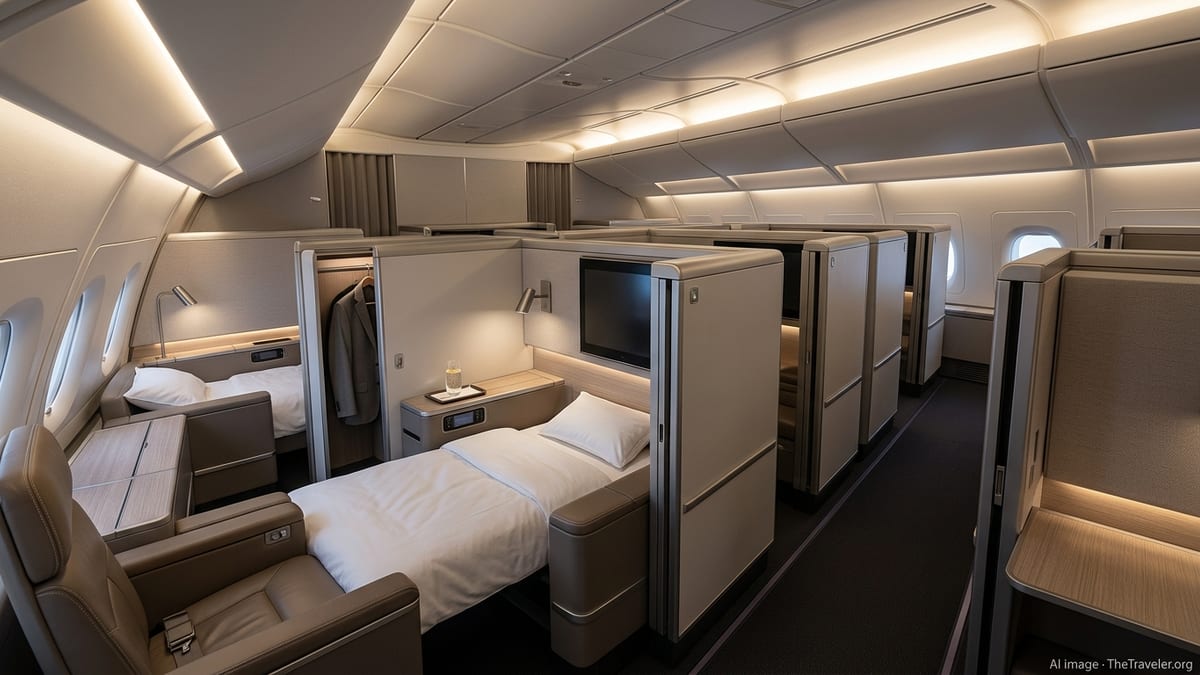
First glimpse of a true IndiGo long haul business cabin
Early teasers circulating among aviation watchers indicate that IndiGo is working on a dedicated lie flat business class cabin for the A350, separate from the IndiGo Stretch recliner-style seats seen on its A321neo narrowbodies. While the airline has not yet released full cabin images, references to an “under development” widebody business product are appearing in industry coverage and presentations tied to the A350 program.
The move represents a notable evolution for a carrier that built its brand on high-density, all-economy operations. IndiGo’s A350 order book, which now runs to dozens of aircraft according to public filings and manufacturer announcements, is widely viewed as the backbone of a planned push into long haul markets in Europe, North America and East Asia. A competitive business class is seen by analysts as essential if the airline is to win higher-yield traffic on those routes.
Teaser material suggests IndiGo is focusing on a fully flat bed, direct aisle access and a more private “mini-suite” style layout, in line with current trends on new A350 cabins at other airlines. Exact seat suppliers, finishes and layout remain under wraps, but the airline is clearly positioning the product as a step above the recliner seats used on its regional network.
Industry reports also highlight that IndiGo is still fine-tuning the balance between seat count and comfort, as it seeks to protect its low-cost DNA while creating a premium proposition strong enough to challenge established full service rivals.
How the A350 business concept fits IndiGo’s long haul strategy
Reports on IndiGo’s fleet plans show that the A350 will be the airline’s first true long range widebody, with range and capacity tailored for non-stop services from Indian hubs to Europe, the United States and Australia. Public statements from the carrier and Airbus have framed the type as central to IndiGo’s ambition to tap India’s fast-growing outbound travel demand and to route connecting traffic through its home market.
To make that strategy work, IndiGo needs to persuade corporate travelers, high-spend leisure passengers and connecting premium traffic to choose its flights over those of full service competitors based in the Gulf, Europe and East Asia. Aviation analysts note that this is where the “under development” business class product becomes critical. A strong hard product on the A350, paired with an upgraded soft product, would help IndiGo step into markets traditionally dominated by network carriers.
Publicly available information indicates that the airline is also investing on the ground, with maintenance and operational infrastructure being expanded ahead of the A350’s arrival. Observers see this as a sign that IndiGo is approaching the A350 program as a long term structural shift, not a side experiment, and that the business class cabin will be a core differentiator rather than an afterthought.
By teasing the A350 business product well before entry into service, IndiGo appears to be managing expectations and building anticipation, while retaining flexibility to refine details based on customer feedback from its existing premium-style seating and from evolving market conditions.
Design cues from the latest generation of A350 cabins
Although IndiGo has not yet shown full renderings of its A350 business cabin, industry comparisons suggest the product is likely to mirror key trends visible on other recent A350 launches. Several airlines unveiling new A350 interiors in 2025 and 2026 have opted for suites with doors, large 4K entertainment screens, wireless charging, and increased personal storage, as long haul competition intensifies.
Aircraft interior suppliers have been rolling out new seat platforms optimised for the A350 cross-section, including staggered and reverse herringbone layouts that deliver direct aisle access in every seat. Aviation design coverage indicates that these platforms can be tailored to a range of brand identities, from ultra-luxury flag carriers to cost-conscious operators seeking a simpler but still competitive offering.
IndiGo, known for a clean and minimalist aesthetic, is expected by commentators to lean toward a modern but relatively understated design language, focusing on practical comfort and intuitive storage rather than ornate finishes. The airline’s existing premium-style seating already emphasises simplicity and durability, and analysts expect those priorities to continue on the A350, albeit with more personal space and additional features to match long haul expectations.
Cabin mockups for other A350 operators also show greater emphasis on privacy wings, sculpted shells and accent lighting to create a sense of separation without excessively reducing cabin density. Observers anticipate that IndiGo will draw on similar techniques to strike a balance between passenger comfort and the high utilization economics that underpin its business model.
Implications for India’s evolving premium travel market
IndiGo’s decision to develop a bespoke A350 business class product comes at a time when India’s premium travel segment is rapidly expanding. Other Indian and foreign carriers are investing heavily in new-generation cabins on long haul routes to and from the country, and aviation analysts describe the current period as a reset for how premium travel to India is marketed and priced.
Publicly available data on India’s aviation growth points to rising disposable incomes, increased corporate travel and a growing appetite for non-stop long haul flights. In this context, IndiGo’s future A350 business cabin is viewed as both a competitive necessity and an opportunity to capture customers who may previously have connected over foreign hubs to access higher-quality products.
If IndiGo can deliver a business class offering that closely tracks global benchmarks while maintaining comparatively lean operating costs, it could exert downward pressure on premium fares in some markets and reshape expectations of what a low cost carrier can offer on long haul services. Industry analysts caution, however, that the transition from a single-class short haul specialist to a multi-cabin long haul operator involves complex operational and service challenges.
For now, the airline’s approach of selectively teasing its “under development” A350 business product keeps attention focused on its long haul ambitions without locking in specifics too early. As the first delivery dates draw closer and cabin details are progressively revealed, the IndiGo A350 business class concept is likely to become one of the most closely watched new premium products in the Indian aviation landscape.