


More news on this day
Passengers traveling through major hubs in Europe and the Middle East on June 9 are facing mounting disruption, as publicly available tracking data shows at least 26 flights delayed and 17 cancelled across Madrid Barajas, Doha’s Hamad International, Lisbon and Riyadh, affecting services operated by FlyDubai, KLM, easyJet and several other carriers.
Get the latest news straight to your inbox!
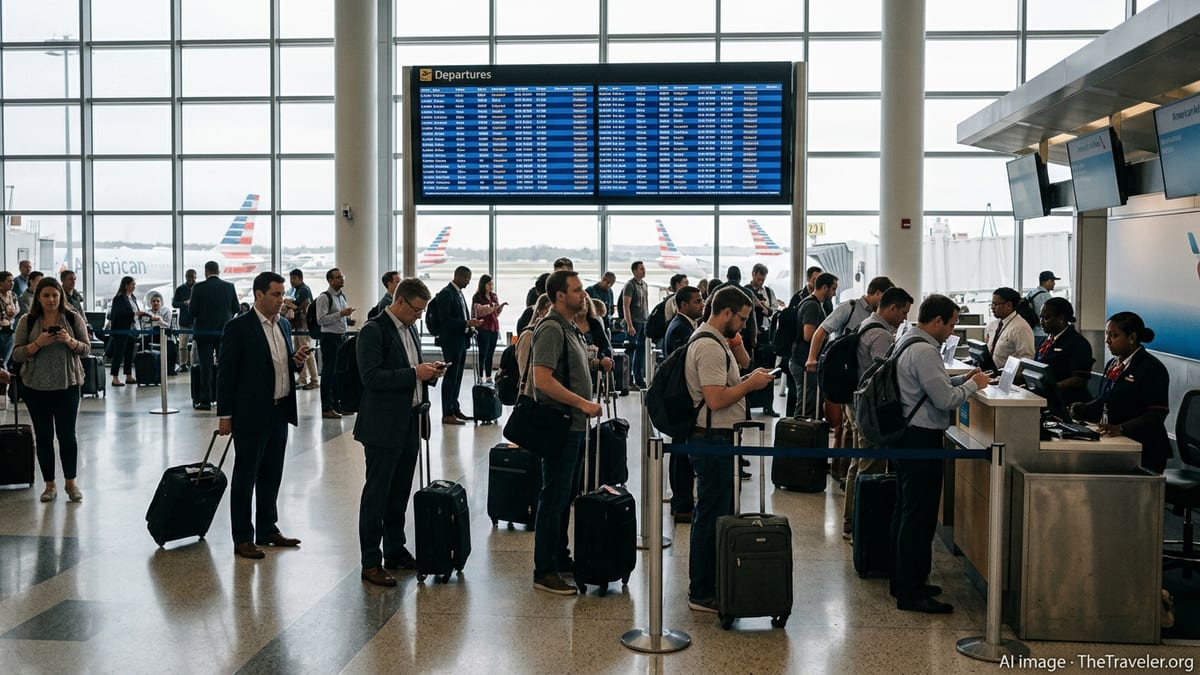
Delays and Cancellations Ripple Across Key Hubs
Real time departure and arrival boards from major airport and flight tracking platforms on June 9 indicate that a fresh cluster of delays and cancellations is hitting services in Spain, Portugal, Qatar and Saudi Arabia. Madrid’s Adolfo Suárez Barajas, Doha’s Hamad International, Lisbon’s Humberto Delgado and Riyadh’s King Khalid International are among the airports reporting notable schedule disruptions, with at least 26 services running significantly late and 17 flights shown as cancelled across the network.
The pattern emerging from these data sources points to a familiar scenario for travelers in 2026, with operational complexity in Middle East airspace overlapping with localized congestion and weather related constraints in parts of Europe. While the precise mix of causes varies airport by airport, the combined impact is a patchwork of rolling delays, missed connections and last minute rebookings for passengers attempting to move between Europe, the Gulf and connecting long haul markets.
Industry performance reports for this year already highlight that Madrid Barajas has been working to reduce weather driven bottlenecks, but on high volume days even modest disruptions can cascade quickly through departure banks and connecting waves. Lisbon, which serves as both a leisure gateway and a growing transfer point between Europe, Africa and South America, has also seen a rising number of delayed departures on busy mornings, according to airport delay history data that aggregates seat capacity and punctuality trends.
For many travelers, the impact of today’s irregular operations will be felt less in any single cancellation than in the knock on effects across their wider itineraries, as missed onward connections through hubs such as Doha or Riyadh turn what should be a same day journey into an overnight or multi day trip.
Hamad International Still Managing After Months of Strain
Hamad International Airport in Doha remains under close scrutiny from frequent travelers after months of strain linked to regional security tensions and airspace advisories. Publicly available information on recent disruptions shows that closures of Qatari airspace earlier this year triggered waves of cancellations and hours long suspensions of aircraft movements, leading to severe backlogs for transfer passengers and lingering schedule instability for airlines relying on Doha as a primary connection point.
Discussion on passenger forums and travel advisories summarizing this period describe thousands of flights worldwide being delayed or cancelled as airlines readjusted routings and block times to account for diversions around sensitive airspace. Although Hamad International is currently open and operating, many passengers connecting through Doha in June continue to report extended layovers, retimed departures and last minute aircraft swaps, reflecting the ongoing process of network recovery rather than a return to fully pre disruption stability.
Qatar focused analysis circulated in recent months highlights how tightly banked transfer waves magnify any shock to operations at Hamad International. When a cluster of arrivals runs late, the delay can reverberate through multiple onward departures, affecting not only Qatar based carriers but also codeshare partners and interline customers whose journeys originate in cities such as Lisbon, Madrid or London and rely on smooth transits through Doha to reach Asia and Africa.
Travel guidance emerging from this experience emphasizes the importance of monitoring flight status through official digital channels, building extra buffer time into self connecting itineraries and remaining flexible about rerouting options in the event of further disruptions linked to regional developments.
European Hubs Madrid and Lisbon Juggle Punctuality Pressures
Across Europe, Madrid Barajas and Lisbon are again featuring in delay statistics on one of the busiest travel periods of the early summer. Operational data compiled by European air traffic analysts for March and April already showed average departure delays edging upward, with weather, capacity constraints and reactionary delays from previous sectors cited as key drivers. Subsequent daily boards for early June suggest that these pressures have not fully subsided as seasonal traffic ramps up.
At Madrid, live arrivals and departures pages on June 9 display a number of services running behind schedule across both European and intercontinental routes. While many of these delays remain within 30 to 60 minutes, the cumulative effect is to squeeze turnaround times, push aircraft into off schedule slots and create knock on disruption later in the day. Connections through Madrid are particularly vulnerable when inbound long haul flights from Latin America or the United States arrive outside their planned arrival window, compressing connection banks for passengers bound for Portugal or the wider Schengen area.
Lisbon’s delay history, compiled from multiple tracking providers, similarly underscores how morning and early afternoon waves can quickly deteriorate when just a handful of departures or arrivals encounter technical, staffing or weather issues. With low cost and full service carriers sharing the same constrained runway and apron infrastructure, an initial backlog can translate into significant rolling delays, especially on short haul sectors to Spain, France and the United Kingdom that then feed into evening rotations.
For airlines such as easyJet that operate dense European schedules through Lisbon and other Iberian airports, even small punctuality slips on individual rotations can erode schedule resilience, forcing last minute cancellations on weaker commercial sectors in order to recover aircraft and crews for higher priority flights later in the day.
Middle East Carriers Adjust Networks in Riyadh and Beyond
In Saudi Arabia, Riyadh’s King Khalid International Airport is experiencing a complex mix of disruption and transformation. Publicly available aviation reports and airline updates confirm that some established European carriers, including KLM, have temporarily suspended or reduced services to Riyadh and Dammam, citing continuing uncertainty and operational complexity in parts of the region. Travelers have reported receiving notifications of cancellations on routes linking Riyadh with key European hubs, with booking platforms reflecting limited availability through at least mid summer.
At the same time, Saudi Arabia’s emerging carrier Riyadh Air is pressing ahead with its own network build up, recently advancing the start date of its first revenue flights and opening sales on new city pairs that include London and Dubai. Industry coverage describes the airline’s initial route map as a point to point oriented network designed to grow into a full scale connecting hub over the coming years, even as it contends with the same fuel price pressures and airspace diversions affecting other Middle East operators.
Other regional airlines are also reshaping schedules through Riyadh and neighboring airports, with FlyDubai’s publicly accessible operational updates outlining a broader pattern of reduced but ongoing operations across its network. These advisories note that the carrier is operating with a trimmed schedule, longer flight durations and extended transit times on some routes as aircraft are rerouted to avoid restricted zones and congested corridors.
The result for passengers is a more fluid and less predictable schedule environment, where traditional assumptions about frequency and connection options between Riyadh, Dubai, Doha and European gateways such as Lisbon or Madrid may no longer hold on every day of the week.
What Today’s Disruption Means for Affected Travelers
For individual travelers hit by the current wave of 26 delays and 17 cancellations, the immediate questions focus on rebooking options, financial protection and practical steps at the airport. Passenger rights frameworks such as the European Union’s Regulation 261 set minimum standards for compensation and assistance on affected flights departing from EU airports or operated by EU based carriers, although entitlements vary depending on the cause, length of delay and destination.
Consumer advocates routinely advise passengers to document actual departure and arrival times, retain boarding passes and receipts for meals or accommodation, and submit claims directly through airline channels where applicable. On routes touching non EU jurisdictions, including segments through Doha or Riyadh, compensation provisions may differ, making it important to review the specific conditions of carriage for each operating airline and any relevant local regulations.
Operational updates from carriers such as FlyDubai and KLM, together with real time tracking tools, remain the most reliable way to understand how today’s disruptions will affect a particular itinerary. In many cases airlines are offering free date changes, rerouting via alternative hubs or full refunds when cancellations are confirmed, although availability on popular summer routes can tighten quickly once disruption sets in.
For upcoming trips in June, travel planners recommend allowing extra connection time at known pinch points like Madrid Barajas, Lisbon and Hamad International, considering earlier departures where possible, and keeping accommodation plans flexible in case onward segments via Qatar or Saudi Arabia experience further last minute changes as regional conditions evolve.