


More news on this day
Early findings from Britain’s Rail Accident Investigation Branch into the fatal Bedford train collision are sharpening questions around rail safety and accountability, prompting renewed calls for an independent inquiry led by frontline rail workers and passengers.
Get the latest news straight to your inbox!
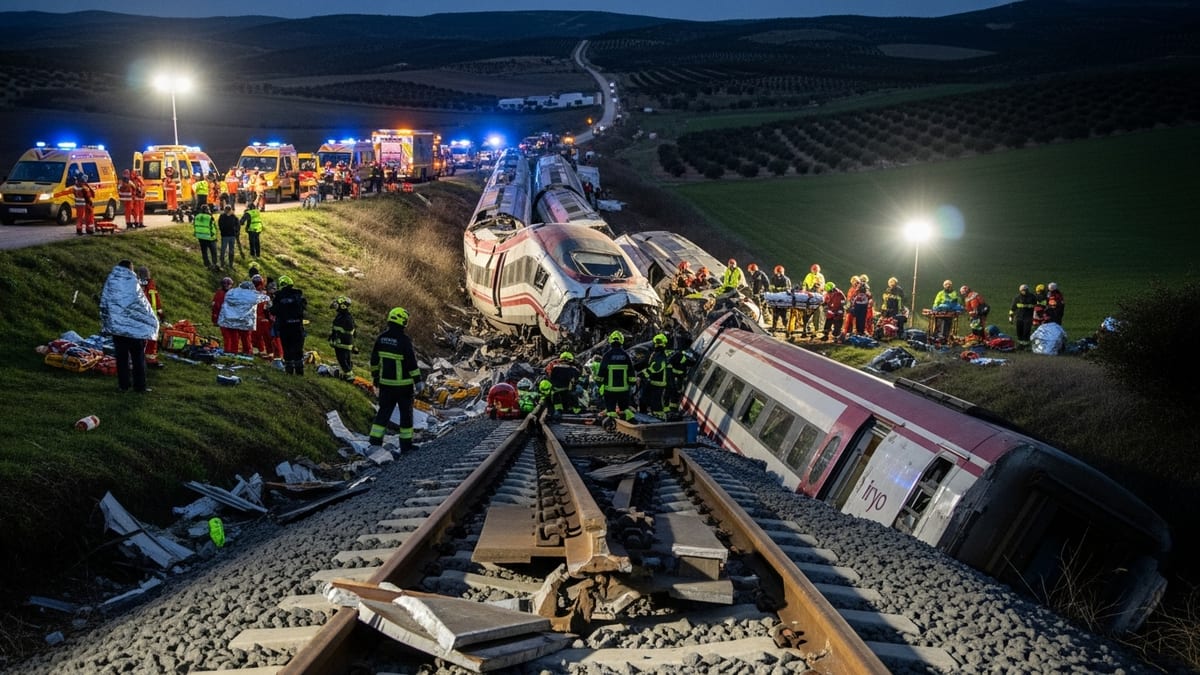
Preliminary findings shed light on the Bedford collision
The Bedford collision occurred on June 19, 2026, when two East Midlands Railway services travelling toward London St Pancras collided on the Midland Main Line near Elstow, just south of Bedford. Publicly available information indicates that the rear train, a Corby to London service, struck the back of a stationary Nottingham to London intercity train, killing the driver of the rear service and injuring more than 100 people.
The initial Rail Accident Investigation Branch (RAIB) statement and preliminary report describe a rear-end collision at around 17:15, with the Corby service travelling at an estimated 79 km/h at impact. The intercity service ahead had come to a stop after a technical fault, while the following train is reported to have passed a red signal shortly before the crash, with its brakes applied only seconds before the collision.
Investigators are now focusing on several interlocking factors: why the leading train came to an unexpected halt, what role its warning-system fault played, and whether the signalling, train protection and onboard alert systems provided sufficient safeguards to prevent a high-speed rear-end impact on a principal intercity corridor.
While the full RAIB report may take many months to complete, the initial findings already depict a serious failure in a part of the network that is equipped with modern protection systems intended to make such collisions highly unlikely.
Safety systems under scrutiny on a key intercity corridor
The Midland Main Line between London and the East Midlands is one of Britain’s core intercity routes, used by high-speed passenger services as well as commuter trains. It is fitted with signalling and train protection systems designed to stop trains before they reach danger points. The Bedford collision has therefore raised urgent questions about how a stopped train and a following service could end up occupying the same stretch of track at speed.
According to published coverage of the preliminary RAIB report, the Nottingham to London train came to a standstill after a problem with its onboard warning equipment, which interfaces with trackside signalling. The Corby to London service behind is reported to have passed a red signal without stopping, with its brakes applied a few seconds before impact. Investigators are now examining whether the automatic warning system and train protection systems functioned as intended and how the driver of the following train responded to any alerts.
Rail safety specialists note that in modern, layered safety regimes, accidents typically occur when multiple protections fail simultaneously. In Bedford, attention is turning to the interaction between signalling design, train protection hardware, operational rules and real-world working conditions in the cab. The relative performance of the newer intercity train and the older commuter units in absorbing the forces of impact is also expected to feature prominently in the full technical analysis.
For passengers and rail staff who depend on this corridor daily, the Bedford crash has underlined the reality that even heavily engineered safety systems are not infallible, especially when combined with intense timetabling pressures and complex fleet upgrades.
Union responses and the call for a rank-and-file inquiry
In the days following the collision, rail unions expressed grief at the death of the driver and concern for injured passengers and staff. Public statements emphasised the bravery of frontline workers in the emergency response and reiterated longstanding criticisms of cost-cutting, staffing reductions and the fragmentation of Britain’s rail system.
Alongside these official responses, campaigning voices within the rail workforce and among passenger advocacy groups have argued that existing investigation mechanisms are too narrowly focused. Commentaries published by rank-and-file rail activists call for an independent, worker-led inquiry that would sit alongside the RAIB and regulatory investigations, rather than replacing them.
Supporters of such an inquiry contend that rail workers are best placed to document day-to-day conditions that may not be fully captured in formal reports. These include staffing levels on safety-critical roles, the cumulative impact of timetable intensification, the pressures created by performance targets, and the effects of rolling stock and signalling changes on workload and fatigue.
The emerging demand is for a structured rank-and-file committee of drivers, guards, signallers, maintenance workers and other staff, supported by independent engineers and safety specialists, to analyse the Bedford findings and make their own recommendations to passengers and the broader public.
Limits of official investigations and lessons from past crashes
Britain’s formal rail accident investigations are designed to be independent of both government departments and train operators, focusing on technical and systemic causes rather than individual blame. Previous high-profile crashes have led to detailed RAIB reports and, in some cases, significant changes to infrastructure, rolling stock and operating procedures.
However, critics point to a pattern in which the most senior decision-makers rarely face meaningful accountability when investigations reveal underlying structural issues. Published commentary on earlier crashes, such as derailments and collisions linked to infrastructure failings or signalling weaknesses, frequently highlights how recommendations can take years to implement and may be diluted by financial or political constraints.
In the context of Bedford, this history is feeding scepticism among some rail workers and passengers about whether the existing framework can fully address the long-term effects of privatisation, fragmented responsibilities and outsourcing. They argue that official inquiries tend to focus on proximate, technical triggers, while broader issues such as chronic understaffing, maintenance backlogs and profit-driven cost control are treated as background factors rather than central causes.
This perceived gap between technical diagnosis and systemic change is a major reason why calls for an independent, rank-and-file inquiry have gained traction so quickly following the initial RAIB report.
Implications for passengers and future rail operations
For passengers using the Bedford corridor, the immediate impact of the collision has been severe disruption, diversions and, for many, a lasting sense of unease about daily journeys. Services have been gradually restored, but sections of the line remain subject to operational restrictions while investigators continue site work and data analysis.
Travel-industry observers note that serious rail accidents often trigger a short-term dip in passenger confidence, particularly among occasional leisure travellers and tourists unfamiliar with the overall safety record of rail compared with road transport. The Bedford incident has unfolded at the start of the busy summer travel season, placing additional pressure on operators to communicate clearly about safety measures and service reliability.
If a rank-and-file inquiry proceeds in parallel with official investigations, it may influence public debate about rail funding, staffing and the pace of safety technology upgrades across the network. Transparent, worker-led scrutiny of day-to-day operating conditions could resonate with passengers who want assurance that lessons from Bedford are being driven from the ground up, not only from boardrooms and regulatory offices.
In the longer term, the Bedford collision is likely to become a reference point in discussions about how Britain balances efficiency, cost and safety on its railways. The initial report has already exposed critical questions about signalling, train protection and operational culture. Whether those questions lead to deep structural change may depend, in part, on how forcefully rail workers and passengers assert their role in shaping the inquiry process and its outcomes.