


More news on this day
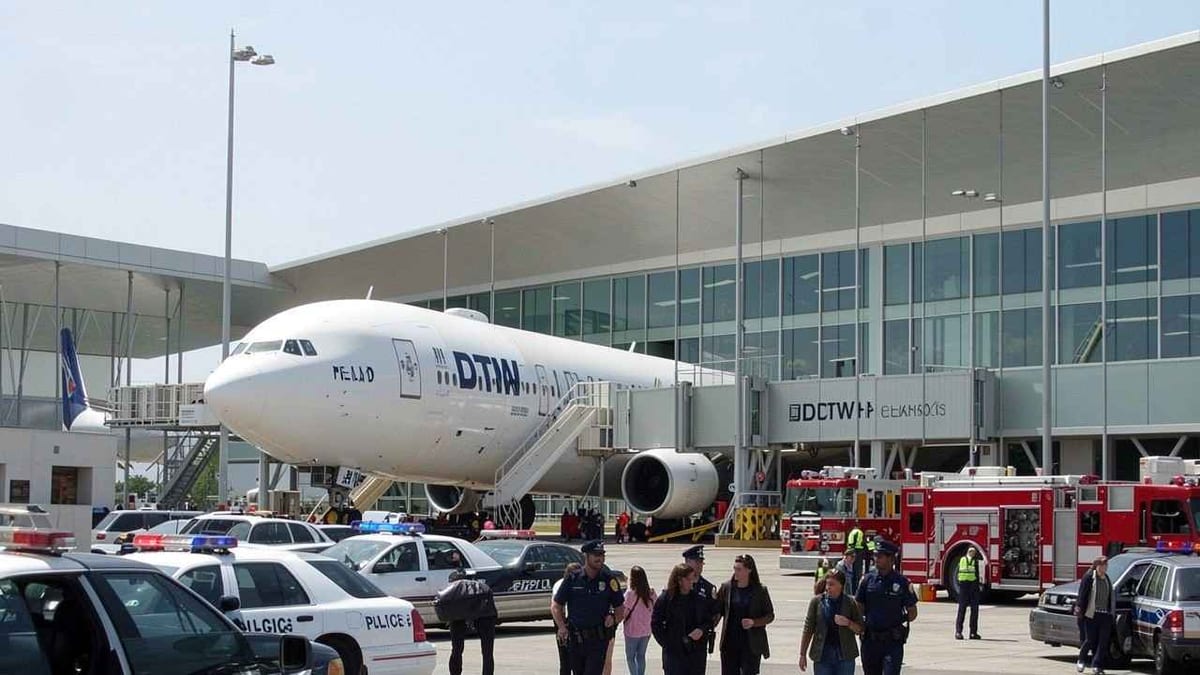
An American Airlines flight operating as AAL1568 between Austin and Chicago diverted to St. Louis, adding another disruption to an already volatile summer for U.S. air travel and raising fresh questions about how weather and congestion are straining tightly scheduled domestic routes.
Get the latest news straight to your inbox!
Unexpected Diversion on a Busy Domestic Route
Publicly available flight-tracking information shows that American Airlines flight AAL1568, scheduled to operate between Austin-Bergstrom International Airport and Chicago O’Hare International Airport, did not complete its planned route and instead diverted to St. Louis. The aircraft ultimately landed at St. Louis Lambert International Airport after departing central Texas on what is typically a routine mid-continent service.
The Austin to Chicago corridor is a well-established domestic link served by multiple daily frequencies, reflecting business, tech-sector and leisure demand between Central Texas and the Midwest. When a flight on such a busy pairing diverts, even a single disruption can cascade into missed connections for passengers and schedule adjustments for the airline’s tightly timed hub operations.
Initial indications from online trackers and traveler reports suggest that the diversion was operational in nature, potentially influenced by weather and traffic management constraints affecting Chicago operations. While the specific trigger for AAL1568’s rerouting has not been formally detailed, the pattern aligns with broader disruption trends seen across American’s network this summer.
Passengers on board typically experience a diversion as an extra, unplanned leg, often followed by an extended wait on the ground while crews and operations teams decide whether the flight can continue or whether travelers must be rebooked. For those connecting onward at Chicago O’Hare, even a relatively short diversion can mean missed onward flights and overnight stays.
Weather, Congestion and Network Strain
Austin and Chicago are both exposed to seasonal weather that can rapidly affect flight paths. In summer, convective storms across the central United States frequently trigger holding patterns, ground stops and sudden reroutings. Aviation observers have noted clusters of diversions in and out of Texas hubs in recent weeks when thunderstorm cells built quickly along key arrival and departure corridors, compressing airspace capacity and forcing carriers to improvise.
Operational data and past research into delay propagation show how a single weather system around a major hub such as Chicago O’Hare can have ripple effects hundreds of miles away. When arrival rates are reduced, flights already airborne may be sent to alternates if fuel reserves or crew duty-time limits leave insufficient margin to continue holding. St. Louis, located roughly midway between Austin and Chicago, is a logical diversion point with ample runway capacity and established handling for large domestic carriers.
For airlines, diversions like that of AAL1568 are among the most expensive forms of disruption. They require coordinating ground handling at an unscheduled station, arranging new departure slots, and potentially sourcing replacement crew if original staff approach regulated duty limits. At the same time, carriers seek to avoid extended tarmac delays for passengers, especially at airports not originally planned for a stop.
The experience for travelers can vary significantly. Some diversions result in an eventual continuation to the original destination once conditions improve, while others end with passengers being rebooked onto later flights or even overnighted at hotels. In any case, the impact is felt not only by those aboard the diverted aircraft but also by travelers waiting on downline departures that rely on that same plane and crew.
Passenger Frustration and Reliability Concerns
The diversion of AAL1568 lands at a time when many U.S. travelers are already voicing concerns about reliability on American Airlines and other major carriers. Online forums and social media are filled with recent accounts of diversions, missed connections and overnight delays attributed to weather, crew availability and increasingly complex schedules. Passengers often struggle to distinguish between events within an airline’s control and those triggered by air traffic management or severe weather.
Reports from traveler communities suggest that diversions can be particularly stressful when communication is infrequent or confusing. Some passengers recount learning of reroutings only after checking flight-tracking applications, while gate information screens still show standard statuses such as “delayed.” When a flight like AAL1568 diverts to an intermediate airport, clear messaging about the expected timeline and rebooking options becomes critical to maintaining trust.
Regulatory guidance in the United States requires airlines to adhere to tarmac delay rules and to provide basic information about significant schedule changes. However, compensation policies still vary widely by carrier and by cause of disruption. Diversions linked to weather or air traffic control constraints are typically categorized as outside the airline’s control, limiting the scope of vouchers or reimbursements, even when travelers face overnight stays or lost vacation time.
Consumer advocates frequently encourage passengers on disrupted flights to document their experiences, retain boarding passes and expense receipts, and review airline contracts of carriage after the trip. While these steps may not change the outcome of a weather-related diversion, they can help travelers pursue goodwill gestures or refunds where policies allow.
Implications for Austin, Chicago and St. Louis Travelers
The rerouting of an Austin to Chicago service through St. Louis underscores how interconnected U.S. domestic air travel has become. Austin-Bergstrom continues to expand as a focus city with growing tech and tourism demand, while Chicago O’Hare functions as a major national and international hub. St. Louis Lambert, historically a connecting hub in its own right, often serves as a practical alternate when Midwest weather or congestion affect operations further north.
For Austin-based travelers, incidents such as the AAL1568 diversion highlight the importance of buffer time in itineraries, particularly for tight connections at large hubs. Those relying on same-day links from Chicago to international destinations or smaller regional cities may be most vulnerable when a mid-continent leg encounters operational challenges.
In Chicago, the knock-on effects of a diversion can appear as rolling delays across later departures, aircraft swaps or unexpected gate changes. Frequent flyers at O’Hare increasingly monitor inbound aircraft positioning, aware that a delay or diversion earlier in the day can influence evening schedules, particularly during peak summer storms or winter weather events.
Travelers in St. Louis, meanwhile, may notice diverted aircraft creating short-term congestion at gates or on the tarmac, even if they are not booked on the affected flight. While diversions can briefly raise the profile of an airport’s role in the national network, they also place additional demands on local ground crews and facilities.
What Travelers Can Do When Flights Divert
While no traveler can prevent a diversion like that experienced by AAL1568, preparation and quick action can help mitigate the disruption. Aviation analysts and frequent flyers commonly recommend monitoring flight status not only through airline channels but also via independent tracking tools, which may surface route changes earlier in the process.
In the event of a diversion, passengers often benefit from simultaneously using multiple rebooking channels, including mobile apps, airport kiosks and customer service phone lines. When a large group of travelers is affected, call centers and digital channels may offer faster options than standing in a single line at a gate desk, especially if the diverted aircraft does not continue to its original destination that day.
Travel insurance and credit card protections can also play a role, particularly for trips involving nonrefundable hotels, tours or cruise connections. Policies vary, but some products may cover certain expenses arising from extended delays or overnight stays triggered by diversions, regardless of whether the underlying cause was weather or an operational issue.
As the busy travel season continues, the diversion of American Airlines flight AAL1568 serves as another reminder that U.S. air travel remains highly sensitive to weather, congestion and scheduling pressures. For passengers flying popular routes such as Austin to Chicago, building flexibility into plans and staying informed about changing conditions may offer the best defense against the unexpected.