


More news on this day
Passengers on LATAM Airlines flight LA454 from Buenos Aires to Santiago experienced unexpected disruption when the service diverted and landed at Buenos Aires’ Ministro Pistarini International Airport, instead of continuing to Chile as scheduled.
Get the latest news straight to your inbox!
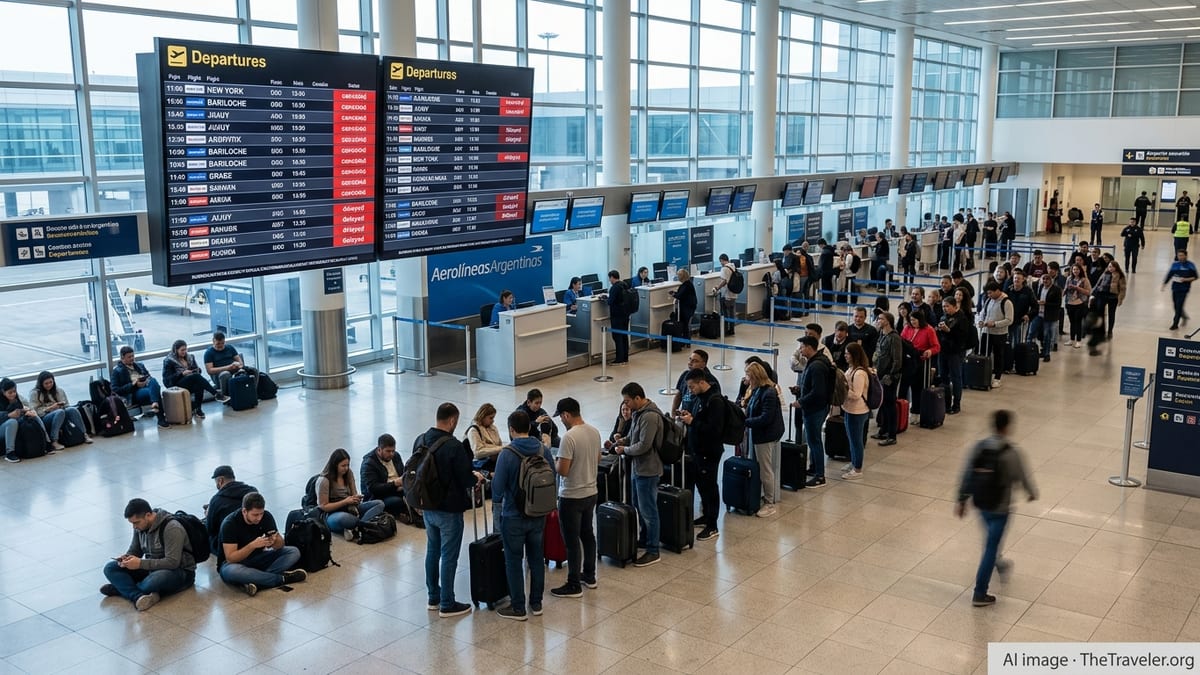
Scheduled Short-Hop Turns Into Disrupted Journey
LATAM flight LA454 operates between Buenos Aires and Santiago, a busy trans-Andean corridor linking the Argentine and Chilean capitals. According to publicly available flight data and timetable information, the service typically connects Buenos Aires’ city airport with Santiago in around two hours of flying time, serving both business travelers and international passengers connecting to long-haul routes.
On the affected rotation, the flight departed Buenos Aires as planned but did not complete its crossing of the Andes to Chile. Instead, tracking data and online discussion among aviation observers indicate that the aircraft discontinued its route toward Santiago and returned to Buenos Aires, landing at Ministro Pistarini International Airport, commonly known as Ezeiza, which handles most of Argentina’s international traffic.
The diversion turned what is normally a routine regional leg into a longer and more complex journey for passengers. Many travelers on this corridor use LATAM services to connect to onward flights in Santiago, including long-haul departures to North America, Europe, and other parts of South America, increasing the potential impact of any delay or rerouting.
Publicly accessible information has not yet clarified the precise operational reason for this particular diversion. However, regional aviation coverage and previous incidents in the area show that factors such as adverse weather in the Andes, wind conditions affecting airports along the route, airspace congestion, or technical and crew-related considerations can all prompt route changes or returns to origin.
Why Flights Sometimes Turn Back to Buenos Aires
Commercial routes between Argentina and Chile cross one of the world’s most demanding mountain barriers. Reports and aviation analyses focusing on the southern cone highlight that strong winds, turbulence, and rapidly changing meteorological conditions over the Andes can occasionally constrain operations, particularly for approaches into airports such as Santiago, Mendoza, or smaller regional fields.
In similar recent cases documented in local media and online aviation communities, flights transiting the region have diverted or returned to Buenos Aires when conditions at their intended destination made safe landing uncertain or temporarily impossible. These previous disruptions have been linked to phenomena such as high-altitude winds, reduced visibility, runway works, or other airport-operations issues along the route.
Ministro Pistarini International Airport functions as a primary contingency option for many international and regional services in Argentina. With its longer runways, international processing facilities and extensive ground infrastructure, Ezeiza is often used when a flight that originated in Argentina cannot continue to its planned foreign destination and needs an alternate field with full passenger-handling capabilities.
While available data for this specific LATAM flight do not specify whether the cause was weather-related, operational, or technical, the decision to return to Ezeiza allowed passengers to disembark at a fully equipped international airport. From there, airlines can rebook travelers, arrange onward connections, and, where applicable, provide support under their own service policies and local regulations.
Impact on Passengers and Connections in Santiago
For passengers on LA454, the diversion meant missed or at-risk connections in Santiago, an important regional hub. According to published airline network information and traveler accounts, Santiago offers onward services to destinations including the United States, Europe, the Pacific, and domestic points throughout Chile, so any disruption on feeder flights like LA454 can ripple across numerous itineraries.
Travel forums and social media posts about similar disruptions on this corridor describe travelers facing tight rebooking windows, overnight stays, and itinerary changes when flights do not arrive in Santiago as planned. In such situations, passengers typically need to coordinate with the operating airline for new routings, which may involve same-day alternatives via other hubs or departures on subsequent days depending on seat availability.
Given that LA454 links two major South American capitals, the passenger mix often includes international tourists, corporate travelers and residents returning home. For visitors with fixed plans in Chile or those relying on onward long-haul flights, the diversion to Ezeiza likely complicated hotel bookings, tour schedules, and business meetings.
Published consumer guidance for the region notes that travelers affected by diversions should retain all boarding passes and receipts, monitor airline communications, and check the status of downstream flights frequently. Depending on the length and cause of disruption, passengers may be entitled to certain forms of assistance under local rules and airline policies, though the specifics vary by jurisdiction and circumstances.
Ezeiza’s Role as Argentina’s Main International Gateway
Ministro Pistarini International Airport lies outside central Buenos Aires and functions as Argentina’s principal international gateway. Aviation reference data show that Ezeiza handles a large share of the country’s long-haul traffic, serving as the main hub for transcontinental services and a key base for both domestic and foreign carriers operating widebody aircraft.
The airport’s infrastructure, including extended runways, customs and immigration facilities, and extensive apron space, makes it the preferred diversion airport for flights that originate or terminate in Argentina when their intended destinations become unavailable. This includes regional connections like Buenos Aires to Santiago, where aircraft may need an international-capable airfield if they cannot proceed across the Andes.
By diverting LA454 to Ezeiza instead of a smaller or purely domestic field, the airline ensured that passengers remained within an environment equipped to manage international arrivals. This simplifies immigration formalities, baggage handling, and the logistics of rebooking travelers onto later flights or alternative routings, whether back to Santiago or onward to other destinations.
Travelers unexpectedly arriving at Ezeiza instead of Santiago face practical considerations such as arranging accommodation in Buenos Aires, revalidating tickets, and possibly adjusting their travel insurance claims. Published traveler advice generally recommends contacting accommodation providers and tour operators as soon as possible, as many are familiar with aviation-related disruptions on this frequently used corridor.
What Travelers Can Learn From the LA454 Diversion
The diversion of LATAM flight LA454 highlights the importance of flexibility for those flying across the Andes. Publicly available travel guidance for South America often recommends allowing generous connection times and avoiding tight same-day links to crucial long-haul flights in regions where weather and operational factors can be unpredictable.
Experts cited in prior coverage of similar events advise that passengers consider building buffer periods into itineraries that rely on short regional hops to feed longer journeys. On routes like Buenos Aires to Santiago, leaving several hours between arrival and any onward international departure can reduce the risk of missed flights when diversions or delays occur.
Travel insurance policies that cover missed connections, extended delays, and additional accommodation costs may also help mitigate the financial impact of unexpected schedule changes. Policy terms differ widely, and consumer organizations in the region routinely stress the value of reviewing coverage details before purchase, particularly for complex multi-leg trips.
For now, publicly accessible information portrays the LA454 diversion as a reminder that, despite modern aircraft and dense schedules on the Buenos Aires–Santiago corridor, flights remain subject to operational realities. Passengers planning to cross the Andes in either direction may wish to watch real-time flight status closely, maintain updated contact details with their airline, and be prepared to adjust plans when conditions demand it.