


More news on this day
A recent sailing on Royal Caribbean’s Harmony of the Seas shows how far interior cabins have come, with a $1,300 windowless stateroom delivering more comfort and value than many travelers might expect.
Get the latest news straight to your inbox!
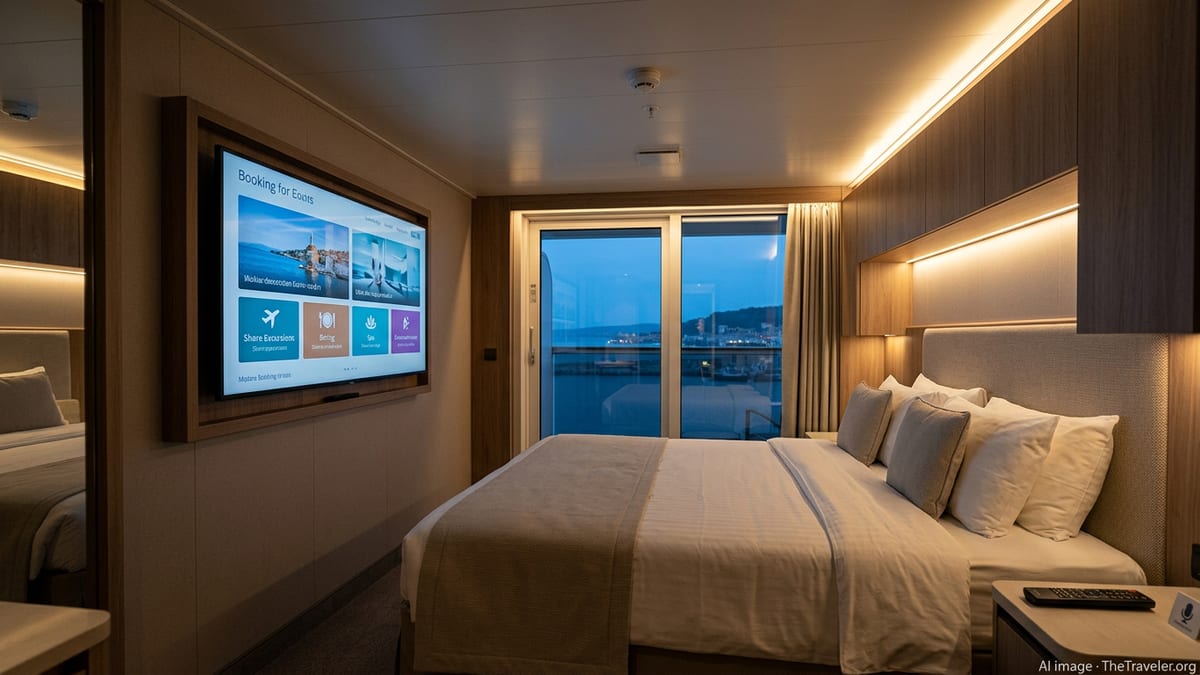
A budget choice on a newly refreshed megaship
Harmony of the Seas, one of Royal Caribbean’s Oasis-class megaships, has undergone a series of updates aimed at keeping the 5,400-passenger vessel competitive in a crowded cruise market. Among the refreshed venues and upgraded public spaces, inside cabins remain the most affordable way to secure a spot on board.
On a recent three-night Western Mediterranean itinerary, a Category 4V interior stateroom was booked for about $1,300, or roughly $643 per person based on double occupancy, including gratuities. Publicly available pricing data and coverage of the sailing indicate that the fare not only covered the cabin itself but also meals in included dining venues, basic beverages, onboard entertainment and transportation between ports.
The decision to opt for the least expensive room category reflected a common strategy among cruise travelers: spend less on accommodations and more on experiences ashore. With port calls in Spain and France and no sea days, the cabin was primarily a place to sleep and recharge between long days off the ship.
Rather than feeling like a compromise, the small, windowless room ultimately proved more comfortable and functional than expected, underscoring how modern ship design can make even the most basic category feel surprisingly livable.
Inside layout: small footprint, efficient design
Interior cabins on large Royal Caribbean ships are typically among the smallest standard staterooms on board, often starting around 170 square feet. On Harmony of the Seas, the 4V inside cabins follow this compact template, but the layout aims to maximize every inch.
The cabin featured a Royal King bed that can convert into two twins, a small sitting area with a sofa, a desk and vanity, and a compact bathroom with a shower pod. Storage solutions, including a wardrobe, overhead cabinets and drawers integrated into the desk, helped keep luggage and personal items out of the way.
Reports from similar cabins on Harmony of the Seas indicate that climate control, an in-room safe, hair dryer and an HD television are standard in this category. While there is no natural light, adjustable lighting and neutral décor are designed to prevent the space from feeling overly closed in.
Noise levels can be a concern in budget cabins, especially those located below busy public decks. In this case, the cabin’s position away from major venues helped limit late-night disturbance, an important factor for travelers who plan early mornings in port rather than late nights in onboard bars.
Living without a window at sea
For many first-time cruisers, the idea of a windowless cabin can be daunting. Inside rooms lack the visual connection to the sea that oceanview and balcony staterooms provide, and they can feel disorienting on longer itineraries or for those who prefer to wake with natural light.
Yet experienced passengers often highlight several advantages to interior cabins. The complete darkness once the lights are switched off can make for especially deep sleep, something travelers on Harmony of the Seas also reported. For those exhausted from port days and late-night shows, the absence of sunrise streaming in at 6 a.m. can be a welcome feature.
Royal Caribbean has also experimented with technology to counter the closed-in feeling of interior spaces. The line’s virtual balcony cabins, available on select ships including Harmony of the Seas, use floor-to-ceiling screens to broadcast real-time ocean views into some inside staterooms. While the specific $1,300 cabin in question was a standard interior without this feature, the broader trend indicates that cruise lines recognize the demand for more comfortable budget options.
Passengers who choose windowless rooms often report spending most of their waking hours in public spaces, treating the cabin as a place to sleep, shower and change. On a ship the size of Harmony of the Seas, with multiple pools, promenades, lounges and outdoor decks, that trade-off can make financial sense.
What the fare really buys on a short sailing
The roughly $1,300 fare for a three-night sailing in an interior cabin on Harmony of the Seas may sound steep for a windowless space, but the total cost reflects more than square footage. The price bundled accommodation, meals in complimentary dining venues, entertainment in theaters and lounges, and transit between several Mediterranean ports.
Cruise pricing is dynamic and influenced by demand, itinerary, ship, and booking window. Coverage of recent Harmony of the Seas sailings shows that prices for entry-level cabins on short European itineraries can rise when ships operate popular routes from major departure ports. Booking months in advance, as in this case, can help lock in rates before further increases.
Travelers who prioritize shore excursions, specialty dining or add-ons such as drink packages often accept a modest room as the necessary compromise. For the Harmony sailing, saving on the cabin category freed up budget for exploring destinations in Spain and France, from local cuisine to paid activities in port.
Viewed in that context, the interior stateroom functioned as part of a larger value proposition. The lack of a window was offset by access to the ship’s amenities and the variety of experiences built into the fare.
Interior cabins as a strategic choice, not just a downgrade
Travel forums and cruise specialists frequently note that inside cabins are no longer just the last resort for travelers who book late. Instead, they are increasingly seen as a deliberate choice for passengers who prefer to cruise more often, extend trips with back-to-back sailings, or allocate funds toward higher-impact experiences.
On ships like Harmony of the Seas, the gap between interior and balcony pricing can be several hundred dollars per person, particularly during peak seasons. Some travelers choose to redirect that difference into additional cruises, premium shore excursions or pre- and post-cruise stays on land.
The experience of paying about $1,300 for a standard interior cabin, and finding it more than adequate, reinforces that perspective. The room offered a comfortable bed, reliable climate control and enough storage for two people, while the ship itself provided the views and fresh air that the cabin lacked.
As cruise lines continue to refine interior stateroom design and introduce features like virtual balconies, the traditional hierarchy that places inside cabins firmly at the bottom of the desirability scale is beginning to blur. For travelers willing to trade a private ocean view for a fuller travel budget, the Harmony of the Seas interior cabin shows that windowless does not have to mean joyless.