


Few hotel brands are as closely linked with affordable city stays as Ibis. From overnight airport layovers to week-long European city breaks, the red Ibis logo has become a familiar sight outside train stations, business districts and stadiums. Yet not all Ibis properties are the same. Under the wider Accor umbrella, the family now includes three distinct brands: Ibis, Ibis Styles and Ibis Budget, each promising a different experience while staying firmly in the value category. Understanding those differences can help you book smarter, sleep better and stretch your travel budget further.
Get the latest updates straight to your inbox!
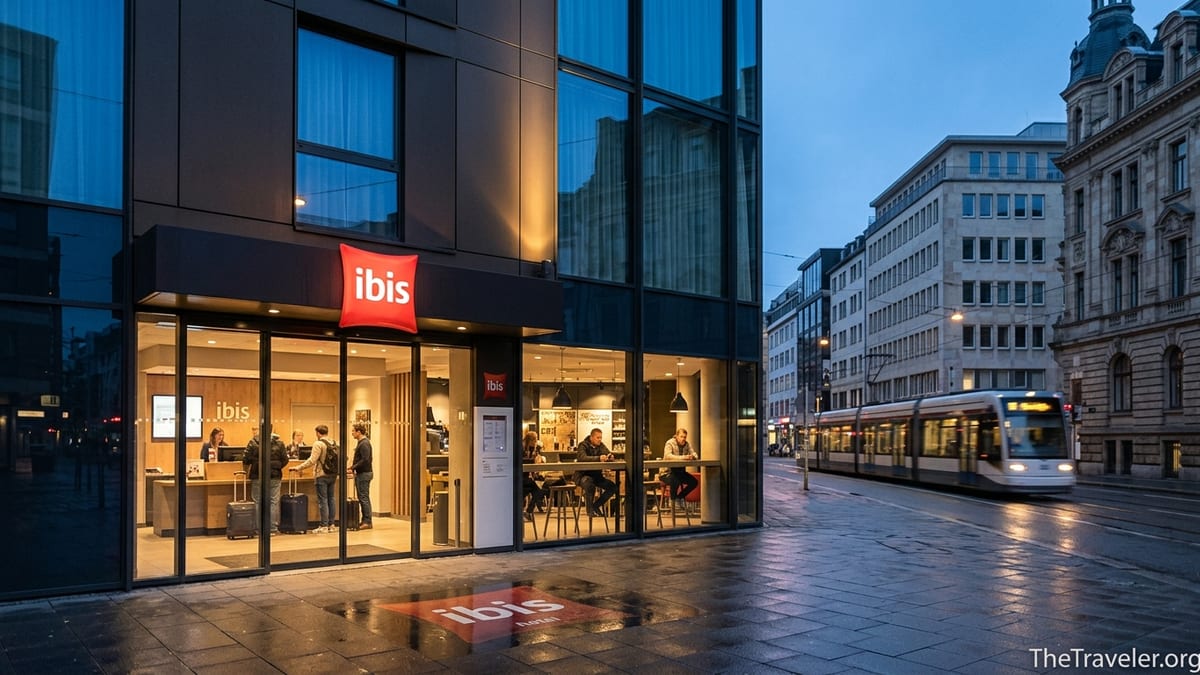
The Ibis Family: One Brand, Three Experiences
The Ibis story began in 1974 with the first hotel in Bordeaux, France, created as one of the world’s first standardized economy hotel brands. Today, the Ibis name covers a global network of economy and budget hotels operated by Accor in more than 100 countries. Within that network, three sub-brands dominate: classic Ibis, design-focused Ibis Styles and stripped-back Ibis Budget. They share a common promise of affordable, reliable rooms, but each is tailored to a slightly different type of traveler and price point.
Classic Ibis hotels usually sit in the middle of the family. In many cities they are rated around the two to three star level and are designed for travelers who want a simple but comfortable base. You will typically find a standard double or twin room, a private bathroom, air conditioning in warmer destinations and a compact but functional workspace. In places like Ibis London Blackfriars or Ibis Berlin Hauptbahnhof, nightly rates often fall in the mid-range of local budget options, higher than no-name guesthouses but lower than full-service midscale brands.
Ibis Styles sits slightly above that level in character rather than luxury. Accor describes these as design-led economy hotels where each property has its own theme. In practice, that could mean comic-book murals at Ibis Styles Brussels Centre Stéphanie or bold, geometric patterns at Ibis Styles Zurich City Center. Rooms usually include breakfast in the rate, and decor often leans colorful and playful, attracting families and couples who prefer a bit of personality over a purely functional space.
Ibis Budget is the most stripped-down option. Many of these properties evolved from older super-economy brands and are built around high-occupancy, low-frills stays. Rooms are compact, sometimes with a double bed and a bunk above, and storage is minimal. In exchange for the simplicity, prices can be notably lower than other branded hotels nearby. Along major European highways and on the outskirts of cities like Paris, Lyon or Munich, it is common to see Ibis Budget rates under the entry-level price of regular Ibis next door.
What a Stay at Ibis Really Looks Like
For many travelers, their first Ibis experience is tied to a specific practical need: an early-morning flight, a train arriving late at night, a conference downtown. Around Paris Charles de Gaulle Airport, for example, multiple Ibis properties sit a few minutes from Terminal 3 on the CDGVAL shuttle. A traveler arriving from Pakistan late in the evening might use one of these hotels simply as a place to shower and sleep before connecting the next day. Rooms are standardized, check-in is fast, and the reception is used to handling guests who arrive after midnight or leave at dawn.
In city centers, the experience shifts slightly. An Ibis near Zurich Hauptbahnhof, Munich Hauptbahnhof or Amsterdam Sloterdijk tends to attract a mix of business and leisure guests. During the week, you are likely to see laptop bags and small suitcases in the lobby as short-stay business travelers move in and out. At weekends, the clientele skews more toward couples and friends coming in for concerts, football matches or Christmas markets. Lobbies are often designed as open social spaces with a bar area that doubles as the reception desk, reflecting Accor’s push to make Ibis feel more like a casual living room than a traditional front desk.
Room layouts are intentionally familiar from one property to another. In a typical classic Ibis double room, you can expect a queen or double bed with a standardized mattress, a compact private bathroom with shower, a small desk or shelf and a wall-mounted television. There is usually enough space to open a medium suitcase on the floor, but not much more. The trade-off is predictability: whether you are in Warsaw, Rio de Janeiro or Singapore, you broadly know what you will get for your budget.
That standardization extends to service. There is rarely a concierge or bell service at Ibis. Instead, the focus is on quick, efficient basics: self-service coffee in the lobby, bar snacks available until late evening and staff trained to check in multiple guests in just a few minutes. For travelers who see the hotel as a place to sleep and shower rather than a destination in itself, this model can be a significant advantage compared with smaller independent properties where standards vary.
Ibis vs Ibis Styles vs Ibis Budget: Key Differences
On paper, the three Ibis brands might look similar. In practice, travelers quickly notice a difference in look, feel and sometimes price. Classic Ibis sits in the center with a focus on consistent comfort and straightforward design. An Ibis room in Madrid or Budapest will often feature neutral tones, a comfortable bed developed with a branded mattress concept and a full private bathroom. Breakfast is typically optional and charged separately, often at a moderate price compared with nearby cafes.
Ibis Styles hotels aim to add more visual interest and a sense of place. At Ibis Styles Zurich City Center, for example, the interior draws on graphic patterns and bold colors that reference the city’s design culture. In Manila, Ibis Styles Araneta City carries contemporary architecture and bright accents that fit its shopping and entertainment district location. In many markets, breakfast is bundled into the room rate and communal areas are kitted out with lounge-style seating, making them more appealing for families and longer conversations over coffee.
Ibis Budget strips back to the essentials. A typical room just outside Paris, near Disneyland or along an autoroute in France, might feature a double bed fixed against the wall, a single bunk above and an integrated shower pod. Storage shelves replace wardrobes, and amenities such as in-room safes or phones are either very simple or not present. Some travelers report that mattresses can feel quite firm and thin compared with the regular Ibis next door. In Bogotá, for example, guests at an Ibis Budget have noted the absence of room safes as part of the trade-off for a lower nightly rate.
Price differences between the three brands can vary widely depending on city and season. In some European suburbs, an Ibis Budget might cost only slightly less per night than the classic Ibis across the parking lot, leading some guests to favor the regular Ibis for better beds and soundproofing. In high-demand capitals, the gap can be more pronounced, with Ibis Budget positioning itself as a low-cost alternative to hostels for those who still want a private bathroom and a known international brand.
Budget in Practice: What You Actually Pay
Ibis brands operate in a wide range of markets, so nightly rates can vary from under the cost of a local budget guesthouse to approaching midscale prices in very expensive cities. In parts of Western Europe, recent traveler reports mention Ibis Budget stays in Germany, Italy and France for under around 50 euros per night in 2024 when booking in advance and staying outside peak holidays. In contrast, an Ibis or Ibis Styles in central Paris, Zurich or London during a major event can cost several times that figure.
At airports and transport hubs, pricing often tracks demand closely. Near Paris Charles de Gaulle, for instance, an Ibis or Ibis Budget can be relatively inexpensive on a quiet midweek night in winter but rise significantly during summer school holidays when the airport is crowded. Similar patterns appear at Ibis properties near major train stations like Gare de Lyon in Paris or Hauptbahnhof stations in Germany. Flexible travelers who can adjust their dates or book early often secure better deals than those booking the week of arrival.
Sales and loyalty promotions add another layer. Regular discount campaigns through Accor’s loyalty program sometimes offer around 25 to 30 percent off advance purchase rates, especially in Asia Pacific and Europe. Savvy travelers who cancel and rebook when a sale appears can shave a meaningful amount off multi-night stays. For regular guests, status and regional subscription programs provide further savings on Ibis bookings, particularly for those who stay in the brand family frequently on business.
When comparing prices in practice, it is worth looking beyond the nightly rate. Some Ibis Styles properties include breakfast by default, which can make them competitive with a cheaper Ibis or Ibis Budget that charges extra for a buffet. In city centers where a simple breakfast of coffee and a pastry already costs several euros per person, the value of an included hotel breakfast can be substantial for couples or families.
Location, City Stays and Real-World Use Cases
One of the key strengths of the Ibis family is location. Accor has spent decades placing these hotels where people actually travel: near major train stations, in business districts, beside ring roads and in airport zones. For a traveler landing late at Zurich Airport, an Ibis Budget a short shuttle ride away provides a predictable overnight stop before continuing by train into the Alps. In Manila, Ibis Styles Araneta City slots directly into a transport and shopping hub, catering to domestic travelers attending events or visiting family.
Within European cities, it is common to find Ibis or Ibis Styles properties within a short walk of the main station or metro interchange. In Berlin, for example, several Ibis hotels sit along key U-Bahn and S-Bahn lines, allowing guests to reach the Brandenburg Gate or Museum Island in under 15 minutes. In smaller French cities, an Ibis just opposite the station often doubles as a base for both business travelers visiting local offices and weekenders exploring regional wine routes.
On the outskirts and along motorways, Ibis Budget dominates. Drivers crossing France or Germany frequently use these hotels to break long journeys, checking in late and leaving after breakfast. Car parks are usually included or modestly priced, and reception hours are often extended or supported by automatic check-in machines for arrivals outside standard times. The layout is functional for one-night stays, and location just off major roads helps minimize detours.
For families, practical considerations often outweigh style. Near Disneyland Paris, for instance, some travelers choose an Ibis Budget around 45 minutes from the resort to reduce accommodation costs, accepting a simple room configuration in exchange for spending most of the day in the park. Others decide that the small price difference to the regular Ibis closer to Val d’Europe is worthwhile for better beds and more traditional soundproofing. These trade-offs are typical of the Ibis experience: saving on the room in order to spend more on the destination.
Comfort, Quirks and Common Complaints
While the Ibis brands aim for consistent quality, guest feedback highlights a few recurring themes that are useful to consider before booking. Mattress comfort is one. Many travelers praise the standardized Ibis beds as reliably supportive after a day of sightseeing. Others, especially at Ibis Budget properties, report that mattresses can feel thin or very firm, sometimes mentioning restless nights as a result. Sensitivity to mattress types varies widely, so frequent hotel users who prefer softer beds might favor classic Ibis or Ibis Styles over budget locations.
Room size is another point. Ibis and particularly Ibis Budget rooms are compact by design. In older properties or those converted from previous brands, you may find narrow walkways and limited space for large suitcases. This is usually not an issue for solo travelers or couples on short trips, but families with multiple bags or those staying a week in a single room may find the space tight. When possible, viewing room photos carefully before booking can help set realistic expectations.
Soundproofing and security also appear regularly in traveler reports. Many Ibis properties, especially newer builds near airports and highways, are surprisingly quiet due to modern windows and insulated walls. Others, particularly some older Ibis Budget locations, can suffer from thin walls, noisy corridors or doors that feel less solid. There have even been isolated anecdotes of door locks not functioning correctly in certain budget hotels. While these are not representative of the entire network, they highlight the importance of checking recent reviews for a specific property rather than relying solely on brand reputation.
Amenities are intentionally minimal at economy level. Complimentary bottled water is not guaranteed, even at some classic Ibis hotels in Europe, and extras like in-room safes or full bathroom amenities may be scaled back. Breakfast buffets are usually generous enough, but those expecting the broader selection found at midscale brands like Novotel or Grand Mercure may be underwhelmed. The value proposition works best when guests understand they are trading some frills for a lower price and central location.
Getting the Most from the Ibis and Accor Ecosystem
For travelers who use Ibis regularly, the wider Accor ecosystem can significantly improve value. All three Ibis brands participate in the company’s points-based loyalty program, where guests earn rewards pegged to the euro value of their stays. These points can be redeemed for discounts across Accor’s portfolio, from other Ibis stays to higher-tier brands like Mercure, Novotel or Sofitel. Frequent guests who concentrate their economy bookings with Ibis can effectively subsidize occasional upgrades to more upscale properties.
In some regions, subscription products focused on the Ibis family offer additional discounts and soft benefits. These programs can be particularly appealing for travelers in Asia Pacific or Europe who often stay at Ibis on business and want a predictable discount plus accelerated status. While details vary by country and can change over time, the general pattern is straightforward: pay a yearly fee in exchange for ongoing percentage discounts and sometimes dining benefits at participating hotels.
Smart booking strategies also matter. Because Ibis revenue management is sophisticated, prices move frequently. Travelers who watch for periodic “private sales” or regional promotions through the loyalty program often secure better deals than those who book the first rate they see. It can be worth re-checking prices in the weeks leading up to a stay; in one example in southern India, a traveler canceled and rebooked an Ibis under a year-end sale, saving roughly a third of the original rate for exactly the same room and dates.
Finally, understanding when not to book Ibis is just as important. In some markets where local guesthouses, pensions or apartment hotels are both safe and well-regulated, a family might find more space, a kitchen and a local atmosphere at a similar price. In others, especially unfamiliar cities where language or safety is a concern, the straightforward, standardized Ibis product can provide peace of mind. Matching the brand to the purpose of the trip remains the most reliable way to extract value.
The Takeaway
The Ibis family has grown from a single standardized economy hotel in Bordeaux to a global network of more than a thousand properties, covering classic city hotels, design-led stays and ultra-budget rooms. Throughout that expansion, its core appeal has stayed remarkably consistent: clean, functional accommodation in locations that make practical sense for travelers who prioritize the city outside the window rather than the square footage inside the room.
Choosing between Ibis, Ibis Styles and Ibis Budget comes down to how you balance budget, comfort and character. If you want the most space and a reliable bed in a central location, classic Ibis is usually the safest bet. If you enjoy playful design and often eat breakfast at the hotel, Ibis Styles can provide a more memorable stay without a steep price premium. If you simply need a shower and a bed after a long drive or a late flight, and are prepared to accept basic facilities, Ibis Budget delivers that at a price that often undercuts independent competitors.
For many travelers, the perfect Ibis stay is one you barely notice: check in, sleep well, step out into the city and repeat. Used thoughtfully and chosen with realistic expectations, the brand can be a powerful tool for stretching your travel funds while still enjoying the convenience of international standards. Whether you are crossing Europe by train, navigating Southeast Asia’s megacities or stringing together road-trip stops across France and Germany, understanding the nuances of the Ibis experience can help you make better choices, night after night.
FAQ
Q1. What is the main difference between Ibis, Ibis Styles and Ibis Budget?
Ibis offers standard economy rooms with consistent comfort, Ibis Styles adds more design and often includes breakfast, while Ibis Budget is the most basic and usually the cheapest.
Q2. How much does a typical Ibis Budget room cost in Europe?
Prices vary by city and season, but outside peak dates some Ibis Budget hotels in Western Europe have recently been available for under about 50 euros per night when booked early.
Q3. Are Ibis hotels suitable for families with children?
Yes, many Ibis and Ibis Styles properties welcome families, with some offering family rooms or connecting rooms. Ibis Styles in particular often has playful decor and breakfast included, which can work well for parents traveling with kids.
Q4. Do Ibis hotels include breakfast in the room rate?
At classic Ibis and Ibis Budget, breakfast is usually optional and charged separately. Ibis Styles more often includes breakfast in the room rate, but this can vary by hotel, so it is worth checking when you book.
Q5. How small are the rooms at Ibis Budget?
Ibis Budget rooms are compact, often designed primarily for sleeping and showering rather than long stays. Expect limited storage, simple furnishings and sometimes bunk-style configurations, especially in roadside or airport locations.
Q6. Are Ibis hotels safe for solo travelers?
Generally yes, Ibis properties follow international hotel standards for security, with staffed receptions and keycard access in most buildings. As with any hotel, it is still wise to check recent reviews and follow normal personal safety precautions.
Q7. Can I earn and use loyalty points at all Ibis brands?
Yes, Ibis, Ibis Styles and Ibis Budget all participate in Accor’s loyalty program. Stays at these hotels typically earn points that can later be redeemed for discounts or free nights at participating Accor properties.
Q8. Is it worth paying extra for a regular Ibis over an Ibis Budget next door?
Often it can be. Travelers frequently find that classic Ibis offers more comfortable beds, better soundproofing and a slightly larger bathroom. If the price difference is modest and you value sleep quality, the upgrade is usually worthwhile.
Q9. Are Ibis hotels always close to city centers or transport hubs?
Many are, especially classic Ibis and Ibis Styles, which often sit near main train stations or metro lines. Ibis Budget properties are more commonly found on city edges, near ring roads and airports, aimed at drivers and transit guests.
Q10. How far in advance should I book an Ibis to get the best rate?
Rates fluctuate, but booking a few weeks to a few months in advance usually secures better prices, especially in popular cities. Watching for loyalty program sales and rechecking prices before your stay can also help you catch lower promotional rates.