


Ibis hotels can be a smart, budget friendly choice in big cities from London to Bangkok, but expectations often collide with reality. Travelers who book in a rush sometimes discover tiny rooms, surprise fees, or locations that are less convenient than the map suggested. Before you lock in a non refundable rate, it is worth understanding how the Ibis brand works and which common booking mistakes you can avoid with just a few extra minutes of research.
Get the latest updates straight to your inbox!
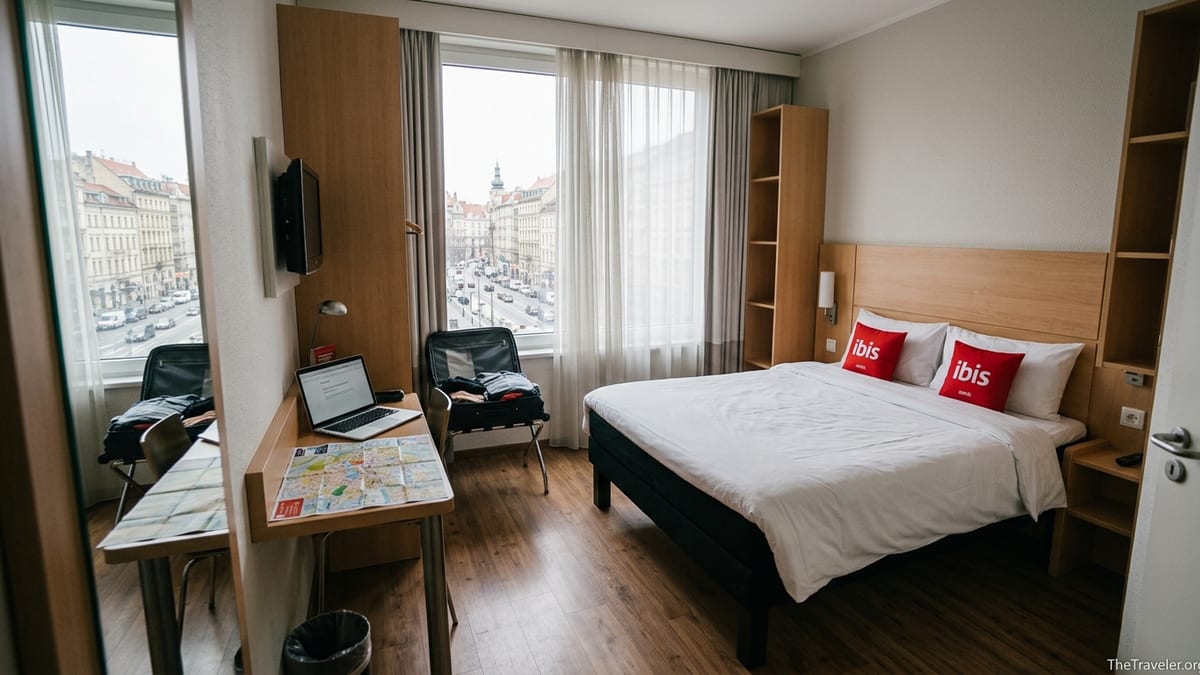
Understand the Three Different Ibis Brands First
The Ibis name now covers three distinct brands under the Accor umbrella: classic Ibis, Ibis Styles, and Ibis Budget. Accor describes Ibis as its economy "megabrand," with more than a thousand hotels worldwide, but each sub brand targets a different price and comfort level. Classic Ibis generally sits in the 2 to 3 star range with simple, standardized rooms and the brand’s Sweet Bed, while Ibis Styles offers brighter design led properties that usually include extras like breakfast in the rate. Ibis Budget is the stripped back option, closer to a modern hostel than a full service hotel, with compact rooms, minimal storage, and very limited on site services.
Booking purely on the word "Ibis" without checking which version you are choosing is one of the most frequent mistakes. For example, an Ibis Styles near a European city center may advertise colorful family rooms, a generous breakfast, and playful decor themed around local history, while an Ibis Budget on the same ring road mainly offers small, functional triple rooms with a bunk over the main bed. Both carry the Ibis name and red branding, but the daily experience is very different. Before reserving, check the exact brand logo on the property page and reread the description to confirm whether you are paying for budget bare essentials or something a bit more comfortable.
Prices can overlap, which makes confusion easier. In some cities, you might see an Ibis Budget at around 60 to 80 euros a night and a standard Ibis at 80 to 110 euros on the same dates, while an Ibis Styles just outside the center sits somewhere in between, especially on weekends when business demand drops. If you sort only by price on a booking site, it is easy to click the wrong one, so slow down and confirm which sub brand you are choosing before you commit to a non flexible rate.
Do Not Assume Room Size and Amenities Are Standard
Even within the same sub brand, Ibis properties can feel very different in practice. The company publishes fact sheets with typical room sizes for its economy hotels, and these are usually modest by design. In busy cities such as Paris or Barcelona, guest reviews regularly describe Ibis rooms as "extremely small" or "just big enough for a suitcase and the bed". Some families find this perfectly acceptable for a two night city break where they are focused on sightseeing. Others, especially travelers with large luggage or those staying a full week, feel cramped and disappointed because they assumed the space would resemble a midscale American chain hotel.
Amenity sets also vary more than many guests expect. Reviews for several Ibis properties highlight that standard rooms may lack a fridge, in room safe, or even basic tea and coffee facilities. In one Paris Ibis, guests praised the bed but repeatedly mentioned the absence of a minibar or kettle, details that matter on hot days or when you arrive late and want a drink without heading back down to the lobby. In some Ibis Budget hotels, the sink is in the main room and the shower is separated by only frosted glass, which can be awkward for friends traveling together who expected more privacy.
Before booking, read the detailed room description line by line rather than relying on the brand name. Check for the size in square meters where provided and for specific amenities such as air conditioning, desk, safe, kettle, and refrigerator. If these details are missing from the official description, scan several recent guest reviews that mention room layout and equipment. Travelers frequently share whether they could comfortably open two large suitcases, whether the shower flooded the bathroom floor, or whether there were enough power sockets for two laptops and phones, which can be more useful than the marketing photos.
Look Beyond the Map Pin to Understand Location
Location is one of the main reasons people choose Ibis: the brand often places hotels near train stations, business districts, or ring roads that provide straightforward car access. Yet on booking platforms, a hotel can appear "central" or "close to public transport" even when it sits on a noisy arterial road or requires multiple transfers into the historic core. A traveler might see an Ibis marked as "Paris 17" or "Barcelona Glories" and assume they are walking distance from the Eiffel Tower or La Rambla, only to discover that they are in an up and coming district 20 to 30 minutes away by metro.
This distance is not necessarily a problem if you know it in advance. Many guests staying in outer arrondissements or business parks report that the trade off between price and commute is worthwhile, especially when nightly rates in the old town run significantly higher. The mistake is failing to zoom in and check what actually surrounds the property. Is it beside a motorway junction, a nightlife strip, or a transport hub that is busy all night. Are there supermarkets and cafes within a five minute walk, or is the hotel effectively attached to a convention center with no alternative dining nearby after 9 pm.
To avoid frustration, compare walking times to the sights you plan to visit using a maps app and look for phrases in guest feedback such as "felt safe walking back at night" or "quiet residential street". In some cities, like Sao Paulo or Johannesburg, the feel of a street can matter as much as raw distance. An Ibis that looks slightly farther on the map but sits opposite a shopping mall with restaurants and good lighting may suit most travelers far better than a cheaper Ibis Budget hidden behind a bus depot.
Do Not Overlook Noise, Thin Walls, and Air Conditioning
Noise is one of the most common complaints across economy hotels, and Ibis properties are no exception. In guest comments from cities as varied as Americana in Brazil and central Paris, people praise the cleanliness and bed comfort yet still mention traffic noise, hallway sounds, or footsteps from the room above. Smaller, denser buildings, especially older conversions, can transmit noise more easily than modern midscale hotels with heavier construction, and the thin walls typical of budget chains leave little margin if you are a light sleeper.
Several travelers report that requesting a room facing the courtyard instead of the street makes a major difference. Others mention that upper floors are quieter, while rooms directly above the bar or near elevator lobbies can stay loud well past midnight. Some Ibis hotels have good double glazing but rely on older climate control systems, forcing guests to choose between opening the window for fresh air and keeping it shut to block traffic and tram noise. In very warm destinations, if air conditioning is weak or controlled centrally, the situation can quickly become uncomfortable in summer.
Before you book, filter reviews by keywords like "noise", "quiet", and "air conditioning". Pay special attention to comments from the most recent season that match your travel dates, since a hotel that felt comfortable in April might be stifling in August. If multiple guests in the last few months mention sleepless nights due to street noise or non functioning AC, consider a different Ibis nearby or budget for earplugs and a portable white noise app so that a three night stay does not turn into a test of endurance.
Avoid Surprises With Rates, Breakfast, and Extra Fees
At first glance, Ibis pricing looks straightforward, especially compared with some upscale chains that use complex dynamic rates and bundled perks. However, there are several traps that can catch travelers who are not paying attention. One common issue appears around breakfast: at many Ibis and Ibis Budget hotels, the basic rate does not include breakfast, while at Ibis Styles it often does. Online travel agencies may show an attractive low rate, only for guests to discover at check in that breakfast adds a fixed per person fee each day, turning a budget friendly trip into something considerably more expensive.
Another area to watch is the difference between fully flexible and non refundable rates. Ibis often advertises very competitive prepaid deals that cannot be changed, and stories circulate online of guests who booked these and then faced issues when flights were rescheduled or when they arrived significantly later than planned. In one reported case at an Ibis Styles in a city center, a traveler arriving around 2 am found their reservation marked as a no show and had to pay for a new room, despite already having paid in advance. Policies can differ by property, so if you expect to arrive after midnight, it is safer to inform the hotel ahead of time and keep written confirmation of late check in.
Finally, always scan the fine print for local taxes and optional services. City taxes in parts of Europe are often collected per person, per night, at the property and are not always baked into the headline rate. Parking at urban Ibis hotels can also be an added daily charge, and some properties monetize extras like early check in, late check out, or luggage storage. A traveler driving into a German city, for example, might see a promotional room rate under 80 euros but then add underground parking, breakfast, and a late check out that pushes the final bill much closer to midscale territory. A quick calculation before you book helps you compare apples to apples with other nearby options.
Check Recent Reviews for Service and Maintenance Issues
Ibis as a brand leans heavily on consistency and standardized design, but individual hotels are often operated by different owners under franchise or management agreements. This means that service style and maintenance can vary more than many guests expect. Some properties score highly in guest surveys for friendly front desk staff, spotless rooms, and modern, well maintained bathrooms. Others, sometimes even in the same city, receive repeated complaints about worn carpets, malfunctioning air conditioning, or slow responses when something goes wrong.
For example, travelers reviewing an Ibis property in Brazil described the rooms as generally comfortable and the cleaning as "impeccable" but also noted isolated issues like noisy beds or maintenance problems that took longer than expected to resolve. Meanwhile, reviews of a large Ibis in northern Paris present a mixed picture: some guests appreciate the quiet rooms and convenient parking, while others comment on tired decor and missing amenities compared with newer Ibis hotels they had stayed in elsewhere. These kinds of contrasts highlight how relying only on the brand name can be misleading.
When you scan reviews, focus less on the overall score and more on patterns in the last six to twelve months. If you see multiple mentions of broken lifts, long waits at check in, or housekeeping oversights, treat that as a warning sign. On the other hand, if older critiques give way to recent comments praising a renovation or improved breakfast, you might benefit from a property that has just been refreshed yet still prices below competitors that have long since repositioned themselves.
Match the Hotel Type to Your Trip Style
Many frustrations with Ibis stays stem from a mismatch between what the hotel is designed to offer and what the traveler actually needs. Business travelers on a quick overnight near a train station or airport often find that a standard Ibis or Ibis Budget fits the bill perfectly: clean bed, hot shower, reliable Wi Fi, maybe a simple bar menu, and an early breakfast. For a couple on a once a year vacation expecting atmospheric interiors, on site spa, and a memorable restaurant, the same hotel may feel bland and utilitarian, no matter how fair the rate.
Families with children, digital nomads, and long stay guests should be especially careful. A compact Ibis Budget room with a fixed double bed and a small bunk above can work for one night en route to another destination, but spending a full week in such a space will test everyone’s patience. Many Ibis hotels lack kitchenettes, coin laundry, or generous wardrobe space, so travelers planning to unpack and settle in for ten days may be better served by an apartment style property or a midscale brand with larger rooms, even if the nightly price is a little higher.
Before you hit "book", make a quick list of non negotiables for your specific trip. If you need a quiet desk to work at night, verify that your chosen Ibis offers proper workspaces in the room or lobby. If you are traveling with a baby, confirm whether baby cots are available and whether the room can realistically accommodate one alongside your luggage. If you depend on loyalty perks such as free welcome drinks or late checkout through the Accor program, compare what past elite members say about recognition at that particular hotel, since benefits can feel more limited in economy properties.
The Takeaway
Ibis hotels can absolutely deliver on their promise of budget friendly, reliable stays, especially in expensive cities where full service hotels can be far beyond many travelers’ budgets. The key is to understand exactly which type of Ibis you are choosing, to verify the room size and amenities against your needs, and to pay close attention to location, noise, and extra fees before you commit to a non refundable rate. When you approach booking with open eyes rather than brand assumptions, you are far more likely to step into your room and think "this is exactly what I expected" instead of "this is not what I thought I was paying for".
Spend an extra ten minutes comparing the three Ibis sub brands, zooming in on the map, and scanning recent reviews that mention noise, air conditioning, breakfast, and service. Those small steps can make the difference between a stay that feels like a smart travel hack and one that leaves you vowing never to book an economy chain again.
FAQ
Q1. What is the main difference between Ibis, Ibis Styles, and Ibis Budget?
Ibis is the classic economy brand with simple standardized rooms, Ibis Styles adds more design and often includes breakfast, and Ibis Budget is the most stripped back, no frills option with smaller rooms and fewer services.
Q2. Are Ibis hotels usually in city centers?
Some Ibis and Ibis Styles properties sit in very central districts, but many others are near train stations, business parks, or ring roads, so you should always check exact walking and transit times to the places you plan to visit.
Q3. Do all Ibis rooms have air conditioning, a fridge, and a safe?
No, equipment varies by hotel. Most city Ibis hotels have air conditioning, but fridges, safes, and kettles are not guaranteed, especially in older or budget focused properties, so always check the room description.
Q4. Is breakfast included in the rate at Ibis hotels?
At many Ibis and Ibis Budget hotels breakfast is an extra charge, while at Ibis Styles it is often included. Online booking sites may list both options, so verify whether your chosen rate is room only or includes breakfast.
Q5. How can I avoid getting a noisy room at an Ibis?
Read recent reviews for mentions of noise, then request a courtyard or high floor room away from elevators and the bar. Bringing earplugs or using a white noise app can also help if you are sensitive to sound.
Q6. Are Ibis hotels suitable for families with children?
They can be, particularly some Ibis Styles with family rooms and playful decor, but standard and Budget rooms are often quite compact, so families staying more than a night or two should carefully check room size and bedding arrangements.
Q7. What should I watch out for with non refundable Ibis rates?
Non refundable rates are cheaper but usually cannot be changed if your plans shift. If you may arrive very late, inform the hotel in advance and keep confirmation, since some properties mark very late arrivals as no shows.
Q8. Do I earn Accor loyalty points when I stay at Ibis?
Yes, eligible stays at Ibis, Ibis Styles, and Ibis Budget booked through official channels normally earn Accor loyalty points, although the number of points per euro is lower than at midscale and luxury brands.
Q9. Are Ibis hotels a good choice for long stays or remote work?
They can work for short work trips, but compact rooms, lack of kitchen facilities, and limited storage make some Ibis hotels less comfortable for long stays, so digital nomads often prefer aparthotels or larger midscale rooms.
Q10. How far in advance should I book an Ibis to get a good rate?
Rates fluctuate by city and season, but booking a few weeks to a couple of months in advance usually secures better prices, especially for busy dates such as trade fairs, major concerts, or school holidays.