


Among global luxury hotel brands, few names carry the same quiet power as The Ritz-Carlton. For travelers, the name alone conjures images of white-gloved service, marble lobbies, and suites that feel more like private residences than hotel rooms. Yet the true exclusivity of a Ritz-Carlton stay is not simply about chandeliers and thread counts. It lies in a carefully engineered service culture, a sense of privacy, and a depth of personalization that regular guests quickly recognize and many find difficult to replace.
Get the latest updates straight to your inbox!
The Philosophy Behind the Ritz-Carlton Mystique
The exclusivity of The Ritz-Carlton starts long before a guest steps into a lobby. The brand is built around what it calls its Gold Standards, a service philosophy rooted in a simple motto: Ladies and Gentlemen serving Ladies and Gentlemen. This idea is not a marketing slogan but an operating system for how employees are recruited, trained, and empowered to make decisions. Staff at every level are taught to anticipate needs, from remembering a returning guest’s preferred pillow type to quietly arranging a late checkout before the guest even asks.
At many properties, you feel the difference from the moment of arrival. Instead of a transactional check-in line, a staff member may greet you by name at the car, escort you to a sofa, and handle formalities while you are offered a drink. At oceanfront resorts, that welcome might be a chilled towel and a local juice, while at an urban icon like The Ritz-Carlton, New York, Central Park, it may be a discreet offer to press a suit or arrange a last-minute dinner reservation before a Broadway show.
Importantly, this service culture is codified rather than improvised. Managers frequently reference a set of service values and daily briefings where teams share guest preferences and special occasions. The result is that a room attendant in Bali, a concierge in Tokyo, and a doorman in Vienna are working from the same playbook. For travelers, that consistency is part of the exclusivity: you are not simply booking a room, you are buying into a global promise that the brand has spent decades refining.
Space, Privacy and Design: Why Ritz-Carlton Feels Different
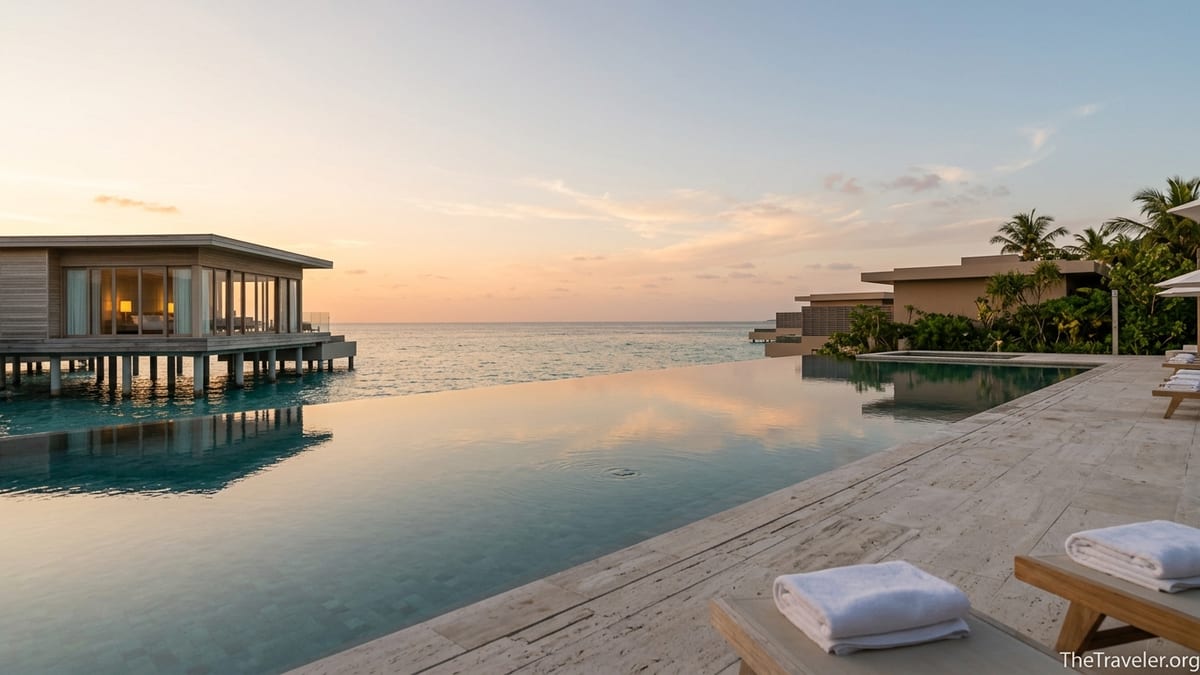
Exclusivity is as much about what you do not see and hear as what you do. Many Ritz-Carlton properties are designed to feel more residential than hotel-like, with generous room sizes, layered lighting, and serious soundproofing. At newer resorts such as The Ritz-Carlton Maldives, Fari Islands, every villa includes its own infinity pool, sun deck, and outdoor lounge area, so guests can swim, dine, or sunbathe without ever needing to visit a shared pool if they prefer privacy.
Architecture plays a crucial role. In the Maldives, the resort is set on a circular artificial island, with villas radiating out over the lagoon in sweeping arcs rather than packed side by side. Even when all 100 villas are occupied, guests often describe the property as feeling almost empty, because private spaces are carefully oriented to minimize sightlines between decks. Interior design leans toward natural stone, pale woods, and expansive glass; the effect is quietly luxurious rather than ostentatious, a style that appeals to travelers who prefer understatement to flash.
In city hotels, the approach is similar. At The Ritz-Carlton, Tokyo, guest rooms occupy high floors of a skyscraper, and floor-to-ceiling windows frame views of the Tokyo skyline and, on clear days, Mount Fuji. Corridors are wide and softly lit, and elevator lobbies often feel like small sitting rooms with art and fresh flowers. Sound insulation is robust enough that guests on a high occupancy night in a business hub like Hong Kong frequently comment on how still and calm their rooms feel, even while a wedding is taking place in the ballroom below.
The Club Level: A Hotel Within the Hotel
One of the clearest expressions of Ritz-Carlton exclusivity is its Club Level, which operates almost like a private members’ lounge layered on top of the standard luxury experience. Club Level rooms and suites are typically located on upper floors accessed with a separate keycard. Inside the Club Lounge, guests find a steady rotation of complimentary food presentations throughout the day, usually including a substantial breakfast, light lunch, afternoon tea, evening hors d’oeuvres and desserts, and an open selection of soft drinks and often beer and wine.
In practical terms, this can feel like staying in a boutique hotel tucked inside a larger property. At The Ritz-Carlton, Hong Kong, for instance, Club Level guests have access to a lounge on one of the highest floors in the city, with views across Victoria Harbour. Staff in the lounge quickly learn guest routines: which table you like in the morning, how you take your coffee, whether you prefer sparkling or still water. At resort properties in Hawaii or the Caribbean, the Club Lounge might step into the role of a family living room where children can grab snacks between pool sessions and parents can enjoy evening canapes without leaving their floor.
This level of access comes at a premium. In major North American cities, booking a Club Level room often adds roughly 150 to 300 dollars per night compared with an equivalent non-club room, depending on season and demand. Some frequent guests use credit card certificates or elite-status offers to reduce that cost, but the underlying idea remains the same: you are paying to step into a more secluded ecosystem where staff-to-guest ratios are higher, food and beverage are largely handled, and many small decisions are removed from your day.
Personalization, From Aris Meeha Butlers to Handwritten Notes
Ritz-Carlton’s commitment to personalization is where the brand’s service philosophy becomes concrete. At flagship resorts, this can mean assigning a dedicated butler or “guest host” to curate the entire stay. At The Ritz-Carlton Maldives, Fari Islands, each villa is looked after by an Aris Meeha, a Maldivian term for a personal butler. These butlers coordinate everything from unpacking luggage and drawing baths with fragrant oils at sunset to booking snorkeling trips and monitoring weather patterns to adjust activities on the fly.
In practice, that might look like a couple waking up to find their bicycles already shaded and towels ready on their private deck, with a message from the butler noting that the sea is especially calm that morning and suggesting a stand-up paddle session. For a family, it could mean returning from dinner to discover that children’s toys have been neatly organized, pajamas laid out, and a bedtime storybook placed on the nightstand, based on an earlier conversation about favorite characters.
In urban hotels, personalization often takes subtler forms. At The Ritz-Carlton, Berlin, a frequent business traveler might find a specific brand of mineral water stocked in the room, their preferred type of pillow already on the bed, and a handwritten note acknowledging the number of nights they have stayed that year. At The Ritz-Carlton, Kyoto, staff might arrange for a local calligrapher to prepare a small piece of art with the guest’s name in kanji as a departure gift. None of these touches are advertised, and not every guest will receive the same gesture, which is precisely why they feel exclusive.
Pricing, Access, and the Quiet Gatekeepers of Luxury
Ritz-Carlton’s exclusivity is naturally reflected in its pricing. Room rates vary significantly between city hotels and resort properties, as well as by season. In large U.S. cities such as San Francisco or Chicago, entry-level rooms at The Ritz-Carlton often start in the region of 500 to 800 dollars per night, rising well above 1,000 dollars for suites or peak dates. At highly sought-after resorts, the numbers escalate. At The Ritz-Carlton Maldives, Fari Islands, for example, published rates for one-bedroom villas typically fall somewhere between roughly 1,800 and 8,000 dollars per night depending on season, villa type, and demand, with larger multi-bedroom villas costing more.
These figures place the brand firmly in the upper tier of luxury hospitality. Yet cost is only one gatekeeper. Availability at some properties during peak holidays or major events can be limited, even for guests willing to pay full rates. During Art Basel in Miami or the Grand Prix in Monaco, suites at the corresponding Ritz-Carlton hotels may sell out months in advance, with a waiting list of regular guests. For some long-time patrons, the real currency is not money but relationship capital: knowing the general manager, building a history of repeat stays, and having travel advisors who can secure favored rooms or negotiate early check-in when it matters.
Loyalty points offer another path to access, although even here, exclusivity persists. Marriott Bonvoy points can be redeemed for stays at Ritz-Carlton properties, but top-tier suites, private residences, or the most coveted villa categories are often excluded from standard redemptions or require a mixture of cash and points. Guests who do book with points may still find that certain experiences, such as private yacht charters, helicopter transfers, or chef’s table dinners, remain fully paid add-ons, keeping the most rarefied aspects of the stay behind an additional curtain.
Family Luxury: Ritz Kids and Multigenerational Travel
Unlike some traditional luxury brands that quietly discourage families, Ritz-Carlton has invested in a clear family offering through its Ritz Kids program. Designed in partnership with child-focused experts, the program introduces younger guests to local culture and nature through play. At a coastal property, that might mean beach clean-ups and guided tide pool explorations; in a mountain resort, it could involve stargazing sessions or storytelling around a fire pit. Many hotels offer dedicated Ritz Kids clubhouses where children can participate in supervised activities, arts and crafts, and themed games while parents enjoy spa time or a quiet meal.
For multigenerational groups, this can be a decisive factor in choosing Ritz-Carlton over an adults-only brand. At The Ritz-Carlton, Dubai, families commonly reserve interconnecting rooms or club-level suites so grandparents, parents, and children can move easily between spaces while still having privacy. Pool attendants remember children’s names, reappear with fresh towels before parents need to ask, and often produce small touches like flavored ices or sand toys. In destinations such as Bali or Puerto Rico, the combination of kids’ programs, water sports, and flexible dining creates a resort experience that feels tailored to both small children and older teens.
There are, of course, limits. Some overwater villas in the Maldives, including those at Fari Islands, have age restrictions for safety, often requiring children to be above a certain age or accompanied by signed waivers. Families with younger children are typically steered toward beachfront villas, which still offer private pools and direct sea access but are considered safer. Again, this blend of accommodation categories within the same resort allows the brand to maintain an atmosphere of calm and privacy while still welcoming a broad mix of guests.
The Takeaway
To stay at The Ritz-Carlton is to step into a world where details that many hotels treat as extras become the baseline. The brand’s exclusivity does not rest solely on chandeliers or room rates, but on a disciplined service culture, architecture that prizes space and privacy, and an intricate web of personal touches that make guests feel individually seen. Whether it is a butler in the Maldives timing a sunset bath, a club lounge attendant in Hong Kong remembering the exact way you like your espresso, or a Ritz Kids counselor in Orlando introducing your child to sea turtles, the through-line is the same: elevated hospitality delivered quietly and consistently.
For travelers deciding whether the premium is worth it, the answer depends on what they value. If you see hotels as interchangeable places to sleep between sightseeing, many of Ritz-Carlton’s subtleties may pass unnoticed. But if you view your accommodation as a central part of the journey, with time built in to appreciate the room, the view, and the service itself, then the brand’s particular version of luxury can feel less like a splurge and more like a carefully crafted experience. That, ultimately, is what keeps guests returning, often to the same property, year after year.
FAQ
Q1. How much does it typically cost to stay at a Ritz-Carlton?
Rates vary widely by location and season. In major cities, entry-level rooms often start around 500 to 800 dollars per night, while premium suites and villas at resorts such as the Maldives can run into several thousand dollars per night.
Q2. What exactly is the Ritz-Carlton Club Level?
The Club Level is a hotel-within-a-hotel concept that grants access to a private lounge serving meals and snacks throughout the day, along with more personalized service and a quieter, more residential atmosphere, typically at an added nightly cost.
Q3. Is Ritz-Carlton suitable for families with children?
Yes. Most properties welcome families and offer the Ritz Kids program with supervised activities, kid-focused experiences, and family-friendly pools, though certain room types such as overwater villas may have age restrictions for safety.
Q4. How does Ritz-Carlton service differ from other luxury brands?
The brand’s service is structured around its Gold Standards and emphasizes anticipating guest needs, empowering staff to solve problems quickly, and maintaining consistent service values across all properties worldwide.
Q5. Can I use Marriott Bonvoy points to book Ritz-Carlton stays?
In most cases, yes. Ritz-Carlton participates in the Marriott Bonvoy program, allowing members to redeem points for rooms, though some premium suites or villa categories may require cash supplements or be excluded from standard redemptions.
Q6. What makes Ritz-Carlton resorts like the Maldives feel so exclusive?
Resorts such as The Ritz-Carlton Maldives, Fari Islands, combine private villas with individual pools, dedicated butlers, and thoughtful design that maximizes privacy, so guests often feel as if they are on their own private island.
Q7. Are Ritz-Carlton hotels only for business or leisure travelers?
They cater to both. City properties often serve business travelers with strong meeting facilities and central locations, while resort properties focus on leisure stays with beaches, spas, and destination-specific experiences.
Q8. Do I need to dress formally at Ritz-Carlton hotels?
Dress codes vary by property and venue, but smart casual attire is generally appropriate in most public spaces. Fine-dining restaurants may request more formal dress in the evening, while pool and beach areas remain relaxed.
Q9. How far in advance should I book a popular Ritz-Carlton resort?
For peak periods such as festive season in the Maldives or major city events, it is wise to book several months in advance, especially if you want specific villa types, connecting rooms, or club-level access.
Q10. Is the Ritz-Carlton experience worth the premium price?
For travelers who value privacy, high-touch service, and a sense of continuity across global destinations, many find the premium justified. Those who use a hotel mainly as a place to sleep may prefer to allocate budget elsewhere.