


More news on this day
Investigations are underway in Western Australia after a CBH Group grain train derailed on a key regional line, disrupting services on the grain rail network and prompting questions about infrastructure resilience and safety across one of the country’s most important export supply chains.
Get the latest news straight to your inbox!
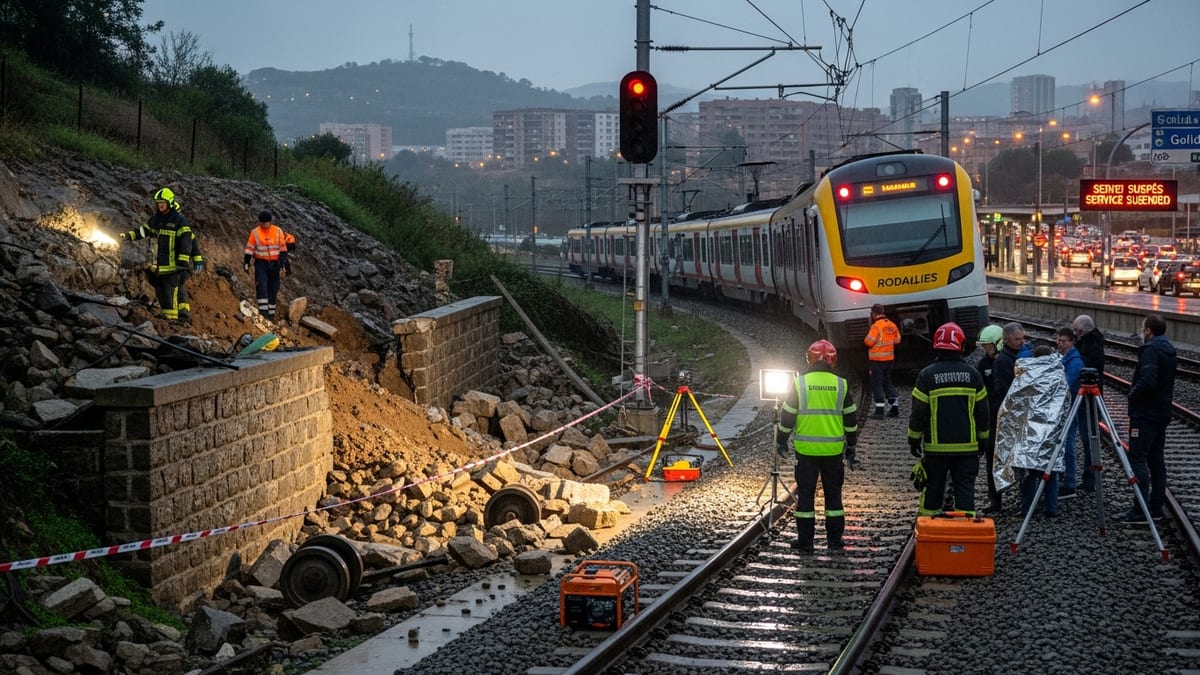
Derailment Involves CBH Grain Consist on Regional Line
According to local and industry reports, the incident involved a CBH Group grain service operating on a regional corridor used to move bulk grain from inland receival sites to export terminals. CBH, Australia’s largest grain exporter, confirmed that a number of wagons derailed, with images from the scene showing several cars off the track and resting at angles along the ballast.
Initial reports indicate the train was either empty or carrying a light load at the time, limiting the scale of any grain spillage along the rail reserve. Published coverage notes that the wagons remained largely intact, with no indication of dangerous goods being involved, in line with CBH’s role as a bulk grain handler rather than a chemicals or fuel operator.
There were no early reports of serious injuries, and publicly available information suggests the incident was confined to the railway corridor. However, the derailment forced the temporary suspension of movements on the affected section while rail and CBH crews worked to stabilise the site and begin recovery of the rollingstock.
The derailment comes at a time when Western Australia’s grain logistics system is under close scrutiny, following recent industrial tensions at key export terminals and ongoing debate about the condition and capacity of regional rail infrastructure serving the grain belt.
Investigations Focus on Track Condition, Train Operations
Rail safety investigators and network engineers are now examining a range of potential contributing factors, including track condition, wagon performance and train handling in the lead-up to the derailment. Similar grain train incidents in Australia and overseas have frequently been linked to track defects, component failures or operational issues, making each of these areas a key focus of the current inquiry.
Publicly available material from previous investigations shows that heavy bulk consists such as grain, ore and coal trains can place sustained stress on regional track, particularly on curves, turnouts and sections affected by heat or ground movement. Where maintenance backlogs exist or where traffic levels have increased, the risk of a wheel climbing the rail or a component failing under load can rise.
Investigators typically collect data from locomotive event recorders, inspect wagon bogies, couplers and braking systems, and review network logs to reconstruct train speed, braking patterns and signal aspects before an incident. In this case, published coverage indicates that detailed mechanical and metallurgical assessments are expected, along with close inspection of sleepers, ballast and rail geometry at the derailment point.
While no preliminary cause has been officially identified, industry observers note that the findings could have implications well beyond a single incident, informing future investment priorities and maintenance standards across the grain rail network.
Clean-Up and Service Disruptions for Growers
Recovery efforts began soon after the derailment, with rail maintenance crews and specialist contractors brought in to rerail wagons, repair damaged track and clear any spilled grain from the corridor. Heavy-lift equipment is typically required to place loaded or partially loaded wagons back on the rails, and that work must be coordinated with track repair to avoid further damage.
Reports indicate that services along the affected route were suspended while the site was made safe, with temporary speed restrictions likely to be imposed once trains begin running again. For growers and marketers, even short interruptions at peak times can affect the flow of grain to port, particularly where a line serves multiple receival sites and export programs are tightly scheduled.
In Western Australia, where bulk grain exports are a cornerstone of the regional economy, any disruption increases pressure on road transport and alternative rail routes. Grain trains are a critical link between inland storages and coastal terminals, and when a section of track is removed from service the logistics task must often be rebalanced across the broader network.
Local coverage suggests that CBH and the rail network operator are working to minimise the duration of the outage and to reschedule movements once the line is cleared, though some short-term delays to export programs and site out-turns remain likely while the system resets.
Renewed Scrutiny on CBH’s Rail Operations and Network Investment
The derailment has intensified attention on the long-running discussion over the adequacy of Western Australia’s grain rail infrastructure and the structure of access and investment responsibilities. CBH operates one of the country’s largest grain rail fleets, and its trains depend on track that is often shared with other freight services and maintained under complex commercial arrangements.
Recent reporting on CBH’s port operations and labour disputes at its Kwinana terminal has already highlighted the sensitivity of the export supply chain to any disruption, whether from industrial action, weather events or infrastructure constraints. The latest derailment adds operational safety and asset condition to the list of issues now being debated by growers, co-operative members and policymakers.
Industry analysts point to a series of grain-related derailments in North America and Europe, where investigation reports have prompted upgrades to inspection regimes, speed restrictions on certain sections and targeted renewals of rail, sleepers and ballast. Observers argue that similar evidence-based interventions may be required on Australian grain routes identified as higher risk, especially where older infrastructure is carrying heavier or more frequent trains than originally designed.
Public commentary following the CBH incident has also raised questions about rollingstock standards and fleet maintenance strategies, including whether additional monitoring technology, such as wayside detection systems and enhanced onboard diagnostics, could help identify defects before they lead to a derailment.
Safety Record and Wider Context for Rail Freight
Despite the impact of individual events, rail remains one of the safest and most efficient modes for moving bulk freight such as grain over long distances. Historical data from national and international safety agencies shows that major derailments involving serious injury, loss of life or significant environmental harm are relatively rare compared with the scale of freight moved each year.
Nevertheless, the CBH grain train derailment occurs against a backdrop of heightened public interest in rail safety following a series of high-profile freight incidents globally, some involving hazardous materials. Those events have led to calls for stronger regulation, upgraded technology and clearer communication with communities living alongside key freight corridors.
In Western Australia’s grain regions, the latest derailment is likely to feed into broader conversations about how to balance efficiency, cost and safety as export volumes grow and climate variability places new stresses on infrastructure. Stakeholders are expected to watch closely for the final findings of the investigation and any associated recommendations for changes to standards, investment or operational practice.
For now, rail services on the affected line are expected to resume under controlled conditions once repairs are completed, while CBH and the network operator work within existing safety frameworks to restore the flow of grain to port ahead of upcoming shipping windows.