

More news on this day
A rapid, multi‑agency response to a serious train crash, described in broadcast coverage as “spectacularly quick,” is being credited with limiting fatalities and preventing a feared mass‑casualty event.
Get the latest news straight to your inbox!
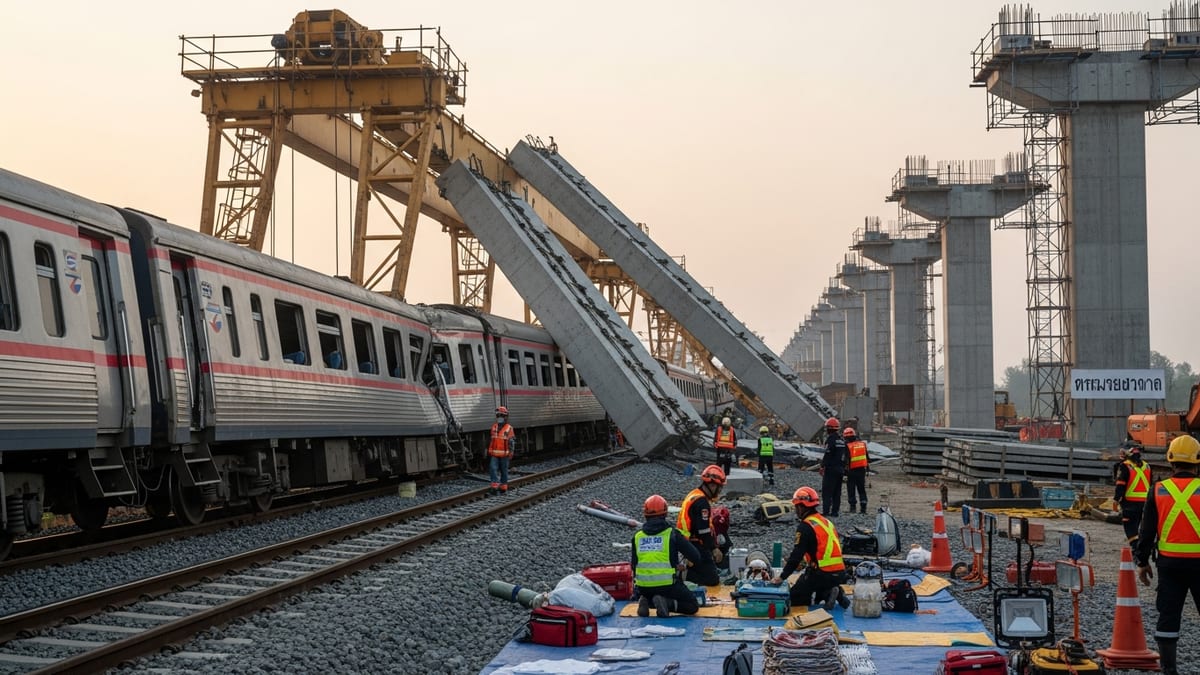
Fears of mass casualties ease as real scale emerges
Early reports from the scene indicated that emergency planners initially braced for some of the worst outcomes seen on the rail network in recent years. Air ambulance teams cited by UK news coverage said they prepared for as many as 100 casualties and up to 20 potential fatalities after early information suggested multiple carriages had left the tracks and a large number of passengers might be trapped.
As daylight operations continued and search teams worked through the carriages, the final tally of deaths and serious injuries, while still grave, remained well below those early estimates. Publicly available information indicates that rapid triage on the embankment, inside the carriages and at makeshift casualty clearing points helped move the most seriously injured to trauma care in the critical first hour.
Rail incident responders and specialist medics used standard mass‑casualty protocols to categorize patients by urgency, stabilizing breathing and major bleeding on site before dispatch. Travel disruption in the wider region remained significant through the day, but transport analysts note that the swift medical effort is likely to be remembered as the defining feature of the incident rather than the scale of the death toll.
For those watching the response unfold, from roadside vantage points and in subsequent video footage, the contrast between initial fears and the eventual casualty numbers has sharpened attention on how speed and coordination can change the trajectory of a rail disaster.
Minutes that mattered: how the response was mobilized
Accounts compiled from news reports describe a sequence that began within minutes of the first alarm. Local ambulance services, police, fire and air ambulance charities were rapidly deployed, with helicopters landing in fields near the line while road crews converged along narrow access roads. Rail staff already on duty at nearby stations and signal boxes began isolating power and securing the line to allow rescuers safe access to the derailed coaches.
Incident commanders appear to have established a clear perimeter early, separating uninjured passengers from active treatment areas. Passengers able to walk were guided away from the tracks to nearby reception points for assessment, shelter and transport, reducing congestion around the carriages where paramedics were working on critical cases.
Specialist teams trained in major rail incidents, including hazardous environment medics and heavy rescue units, began penetrating the most badly damaged coaches, cutting through metal and using ladders and stretchers to extract those unable to move. Concurrently, air ambulance doctors and critical care paramedics provided advanced interventions on site, bridging the gap between initial first aid and hospital‑level treatment.
Observers of past rail emergencies note that the speed with which interoperable communications, staging areas and access routes were established appears to have been a decisive factor. The reduction of on‑scene confusion allowed medical teams to focus on clinical priorities rather than logistics, a key benchmark in modern disaster medicine.
Community, passengers and rail staff join frontline efforts
Alongside professional responders, passengers and local residents played a visible role in the early minutes after the derailment. People on board who escaped with minor injuries helped others climb from carriages, formed improvised human chains down the embankment and offered basic first aid using clothing as bandages and supports.
Residents living near the line, alerted by the sound of the crash and the subsequent sirens, arrived with blankets, water and mobile phone chargers, according to accounts collected by regional media. Their support eased immediate discomfort for those waiting to be assessed and transported, particularly older passengers and families.
Railway staff, including train crew and maintenance workers, were among the first organized personnel on the scene. Drawing on routine safety drills, they moved quickly to check for fuel leaks, secure emergency doors and assist with controlled evacuations from the least damaged carriages. Their familiarity with the train layout enabled them to guide paramedics to areas where injured passengers were most likely to be found.
This mix of trained professionals and spontaneous helpers reflects a pattern seen in other major transport incidents, where local initiative fills gaps in the earliest phase before formal structures are fully in place. Safety specialists suggest that the ability of ordinary passengers and residents to act calmly and constructively is an underappreciated component of incident resilience.
Infrastructure, training and technology under renewed scrutiny
As investigators examine the causes of the crash, attention within the transport sector is also turning to how infrastructure and training shaped the outcome. Rail operators in the region have invested in joint exercises with emergency services, simulating derailments and complex passenger rescues in both rural and urban settings. Analysts reviewing this latest incident note strong echoes of those drills in the way staging areas, casualty flows and command structures were arranged.
Medical teams deployed standard incident management tools, including color‑coded triage tags and portable diagnostic equipment, to rapidly prioritize patients. Access to air ambulances, now a routine part of serious transport incidents in many European regions, appears to have shortened journeys to major trauma centers for those with life‑threatening injuries.
At the same time, the derailment is prompting fresh questions about infrastructure resilience, signaling systems and line‑side access for rescue vehicles. Transport commentators point out that the relative remoteness of the crash site could have compounded the impact if not for coordinated planning and prior mapping of entry points along the railway corridor.
Debate is already emerging over whether further investment is needed in real‑time train monitoring, carriage crashworthiness and automatic braking technologies in order to prevent similar incidents, or at least reduce their severity when they occur. The visible success of the emergency response is being weighed against the imperative to reduce the need for such interventions in the first place.
Lessons for rail travelers and the wider transport sector
For travelers, the crash serves as a stark reminder that rarely used safety information and procedures can make a difference in critical moments. Emergency planners consistently emphasize the value of passengers taking note of nearest exits, listening to briefings and keeping aisles clear, advice that often receives little attention on routine journeys.
Rail safety advocates argue that this incident also highlights the need for clear, calm public communication in the aftermath of major disruptions. Early assumptions about casualty numbers, while understandable in the confusion of a derailment, can amplify anxiety far beyond the accident zone. More measured updates as facts become clearer can help travelers elsewhere on the network make informed decisions.
Across the wider transport sector, the crash is likely to be studied as a case in which rapid, coordinated action shifted the narrative from potential catastrophe to managed crisis. Airlines, bus operators and urban transit authorities regularly review such events to refine their own emergency plans, searching for lessons that can be applied to crowded terminals, tunnels and highways.
While the human cost of the derailment remains deeply felt by those directly affected, the phrase “spectacularly quick” is now being applied not only to the speed of trains, but to the capacity of people and systems to respond when that speed is suddenly and violently lost.