


More news on this day
Iranian state-linked media have escalated their rhetoric against the United Arab Emirates, explicitly naming Dubai and Abu Dhabi airports along with the Port of Fujairah and Jebel Ali Port in fresh warnings tied to surging hostilities with the United States, raising new concerns for travelers, airlines and the wider Gulf tourism economy.
Get the latest news straight to your inbox!
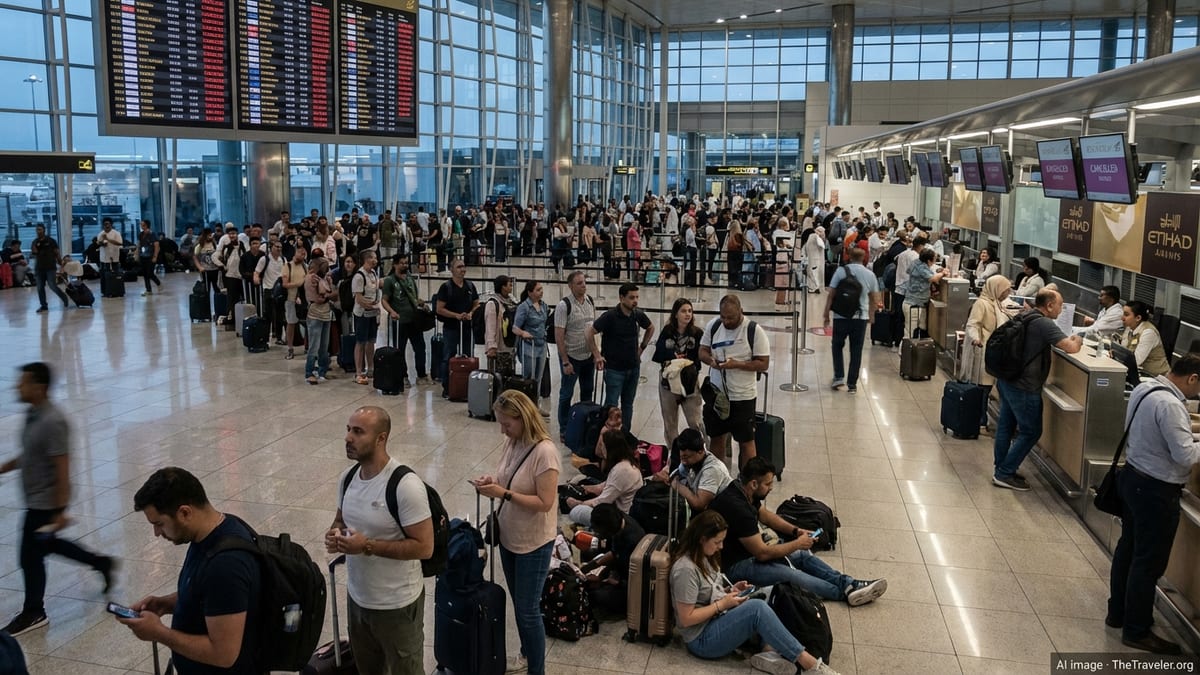
New Iranian Rhetoric Singles Out UAE Transport Hubs
Recent reporting from Iranian outlets closely aligned with the state has highlighted the UAE’s major aviation and shipping gateways, stating that continued strikes on Iranian civilian infrastructure could prompt action targeting Dubai and Abu Dhabi international airports as well as the Port of Fujairah and Jebel Ali Port. Coverage in regional and international media notes that these statements are being interpreted as a direct attempt to pressure Gulf states seen as hosting or facilitating US military activity.
The warnings emerged after fresh US strikes on Iran’s Revolutionary Guard and other targets, part of an intensifying cycle of attacks and reprisals that has unfolded across the Gulf and wider Middle East in 2026. Publicly available analysis suggests Iran is using explicit references to high-profile UAE hubs to underline the potential economic and symbolic cost of any further confrontation.
Commentary carried by major news agencies describes the language as unusually blunt, with specific commercial airports and ports named rather than broad references to “regional infrastructure.” Aviation and shipping observers say that, even without immediate follow-through, this kind of signaling can unsettle passengers, airlines and insurers already jittery after months of missile and drone activity around the Gulf.
Recent Attacks Leave Lasting Scars on UAE Aviation
The latest rhetoric comes only months after Iran’s missile and drone campaign earlier in 2026 briefly forced the closure of Dubai International Airport and disrupted operations at Abu Dhabi International Airport. Open-source chronologies of the conflict describe strikes on targets inside the Emirates, with fragments from intercepted projectiles linked to fires and localized damage at key infrastructure sites.
Dubai International, one of the world’s busiest long-haul hubs, has since restored most operations, but the episode underscored its vulnerability to regional security shocks. Travel advisories issued by several governments in March and April cited the risk of further Iranian attacks, highlighting that airspace closures and sudden schedule changes could occur with little notice. Some airlines temporarily diverted flights or adjusted routings to avoid the most sensitive air corridors.
While flight schedules have gradually stabilized, recent government guidance continues to warn that UAE airspace can be subject to short-notice restrictions during periods of heightened tension. Aviation safety bodies have also issued recurring notices advising carriers to carefully assess overflight risk in Gulf airspace, reflecting concerns that renewed US–Iran clashes could once again put major transit hubs such as Dubai and Abu Dhabi in the direct line of fire.
Ports of Fujairah and Jebel Ali Back in the Spotlight
Iran’s mention of the Port of Fujairah and Jebel Ali Port revives anxieties that first spiked earlier this year, when drone attacks and debris from aerial interceptions caused fires and temporary disruption at UAE maritime facilities. Public timelines of the conflict describe a drone strike on the Port of Fujairah and an incident at Jebel Ali that authorities attributed to falling debris from defensive measures against Iranian projectiles.
These ports are critical to global energy flows and container trade. Fujairah, located on the Gulf of Oman outside the Strait of Hormuz, is a strategic export point for crude and refined products, while Jebel Ali is the busiest container port in the Middle East. Shipping circulars and port advisories issued since March refer to elevated security levels, intermittent GPS interference off Fujairah’s coast and precautionary measures to maintain operations under the shadow of regional conflict.
Industry bulletins indicate that, despite the threats, UAE ports have remained largely operational, with some procedural adjustments and routing flexibility to mitigate perceived risks. However, credible references in Iranian messaging to these facilities add a new layer of uncertainty for tanker operators, container lines and maritime insurers, particularly if US–Iran tensions continue to escalate around sensitive chokepoints near the Strait of Hormuz.
Government Travel Advisories Flag Ongoing Risk
In parallel with Iranian warnings, several governments have tightened their travel advice for the UAE. The United States currently rates the country at a level that urges travelers to reconsider non-essential trips, citing the threat of armed conflict, possible missile or drone attacks and disruptions to commercial flights. Other countries advise heightened vigilance, especially in and around major cities and transport hubs.
Recent updates to official advisories reference the broader confrontation between Iran and the United States, noting that the UAE has previously been directly affected by Iranian strikes. Travelers are urged to monitor local media and government channels for alerts, remain aware of missile-warning sirens and follow instructions from local emergency systems in the event of an incident.
Tourism boards and airlines continue to promote the UAE as open for business, emphasizing that hotels, attractions and most services in Dubai and Abu Dhabi are operating normally. However, the contrast between promotional messaging and cautious government advice highlights the complexity of risk assessment for visitors, especially those transiting through the Emirates en route to other destinations in Asia, Africa or Europe.
Tourism and Aviation Weigh Contingency Plans
Industry analysts note that Gulf carriers and local tourism operators have become adept at managing geopolitical shocks, from airspace closures to oil-price swings. In the current environment, airlines using Dubai and Abu Dhabi as hubs are reported to be reviewing contingency routings, crew layover policies and insurance coverage to account for the possibility of renewed strikes or temporary airport restrictions prompted by US–Iran escalation.
Travel management companies advise clients to build flexibility into itineraries involving the UAE, including longer connection times, refundable tickets where possible and up-to-date contact information with airlines in case of schedule changes. Some corporate travel programs have introduced additional approval steps for non-essential trips through the region, reflecting internal duty-of-care obligations.
For leisure travelers, the practical impact so far has been limited primarily to occasional delays, diversions and heightened security checks around peak alert periods. Yet the explicit naming of Dubai, Abu Dhabi, Fujairah and Jebel Ali in recent Iranian media coverage serves as a reminder that these gateways sit at the center of a volatile geopolitical struggle, where developments far beyond the beaches and malls of the Emirates can have rapid consequences for global mobility.