


More news on this day
Rail travel across central and southern Israel was disrupted after a fire broke out near railway tracks, forcing a temporary shutdown of several lines before crews contained the blaze and gradually restored service.
Get the latest news straight to your inbox!
Trackside blaze triggers broad service disruption
According to published coverage from Israeli media, the fire ignited near a section of railway infrastructure in central Israel, close to one of the country’s main north–south corridors. Flames and thick smoke in the vicinity of the tracks prompted rail operators to halt traffic on affected sections as a precaution, triggering delays and cancellations that rippled across central and southern routes.
Publicly available information indicates that trains were stopped or rerouted on multiple lines feeding into major hubs, with knock-on effects for commuter and intercity services. Some trains were terminated early at intermediate stations, while others were held in place as safety checks were carried out along exposed segments of track.
Reports indicate that the incident occurred during busy travel hours, leaving platforms crowded and trains filled beyond normal capacity on lines that remained open. Passengers traveling between the Tel Aviv region and southern cities such as Beersheba and Ashkelon experienced the most substantial disruption, with extended journey times and limited alternative options.
Initial assessments suggested no serious injuries, and early reports did not indicate significant damage to rolling stock. The primary impacts were on punctuality and capacity as traffic controllers worked to keep at least part of the network moving while fire crews tackled the blaze along the right of way.
Fire contained as crews protect key rail corridor
Information released through local news outlets indicates that firefighting teams quickly focused on vegetation and infrastructure immediately bordering the railway. Dry brush, high seasonal temperatures and gusty winds raised concerns that flames could spread along embankments and under bridges, threatening signaling cabinets, power equipment and overhead lines.
Fire crews reportedly established containment lines on both sides of the affected tracks, using ground units supported by water tankers and, where available, aerial observation to monitor flare-ups. Rail engineers accompanied responders to identify sensitive installations and ensure that suppression efforts did not damage signaling, communications cables or electric systems critical to safe operations.
As conditions stabilized and smoke levels decreased, inspectors began methodical checks of rails, sleepers, ballast and wayside equipment. Publicly accessible updates from rail operators described a phased reopening strategy, with limited services permitted to pass at reduced speeds through the affected area once temperatures at the track surface and nearby components returned to safe levels.
By the time the fire was fully contained, preliminary inspections suggested that structural damage to core rail infrastructure was minor. This allowed planners to focus on clearing backlogs of delayed trains rather than scheduling extended closures for large-scale repairs.
Passenger impact and rolling delays through the evening
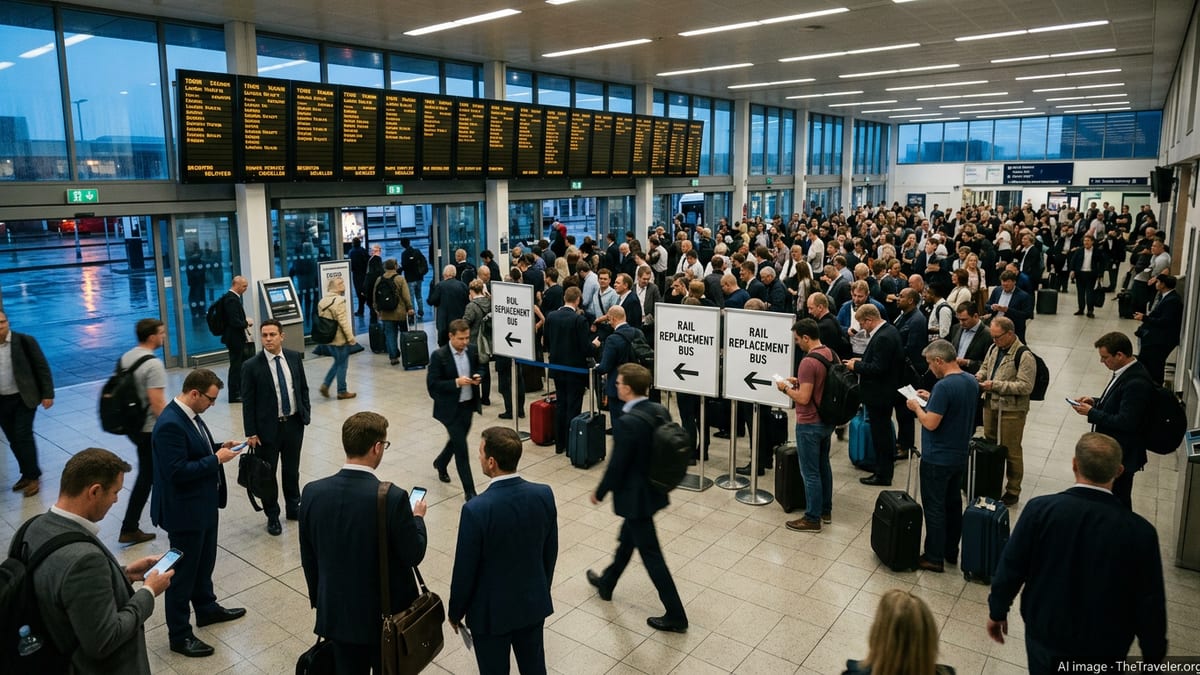
The sudden halt in train movements left hundreds of passengers stranded on platforms across central Israel and at transfer stations serving southern destinations. According to media summaries, station concourses in the Tel Aviv area and several intermediate hubs experienced heavy crowding as departure boards filled with delay notices and cancellations.
Rail operators issued advisories urging travelers to verify schedules before heading to stations and to expect slower journeys as services resumed in a limited pattern. Replacement buses were arranged on selected routes, though demand outstripped capacity during the peak of the disruption, particularly for commuters returning from central employment centers to suburban communities and southern towns.
Once the fire was contained and lines began reopening, trains operated under temporary speed restrictions through the affected zone. This created a rolling wave of delays that lasted into the evening as dispatchers worked to move backed-up trains while preserving safe spacing between services.
Reports from the scene described passengers crowding into any available train, with some services departing significantly fuller than usual. Despite the inconvenience, publicly available information suggests that the incident remained primarily an operational challenge rather than a safety crisis, with staff focused on crowd management and clear communication inside stations and on board trains.
Focus on resilience amid seasonal fire risk
The episode has drawn attention to the vulnerability of Israel’s rail network to trackside fires during the hot, dry season. Past wildfire events in central Israel and the Jerusalem corridor have shown how quickly flames can advance through forests and scrubland situated close to rail infrastructure, threatening signaling systems, power lines and bridges.
Rail planners have increasingly emphasized vegetation management, firebreak maintenance and the hardening of key assets such as signal cabinets and power substations. Publicly available planning documents and audits have highlighted the importance of integrating fire risk assessments into long-term rail expansion projects, particularly where new lines pass near forests or open fields.
Analysts following regional transport developments note that Israel’s ongoing electrification program and expansion of high-frequency suburban and intercity services increase the stakes when incidents occur on core corridors. A single closure on a key north–south route can quickly cascade into delays across the wider network, affecting both daily commuters and longer-distance travelers heading to and from the south.
In response, operators are refining emergency timetables designed to keep some trains running even when sections of track are temporarily closed. The latest incident is expected to feed into those contingency plans, providing fresh data on how to balance safety, capacity and clear communication during sudden wildfire-related disruptions.
Travel advice for visitors using Israel’s rail system
For international visitors relying on trains to move between Ben Gurion Airport, Tel Aviv, Jerusalem and southern destinations, the disruption serves as a reminder that summer travel in the region can be affected by environmental hazards such as fires and extreme heat.
Travel updates and publicly posted alerts from rail operators typically provide the most accurate picture of current conditions. When reports indicate trackside fires or other incidents, travelers may benefit from building extra time into itineraries, particularly when catching flights, cruises or onward international connections.
Tourism advisers often recommend having a flexible backup plan that includes intercity buses, shared taxis or rental cars, especially for routes where rail capacity is limited. In urban areas, light rail and bus rapid transit corridors can sometimes offer alternative options when mainline rail services encounter disruption.
Despite the day’s delays, rail service in central and southern Israel resumed after the fire was contained, and publicly available information suggests that the network is expected to operate on normal or near-normal timetables once residual checks are complete. Travelers planning journeys in the coming days are still encouraged to monitor service bulletins, particularly during periods of elevated fire risk along the country’s key railway corridors.