


More news on this day
Air travel across Europe faced fresh disruption over the weekend as operational data showed at least 85 flights cancelled and 2,448 delayed across major hubs in Spain, Germany, France, Austria and neighboring countries, interrupting schedules for carriers including Air France, Austrian Airlines, Lufthansa and a wide range of European and international operators.
Get the latest news straight to your inbox!
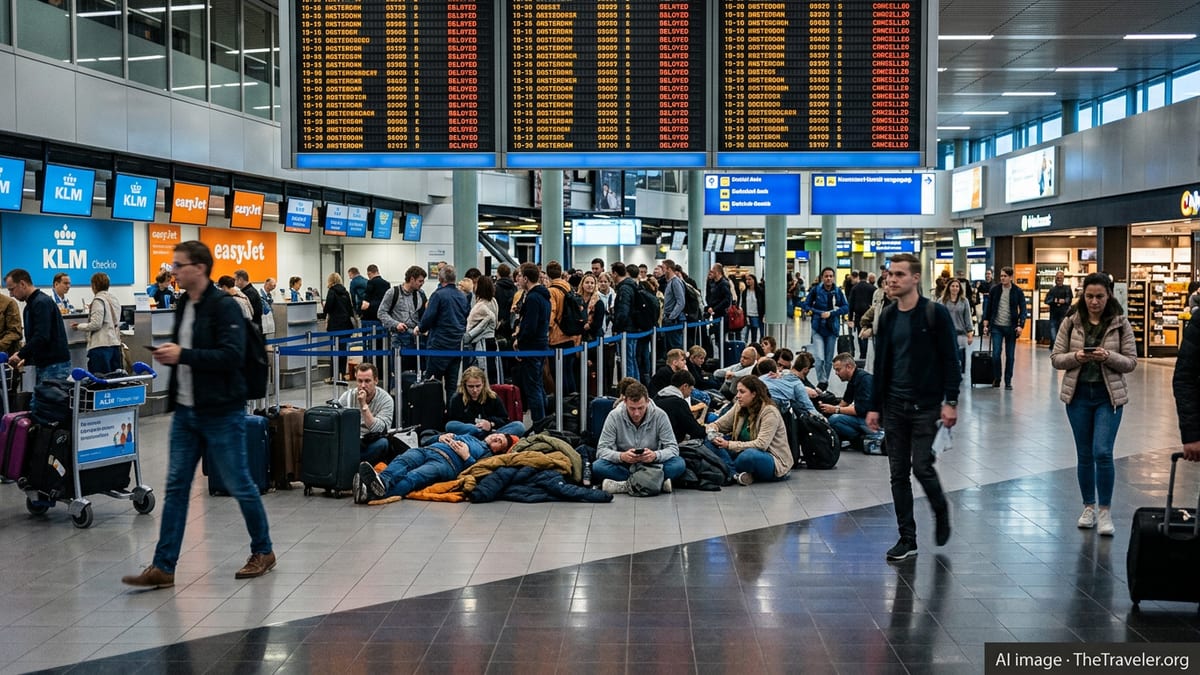
Widespread Disruption Hits Key European Hubs
Tracking data from multiple flight information platforms indicated that a wave of cancellations and delays affected airports from Madrid and Barcelona to Frankfurt, Munich, Paris and Vienna, with knock-on effects felt across the continent. The figures point to a day of heavily strained operations, particularly for passengers traveling through central and western Europe.
Spain, Germany, France and Austria featured prominently among the hardest hit countries, reflecting their role as major transfer points for intra-European and long haul traffic. Publicly available dashboards showed dozens of flights arriving or departing late, with delays in some cases stretching well beyond one hour, affecting connections and forcing many travelers to rebook.
While the 85 cancellations represent a smaller share of total daily European movements, the 2,448 delayed flights highlight how even modest schedule changes can ripple through a congested network. Disruption at a few major airports, especially where airlines cluster their connecting traffic, can quickly cascade into missed onward flights and overnight stays for thousands of passengers.
Reports indicate that the problems were not confined to a single airline or airport group, but rather reflected congestion and air traffic management constraints across several regions. This aligns with recent operational summaries showing persistent pressure on control centers in France, Germany and parts of central Europe, which have been associated with elevated levels of departure and arrival delays.
Flag Carriers Among Those Most Affected
A range of European flag carriers and their partners were caught up in the disruption, including Air France at Paris Charles de Gaulle, Austrian Airlines at Vienna, and Lufthansa at its German hubs. Their extensive networks and reliance on tight connecting banks mean that even relatively small timing issues can impact a large number of itineraries.
Operational statistics for recent weeks have shown that Lufthansa and Austrian Airlines in particular have been facing higher average delay minutes per flight than some competitors, with Vienna and Munich frequently cited among the most penalized locations for air traffic flow management delays in Europe. These patterns leave airlines vulnerable when additional strains emerge, such as capacity restrictions in nearby control sectors.
Air France has also been operating in a challenging environment, with traffic concentrated through Paris and frequent congestion reported in the French upper airspace sectors that serve much of western Europe. When those bottlenecks occur, they often generate airborne holding, ground delays and re-routings that filter through to airports in Spain, Germany, Austria and beyond.
Low cost and leisure carriers using the same hubs and airspace have also experienced knock-on effects, but the impact tends to be particularly visible at the large network airlines, which publish dense schedules and depend heavily on efficient aircraft rotations and crew utilization to maintain reliability.
Air Traffic Control Constraints Drive Delays
Recent briefings from Eurocontrol, the organization that coordinates air traffic management across Europe, have highlighted continuing strain in several key control centers. Weekly performance over late June and early July showed high levels of air traffic flow management delay associated with sectors such as Marseille, Reims, Karlsruhe, Vienna and Barcelona, reflecting a mix of capacity restrictions, staffing limits and weather-related constraints.
According to these summaries, airline groups including Air France, Austrian Airlines, Lufthansa and several low cost operators have been among those most exposed to these problem areas. In particular, operators with dense schedules through central European corridors have been recording elevated average delay minutes per flight, often linked to restrictions in upper airspace rather than local airport issues.
The latest wave of 2,448 delayed flights appears consistent with this pattern, where structural airspace constraints amplify the impact of busy summer traffic. When sectors reduce capacity for reasons such as staffing, technical work or convective weather, the resulting flow restrictions can require airlines to reduce speeds, accept longer routings or wait on the ground, all of which contribute to late arrivals and departures.
Observers note that the current summer season follows several years of gradual traffic recovery, with demand now approaching or surpassing pre-pandemic levels on many routes. Although airlines have adjusted schedules and aircraft deployment, the underlying airspace system in parts of Europe continues to run close to its practical limits during peak periods, leaving little room for recovery when problems occur.
Passengers Face Missed Connections And Rebookings
For travelers, the combination of 85 cancellations and thousands of delays has translated into a familiar mix of missed connections, overnight stays and long queues at customer service desks. At major hubs such as Frankfurt, Paris Charles de Gaulle and Vienna, same day rebooking options can quickly become scarce when disruption coincides with peak holiday traffic.
Published guidance from European airlines advises passengers to monitor their flight status closely using official websites or mobile apps, and to avoid heading to the airport before confirming whether a flight is still operating. Many carriers automatically rebook affected travelers on the next available services, but in busy periods those alternatives may depart many hours later or involve additional connections.
Under European passenger rights rules, travelers whose flights are cancelled at short notice or delayed significantly may be entitled to assistance such as meals, hotel accommodation and, in some cases, financial compensation, depending on the cause of the disruption and the length of delay. Public information from consumer organizations continues to emphasize the importance of documenting arrival times and keeping receipts for any extra expenses.
With schedules still under pressure in parts of the network, frequent flyers are increasingly building longer connection times into their itineraries when traveling through known congestion points. Travel industry commentary suggests that this strategy, along with choosing early morning departures where feasible, can slightly reduce the risk of severe knock-on delays when conditions deteriorate later in the day.
Outlook For The Remainder Of The Summer
Operational planning documents from major airline groups show that carriers have already made some capacity adjustments for the summer season, including targeted reductions on certain European routes to ease pressure on hubs and crew resources. Lufthansa Group, for example, has trimmed parts of its intra-European program in recent months, while maintaining overall connectivity through partner airlines and alternative hubs.
Eurocontrol forecasts indicate that traffic volumes are expected to remain high across Europe through August, with particular peaks around major holiday weekends. If air traffic control capacity remains constrained in key sectors, further days of widespread delay are possible, even if outright cancellations remain comparatively limited.
Travelers planning journeys over the coming weeks are being encouraged in public advisories to check in online as early as possible, track flight status continuously and consider flexible tickets where budgets allow. Those with essential connections, such as cruises or long haul departures from Europe, may benefit from arriving a day early to build additional resilience into their plans.
The latest day of disruption underlines how interdependent Europe’s air transport system has become, with issues in Spanish, German, French or Austrian airspace quickly impacting airlines and passengers across the wider region. As the peak summer period continues, reliability will depend not only on airline scheduling, but also on the capacity of air traffic management systems to handle heavy demand in complex and often weather-sensitive airspace.