


More news on this day
Irish families preparing for summer holidays are being urged to build in extra time and contingency plans, as a mix of new EU border rules, heavy demand and operational strains raises the risk of lengthy delays at some of the most important airports used by travellers from Ireland.
Get the latest news straight to your inbox!
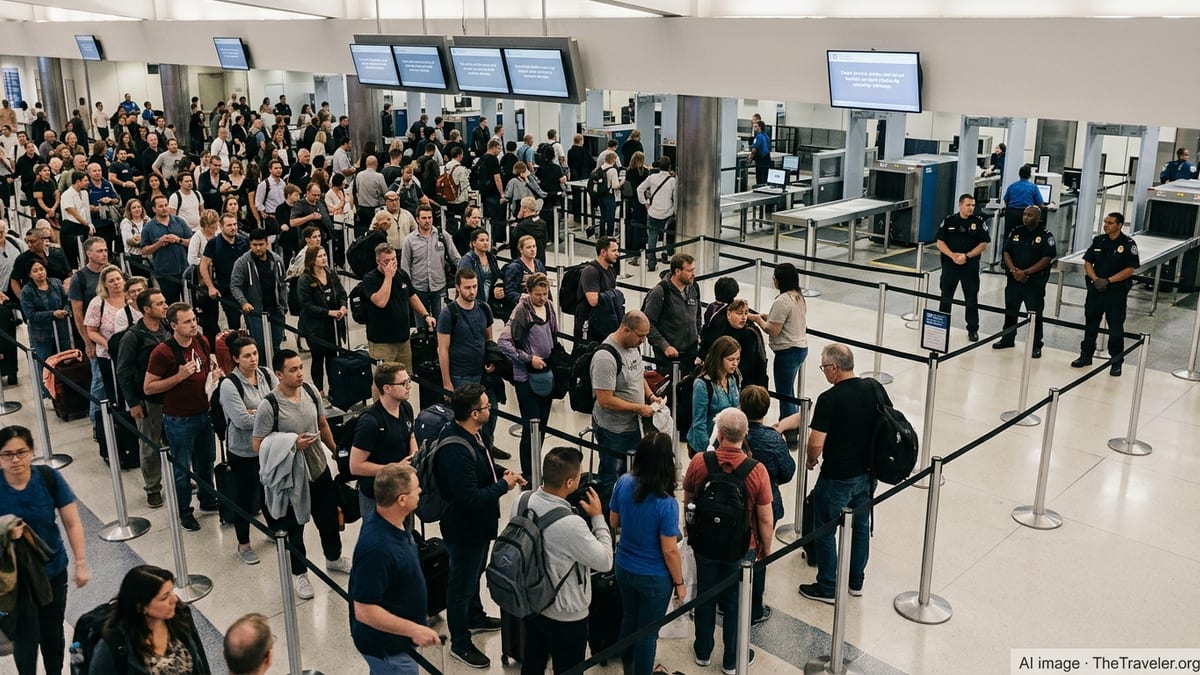
New EU border checks driving queues at major hubs
Across much of continental Europe, the new Entry/Exit System for non-Schengen nationals is emerging as a key pressure point for families heading on sun holidays and city breaks. The system, fully rolled out earlier this year, requires non-EU and many non-Schengen passengers to provide fingerprints and facial images on their first trip, in addition to standard passport checks. Reports from travel outlets indicate that this process is taking several minutes per person at busy times, resulting in long tailbacks at border control in some terminals.
Although Ireland itself is not part of the Schengen area and is exempt from operating the new system, Irish residents are directly affected when they arrive in popular destinations such as Spain, Italy, Portugal, France, the Netherlands and Greece. Airports serving these countries, including Amsterdam Schiphol, Paris Charles de Gaulle, Barcelona and Malaga, feature prominently in Irish holiday schedules. Industry coverage has highlighted concerns that bottlenecks at automated gates and limited staffing could turn peak weekend arrivals into multi-hour waits for families with children.
Airlines and airport groups in Europe have publicly urged travellers from non-Schengen countries to arrive earlier than usual and to expect a less predictable experience at passport control. Some carriers are advising passengers to be at the airport up to three hours before departure on affected routes, particularly during school holidays. For Irish families, that guidance can mean very early starts, longer transfers and higher costs for airport parking or overnight hotels, especially when travelling with checked luggage or extended family groups.
Travel analysts say the impact is uneven across Europe, with some airports adapting more smoothly than others. However, they point out that even a relatively small number of slow first-time registrations can trigger knock-on queues at peak times. Families connecting through a Schengen hub on the way to onward destinations are urged to pay close attention to minimum connection times and to avoid very tight transfers where possible.
Dublin Airport braced for record summer crowds
Dublin Airport, the main gateway for Irish outbound travel, is preparing for another record season, with aviation forecasts pointing to more than 11 million passengers moving through the terminals over the core summer months. That volume comes on top of a record year in 2025 and amid continuing debate about capacity limits at the airport. Publicly available regulatory documents show that runway and terminal coordination parameters for summer 2026 were set with only a small margin below the movement cap, leaving limited room to absorb disruption without queues or schedule knock-ons.
Recent coverage in the Irish media points to ongoing staffing challenges in air traffic control and the risk of short-notice restrictions if rosters come under pressure. Earlier this year, temporary runway constraints and isolated night-time closures at regional airports highlighted how quickly staffing issues can translate into delays or cancellations for passengers. While efforts are under way to stabilise operations, passenger advocates warn that tight margins at peak morning and evening waves leave little slack if weather, technical issues or knock-on delays from other European hubs occur.
Within the terminals, Dublin Airport has focused on keeping security wait times under control after well-publicised queues in previous summers. Independent queue guides indicate that, on normal days, passengers who arrive at the recommended times typically clear security within an hour. However, they also advise adding extra time around Irish school holidays and bank holiday weekends, when large family groups and sports trips create sharp spikes in demand. Families with mixed tickets, special assistance needs or large amounts of baggage are considered particularly vulnerable to delays if they cut arrival times too fine.
For Irish households, the pressure at Dublin does not only relate to queues at check in and security. Airlines serving the airport have trimmed some schedules for summer 2026 in response to fleet maintenance and cost pressures, leaving fewer back-up options when flights are delayed or cancelled. Coverage of one major carrier’s decision to cut hundreds of flights from its seasonal programme notes that services to hub airports such as Amsterdam Schiphol and key UK cities have been reduced, further limiting flexibility for rebooking.
Ryanair highlights seven EU airports as delay hotspots
The latest warnings for Irish travellers have been sharpened by a public statement from Ryanair, the largest carrier at Dublin, which has singled out seven European airports as being at particular risk of “queue chaos” this summer. While the airline’s comments are framed as part of a wider campaign to delay or adjust the EU’s new border regime, they also provide a practical list of hubs where Irish families may wish to take extra precautions. The airports named span major leisure and transfer gateways that feature heavily in Irish holiday itineraries.
Among those highlighted are Amsterdam Schiphol and other major continental hubs that handle huge numbers of transfers for routes between Ireland and southern Europe. Industry trade bodies representing airlines and airports have echoed concerns that, without additional resources and further streamlining of procedures, peak weekends could see hours-long queues at border control and security. Families connecting on low-cost point-to-point schedules, where missed flights are not automatically rebooked, are seen as particularly exposed.
Travel coverage suggests that the situation is complicated by uneven preparation at national level. Some countries have invested in additional biometric kiosks, staff training and redesigned queuing areas, while others are still relying heavily on manual processing. In practice, that means two families taking similar routes from Ireland could have very different experiences depending on the airport and the time of day they travel.
Consumer commentators advise that, where possible, Irish passengers should look closely at alternative routing options that avoid known pinch points during the busiest weekends of July and August. However, with seat capacity already tight on many of the most popular dates, flexibility on travel days and departure times may be just as important as the choice of airport itself.
What Irish families can do to minimise disruption
Travel experts stress that, although this summer carries an elevated risk of queues and missed connections, many Irish families will still move through airports without major problems if they prepare carefully. Publicly available guidance from airports and airlines emphasises simple steps such as checking in online as early as possible, confirming terminal and gate information on the day of travel, and allowing more time than usual to reach the airport. Families are also encouraged to keep passports, boarding passes and any visas or supporting documents easily accessible in queues to prevent further slowdowns at control points.
For trips involving Schengen destinations, Irish residents travelling on non-EU passports or with family members who do so may face longer processing times under the new border rules. Travel advisories recommend that these families pay particular attention to airline instructions on arrival times and that they avoid tight connections where passports will need to be checked again. Booking longer layovers or choosing direct flights, even at slightly higher cost, is being presented as a form of travel insurance against cascading delays.
Within Ireland, families are being reminded to factor in motorway traffic, public transport schedules and potential weather-related disruption when planning their journey to Dublin, Cork or Shannon airports. Early morning departures, which are popular for Mediterranean flights, can be especially vulnerable if security queues build quickly after the first wave of passengers arrives. Parking reservations, fast-track security products and airport hotels are seeing stronger demand as travellers seek to reduce last-minute stress.
Industry analysts note that the coming months will also test recently agreed updates to EU air passenger rights, which are designed to give travellers clearer information and more consistent support when flights are delayed or cancelled. For now, the message from travel commentators is that Irish families should expect a busier and less predictable airport experience than before the pandemic, particularly at the most popular European hubs, and plan their journeys with that in mind.