


More news on this day
Irish Rail has issued a weekend travel warning to passengers as extensive engineering works trigger train cancellations, diversions and bus transfers on several of the country’s busiest routes, affecting journeys into and out of Dublin and key regional cities.
Get the latest news straight to your inbox!
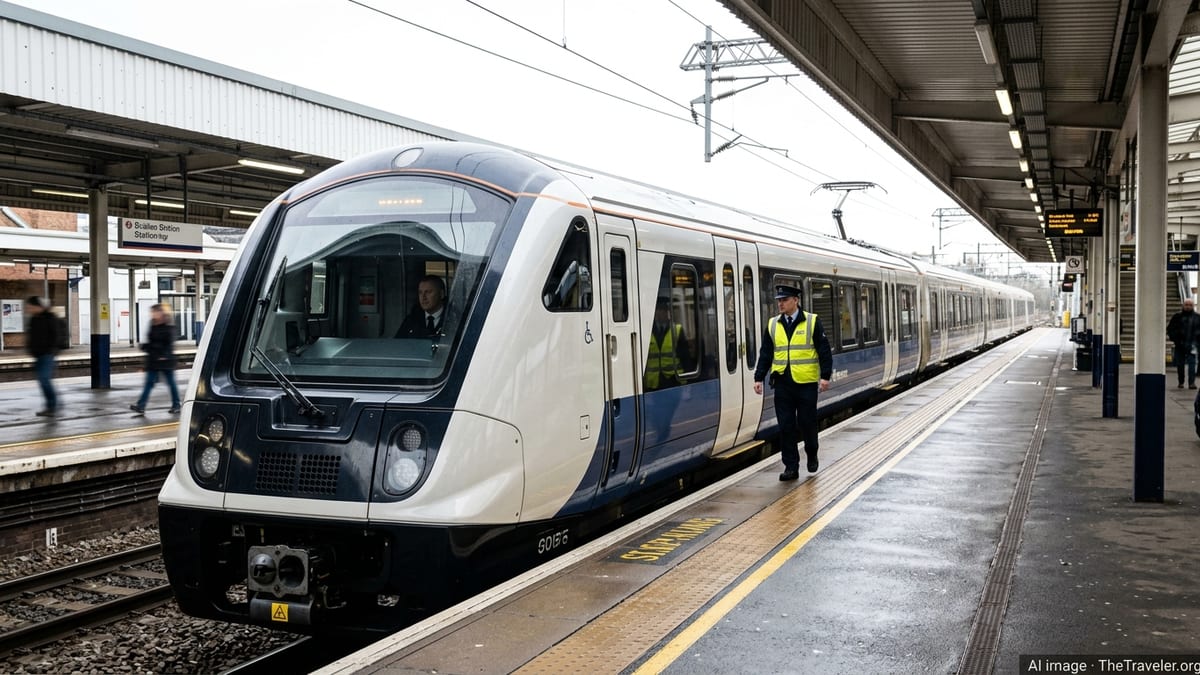
Network upgrades prompt cancellations and altered timetables
Publicly available information from Irish Rail and Transport for Ireland indicates that significant engineering works are scheduled across parts of the rail network over the upcoming weekend, with direct consequences for InterCity, DART and commuter services. Line closures and capacity restrictions mean that a number of trains are cancelled outright, while others will operate to revised timetables or with bus transfers replacing sections of the journey.
The works form part of wider infrastructure and signalling upgrade programmes, including elements of the DART+ and Cork Area Commuter Rail projects. Irish Rail’s published engineering notices state that major tasks are deliberately concentrated into selected weekends and bank holiday periods, when fewer weekday commuters are travelling, even though this creates acute short term disruption for leisure and event travel.
According to Irish Rail’s engineering works summaries for 2026, repeated weekend interventions are taking place on routes radiating from Dublin Heuston and Dublin Connolly, as well as on the southside DART line and sections of the Dublin to Rosslare corridor. Passengers on these routes are being advised to review journey planners in advance and not to rely on habitual departure and arrival times.
Transport for Ireland’s current service updates similarly flag rail engineering works as a key cause of disruption on selected weekends, alongside temporary Luas closures and altered regional bus services. These notices emphasise that further short notice changes remain possible if on-site conditions require additional safety measures.
Heuston corridor: diversions, bus transfers and longer journeys
The Dublin Heuston corridor remains one of the focal points of the planned works. Irish Rail’s published notices for 2026 detail a series of engineering windows between Heuston and key junctions such as Hazelhatch, Portarlington and Athlone, affecting Galway, Westport, Limerick, Cork and Tralee services on different weekends.
On affected dates, some InterCity trains between Dublin Heuston and the west of Ireland are replaced in part by bus transfers, particularly on sections such as Heuston to Athlone or Portarlington to Athlone. These substitutions add to total journey times and can reduce on-board capacity compared with normal rail services. In other cases, trains start or terminate short of their usual destination, requiring passengers to change to a connecting service.
Recent transport advisories highlight that works between Limerick and Limerick Junction and between Dromod and Sligo can also ripple through the wider network, impacting services that connect via Heuston, including some Cork and Galway trains. Bus transfers and revised stopping patterns are used to maintain a skeleton service while allowing track and signalling upgrades to proceed.
Advance timetables published for previous weekends affected by similar works show examples of extended end to end times, such as Heuston to Limerick journeys taking notably longer than in the standard schedule. Passengers planning close connections to flights, ferries or events are being urged by public service announcements to allow additional contingency time.
DART and Southside coastal routes face station closures
While InterCity passengers are dealing with diversions and transfers, DART and coastal commuters face outright station closures on specific weekends. Coverage earlier this year highlighted the closure of 18 DART stations between Dublin Connolly and Bray over a bank holiday period to facilitate intensive works on the southside line, affecting central city stops such as Tara Street and Pearse along with suburban stations through Dún Laoghaire and on to Bray.
Transport for Ireland’s current engineering works notice for the October holiday weekend in 2026 shows a similar pattern of concentrated disruption, with works between Grand Canal Dock and Bray and between Howth Junction, Donaghmede and Howth leading to significant alterations. These include the suspension of regular southside DART services, changes to Rosslare InterCity trains that normally use the same corridor, and service reductions on the northside branches.
During such closures, Dublin area passengers are typically directed towards alternative options, including limited replacement bus services, Luas Green or Red Line connections where available, or re-routed commuter trains that bypass closed sections. However, publicly available advice stresses that capacity on alternatives can be constrained at peak times, especially during major events or holiday weekends.
Previous bank holiday works have coincided with large scale events in Dublin, such as charity runs and concerts, magnifying the impact of the closures. Public transport information services therefore recommend that travellers check both outbound and return options before committing to same-day journeys along the coast.
Cork and regional routes see intermittent shutdowns
Passengers in Cork and the surrounding region are also being warned to expect intermittent weekend shutdowns linked to major signalling and capacity upgrades. Recent local reporting in Cork has described weekend works between Mallow and Cobh as part of the Cork Area Commuter Rail project, with widespread disruption to Cork to Cobh, Cork to Midleton, Cork to Mallow, Cork to Dublin Heuston and Cork to Tralee services across affected Saturdays and Sundays.
Irish Rail’s project information outlines that these works include resignalling, track renewals and station enhancements aimed at enabling more frequent commuter services in the medium term. However, implementing them often requires full possession of certain line sections for extended periods, which limits the possibility of running even a reduced train service.
On such weekends, rail-replacement buses are used on some routes, while others are suspended entirely for the duration of the works window. Timetables published in advance typically show first and last service times being altered, with gap periods in the middle of the day while engineering teams focus on critical tasks that cannot be carried out safely alongside live train movements.
Similar patterns are recorded on regional lines serving Sligo, Longford, Ennis and Ballybrophy, where engineering works between intermediate points like Dromod and Sligo or Limerick and Limerick Junction prompt cascading timetable changes. For travellers, this can translate into fewer direct options to Dublin and a higher reliance on connecting trains or buses.
Advice for weekend rail travellers in Ireland
With multiple worksites active and several routes affected simultaneously, public transport information providers are framing the coming weekend as a period requiring careful planning for anyone relying on Irish Rail services. Journey planners and real time update tools are being highlighted as essential resources, since printed posters or past experience may not accurately reflect temporary timetables.
Passengers holding flexible or open tickets are being advised in public guidance to consider travelling outside the peak impact windows where possible, for example shifting discretionary journeys to early morning or late evening trains that remain unaffected. Where bus transfers are in place, notices point out that journey times can be significantly longer than standard rail timings and that road congestion may further extend travel.
Information services also underline that seat reservations may not be available in the usual way on some altered services, particularly where rolling stock is substituted or where bus links replace a train entirely. Travellers with mobility needs are being encouraged, in publicly available advice, to make themselves aware of changed boarding points, platform alterations and any limits on step free access caused by station works.
For visitors and infrequent rail users, the key message in current public communications is to treat the weekend as an exceptional operating period for the Irish rail network. Allowing extra time, checking schedules shortly before departure and being prepared for revised routes or replacement buses are presented as the most practical ways to navigate the confirmed wave of cancellations and alterations while essential upgrade works continue.