


More news on this day
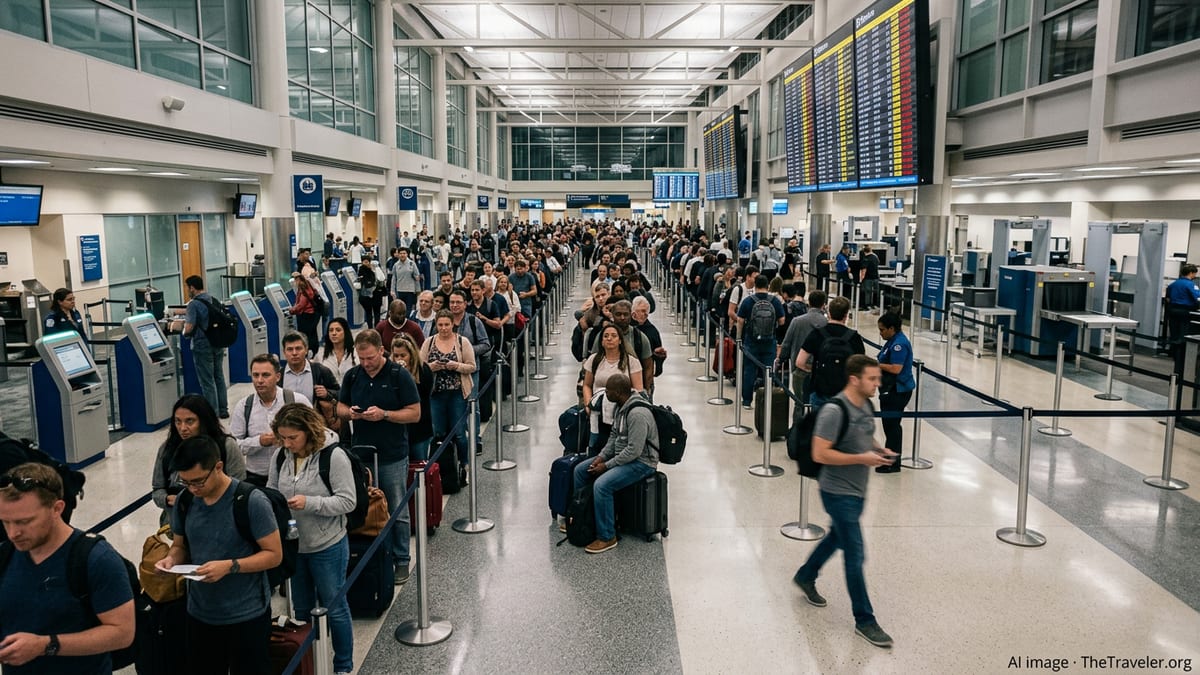
Irish holidaymakers are being warned to brace for longer queues, tighter capacity and a rising risk of disruption this summer, as a series of constraints across Ireland’s aviation system fuel concerns that delays at key airports are “only going to get worse.”
Get the latest news straight to your inbox!
Record Summer Volumes Meet Capacity Limits
Dublin Airport operator daa is preparing for what published coverage describes as its busiest summer on record, with around 11 million passengers expected to pass through the hub between May and October 2026. Forecasts indicate that overall annual traffic is on course to test or exceed the long-standing 32 million passenger cap attached to the airport’s planning permission, intensifying pressure on runways, terminals and security lanes.
The cap, introduced in 2007, has become a central flashpoint in Irish aviation. Airlines and business groups have repeatedly argued that the ceiling is now out of step with demand and economic policy, warning that constrained growth at Dublin risks spilling over into higher fares, fuller flights and more frequent congestion at peak times.
In response, the government has introduced the Dublin Airport (Passenger Capacity) Bill 2026, which aims to lift or significantly amend the cap. Parliamentary debates in June highlighted concerns that Ireland’s reputation as an international gateway could suffer if crowding and slot restrictions continue to divert traffic elsewhere, but the legislation has yet to complete its passage through the Oireachtas.
Until that reform is in place, coordination parameters set by the Irish Aviation Authority and slot allocators effectively ration takeoff and landing rights during the busiest hours. Industry submissions to regulators in recent months have cautioned that adding more early-morning arrivals without wider infrastructure changes could push on-time performance down and extend queues at security and U.S. preclearance.
Flight Cancellations Add To Passenger Squeeze
On top of structural capacity limits, Irish passengers are facing a wave of flight cancellations that is likely to concentrate demand onto fewer remaining services and contribute to longer airport waits. Aer Lingus has already removed more than 500 flights from its summer 2026 schedule, citing mandatory aircraft maintenance and delayed access to hangar slots for heavy checks.
Reports indicate that about 23,000 Aer Lingus customers on roughly 430 flights are directly affected, with many being rebooked onto alternative departures from Dublin, Cork and Shannon. Commentary from pilot representatives suggests that staff availability may be compounding the pressures created by maintenance delays, leading to thinner schedules on certain short-haul routes at peak times.
Ryanair is also cutting back. The carrier has trimmed close to 10 percent of its planned Dublin Airport flights for the summer season, amounting to up to 800,000 seats removed from the market after disagreements over the passenger cap and airport charges. Routes from Cork and Belfast have also been pared, further reducing options for some regional travelers.
While re-accommodation policies and refunds offer individual passengers some protection, the wider effect is to funnel more travelers through a smaller number of departures. Travel analysts note that when aircraft are running at or near capacity, any disruption, from weather to air traffic control delays, tends to cascade more quickly and leave fewer spare seats to absorb stranded travelers.
Staffing Strains And Airspace Bottlenecks
Operational challenges are not confined to airlines. Air traffic management across Irish airspace has shown signs of strain, with public reports earlier this year pointing to repeated closures of sectors due to staffing shortages among controllers. Each closure forces rerouting or metering of flights, increasing the likelihood of knock-on delays for departures and arrivals at Irish airports.
Beyond Ireland’s borders, air traffic control disputes in other European countries are feeding uncertainty into summer schedules used by Irish travelers. In early June, Ryanair was forced to cancel more than 100 flights at short notice after industrial action by controllers in Belgium, leaving around 20,000 passengers stranded across the network. Many of those affected were connecting to or from Irish services or traveling on popular leisure routes used by Irish holidaymakers.
Industry submissions to Irish regulators have warned that even small increases in average delay during key hours can have an outsized impact when airports are operating close to their modeled capacity. With aircraft and crews scheduled tightly, a shortage of controllers in one region, or a brief closure of airspace, can leave aircraft out of position and lead to late arrivals into Dublin and other Irish airports.
Airport planning documents for summer 2026, including analysis prepared for the Irish Aviation Authority, highlight an elevated risk of congestion in early-morning peaks. Concern centres on the combination of more arrivals compressed into a narrow time band, heavy use of U.S. preclearance facilities and already-busy security checkpoints, all of which can translate into longer queues for passengers even when flights ultimately depart on time.
Security Queues And Terminal Experience Under Pressure
In anticipation of higher volumes, daa has rolled out new computed tomography scanning equipment across security lanes in Dublin’s terminals, allowing passengers to keep larger quantities of liquids and electronics in their bags. The technology is designed to reduce the need for secondary searches and, over time, to cut average queue times through security.
However, historical data published by Irish regulators show that security queue times at Dublin spiked significantly during earlier periods of rapid traffic recovery in 2023 and 2024, particularly during school holidays and early-morning waves. Although service levels improved after emergency recruitment and process changes, the system remains sensitive to short-notice staff absences or surges in passenger numbers.
Real-time monitoring projects created by independent developers, which track average wait times using publicly available feeds, show that security queues can still fluctuate sharply across the day. During busy weekends, passengers leaving it late to arrive for departures have reported missing flights after underestimating how long it would take to clear both check-in and security.
Travel commentators note that even with improved technology, the cumulative impact of larger crowds, full flights and heightened checks can make airport journeys feel more stressful. Reports from recent weeks describe crowded departure halls, limited seating and longer lines at food outlets as travelers arrive earlier than before to protect themselves against delays.
What Irish Passengers Can Expect In The Coming Weeks
With the peak summer getaway now under way, the consensus from airline schedules, regulatory filings and recent news coverage is that disruption risks are trending upwards rather than easing. Capacity caps at Dublin, widespread flight cuts by Ireland’s two largest carriers, ongoing controller staffing issues and external air traffic disputes in Europe are all converging during the busiest travel window of the year.
For passengers, this may translate into longer queues at check-in and security, more crowded boarding gates and a higher probability of short-notice time changes or cancellations. Even when flights operate as planned, heavier loads and tighter turnaround times can extend boarding and disembarkation, lengthening the overall journey through the terminal.
Consumer advocates are emphasizing the importance of understanding passenger rights, including entitlements under EU compensation rules for significant delays and cancellations within an airline’s control. At the same time, they note that many of the systemic constraints now weighing on Irish aviation, from planning caps to air traffic staffing, sit beyond the reach of individual carriers and will require policy decisions that may not take effect until after the current summer season.
Until those longer-term measures are in place, publicly available information suggests that Irish travelers should prepare for a challenging few months at the country’s main airports, adjusting their plans with the expectation that delays and congestion are likely to remain a defining feature of summer 2026 air travel.