


Barcelona is full of Gaudí. From the spires of the Sagrada Família to the mosaics of Park Güell, you can feel his presence without ever stepping inside one of his famous houses. Yet for many travelers, the real question is whether paying premium ticket prices to tour a Gaudí house is actually worth it. With standard entry often hovering around 30 to 40 euros, should you carve out precious time and budget for Casa Batlló, La Pedrera, Casa Vicens or another Gaudí home, or simply admire them from the street?
Get the latest updates straight to your inbox!
What You Really Get From a Gaudí House Tour
From the outside, Gaudí’s houses are already spectacular. Casa Batlló’s dragon-backed roof and skull-like balconies stop people in their tracks on Passeig de Gràcia, while La Pedrera’s undulating stone facade and wrought-iron balconies look like a living sculpture. Many visitors assume that snapping photos from the sidewalk is enough. Stepping inside, however, is a very different experience. You are not just seeing a building, you are walking through Gaudí’s ideas about nature, light and how people should live.
On a typical house visit you will move through restored apartments, attic spaces that once served practical purposes, inner courtyards, and rooftops that feel almost theatrical. At Casa Batlló, for example, the self-guided tour leads you through a family residence with curved wooden doors, wave-shaped ceilings and stained glass that changes color as the sun moves. La Pedrera takes you into a recreated early 20th century bourgeois apartment and an attic exhibition where the original parabolic brick arches feel like the ribcage of a giant animal. These interiors are not replicated anywhere else in the city, not even at Park Güell.
Modern audio guides also add context that you will not get from the pavement. Many visitors note that the storytelling at Casa Batlló, available in multiple languages, transforms the visit from a simple walk-through into a narrative about the family, the neighborhood and Gaudí’s experiments with ventilation and natural light. La Pedrera and Casa Vicens similarly use models, historic photographs and short films to help you visualize how radical these designs were when they first appeared in Barcelona’s conservative Eixample district.
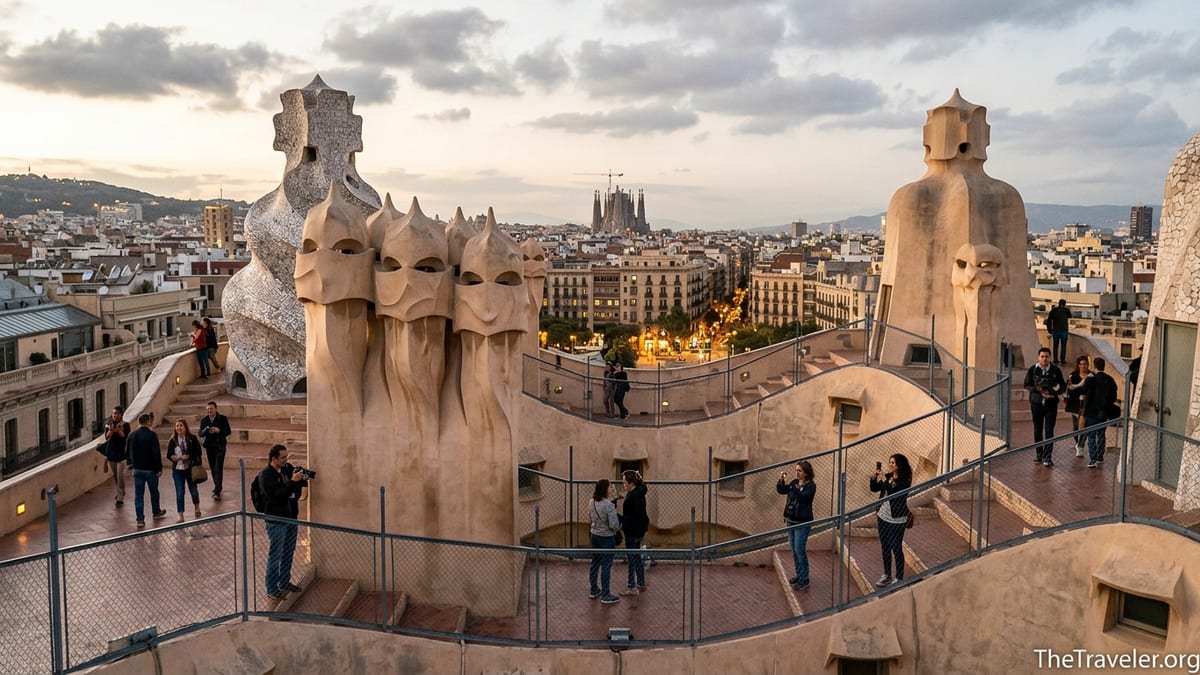
The last major advantage is access to the rooftops and inner courtyards, which are almost always closed to casual passersby. The warrior chimneys of La Pedrera, the shimmering blue and green rooftop of Casa Batlló and the tiled turrets of Casa Vicens become quiet vantage points over Barcelona once you are inside the paid area. On a clear evening you can watch the sunset over the city from the top of La Pedrera, glass of cava in hand, something that is simply not possible without a ticket.
How Much Do Gaudí House Tours Cost in 2026?
As of mid 2026, Gaudí house visits are some of the more expensive cultural experiences in Barcelona, and prices continue to inch upward. Standard online tickets for major houses often fall in the 30 to 40 euro range for adults, with discounts for children, seniors and students. For example, night experiences at La Pedrera currently list adult tickets around 39 to 40 euros, including a guided tour, audiovisual show on the rooftop and a glass of cava at the end. Park Güell, which is technically a park rather than a house, now charges around 18 euros for basic adult entry to the monumental zone after a sharp price rise in January 2026.
Casa Batlló’s standard daytime tickets tend to be among the priciest, often landing around the mid 30s in euros for the base level and more for premium options that include fast-track entry or extended access. Recent visitors report that rooftop access is now tied to higher-tier tickets instead of being automatically included with the cheapest level, so reaching the famous tiled rooftop may require paying for at least a mid-range ticket. Special evening experiences that combine the house visit with live rooftop music generally sit above 45 to 50 euros per person.
Casa Vicens, Gaudí’s earlier residential work in the Gràcia neighborhood, is usually kinder to the wallet. Adult tickets here are often closer to the low 20s in euros, making it one of the more affordable Gaudí interiors to visit while still offering a full museum experience. Combined with the fact that lines are typically shorter and same-day tickets are often available at the door, Casa Vicens is increasingly attractive to travelers watching both time and money.
When calculating costs, remember that many houses now operate almost entirely with timed online tickets. Same-day walk-up tickets may be limited or sold at a small premium through resellers. If you are a family of four, a single visit to Casa Batlló at peak rates can easily reach 120 to 140 euros, particularly if teens are paying near adult prices. That level of expense makes it important to think carefully about where a house tour fits into your overall Barcelona budget.
Which Gaudí House Is Best for First-Time Visitors?
If you have never seen Gaudí’s work up close and want one definitive house experience, most travelers debate between Casa Batlló and La Pedrera. Both sit in the city center on Passeig de Gràcia, both are UNESCO-listed, and both offer striking rooftops and well-designed visitor routes. The choice often comes down to how you like to experience architecture and what kind of atmosphere you prefer.
Casa Batlló is the more theatrical of the two. The interiors are fully immersive, with multimedia projections, colored lighting and sound design that emphasize the building’s “underwater” and dragon themes. Many rooms intentionally heighten the sense of fantasy, and the visit can feel closer to an art installation or high-end attraction than a traditional museum. If you love bold color, surreal details and Instagram-ready spaces, this house tends to be unforgettable, especially during seasonal night events that bathe the facade and courtyard in changing light.
La Pedrera, by contrast, leans into the building’s role as an actual residence and as a piece of early 20th century urban history. The recreated apartment shows everyday objects, children’s toys and dining settings from the 1910s, while the attic exhibition brings together models and plans for Gaudí’s other works. The rooftop, with its helmet-like chimneys and sweeping views of the Eixample grid and the Sagrada Família in the distance, is dramatic without heavy multimedia. For travelers who prefer a slightly calmer, more architectural focus, La Pedrera often feels more satisfying and less crowded than Casa Batlló at peak times.
Casa Vicens suits visitors who want to delve deeper into Gaudí’s evolution without the crowds or spectacle. Located in a residential corner of Gràcia, it has a more intimate feeling, with vivid ceramic tiles, oriental influences and a lush small garden. Because it was Gaudí’s first major commission, the building reveals aspects of his style before the full explosion of curves and mosaics that you see at Casa Batlló. Many architecture enthusiasts describe Casa Vicens as a quieter but deeply rewarding choice, especially when combined with a stroll through Gràcia’s plazas and cafes.
When a Gaudí House Tour Is Absolutely Worth It
There are certain travelers for whom a Gaudí house visit is practically non-negotiable. If you are passionate about architecture, design or urban history, walking through at least one house provides context that you cannot get from facades alone. Designers frequently note that details such as door handles shaped to fit the human hand, hidden ventilation shafts and skylights that diffuse light evenly across a room only become apparent inside. Photography enthusiasts also gain access to unusual angles and patterns, from the fish-scale tiles of Casa Batlló’s rooftop to the shadow play of La Pedrera’s attic arches.
Short stays can also justify the cost. If you are in Barcelona for only two full days, you will not have time to see every major Gaudí site in depth. Investing in one carefully chosen house visit can offer a concentrated experience of his style without dedicating hours to cross-city travel. A common approach is to pair a morning visit to La Pedrera or Casa Batlló with an afternoon at the Sagrada Família, then reserve Park Güell for a later trip. This creates a manageable itinerary where you see interior, rooftop and sacred architecture in a single day.
Evening experiences are particularly worthwhile if you want something beyond daytime sightseeing. The La Pedrera Night Experience, for instance, guides small groups through the building after regular closing, then ends with a video-mapping show on the rooftop and a drink. The atmosphere feels more exclusive, and the city lights stretch out around you. Similarly, Casa Batlló’s special night visits and rooftop concerts combine architecture with live music, creating a memorable date night or special-occasion outing. These events cost more than standard entry, but many travelers remember them as the highlight of their Barcelona stay.
Finally, a Gaudí house can be a smart choice for travelers visiting in cooler months or on days when rain or heat makes outdoor sightseeing less pleasant. Unlike Park Güell or long walks along the seafront, the houses are almost entirely indoors, with climate control and seating areas. Families with children, older travelers and anyone who needs a predictable, weather-proof activity will often find a 60 to 90 minute house tour a comfortable way to experience Gaudí without worrying about the forecast.
When You Might Skip It and Still Have a Great Trip
Despite their appeal, Gaudí houses are not essential for everyone. If you are traveling on a very tight budget, the combined ticket costs of Sagrada Família, Park Güell and a house visit can quickly exceed what you are comfortable spending on sightseeing. In that case, you can still enjoy Gaudí from the outside by strolling along Passeig de Gràcia to see Casa Batlló and La Pedrera, then visiting Park Güell for a single paid Gaudí experience that includes both architecture and views. Adding a free exterior visit to the Sagrada Família at dusk, when the stone glows, rounds out the experience without additional ticket fees.
Time constraints are another key factor. Many first-time visitors underestimate how long it takes to move around Barcelona’s busy streets, especially in high season. If you only have one day in the city and have already committed to a timed Sagrada Família visit and a Park Güell ticket, squeezing in a full Gaudí house tour may leave you rushing through everything. You might be better off enjoying the facades at your own pace while leaving enough time to wander the Gothic Quarter or relax at Barceloneta beach.
Some travelers also find that the multimedia-heavy style of certain houses does not match their taste. If you prefer quiet spaces and minimal digital effects, you may not enjoy Casa Batlló’s more immersive approach and could feel that the ticket price is high for what feels like an attraction rather than a traditional historic house. In that scenario, you might choose Casa Vicens or skip interiors altogether and spend that portion of your budget on tapas, a day trip to Montserrat or a food tour of neighborhoods like Poble-sec.
Finally, repeat visitors to Barcelona may feel that they have seen enough Gaudí interiors on prior trips. If you have already toured one or two houses and the Sagrada Família, your next visit could reasonably focus on different aspects of the city, such as contemporary art at MACBA, the modernist Hospital de Sant Pau or simply exploring local markets. Gaudí will still be present in the streetscape, but your budget can shift toward new experiences.
How to Choose the Right Gaudí House for Your Itinerary
Start by considering your neighborhood base and daily plans. If you are staying near Plaça de Catalunya or Passeig de Gràcia and already walking that avenue for shopping or dining, adding Casa Batlló or La Pedrera makes logistical sense. Both are easy to combine with a visit to the Gothic Quarter or a stroll along Rambla de Catalunya. On the other hand, if your accommodation is in Gràcia or you want to spend an afternoon exploring that village-like district, Casa Vicens ties in naturally with coffee in Plaça de la Vila and tapas on Carrer de Verdi.
Next, match the house to your interests. For vivid colors, strong visual impact and a slightly fantastical feeling, Casa Batlló is hard to beat. For an emphasis on how people actually lived, with more original furnishings and educational content, La Pedrera often wins out. For early Gaudí and lighter crowds, Casa Vicens offers a quieter, more contemplative visit. Families with young children might favor La Pedrera’s wider staircases and open rooftop or Casa Batlló’s interactive features, while travelers with mobility concerns should check each house’s elevator and step information in advance, as rooftops in particular can involve stair climbing.
Also think about timing. Gaudí houses are busiest in the late morning and mid-afternoon, especially in spring and summer. Booking the first entries of the day often means cooler temperatures, softer light in interior courtyards and fewer people in your photos. Evening slots, particularly for special experiences, feel atmospheric and less hurried but can sell out days or weeks ahead in peak months. Real-world booking patterns in 2026 show that morning slots for Park Güell and prime times for La Pedrera Night Experience disappear quickly around weekends and holidays, so advance planning is important.
Finally, look at combination tickets and city passes only after you have a clear idea of what you truly want to see. While multi-attraction passes can be convenient, they may push you into visiting more Gaudí interiors than you actually have time or interest for. Many independent travelers now prefer to buy only two or three carefully chosen tickets, such as Sagrada Família, one Gaudí house and Park Güell, and then leave the rest of their itinerary open for spontaneous discoveries.
Practical Tips to Get the Most Value From a Gaudí House Visit
To maximize value, book directly with the official site whenever possible. Official tickets typically offer the best control over entry times and access levels, while also clearly indicating what is included, such as rooftop access or use of an audio guide. Third-party sellers may bundle extras, but you should read the fine print to avoid paying more than necessary for things like generic audio guides that are already part of the standard ticket.
Plan around transport and meals to avoid backtracking. For instance, if you book a 9:00 a.m. slot at La Pedrera, you can have coffee at a nearby cafe on Passeig de Gràcia at 8:30, tour the house for 60 to 90 minutes, then walk ten to fifteen minutes to the Gothic Quarter for lunch. Similarly, a late afternoon visit to Casa Vicens can be followed by an early dinner in Gràcia, allowing you to experience the building and the neighborhood’s evening energy in one stretch. Thinking in terms of clusters like this prevents you from spending more on taxis or wasting metro rides.
Once inside, resist the urge to rush to the rooftop. Many visitors make a beeline for the famous chimneys and tiles, then realize they have skimmed past explanatory exhibits and period rooms that give those rooftops meaning. A more rewarding route is to move slowly through the main apartment or interpretive spaces first, listen to the short audio guide segments, and only then head upward. You will see recurring motifs, such as Gaudí’s use of catenary arches or organic shapes inspired by plants and animals, which makes the rooftop feel like the logical culmination rather than a disconnected photo stop.
If you are sensitive to crowds, aim for shoulder seasons like late October or early March, when both ticket prices and visitor numbers can be marginally lower than in July or August. Within a single day, choosing earlier or later slots also helps. Many travelers report that the last entries before closing, whether at Casa Batlló or La Pedrera, feel calmer, with more space to linger on balconies and in stairwells. Bring a light layer, as some interior spaces can feel cool even in summer due to stone walls and air conditioning.
The Takeaway
So, is a Gaudí house tour worth adding to your Barcelona itinerary? For many travelers, the answer is yes, provided it fits your budget and interests. Touring at least one of Gaudí’s houses gives you access to spaces, stories and views that you simply cannot get from the street. The interiors reveal how he bent architecture around human comfort and natural light, while rooftops and courtyards offer some of the most distinctive cityscapes in Barcelona.
At the same time, a Gaudí house is not automatically essential for every visitor. If your budget is tight, your time limited or your tastes lean away from multimedia attractions, you can still build a meaningful Gaudí experience around Park Güell, the Sagrada Família and exterior views of the houses. The key is to be intentional. Choose one house that aligns with your style, schedule it thoughtfully, and treat it as a highlight rather than just another box to tick.
Ultimately, the value of a Gaudí house tour lies in how it deepens your relationship with the city. Whether you are standing under the attic arches of La Pedrera, tracing the curve of a Casa Batlló balcony or admiring the patterned tiles of Casa Vicens, you are stepping into the living fabric of Barcelona’s identity. For many visitors, that brief immersion alone justifies the ticket price.
FAQ
Q1. If I only visit one Gaudí house, which should it be?
For a first visit, most travelers choose either Casa Batlló for its colorful, immersive atmosphere or La Pedrera for a more architectural, museum-style experience with a dramatic rooftop.
Q2. Are Gaudí house tours worth it if I am already visiting the Sagrada Família and Park Güell?
Yes, if your budget allows. The houses show Gaudí’s ideas applied to everyday living spaces, which complements the religious focus of the Sagrada Família and the landscape design of Park Güell.
Q3. How far in advance should I book Gaudí house tickets?
In high season, book at least several days ahead for prime morning and evening slots, and a week or more in advance for popular night experiences or weekend visits.
Q4. Can I buy tickets at the door for Gaudí houses?
Some houses, such as Casa Vicens, often have same-day tickets at the door, but major sites like Casa Batlló and La Pedrera can sell out, so online advance purchase is strongly recommended.
Q5. Are Gaudí house tours suitable for children?
Yes. The unusual shapes, colors and rooftops appeal to many kids, though younger children may tire during longer audio guides. Early morning or late afternoon slots are usually calmer for families.
Q6. Which Gaudí house is best on a tight budget?
Casa Vicens is typically one of the more affordable Gaudí interiors, while simply viewing Casa Batlló and La Pedrera from outside and investing in a Park Güell ticket is another budget-friendly strategy.
Q7. Is a night experience at a Gaudí house worth the extra cost?
Often yes, especially at La Pedrera or Casa Batlló. Smaller groups, illuminated rooftops and added elements like music or projections create a distinctive atmosphere many visitors remember for years.
Q8. How long should I plan for a Gaudí house visit?
Most visits take around 60 to 90 minutes, depending on how thoroughly you use the audio guide and how long you spend on the rooftop or in temporary exhibitions.
Q9. Are Gaudí houses accessible for travelers with limited mobility?
Most offer elevators and step-free routes for major interior areas, but rooftop access can be challenging due to stairs and uneven surfaces. Check current accessibility details on each house’s official site before booking.
Q10. Can I skip the audio guide and still enjoy the visit?
You can, but you will miss much of the context. A good compromise is to listen to the shorter segments in key rooms and then wander more freely in spaces like rooftops and courtyards.