


Barcelona first-timers almost always face the same Gaudí dilemma: if you only have time or budget for one big-ticket modernist attraction, should it be the Sagrada Família or one of the Gaudí houses such as Casa Batlló or La Pedrera (Casa Milà)? Both promise soaring curves, colored tiles and that unmistakable Gaudí magic, yet they deliver very different kinds of experiences. This guide breaks down what each offers, what it costs in real terms, and which type of traveler will get more out of each option.
Get the latest updates straight to your inbox!
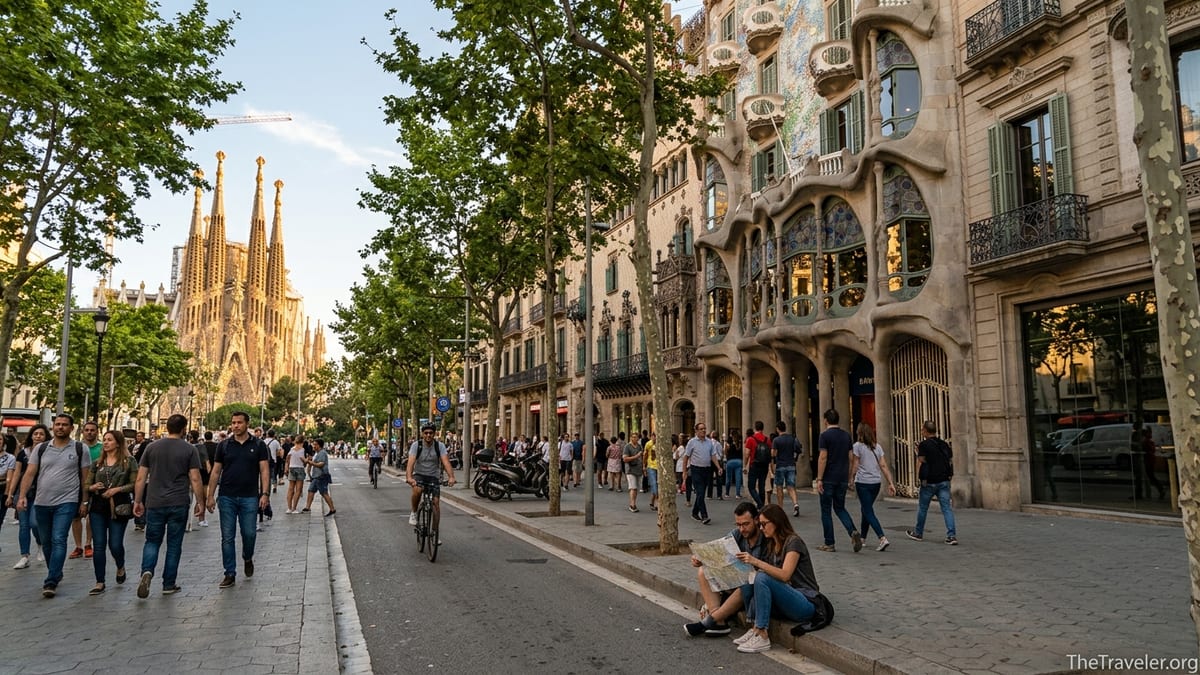
Understanding the Two Experiences: Monument vs Home
The Sagrada Família is Gaudí’s unfinished basilica and the single most visited attraction in Barcelona, drawing nearly five million paying visitors a year. It dominates the skyline, feels closer to a cathedral than a museum, and functions as both an active place of worship and a global architectural icon. Walking inside is about volume and drama: vast pillars shaped like trees, colored light pouring through stained glass, and the sense that you are stepping into a forest made of stone.
By contrast, the Gaudí houses such as Casa Batlló and La Pedrera are residential buildings turned into museums. Here the experience is intimate and domestic. You walk through stairwells, living rooms, courtyards and rooftops that were actually used as homes and apartments. Instead of looking up at a 70-meter nave, you are close enough to see the texture of hand-carved doors, ceramic tiles and wrought-iron balconies that once framed everyday life along Passeig de Gràcia.
This difference in scale shapes everything about your visit. At the Sagrada Família, you are one person in a sea of visitors, moving along controlled paths inside an active construction site that is finally pushing toward completion in the late 2020s. At a Gaudí house, even on a sold-out afternoon, it often feels like you are exploring a single, coherent work of art, room by room. Both are unforgettable, but they scratch very different itches.
When locals talk about “seeing Gaudí,” they usually mean both types of sites: the spiritual monument and at least one house. If you must choose, start by asking if you want to feel awe in a sacred space or curiosity about how Gaudí reshaped daily domestic life.
What You Actually See at Sagrada Família
A standard ticket to the Sagrada Família gets you access to the basilica interior, the museum beneath the church and the exterior facades from the street. In practice this means at least 60 to 90 minutes of walking through the nave, circling the apse, and wandering the small exhibition that explains the project’s history, models and ongoing construction. Many visitors describe their first step into the nave as the single most powerful visual moment of their trip, especially in late afternoon when the sun hits the west-facing stained glass and floods the interior with deep reds and oranges.
If you pay extra for a tower ticket, you take a lift up one of the facades, then descend on foot via narrow staircases. The views are memorable but not essential for everyone; travelers with vertigo or mobility issues often say the basilica floor alone is enough. Inside the museum you can examine Gaudí’s original plaster models and photographs of bomb damage from the Spanish Civil War, a useful context if you are curious about how much of what you see is original and how much is careful reconstruction.
Queues and crowd management are part of the Sagrada experience. Timed entry works well, but security and audio-guide lines can still eat into your schedule, particularly in July and August afternoons. Many travelers share stories of arriving without tickets at 10 a.m., only to find the next available slot is in the late afternoon or sold out entirely. To make this visit worthwhile, you should be willing to plan ahead, book online at least a few days out in high season, and accept that you will be moving at the pace of a very popular site rather than wandering freely.
For some visitors, especially those who regularly visit churches and cathedrals in Europe, the religious dimension matters. The Sagrada Família hosts services and occasional special masses; if you are sensitive to sacred spaces, the quiet side chapels and organ music can turn the visit into something closer to a retreat. If you travel primarily for design and photography, you may spend your time chasing angles of the facades and stained glass instead.
What You Actually See at a Gaudí House
There are several Gaudí houses open to the public in Barcelona, but the most popular for first-time visitors are Casa Batlló and La Pedrera (Casa Milà), both on Passeig de Gràcia. A typical visit includes the spectacular facade, main staircase, one of the former noble floors, the attic, and the rooftop. You move through former living spaces, often with furniture, textiles and decorative details that help you picture how wealthy Barcelona families lived before the First World War.
Casa Batlló leans into immersive storytelling. Standard tickets now include a multimedia guide and access to features such as the “Gaudí Cube” room, which projects digital art inspired by Gaudí’s sketches and natural motifs. Travelers regularly highlight the light-filled central patio, lined with glazed tiles that deepen in color as they rise, and the dragon-back roof terrace with its mosaic scales and chimney clusters. Many describe this house as walking into a fairytale version of a home, where even the door handles and window frames have been ergonomically sculpted.
La Pedrera, by contrast, emphasizes structure and rooftop drama. Its undulating stone facade is striking from the street, but the most memorable part for many visitors is the roof, with rows of warrior-like chimneys and ventilation towers that feel like a sculptural garden. Inside, you typically see a restored early 20th-century apartment staged with period furniture, which helps you imagine the building as a functioning residence rather than a pure art piece. The attic, with its brick arches, also gives a clearer sense of how Gaudí used structural innovation to support the free-form facade.
If you choose a Gaudí house over the Sagrada Família, what you get is proximity and detail. You can linger over door frames, tiles and stair rails without feeling rushed. Photographers appreciate being able to compose shots of courtyards and staircases without the intense vertical distortion that comes with shooting inside the basilica. Families with school-age kids often report better engagement here because the domestic scale is easier for children to relate to than a vast religious monument.
Cost, Time and Practical Trade-offs
From a budget perspective, the Sagrada Família and the top-tier Gaudí houses sit in a similar price band, with some nuance that can sway your decision. In 2026, basic Sagrada Família tickets typically start in the lower to mid 20-euro range for adults, with guided tours and tower access pushing the total closer to or above 35 to 40 euros per person, depending on the option and season. Third-party guided tours that bundle skip-the-line access, a guide and sometimes a bus transfer often land in the 45 to 60 euro bracket per adult.
Casa Batlló tends to be one of the priciest Gaudí houses. Current basic online tickets commonly start around the low 30-euro mark for adults for entry with an audio or multimedia guide, with premium options that add early access, small-group tours or special rooms priced significantly higher. La Pedrera day tickets are usually somewhat cheaper than Casa Batlló, while the night experience with rooftop light show often costs around the mid 30-euro range for general admission. Prices fluctuate with bundles, seasonal demand and sales, but for most travelers the headline is that a high-quality visit to either the Sagrada Família or a major Gaudí house will cost roughly the same as a nice sit-down dinner for two in a mid-range Eixample restaurant.
Time is just as important as money. A focused visit to a Gaudí house generally takes 60 to 90 minutes, and you can fit it neatly between other plans. The Sagrada Família, once you factor in security, audio-guide collection, lingering in the nave and a quick look at the museum, often takes a similar amount of time but feels less flexible, because you must hit your assigned entry window and adjust the rest of your day around it. In peak travel months when Barcelona hosts multiple cruises at once, those fixed windows can mean very early or very late entries if you book at the last minute.
For a short city break of two full days, that planning friction matters. If you arrive on a Friday afternoon and leave Sunday evening, you may find that a Gaudí house integrates more easily with a flexible tapas crawl, afternoon at Barceloneta beach or a spontaneous shopping session on Passeig de Gràcia. If your schedule is already packed with timed entries for Park Güell or Picasso Museum, adding a rigid Sagrada Família slot may feel like one commitment too many.
Which Experience Fits Your Travel Style?
If this is your first and possibly only trip to Barcelona, most travelers and local guides will still lean toward the Sagrada Família as the more essential experience. It is the city’s visual shorthand on postcards and TV news, and seeing its facades and interior in person ties together much of what you encounter elsewhere in Catalan modernism. Visitors who love grand architecture, sacred spaces, or “bucket list” world icons almost always rank it as a highlight, on par with sites like Rome’s Colosseum or Paris’s Eiffel Tower in impact.
On the other hand, travelers who are particularly interested in design, interiors or everyday urban life often come away more satisfied from a Gaudí house. If you work in architecture, graphic design or user experience, walking through rooms where every doorknob and window was designed with human ergonomics and light in mind can feel incredibly contemporary. The houses also tend to appeal more to people who prefer to observe rather than perform; the atmosphere encourages quiet inspection and photography rather than the sense of being part of a large, moving pilgrimage.
Introverted travelers, parents with easily overstimulated kids, and anyone sensitive to crowds sometimes describe the Sagrada Família visit as overwhelming in peak summer. In that case, a timed evening slot at La Pedrera’s night experience or an early opening at Casa Batlló can offer a gentler way to engage with Gaudí’s work. You can stand on a rooftop terrace at dusk, watching the city lights come up over the Eixample grid, instead of jostling through security lines beside bus tours.
Another factor is mobility and accessibility. The basilica works hard to accommodate wheelchairs and visitors with reduced mobility, but the sheer scale, slopes and steps to towers can be tiring. Gaudí houses also have staircases and rooftop steps, yet the visit is broken into shorter segments with more seating and easier exits back to street level. If you or a travel companion has limited stamina, a house may be a more manageable and still deeply rewarding way to experience Gaudí’s world.
Real-world Itineraries: How Locals and Repeat Visitors Decide
Consider three common trip scenarios. A weekend visitor staying near Plaça de Catalunya arrives late on a Friday with no advance tickets. Saturday is already loosely planned with a Gothic Quarter walk and evening in El Born. In this case, same-day tickets for the Sagrada Família in high season may only be available at awkward times, or not at all. That traveler might reasonably book an afternoon slot at La Pedrera or Casa Batlló instead, which often has more flexible availability, and treat the basilica as a must-see exterior stop instead of an interior visit.
Now imagine a family of four traveling in late October, staying in an apartment in the Eixample for five nights. They have enough days to spread out major attractions and can book tickets a week in advance. Here, doing both makes excellent sense: the parents might choose a morning guided tour at the Sagrada Família, then a late-afternoon visit to Casa Batlló or La Pedrera another day, tying it to a stroll and hot chocolate along Passeig de Gràcia. The extra time lets them schedule each big Gaudí site when the kids are freshest, avoiding back-to-back intense visits.
A third scenario involves a repeat visitor who has already toured the Sagrada Família interior on a previous trip. On a return visit, they may skip going inside again and instead invest their budget in a new Gaudí house experience, such as a night rooftop show at La Pedrera or a special apartment visit at Casa Batlló that has only recently opened to the public. This pattern is common: the basilica is often the first big Gaudí investment, with houses reserved for subsequent trips when people already feel they have “done” the main icon.
Listening to how frequent visitors talk about these choices reveals a subtle pattern: hardly anyone regrets visiting the Sagrada Família once, but a significant number say that if they had to cut something from a short itinerary, they would delay a house for a future trip rather than skip the basilica entirely. That said, for travelers deeply focused on design and interiors, the opposite is sometimes true, and they describe a Gaudí house as the more inspiring, human-scale encounter.
Tips to Get the Best Out of Either Choice
Whichever option you choose, timing and preparation will shape your experience. For the Sagrada Família, early morning entries shortly after opening or late-afternoon slots typically feel slightly calmer than the peak middle-of-the-day hours when large tour groups arrive and interior noise rises. Many photographers favor late afternoon for the most dramatic stained-glass color, but if you are more interested in serenity than Instagram shots, the first hours of the day often bring a softer atmosphere.
At Gaudí houses, the pattern is similar but less extreme. Early morning or late evening sessions tend to see fewer large groups. The La Pedrera night experience combines a guided rooftop tour with a light-and-sound show projected onto the chimneys, finishing with a glass of cava. This makes it particularly appealing for couples or groups of friends who want to combine culture with a special-night-out feel. Families with younger children often prefer daytime visits, when the rooftop is still magical but the show and late finish are not factors.
Audio guides and multimedia tools are worth using in both settings. At the Sagrada Família, an audio guide or guided tour helps decode the symbolism of the Nativity and Passion facades, which can otherwise feel visually overwhelming. At Casa Batlló, the multimedia guide brings to life small details like air vents hidden in walls and windows designed to adjust light and ventilation long before air conditioning existed. These explanations turn aesthetic pleasure into a deeper understanding of how Gaudí thought about function and spirituality.
Finally, think about neighborhood context. The Sagrada Família sits in a residential area of the Eixample, with smaller cafes and local bakeries nearby. Many visitors combine their basilica slot with a casual lunch at a nearby vermuteria or a stroll through the surrounding streets to see how the church rises unexpectedly above ordinary apartment blocks. The Gaudí houses, by contrast, are in the heart of Passeig de Gràcia, surrounded by designer boutiques, department stores and busy intersections. Combining a visit there with shopping, a modern Catalan tasting menu or cocktails on a rooftop bar fits naturally into the setting.
The Takeaway
If you are deciding between the Sagrada Família and a Gaudí house, start with your priorities. If this is your first visit to Barcelona, you enjoy large-scale monuments and you are willing to plan ahead, the Sagrada Família gives you the most iconic, once-in-a-lifetime experience. It ties together the city’s image, Gaudí’s grandest ambitions and a living story of construction that is still unfolding. For many travelers, skipping it feels like visiting New York without seeing the skyline or Paris without walking past the Eiffel Tower.
If you care more about interior design, domestic architecture and a quieter, more detailed encounter with Gaudí’s imagination, a visit to Casa Batlló or La Pedrera may be more rewarding. The houses let you move at your own pace, studying staircases, windows and rooftops from just a few steps away. They fit easily into a flexible day of wandering and bring Gaudí’s ideas down to the level of human scale and everyday life.
Ideally, with enough time and budget, you will do both. Many travelers remember the Sagrada Família as their moment of awe and a Gaudí house as their moment of intimacy. If you can only choose one, be honest about your travel style, your tolerance for crowds and your interest in sacred spaces. Barcelona is generous: whichever Gaudí experience you pick, you will leave with a new way of looking at curves, light and the possibilities of architecture itself.
FAQ
Q1. If I can only visit one, should I choose Sagrada Família or a Gaudí house?
If this is your first time in Barcelona and you are comfortable with crowds and advance booking, the Sagrada Família is usually the stronger single choice because it is the city’s defining landmark and offers a unique, large-scale experience that you cannot find elsewhere.
Q2. Which Gaudí house is best for a first-time visitor?
Casa Batlló and La Pedrera are the most popular. Casa Batlló is more immersive and theatrical, while La Pedrera feels slightly calmer and more focused on structure and rooftop views, so choose based on whether you prefer storytelling or a more architectural perspective.
Q3. Are the Sagrada Família tower tickets worth the extra cost?
The towers offer memorable city views and a closer look at the facades, but the narrow stairs and heights are not for everyone. If you have limited budget, fear of heights or mobility concerns, spending your money on a quality guided visit to the basilica interior is often a better value.
Q4. How far in advance should I book tickets?
For the Sagrada Família in high season, booking at least several days ahead is wise, and longer if you want specific times or tower access. Gaudí houses are a bit more flexible, but for weekend evenings or special night experiences, buying tickets a few days in advance is still recommended.
Q5. Which option is better with young children?
Many families find Gaudí houses easier with children because the spaces are smaller, the stories are more concrete and rooftops and courtyards feel playful. The Sagrada Família can still be rewarding, but the crowds, security and scale may be more tiring for younger kids.
Q6. Can I just see the Sagrada Família from the outside and skip the interior?
You can certainly appreciate the facades from the streets around the basilica, and travelers on tight budgets sometimes do exactly that. However, most people who go inside feel it is the most impressive part of the visit, so if you can afford it, the interior is strongly recommended at least once.
Q7. Is there a dress code for visiting the Sagrada Família?
Yes, as an active church, it expects visitors to dress respectfully, which generally means covering shoulders and avoiding very short shorts or beachwear. Enforcement can vary by day, but packing a light scarf or extra layer makes it easy to adapt.
Q8. Are Gaudí houses accessible for visitors with limited mobility?
Most Gaudí houses provide lifts, ramps and adapted routes for many areas, though some rooftops and attics include stairs and uneven surfaces. If accessibility is crucial, check the latest information directly with the attraction and consider focusing on the main floors rather than rooftop sections.
Q9. Which experience is better for photography?
The Sagrada Família offers dramatic vertical shots and extraordinary stained-glass color, especially in late afternoon, but crowds and height can make composing images challenging. Gaudí houses provide more manageable spaces, varied angles and rooftop terraces that many photographers find easier to work with.
Q10. Is it realistic to visit both in one day?
It is possible to see the Sagrada Família and a Gaudí house in a single day if you plan timed tickets carefully and accept a fairly full schedule. Many visitors do a morning basilica visit and a late-afternoon or evening house visit, but if you have the flexibility, spreading them over two days generally feels more relaxed.