


Asbury Park, on New Jersey’s central coast, has gone from near-abandoned boardwalk to one of the most talked-about small beach cities on the East Coast. Travelers today find a compact mix of oceanfront, food, nightlife, and live music that feels very different from the more carnival-style Jersey Shore towns. Yet Asbury Park is not for everyone. Before you commit to a weekend or plan your summer beach day around it, it is worth understanding what this revived seaside city does well, where it falls short, and how to visit in a way that matches your expectations and budget.
Get the latest updates straight to your inbox!
Why Asbury Park Is On So Many Travelers’ Radar
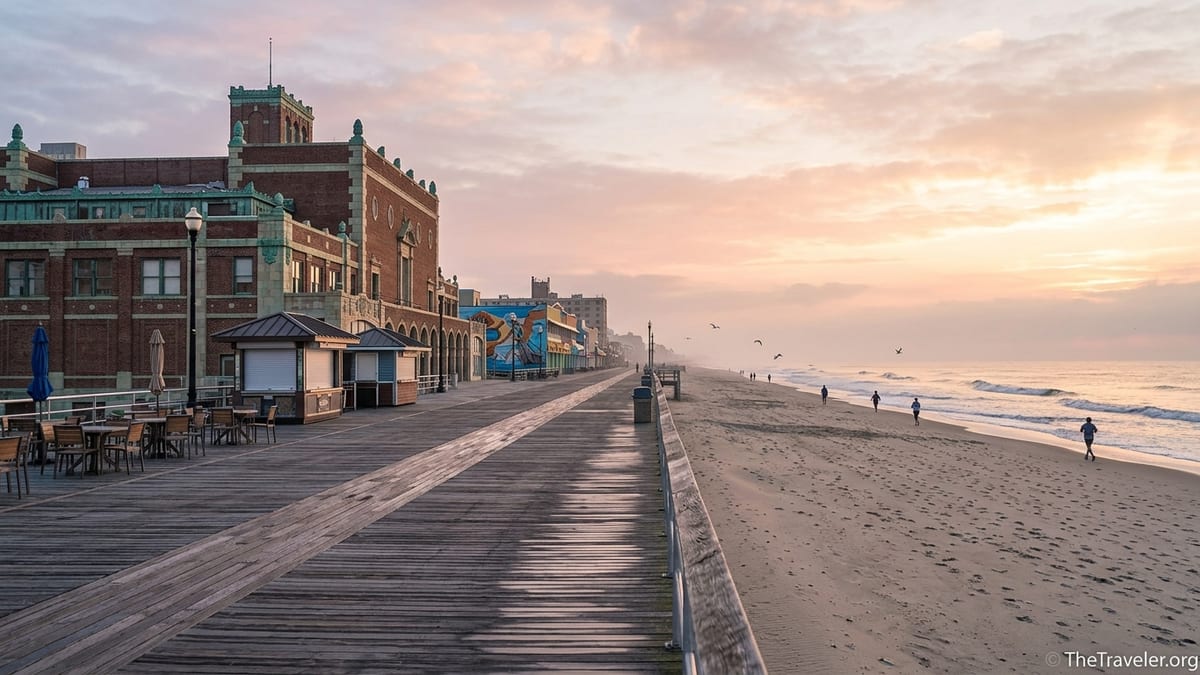
Asbury Park’s appeal begins with its setting: roughly a mile of Atlantic Ocean beachfront backed by a wooden boardwalk lined with independent restaurants, bars, and music venues. Instead of big-box hotels and chain restaurants, the core of the city is still filled with century-old architecture like Convention Hall and the Paramount Theatre, plus historic venues such as The Stone Pony and Asbury Lanes that give the town its long-standing reputation for live music. In practical terms, this means you can spend a single day moving between the beach, a gallery or vintage shop, and a national touring act on the Summer Stage without getting into a car.
The city’s recent revival is visible in the density of places to eat and drink along the boardwalk and in the downtown grid a short walk inland. Visitors find Korean tacos, high-end cocktails with ocean views, vegan bakeries, and local breweries all within a 10 to 15 minute walk. The feel is closer to a small arts district than a traditional resort town. This is a key reason many travelers who are not usually “Jersey Shore people” still end up considering Asbury Park for a short break.
At the same time, Asbury Park remains compact enough that a first-time visitor can get oriented quickly. New Jersey Transit’s Asbury Park station sits about a 15 to 20 minute walk from the ocean, and the beach, boardwalk, and downtown form a simple triangle. For a weekend escape from New York or Philadelphia, that simplicity makes it feasible to arrive by train with a small bag, check into a hotel near the boardwalk, and stay on foot the entire trip.
The question of whether it is “worth it” depends on what you expect from a beach city. Travelers who want big roller coasters and long, old-school amusement piers often prefer Seaside Heights or Wildwood. Those drawn to live music, independent food and bar scenes, and a somewhat grittier, more urban energy tend to find Asbury Park more interesting than its neighbors.
Beach, Boardwalk, and What It Really Costs
For many visitors, the main draw is still the beach. Asbury Park’s oceanfront runs for about a mile, divided by jetties into guarded swimming areas in summer. From Memorial Day weekend through Labor Day, access is controlled by beach badges. As of the 2026 season, the city’s published rates list an adult seasonal badge at about 70 dollars, with discounted seasonal badges near 20 dollars for seniors and teens, and daily badges around 7 dollars on weekdays and 10 dollars on summer weekends and holidays. Children 12 and under can enter free with a supervising adult. These prices put Asbury Park roughly in the middle of the pack for the northern Jersey Shore: more than some smaller towns, less than a few high-end resort communities.
If you are planning a day trip, factor the badge cost into your budget along with parking or train fare. A couple visiting on a Saturday in July might spend 20 dollars for two daily badges, another 20 to 30 dollars feeding a parking meter or paying for a day in a private lot, and easily 40 to 60 dollars on basic boardwalk food and drinks for the day. Families can reduce costs by bringing their own cooler and snacks, but should still expect badge and parking fees to be among the highest fixed costs of a beach visit here.
The boardwalk itself is more about eating, drinking, and people-watching than rides and arcades. You will find mini-golf, a pinball museum with playable vintage machines, and a small splash park for children rather than full-scale amusement rides. Many travelers appreciate that the atmosphere leans more toward adults and mixed-age groups enjoying restaurants and live music rather than teenagers roaming from ride to ride. Others, especially those expecting the flashing lights of a traditional shore arcade town, may be surprised that the “action” is mostly in bars, music venues, and small shops.
If your priority is simply a wide, quiet stretch of sand and surf with minimal fees, other New Jersey beaches might offer a better value. But if you like the idea of stepping off the sand into a proper sit-down meal or a craft beer bar, the boardwalk’s higher prices are offset by the convenience and quality of what is available within a short walk.
Music, Nightlife, and the City’s Cultural Edge
Asbury Park’s strongest argument in favor of a visit is its music and nightlife. The Stone Pony, a low-slung club across from the ocean, has been a launchpad for New Jersey acts since the 1970s and still hosts national and regional bands year-round, plus a Summer Stage erected in the adjacent lot for outdoor shows in warm weather. Travelers will see touring rock, indie, and alternative acts on the schedule, with general admission tickets often in the 40 to 80 dollar range before fees, depending on the artist. On a summer weekend, it is common for concertgoers to spend the day on the beach, grab dinner along the boardwalk, and then walk directly into an evening show.
Beyond The Stone Pony, downtown and the west side host a web of smaller venues where local and regional bands, DJs, and performance artists play. Asbury Lanes combines a historic bowling alley with a stage for live shows and themed dance nights. Newer spots, including revived historic bars and a renovated Turf Club on the city’s west side, add to a scene that regularly draws visitors from across New Jersey and New York for specific shows rather than just the beach itself.
Nightlife is not limited to ticketed venues. Many boardwalk and rooftop bars book DJs or acoustic sets, especially on Friday and Saturday nights in summer. For travelers, this means that even a casual dinner and drinks can turn into a night of live music without much planning. It also means that certain stretches of the city, notably around the boardwalk and Cookman Avenue downtown, stay lively and noisy until late. Visitors seeking a very quiet, early-night atmosphere may prefer a hotel slightly farther from the main corridors or might opt for a different town entirely.
Asbury Park’s cultural edge is also apparent during its festivals and events. The city hosts LGBTQ-focused weekends, arts festivals, and seasonal happenings such as a popular Halloween zombie walk that has drawn thousands of participants in the past. These events can make for an especially memorable first visit but also lead to crowded restaurants and booked-out hotels. Checking the city’s events calendar before choosing your dates can help you decide whether to lean into the busy atmosphere or pick a quieter weekend.
Where Asbury Park Shines (and Where It Does Not)
In purely beach terms, Asbury Park offers clean, guarded bathing areas and basic amenities such as restrooms, seasonal showers, and nearby food stands. The surf can be good for bodyboarding and beginner surfing when conditions allow, though more serious surfers often head to neighboring towns with more consistent breaks. For sunbathers and swimmers, the quality of the sand and water is generally comparable to other Monmouth County beaches.
Where the city stands out is in its urban, walkable character. Travelers staying at one of the boutique hotels or renovated historic properties near the boardwalk can leave their car parked for the entire weekend. A typical day might involve coffee and pastries on Cookman Avenue, a late morning on the sand, lunch from a boardwalk taco stand, an afternoon exploring vintage shops and street art inland, and an evening show at a music venue, all on foot. That kind of car-free beach city experience is relatively unusual along this stretch of coast.
On the other hand, Asbury Park can feel crowded and expensive at peak times. The beach and boardwalk draw heavy weekend traffic from New Jersey and New York City in July and August. Lines for popular food stands form at midday, restaurant reservations fill up, and parking becomes competitive by late morning. Travelers used to more laid-back shore towns might be put off by the urban feel: a mix of locals, day-trippers, concert crowds, and bachelorette parties sharing the same compact streets.
As a small city that has undergone rapid gentrification, Asbury Park also has visible contrasts between newly built waterfront condos and long-time residential areas inland. Most visitors’ experience will be centered on the boardwalk and the downtown grid, which are heavily patrolled and feel generally safe, especially in daylight and early evening. Like any small city, it is wise to stay aware of your surroundings late at night, keep valuables close, and favor well-lit routes back to your lodging.
Getting There, Getting Around, and Practical Logistics
For travelers from New York, northern New Jersey, or Newark Airport, Asbury Park is relatively easy to reach without a car. NJ Transit’s North Jersey Coast Line runs from New York Penn Station through Newark and down the coast, with Asbury Park station as one of the main stops. Travel time from New York City is typically around 1 hour 45 minutes to 2 hours, depending on transfers at Long Branch. Off-peak one-way fares for this distance are usually in the mid-teens per adult, with various discounts for children and monthly pass holders. From the station, you can walk to the beach in roughly 15 to 20 minutes or take a short ride-share trip if you have luggage.
Driving from Manhattan or Brooklyn can take around 90 minutes in light traffic but significantly longer on summer Fridays and Saturdays, especially near major junctions on the Garden State Parkway. Once in town, visitors can choose between metered street parking, which is common along the waterfront and in downtown, and several private lots near the beach. Hourly rates vary by zone and season, but summertime visitors should budget for several dollars per hour near the boardwalk, with daily maximums that can exceed 30 dollars in some lots during peak times.
Within Asbury Park itself, the city is walkable and mostly flat. The boardwalk runs the length of the beachfront and connects easily to side streets leading inland. Bicycles and e-scooters are sometimes available seasonally through regional rental services, and many visitors simply walk. Taxis and ride-share services operate in the area, but in practice most travelers staying near the beach or downtown use them only for late-night returns or to reach farther-flung restaurants in neighboring towns.
Travelers with mobility needs should be aware that, while much of the boardwalk is wheelchair accessible and some beach entry points feature accessible mats in summer, crowds and occasional construction zones can make navigation slower. Hotels and venues vary in their accessibility; checking directly about elevators, ramps, and seating policies, especially for concert events, is important when planning a trip.
When to Visit and How Crowded It Really Gets
The classic season in Asbury Park runs from Memorial Day weekend in late May through Labor Day in early September, with the most intense crowds in July and August. During these peak summer weekends, the beach fills up by late morning, lines form at popular eateries, and evening concerts or festivals bring additional visitors. For many travelers, that energy is part of the draw, especially if they are coming for a specific show or holiday weekend. For others, especially families with small kids or those who dislike crowds, this is exactly what they want to avoid.
Shoulder seasons in late spring and early fall often offer a better balance. In June and September, air and water temperatures can be pleasant enough for the beach on sunny days, yet badge lines are shorter and hotel rates are often lower than in high summer. Boardwalk businesses generally operate on full or near-full schedules by mid-June, and many stay open into October on weekends, though hours may shorten and some seasonal stands close.
Off-season, from late fall through early spring, Asbury Park shifts from beach destination to small arts and dining city by the sea. The boardwalk is much quieter, some seasonal businesses close entirely, and the weather can be windy and cold. Yet hotel rates drop, parking is easier, and the downtown restaurants and music venues continue to operate, often with a stronger local feel. Travelers who are less interested in swimming and more interested in food, bar-hopping, and indoor shows can find November or March weekends surprisingly appealing, provided they pack layers and plan around early sunsets.
Weather is always a factor on the Jersey Shore. Summer afternoons can be hot and humid, with sudden thunderstorms. Coastal storms in late summer and fall occasionally lead to rough surf and red-flag days when swimming is limited or suspended. Travelers planning a short visit should keep an eye on the forecast and, if possible, build in some flexibility to shift beach days to the best-weather window of their stay.
What Kind of Traveler Will Enjoy Asbury Park Most
Asbury Park tends to reward certain kinds of travelers more than others. Couples or small groups of friends in their 20s to 40s who enjoy live music, cocktails, and late dinners often find the city close to ideal for a summer weekend, especially if they align their trip with a favorite band’s show at The Stone Pony or another venue. A typical plan might involve a Saturday afternoon on the beach, a pre-show dinner of Korean tacos or wood-fired pizza along the boardwalk, and a night of music that spills into post-show drinks downtown.
LGBTQ travelers often find Asbury Park particularly welcoming. The city has a long-standing reputation as one of the more queer-friendly destinations on the New Jersey coast, with bars and events that cater to diverse communities and rainbow flags visible across many businesses. Pride-related events and themed weekends add to that draw, though they also increase demand for hotel rooms and restaurant reservations.
Families can and do enjoy Asbury Park, especially those with older children or teenagers who appreciate music, arcades, and a bit of independent time. The beach is guarded and relatively compact, and the presence of casual food stands and a pinball museum offers easy entertainment away from the water. However, parents seeking a quieter, more purely family-oriented environment may find that neighboring towns with playground-heavy boardwalks and fewer late-night bars better fit young children’s routines.
Travelers seeking a high-end luxury beach resort experience may find Asbury Park limited. While a handful of stylish boutique hotels and rooftop bars exist, the city’s scale remains small and its character leans toward creative and slightly rough-around-the-edges rather than polished. Those wanting extensive spa facilities, large pools, private beach clubs, and uniform high-end shopping are often happier in other regional destinations.
The Takeaway
So, is Asbury Park worth visiting? For many travelers, the answer is yes, provided expectations align with what this compact city actually offers. You are not coming here for towering roller coasters or endless outlet shopping. You are coming for a walkable mix of beach, food, and live music, a boardwalk that feels more like an outdoor dining and arts corridor than a carnival, and an atmosphere that still carries some of the grit and creativity that fueled its revival.
Before you go, be realistic about costs, especially in peak summer. Budget for beach badges, parking or train fares, and restaurant prices that reflect the city’s popularity. Pick your timing based on your tolerance for crowds, and consider whether you are more interested in the buzz of July weekends or the calmer feel of a shoulder-season visit. If a specific concert, festival, or event is your main motivation, secure tickets and lodging early and treat the beach as a bonus.
If your idea of a perfect shore day involves drifting between the ocean, a good meal, and a small venue where a band you love is playing within walking distance, Asbury Park can feel like one of the most rewarding destinations on the New Jersey coast. If you want quiet dunes, bargain prices, or a purely family-focused resort, you may be better served elsewhere. Understanding those trade-offs before you book will help you decide whether Asbury Park deserves a spot on your travel list this year.
FAQ
Q1. Is Asbury Park safe for first-time visitors?
Asbury Park’s main visitor areas, including the boardwalk and downtown, generally feel safe and are regularly patrolled, especially in season. As in any small city, basic precautions apply: stay aware late at night, stick to well-lit streets when returning to your hotel, and keep valuables secure on the beach and in parked cars.
Q2. Do I really need a beach badge, and when is it checked?
From Memorial Day weekend through Labor Day, you should expect to need a beach badge on summer days, especially during staffed hours. Badge checkers usually operate at primary beach entrances, particularly late morning through late afternoon. It is simpler to budget for the badge and plan your beach time within those hours rather than trying to avoid checks.
Q3. How expensive is a typical day trip to Asbury Park?
Costs vary, but a realistic example for two adults on a summer Saturday might include 14 to 20 dollars each way in train fare or 20 to 30 dollars for parking, around 20 dollars for two beach badges, and 40 to 80 dollars on casual meals and drinks. Concert tickets, if you add a show, can easily add 40 to 80 dollars per person.
Q4. Is Asbury Park a good choice for families with young children?
Families with young kids can enjoy the guarded beach, simple boardwalk attractions, and casual food, but should be prepared for crowds in peak summer and an evening scene that is more bar and music focused than playground centered. Neighboring towns may offer more rides and family attractions, while Asbury Park is often better suited to families with older children or teens.
Q5. Can I visit Asbury Park without a car?
Yes. Many visitors take NJ Transit’s North Jersey Coast Line train to Asbury Park station and walk or use a short ride-share trip to reach their hotel or the beach. Once in town, the boardwalk and downtown are walkable. Planning your luggage and arrival time with the 15 to 20 minute walk in mind makes the car-free option easier.
Q6. What is the best time of year to visit Asbury Park?
The answer depends on your priorities. July and August offer the warmest beach weather and the fullest concert and event schedules, but they also bring crowds and higher prices. June and September often balance milder crowds with pleasant weather, while off-season visits emphasize restaurants and live music over swimming.
Q7. How does Asbury Park compare to other Jersey Shore towns?
Compared with places like Seaside Heights or Wildwood, Asbury Park has fewer rides and arcades but more emphasis on independent restaurants, bars, and music venues. It feels more urban and arts-focused than many neighboring beach towns, which is a plus for travelers seeking culture and nightlife, but less ideal for those wanting classic boardwalk amusements.
Q8. Are there vegetarian, vegan, or gluten-free options in Asbury Park?
Yes. Asbury Park’s food scene includes vegan bakeries, plant-forward cafes, and restaurants that mark gluten-free options on their menus. Along both the boardwalk and downtown, it is common to find vegetarian tacos, grain bowls, and gluten-free pizza or pasta, though travelers with severe allergies should still ask detailed questions.
Q9. Is Asbury Park worth visiting if I do not care about live music?
It can be. Even without concerts, Asbury Park offers a compact beach, a lively boardwalk dining scene, and a downtown filled with galleries, vintage shops, and bars. However, if you are indifferent to nightlife and mostly want a quiet beach and simple boardwalk, another town might offer a better match for your interests.
Q10. How far in advance should I book lodging for summer weekends?
For July and August weekends, especially those with big concerts or festivals, it is wise to book hotels or vacation rentals several months ahead. Shoulder-season weekends offer a bit more flexibility, but if your dates are fixed and you want a specific property near the boardwalk, reserving early helps avoid higher last-minute prices or limited availability.