


Walk the Jersey Shore from Long Branch down to Belmar and you will find miles of boardwalks, beach badges, and frozen custard. Pleasant, yes, but often interchangeable. Then you hit Asbury Park. Murals suddenly fill the sightlines, live music spills out of century-old venues, and the people on the boards look less like day‑trippers and more like a community of artists, musicians, and entrepreneurs. Asbury Park feels different, more creative and more alive than most Shore towns, and that is no accident. It is the result of years of deliberate investment in arts, music, and inclusive spaces that now shape almost every corner of the city.
Get the latest updates straight to your inbox!
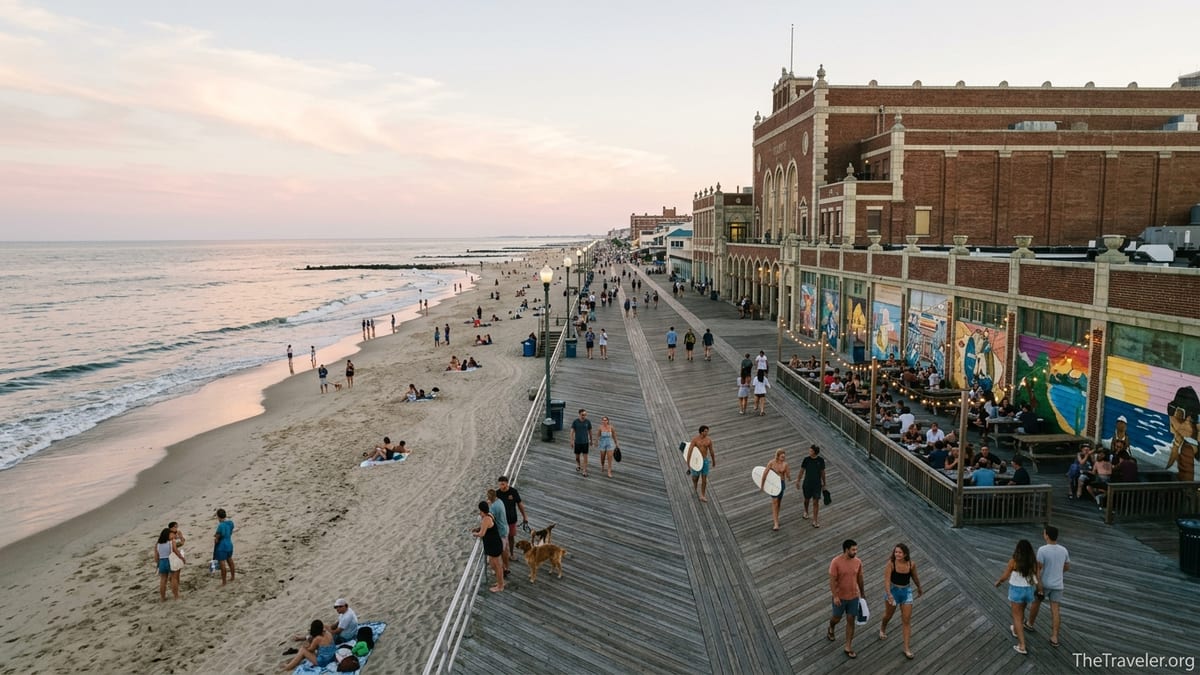
A Boardwalk That Doubles as an Open-Air Gallery
On most Jersey Shore boardwalks, the visual landscape is dominated by prize wheels, pizza signs, and rows of rental chairs. In Asbury Park, the first thing many visitors notice is the art. Along the oceanfront, the Wooden Walls Project has turned the backs of pavilions and old arcade facades into a curated corridor of murals by local, national, and international artists. You might round a corner near the former casino and find a towering fox rendered from found materials, part of a three-dimensional piece created by Portuguese artist Bordalo II and sponsored by local arts groups. A few steps away, bright abstract forms and portraits wrap concrete walls that would be blank in most other towns.
This focus on public art now extends beyond the boardwalk. In late 2025, the city unveiled a large-scale mural on Asbury Park City Hall by New York artist Danielle Mastrion, wrapping two sides of the building with imagery that connects the shoreline to the city’s musical and cultural history. Local officials describe it as both a storytelling device and a daily reminder that creativity is central to civic life, not just something happening in private galleries. Compared with nearby towns such as Belmar or Point Pleasant, where murals are occasional accents, in Asbury Park they define how you read the streetscape.
The art is not static either. New works are added, older pieces are repainted, and seasonal events like art parades and mural tours give visitors a chance to engage with the creators. It is common to see small groups following a local guide, stopping in front of a piece to hear about the artist’s process or the neighborhood history reflected in the imagery. That evolving, conversational approach to public art makes a stroll here feel more like walking through a living gallery than along a typical beachfront promenade.
Music as a Daily Ritual, Not Just Weekend Entertainment
Asbury Park’s creative identity begins and ends with live music. Historic venues like The Stone Pony and Asbury Lanes are now shorthand for the city itself, widely recognized as crucibles for artists such as Bruce Springsteen, Southside Johnny, and Bon Jovi. Decades later, those stages remain active, hosting everything from national touring acts in summer to local album release shows on a random Tuesday. Nearby Jersey Shore towns may have a bar with a cover band on Saturdays; Asbury Park has built a year‑round ecosystem where music is a daily ritual.
Along the boardwalk and downtown, music seeps into everyday spaces. Restaurants like Tim McLoone’s Supper Club program jazz and singer‑songwriter nights that pair a prix‑fixe dinner with performances. Smaller spots on Cookman Avenue often slide tables aside to make room for a duo or DJ set. A casual bar crawl might start with happy hour at Johnny Mac’s, continue to a craft beer stop like Wild Air Beerworks, then land at a late‑night show at Wonder Bar, where a ticketed concert might be followed by a local DJ set.
The city also layers large-scale festivals onto that foundation. Each September, Sea.Hear.Now draws big-name rock, indie, and surf acts to stages on the beach and in Bradley Park, effectively merging a coastal music festival with a surf contest. Visitors who do not hold tickets still camp out on the sand or post up at nearby rooftop bars such as The Asbury Hotel’s roof deck to catch distant views and the sound drifting over the boardwalk. For travelers used to quieter, more traditional Shore towns that power down after Labor Day, a weekend in Asbury Park can feel like dropping into a small city with a reliable soundtrack.
Crucially, the music scene is not confined to venues near the waves. On the West Side, community concerts in places like Springwood Park bring free performances to residents who may never buy a festival pass, reinforcing the sense that music is a civic resource rather than just a tourism product. That emphasis on access and diversity gives Asbury Park’s soundscape a different texture from towns where entertainment revolves around one large club and a rotating list of cover bands.
A Citywide Arts Ecosystem, Not Just Isolated Venues
Unlike many resort communities where creativity is something imported for summer season, Asbury Park has quietly built a year‑round arts infrastructure that supports working artists. The Asbury Park Arts Council and the city’s Public Arts Commission help coordinate initiatives ranging from mural programs to arts master planning, treating culture as an engine for economic development. For travelers, the impact is easy to feel. Even in February, when other Shore towns may feel shuttered, downtown Asbury Park hums with gallery openings, workshops, and small performances.
On the boardwalk, spaces like Art Club and Art Spot at 1100 Ocean Avenue host rotating shows and community events, including regular first‑Friday happenings where visitors can browse works by local painters, photographers, and makers while listening to pop-up performances. A traveler might pick up an affordable print or small ceramic piece here instead of the generic souvenirs found in many beach towns. Elsewhere in the city, over the Moon Art Studio and similar spaces organize free or low‑cost art nights at venues like the Transportation Center, inviting residents and visitors to make art together rather than simply consume it.
The city’s arts planning documents and annual reports explicitly name preserving the creative scene as a priority as redevelopment continues. That means new projects are encouraged to include public art, flexible performance spaces, and opportunities for local talent. In practical terms, a new restaurant opening on Cookman Avenue might build in a corner stage and commit to hosting musicians several nights a week, or a hotel developer might set aside wall space for curated photography exhibits that change seasonally. That kind of baked‑in support is rare along the Shore, where redevelopment often focuses on maximizing beachfront real estate value with minimal attention to culture.
For travelers, this ecosystem makes it easy to slip into the local creative rhythm without much planning. You can start a day with coffee at an independent shop, wander into a studio that is hosting an open house, then end the night at a small theater or listening room without ever moving your car. The city feels less like a beach you visit and more like a community you join for a few days.
Inclusive, Year-Round Nightlife and Community Energy
Another reason Asbury Park feels more alive than many Jersey Shore towns is that it caters to a remarkably wide spectrum of people. Once known for its LGBTQ+ nightlife even during the city’s lean years, Asbury Park has held onto that inclusive spirit even as new hotels and high‑end condos have arrived. Spots like Paradise, the nightclub at the Empress Hotel near the boardwalk, still anchor a vibrant queer scene with dance parties, drag shows, and themed weekends that draw visitors from across the region.
Parallel to that, Asbury Park’s bar and restaurant mix leans creative rather than cookie‑cutter. On a Saturday afternoon you might see groups drifting between a craft cocktail bar like R Bar, the beer garden tucked into a side street, and casual joints on the boardwalk such as The Beach Bar or Watermark, which combines ocean views with DJ nights and curated playlists. Many of these venues treat music as part of their identity rather than an afterthought, so it is common to stumble into a jazz trio at a neighborhood restaurant or a vinyl DJ night at a small bar.
What sets Asbury Park apart is that much of this energy remains visible outside peak beach season. Locals often describe it as a “real town that happens to be by the ocean,” and on a mild weekend in March you are as likely to find people bar-hopping along Cookman Avenue as you are in August. While other Shore towns may spend half the year in a semi‑hibernation, Asbury Park continues to host events like indoor markets, film screenings, and themed music nights that keep sidewalks busy and small businesses buzzing.
For travelers, that means a winter or shoulder‑season visit still delivers the sense of discovery and community you might expect only in July. Hotel rates typically dip outside the height of summer, making it possible to book a stylish room at places like The Asbury Hotel or the Asbury Ocean Club and spend the savings on dinners, show tickets, and art instead. The combination of affordability, walkability, and genuine year‑round nightlife is rare along this stretch of coast.
From Gritty Comeback to Intentional Creative Identity
Part of Asbury Park’s distinct energy comes from its comeback story. After decades of disinvestment that left amusement palaces boarded up and storefronts empty, redevelopment has been framed around culture rather than erasing it. Early anchors were not generic chains but music venues, galleries, and independent restaurants. As those succeeded, they attracted more like‑minded entrepreneurs who saw Asbury Park not just as a market to tap but as a place to participate in.
Today, you can feel that history in the way old and new coexist. The shell of the former casino remains a dramatic, semi‑ruined passageway linking Asbury Park to neighboring Ocean Grove, its high arches now hosting seasonal art installations and photo shoots. The Paramount Theatre and Convention Hall complex, with its ornate brickwork and oceanfront arcades, continues to host concerts and markets, even as discussions about long‑term restoration continue. Rather than sweeping these aging structures away, the city and its partners treat them as canvases and stages for contemporary culture.
In contrast, some other Shore towns have pursued a cleaner, more controlled version of redevelopment, swapping older structures for new condominiums, standardized bars, and national brands. Those approaches can deliver comfort and convenience, but they rarely generate the kind of textured, layered street life that Asbury Park offers. Here, a visitor might walk from a polished rooftop restaurant like AP Rooftop, with its panoramic ocean views and craft cocktail list, straight into a low‑fi punk show at a neighborhood venue or a DJ spinning vinyl in a tiny bar that seats twenty.
The city’s planning documents and tourism materials increasingly highlight arts, music, and diversity as core assets, not just footnotes. That narrative attracts travelers who are looking for more than sunbathing and funnel cake. In turn, their spending supports the very venues, studios, and small businesses that give Asbury Park its personality. It is a feedback loop of creativity that many resort towns struggle to cultivate.
Experiencing Asbury Park’s Creative Side in a Weekend
For travelers wondering how to tap into this creative energy on a short visit, the good news is that Asbury Park is compact and walkable. Arrive on a Friday afternoon, park your car, and you can spend the rest of the weekend moving between the beach, downtown, and the West Side on foot. A practical starting point is the Asbury Park Boardwalk, where you can grab lunch from spots like MOGO Korean Fusion Tacos or Iron Whale, then wander the Wooden Walls murals with an ice cream from Coney Waffle in hand.
As evening falls, head downtown along Cookman Avenue, where independent restaurants like Cardinal, Talula’s, or Taka offer everything from thoughtful small plates to wood‑fired pizza and Japanese dishes. After dinner, check venue calendars for who is playing at The Stone Pony, Asbury Lanes, or Wonder Bar. Ticket prices often hover in the moderate range, roughly comparable to a night out in a mid‑sized city, and it is not unusual to find a compelling local band onstage for the price of a couple of cocktails.
Build in time for unstructured exploration too. Pop into a gallery if you see an opening reception underway, or follow the sound of a street drummer echoing under the Convention Hall arcade. On Saturday morning, start with a coffee from an oceanfront kiosk or an in‑town café, then browse vintage shops and bookstores along Cookman before heading back to the sand. If your visit coincides with an event like the Color & Light Festival, Sea.Hear.Now, or a mural tour, let that anchor your schedule and fill in the rest with slow walks and spontaneous stops.
Compared with neighboring towns that might offer a single main attraction such as an amusement pier or a large nightclub, Asbury Park rewards curiosity on a smaller scale. The most memorable moments often come not from headlining acts but from chance encounters: a sunset jam session outside Convention Hall, an impromptu conversation with a muralist touching up a piece, or a late‑night slice shared on the curb with strangers after a show.
The Takeaway
Asbury Park feels more creative and alive than most Jersey Shore towns because creativity is not a seasonal garnish here. It is built into the boardwalk, stitched into historic venues, and protected in city planning documents. Public art transforms everyday walks into gallery tours. Live music functions as a civic heartbeat rather than a weekend novelty. Inclusive nightlife, year‑round events, and a dense network of studios and small venues give the city the energy of a much larger cultural hub.
For travelers, that means Asbury Park offers a different kind of beach trip. You can still rent a chair and listen to the waves, but you can also spend your evenings discovering local bands, your afternoons wandering mural-covered alleys, and your mornings talking to artists in small studios instead of waiting in line for a boardwalk ride. In a region where many towns feel interchangeable, Asbury Park has chosen to define itself by its creative spirit, and that choice is palpable from the moment you step off the train or over the boardwalk’s wooden planks.
FAQ
Q1. Is Asbury Park worth visiting outside of summer?
Yes. Unlike many Jersey Shore towns, Asbury Park has active restaurants, bars, galleries, and music venues in every season, so a winter or spring visit still feels lively.
Q2. How does Asbury Park compare to other nearby Shore towns?
Neighboring towns often focus on family beaches, amusement rides, or nightlife centered on a few large bars. Asbury Park layers those basics with murals, historic music venues, and a broader arts scene.
Q3. Is Asbury Park family friendly?
Yes. Families will find a wide beach, kid‑friendly spots like the Silverball Retro Arcade, casual boardwalk dining, and daytime events, though nightlife areas can feel more adult after dark.
Q4. Do I need a car to enjoy Asbury Park?
Not necessarily. The city is walkable from the train station to the beach and downtown. A car is helpful for exploring other Shore towns, but not essential for a weekend focused on Asbury Park.
Q5. What kind of traveler will enjoy Asbury Park most?
Travelers who like live music, street art, independent shops, and inclusive nightlife will feel especially at home. It suits couples, groups of friends, and solo travelers who enjoy walkable urban neighborhoods.
Q6. Are there options for a quieter stay away from the nightlife?
Yes. Many small hotels and guesthouses sit on residential blocks a few streets back from the beach, offering a calmer base within a short walk of the action.
Q7. Is Asbury Park expensive compared with other Jersey Shore towns?
Prices for lodging and dining can be similar to other popular Shore destinations, but visiting in the shoulder seasons and choosing mid‑week nights often yields better rates.
Q8. How safe does Asbury Park feel for visitors?
The main beach, boardwalk, and downtown areas are generally busy and feel comfortable for visitors, especially in the evening when events and shows are underway. As in any city, normal urban awareness is wise.
Q9. Can I experience the arts scene without spending a lot?
Yes. Many murals and public artworks are free to see, and there are often low‑cost or free events such as gallery openings, outdoor concerts, and community art nights.
Q10. How many days should I plan for Asbury Park?
A weekend is enough to sample the beach, murals, and music venues. Three nights gives you time to add a festival, a day trip to a nearby town, or a deeper dive into the local art scene.