


Cap Ferrat often appears in Riviera itineraries as a dreamy peninsula between Nice and Monaco, famed for billionaires’ villas, pine-fringed bays and long coastal paths. But is it actually worth carving out a day here if your priorities are scenic walks, good beaches and memorable viewpoints, especially when you could be in Nice, Antibes or Monaco instead? For most visitors who enjoy being outdoors, Cap Ferrat more than earns its place on the schedule, provided you know which trails and coves to target and you arrive with realistic expectations about crowds, prices and terrain.
Get the latest updates straight to your inbox!
Why Cap Ferrat Appeals to Walkers and View Seekers
Cap Ferrat is a compact peninsula in the Alpes-Maritimes, about 10 kilometers east of Nice and a short hop from Villefranche-sur-Mer and Beaulieu-sur-Mer. The headland is ringed by roughly 8 kilometers of coastal paths that hug the shoreline, linked by small residential lanes through the village of Saint‑Jean‑Cap‑Ferrat. Local tourism bodies specifically promote walking as the best way to appreciate the area, because most of its viewpoints, coves and rocky inlets are only accessible on foot along these seafront trails.
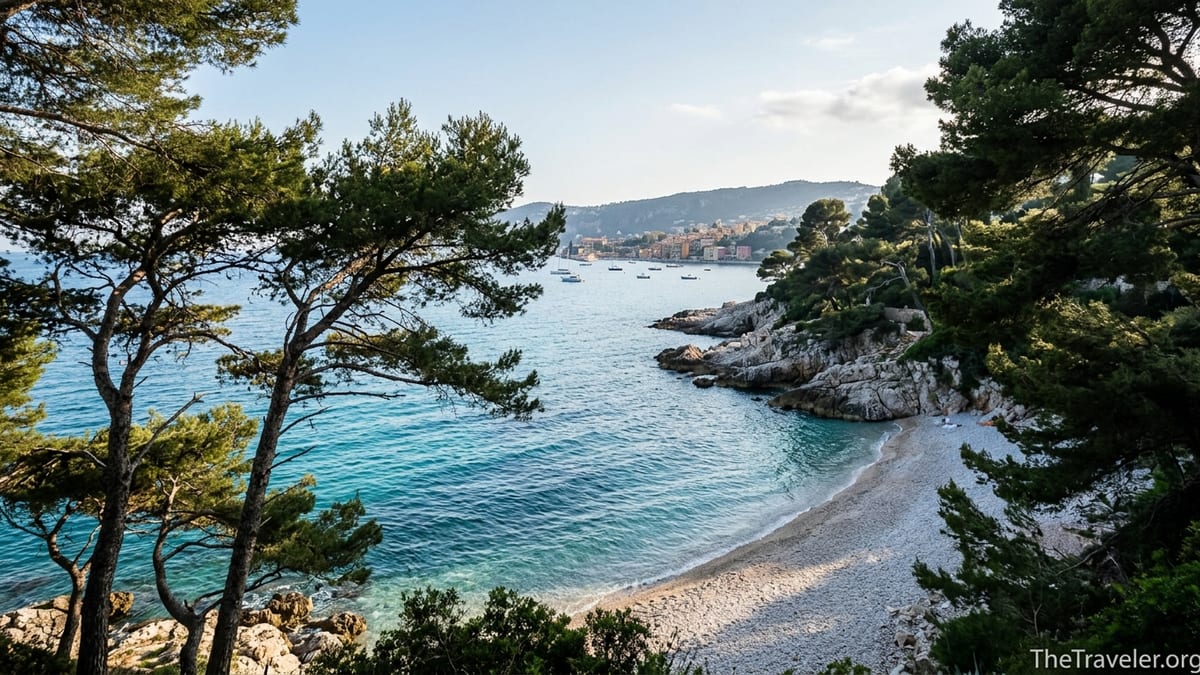
Unlike some Riviera resorts that feel dominated by traffic or high-rise hotels, Cap Ferrat remains relatively low-rise and residential. The scenery is a mix of limestone cliffs dropping into clear turquoise water, umbrella pines sculpted by wind, and glimpses of lavish villas tucked behind stone walls. From many sections of the path you see the ochre village of Villefranche across the bay in one direction and, on clear days, the mountains rising behind Nice in the other. This combination of coastal drama and calm village atmosphere is what convinces many visitors that the detour is worth it.
Cap Ferrat’s trails are generally easy from a technical point of view, with only modest elevation changes and sections of paved or well-maintained gravel path. That makes it appealing to casual walkers and families with older children. At the same time, there are enough stairs and narrow rocky sections that the walks still feel like genuine hikes rather than city promenades. It is very possible to spend a full day here alternating between walking, swimming and lingering at viewpoints with a picnic.
For travelers comparing destinations, it helps to think of Cap Ferrat as more about shoreline walking and small coves than big sandy beaches or nightlife. If you want long, flat promenades and bars right on the sand, Nice or Cannes may suit you better. If your ideal day is a two- to three-hour hike broken up by swims at quiet beaches and an espresso on a shady terrace, Cap Ferrat fits that brief very well.
The Coastal Paths: Where the Best Walks Really Are
The main reason walkers come to Cap Ferrat is the network of coastal paths, often referred to collectively as the Chemin des Douaniers or sentier du littoral. Official information from local tourism offices describes several signed loop or there-and-back routes, but in practice many visitors simply follow the shoreline anti-clockwise or clockwise until they feel like turning back. A full circuit around the cape, including the Pointe Saint‑Hospice headland and the southern tip near the lighthouse, generally works out at around 8 to 9 kilometers and takes about two to three hours at a moderate pace, excluding swim or café stops.
One popular segment starts near Plage Cros dei Pin close to the harbor of Saint‑Jean‑Cap‑Ferrat, then follows the coast past Paloma Beach and around the Pointe Saint‑Hospice. This section offers continuous views over the bay of Beaulieu‑sur‑Mer, with detours up to Saint‑Hospice Chapel and a Belgian military cemetery on a low hill overlooking the sea. Another highly scenic stretch runs from Plage de Passable on the west side of the peninsula along rocky coves toward the Cap Ferrat lighthouse. Here the path becomes narrower and more rugged in places, with waves crashing below and almost uninterrupted open sea views.
For travelers staying in Nice, a very achievable outing is to take the bus to Saint‑Jean‑Cap‑Ferrat, walk the Pointe Saint‑Hospice loop of about 1.5 kilometers, then continue either down to one of the beaches such as Plage des Fossettes or back into the village for a drink on the port. Those with more energy can add the southern loop toward the lighthouse, turning the day into a more substantial coastal hike with multiple swimming stops. Public information boards along the paths mark distances and highlight local flora, fauna and geology, so you do not need any special navigation equipment beyond basic map apps.
One practical point: access to the paths can be restricted in bad weather, especially during strong swell or wind when waves crash onto the rocks, and there may be temporary closures for maintenance. Local authorities recommend checking with the Saint‑Jean‑Cap‑Ferrat tourist office or municipal police on the day, particularly in winter or after storms. In peak summer, the paths can feel busy near main beach access points, but quieter stretches remain nearly empty even in August once you move away from car parks and bus stops.
Beaches: What to Expect From Paloma, Passable and the Smaller Coves
Cap Ferrat’s beaches are relatively small by Riviera standards, set in rocky inlets with a mix of coarse sand and pebbles. They are known more for clear water and views than for space. On the eastern side, Paloma Beach has long been considered one of the peninsula’s most attractive spots, looking across the bay toward the cliffs above Beaulieu‑sur‑Mer. The shore here is framed by low pines and limestone rocks, and in the mornings the light tends to be gentle, with the sun behind the beach. Even when the organized beach area changes from year to year, a section of public strand usually remains accessible free of charge.
On the western side facing Villefranche, Plage de Passable is another favorite, especially for afternoon sun and sunset views. From here you see the colourful houses of Villefranche climbing the hillside across the bay, with boats anchored in the foreground. There is typically a small public section alongside any private beach club installations, and in summer the water is busy with paddleboards and small tenders from yachts. Because parking space around Passable is limited and the access road is narrow, many visitors either arrive on foot from the village or use the local bus service and walk down the hill.
Further south are Plage des Fosses and Plage des Fossettes, two mostly public beaches just a short stroll from each other on the eastern side of the peninsula. They are narrower but slightly less busy than Paloma in high season, with pine trees providing some natural shade. Shower facilities are simple and there are no lifeguards for much of the season, so these spots feel more like neighborhood bathing areas than fully serviced resort beaches. A small café terrace at Jardin de la Paix above Plage des Fossettes is a pleasant place to end a walk with a drink looking down at the sea.
A realistic expectation on Cap Ferrat is that you will share the beaches with many other visitors in July and August, and space on the pebbles can be tight in the middle of the day. Shoulder seasons such as late May, June, September and early October are often more enjoyable for those who want to combine longer walks with swims, when water temperatures are still pleasant but the crowds thin out. The seabed is mostly pebbly and rocky, so many regulars bring water shoes to make getting in and out easier.
Scenic Viewpoints and Photo Moments Around the Peninsula
While almost any point along the coastal path offers some kind of sea view, certain spots around Cap Ferrat are especially memorable. The viewpoints near Saint‑Hospice Chapel offer a fine panorama across the entire bay of Beaulieu‑sur‑Mer, with the cliffs of Eze and the corniche roads visible in the distance. At sunrise or early morning, the light often hits the village facades and hotels in warm tones, and the path is still quiet. Walkers who climb the short path up to the chapel are rewarded with a slightly elevated perspective that gives a better sense of the peninsula’s shape.
On the western side, small clearings along the trail above Plage de Passable provide classic postcard views of Villefranche‑sur‑Mer’s old town, with its ochre and pink buildings and the citadel beside the harbor. In late afternoon, the sun sets behind the hills above Nice, often turning the bay golden. These viewpoints are popular with casual photographers and are easy to reach even for those who only want a short stroll from the bus stop or car park near the village.
The southern tip near the Cap Ferrat lighthouse delivers a different mood, with more open sea and fewer man-made landmarks. Here the path passes close to low, jagged rocks and scrub vegetation, and in windy conditions waves can throw spray over the trail. On calmer days, you may spot sailboats or ferries on the horizon heading between Nice, Monaco and Italy. Because the southern loop is a little longer and more rugged, it feels wilder and less busy, making it attractive for walkers who want more solitude and a stronger sense of being out on a headland.
Elsewhere on the peninsula, viewpoints are subtler but still rewarding. Simple benches along the path under umbrella pines, small gaps in roadside walls, and the harbor area itself all offer attractive photo opportunities. In the village, many visitors pause on the quay opposite the yachts to capture the pastel houses and fishing boats, while others climb a short way up residential streets for oblique views across the rooftops toward the sea. None of these require special equipment; a phone camera is more than enough to bring home striking images if you take the time to explore beyond the busiest corners.
Practicalities: Getting There, Costs and When to Go
From Nice, Cap Ferrat is reachable by public transport in roughly 30 to 40 minutes, depending on traffic. Regional buses run along the coast, with routes that stop in Saint‑Jean‑Cap‑Ferrat’s village center or port area. Fares are typically a few euros per person each way, and many visitors incorporate the peninsula into a wider day trip that also includes nearby Villefranche‑sur‑Mer or Beaulieu‑sur‑Mer. For those who prefer rail, regional trains connect Nice to Villefranche and Beaulieu, from where it is possible to walk or take a short bus ride to the peninsula.
Driving is straightforward but parking can be challenging in peak season. There are signed car parks near the port and village center, as well as limited on-street spaces near some beach access points. In July and August, these often fill up by mid-morning, and circling for a spot can quickly erode the tranquil mood you may be seeking. If you are set on arriving by car during busy periods, early starts or late afternoon visits tend to be easier, and paying for a structured car park is often less stressful than hunting for free street parking.
Cap Ferrat has a reputation for luxury, and the presence of five-star hotels and upscale villas does influence prices. A coffee on the harbor terrace may be a couple of euros more than in central Nice, and sunbed rentals at any private beach setups, when operating, are typically priced in line with other Riviera resorts. Budget-conscious travelers can keep costs manageable by using the public sections of beaches, bringing a picnic for lunch and limiting café stops to one or two key moments. Grocery stores and bakeries in neighboring Beaulieu or Villefranche often offer more affordable takeaway options.
In terms of timing, the peninsula is pleasant all year, but the experience changes with the seasons. Spring and autumn are ideal for long walks, with mild temperatures, wildflowers or autumn light, and fewer people on the paths. Summer brings warm swimming conditions and longer evenings but also crowding on popular stretches and potential midday heat on paths with little shade. In winter, trails are usually open, but storms can be stronger, and temporary closures are more likely. It is wise to check the latest local advice on trail conditions before setting out, especially outside the main summer season.
Who Will Love Cap Ferrat, and Who Might Be Underwhelmed
Cap Ferrat is particularly satisfying for travelers who genuinely enjoy walking and being near the water. If your perfect day involves a two- to three-hour coastal walk, punctuated by swims in clear coves and time sitting quietly on rocks listening to the surf, the peninsula delivers that combination effortlessly. Couples, solo travelers and groups of friends often use Cap Ferrat as a slower-paced counterpoint to busier bases like Nice, spending one day on the cape as an “active rest” from museums, shopping and city streets.
Families with older children or teenagers also tend to appreciate the area, because the coastal paths feel adventurous without being extreme. Children can scramble on rocks at the edge of the water, explore tide pools and jump into the sea in calm spots under parental supervision. The distances are short enough that you can tailor the day: a gentle loop around Saint‑Hospice with a gelato stop in the village, or a more ambitious circuit that feels like a real hike. For visitors interested in architecture and gardens, combining a morning walk with an afternoon visit to one of the peninsula’s historic villas and landscaped grounds makes for a full but not exhausting day.
On the other hand, some travelers may find Cap Ferrat less compelling. If you are looking for broad sandy beaches with easy barefoot entry into the water, you may be disappointed by the pebbles and stones underfoot. Those hoping for nightlife, bars directly on the sand and a bustling promenade might prefer bases like Cannes, Antibes or Nice’s Promenade des Anglais. Similarly, travelers with very limited mobility can find parts of the coastal path challenging, as there are steps, uneven surfaces and occasional narrow sections with drop-offs to the sea.
Expectations also matter for those attracted by the peninsula’s glamorous reputation. While the area is undeniably affluent, most of that glamour is behind hedges and gates. The public face of Cap Ferrat is actually quite low-key: a small harbor, a cluster of restaurants and cafés, and quietly expensive villas set back from the roads. If you arrive expecting overt displays of luxury or a “see and be seen” scene like Saint‑Tropez, you may conclude that Cap Ferrat feels surprisingly residential and peaceful.
The Takeaway
Weighing up the experience, Cap Ferrat is worth visiting for walks, beaches and scenic views if you prioritize time outdoors and do not mind trading long sandy strands for smaller coves and rocky inlets. The peninsula’s coastal paths provide some of the most accessible seafront walking near Nice, offering constant views, varied terrain and easy integration with swims and café stops. Beaches such as Paloma, Passable, Fosses and Fossettes are compact but atmospheric, with clear water and distinctive outlooks toward surrounding bays and villages.
For a first-time visitor to the French Riviera, one well-planned day on Cap Ferrat can balance a trip that might otherwise lean heavily on urban promenades and train rides. Arrive by mid-morning, walk one or two of the signed loops, swim at a beach that catches the sun at the right time of day, and linger at one of the peninsula’s natural viewpoints. If those elements match the way you like to travel, Cap Ferrat justifies its reputation and the time it takes to reach it.
If, however, you are indifferent to walking and mainly interested in broad sandy beaches or nightlife, your time may be better spent in other Riviera destinations. Ultimately, Cap Ferrat rewards visitors who move slowly, pay attention to the landscape and treat the peninsula itself as the main attraction. For that kind of traveler, the mix of paths, coves and horizon-wide views makes this headland more than worth the detour.
FAQ
Q1. Is Cap Ferrat worth visiting on a day trip from Nice just for walking and views?
Yes, for most active travelers a day trip is worthwhile. The peninsula offers around 8 kilometers of coastal paths with constant sea views, easy public transport from Nice and several spots where you can combine walking with swimming and café breaks.
Q2. How difficult are the coastal walks around Cap Ferrat?
The walks are generally easy to moderate. Paths are well defined, with some steps and short steep sections but no major climbs. Most reasonably fit visitors in regular walking shoes can comfortably manage the Pointe Saint‑Hospice loop or even a full circuit given enough time.
Q3. Which Cap Ferrat beach is best if I only have time for one swim?
If you visit in the morning, Paloma Beach is a strong choice thanks to its sheltered bay and views toward Beaulieu. For afternoon sun and sunset light over Villefranche, Plage de Passable is hard to beat. Plage des Fosses and Plage des Fossettes are good alternatives if the main beaches feel too crowded.
Q4. Can I visit Cap Ferrat on a budget, or is it only for luxury travelers?
You can keep costs modest by using public transport from Nice, swimming from the free public sections of beaches and bringing your own picnic. Drinks and snacks in the village may cost slightly more than in larger towns, but there is no requirement to use private beach clubs or high-end restaurants to enjoy the peninsula.
Q5. When is the best time of year to visit Cap Ferrat for walking and swimming?
Late May, June, September and early October usually offer the best balance of warm water, comfortable walking temperatures and manageable crowds. July and August are livelier and hotter, with busier beaches and paths, while winter can bring dramatic seas but also occasional trail closures after storms.
Q6. How long does it take to walk all the way around Cap Ferrat?
A complete circuit of the coastal paths, including the Pointe Saint‑Hospice and the southern tip near the lighthouse, typically takes around two to three hours of walking time. With photo, swim and café stops, many visitors turn it into a relaxed half‑day or full‑day outing.
Q7. Are the coastal paths and beaches suitable for children?
Families with school-age children generally find the paths suitable, as distances are short and there are frequent places to stop. However, some sections have uneven surfaces and drops to the sea, so close supervision is important. Beaches are mostly pebbly, so water shoes and flotation aids can help children enjoy the water safely.
Q8. What should I wear and bring for a day of walking on Cap Ferrat?
Comfortable walking shoes or sturdy sandals, a hat, sunscreen, swimwear, a towel and plenty of water are essential, especially in summer. Many visitors also bring a light picnic to enjoy at one of the coves, as food options right on the trails are limited outside the main beach areas and the village.
Q9. Is Cap Ferrat crowded, and how can I avoid the busiest times?
The village, main beaches and nearby path sections can be busy on summer afternoons and weekends. To avoid crowds, start your walk early in the morning or later in the day, visit in the shoulder seasons, and aim for the longer southern loop where fewer casual visitors venture.
Q10. If I am short on time, what is the single best walk to do on Cap Ferrat?
If you only have a couple of hours, the Pointe Saint‑Hospice loop from the village offers an excellent introduction. It combines clifftop and shoreline views, access to Paloma and nearby beaches, and an optional detour up to the chapel for elevated panoramas, all without committing to a full circuit of the cape.