


On a map, Saint‑Jean‑Cap‑Ferrat and Cap d’Antibes look like twins: two pine‑covered peninsulas nudging into the Mediterranean between Nice and Cannes. On the ground, the personalities could not be more different. One feels like a secluded garden for old‑world glamour, the other like a livelier playground stitched to real city life. If you are trying to decide between Cap Ferrat or Cap d’Antibes for a French Riviera escape, the details matter: how you like to spend a beach day, how you feel about nightlife, and how much you plan to spend on a hotel room with a sea view.
Get the latest updates straight to your inbox!
Setting the Scene: Two Very Different Capes
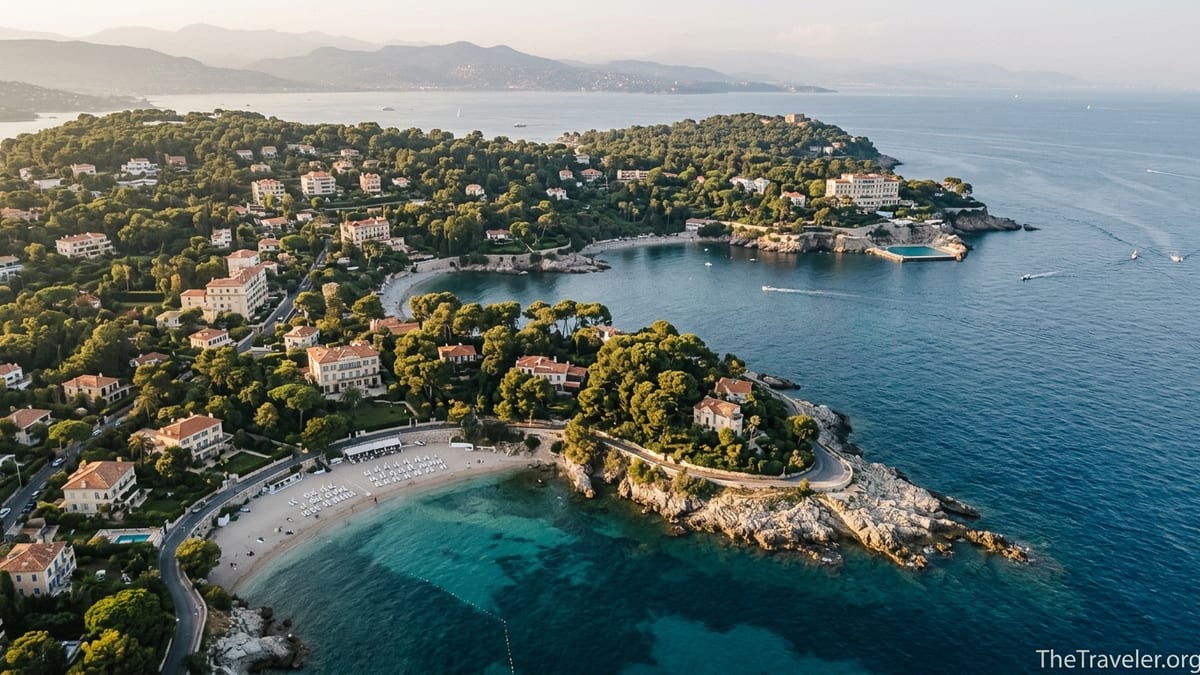
Cap Ferrat belongs to the small commune of Saint‑Jean‑Cap‑Ferrat, a compact harbor village between Nice and Monaco. The headland is thick with umbrella pines and discreet villas, with small coves, paved coastal paths and a tiny central village where everything feels within a short walk. It is serene even in August, with traffic largely restricted and nightlife limited to low‑key bars and hotel lounges.
Cap d’Antibes separates Antibes and Juan‑les‑Pins, and feels much more plugged in. On one side you have Antibes’ old town, daily market and large marina; on the other, Juan‑les‑Pins with its sandy bay, cocktail bars and music venues. The cape itself is a world of grand villas and sheltered coves like the Baie de la Garoupe, but you are never far from a supermarket, a train station or a late‑night ice cream stand.
In practical terms, Cap Ferrat suits travelers who want to slow down, swim, walk and dine quietly, perhaps between day trips to Monaco or Villefranche‑sur‑Mer. Cap d’Antibes suits visitors who crave a beach‑club atmosphere by day, restaurants and bars at night, and the option to dip into city life in Antibes or even Cannes without much effort.
Both capes are luxurious, but the style of luxury differs. Cap Ferrat has a polished resort feel centered on a few major luxury hotels and impeccably maintained villas. Cap d’Antibes mixes top‑tier hideaways with slightly more relaxed, beach‑holiday energy and a broader spread of price points, especially once you factor in Antibes and Juan‑les‑Pins.
Beach Experiences: Coves, Sand and Famous Names
Cap Ferrat is all about small, picturesque coves and pebble or shingle beaches with exceptionally clear water. Paloma Beach, long one of the Riviera’s most famous coves, has a stunning setting under pine‑covered cliffs facing Beaulieu‑sur‑Mer and the cliffs of Èze. The public section of Paloma remains open, though the well‑known private Paloma Beach restaurant and club is closed for renovations through 2025, which means fewer loungers and more towel‑on‑the‑pebbles visitors than in the past. Elsewhere on the cape, Passable Beach overlooks the Bay of Villefranche with sheltered, often very calm water that families appreciate.
Cap d’Antibes, by contrast, offers a mix of sandy and pebbly spots, but the star is Plage de la Garoupe, often cited in recent Antibes tourist guides as the jewel of the cape for its fine sand, turquoise shallows and views across the Baie des Anges toward Nice and the Alps. The small crescent is divided between a free public area and several private beach clubs with loungers, parasols and restaurants. Expect relatively soft sand underfoot, shallow entry and clear, warm water in summer, ideal for swimming or paddle‑boarding.
For travelers deciding between the two, think about your tolerance for pebbles and your love of facilities. On Cap Ferrat, you will often spread your towel on smooth stones, with perhaps a simple snack kiosk behind you. On Cap d’Antibes, especially at Garoupe, you are more likely to book a sunbed at a club such as Plage Keller or one of the other long‑standing establishments, where staff bring salads and chilled rosé directly to your chair and showers and changing cabins are part of the package.
One more nuance is construction and coastal works. Around Cap d’Antibes, the municipality has been renovating some waterfront areas at Garoupe and nearby beaches, with phases of work scheduled to complete by summer 2026. During high season this can mean fenced‑off zones or altered access points, though the main bathing area remains open. On Cap Ferrat, beach infrastructure is simpler and changes tend to be more subtle, but the limited size of coves like Paloma means they fill fast on sunny weekends.
Hotels, Budgets and the Feel of Luxury
Both capes offer some of the most exclusive addresses on the Riviera, but the way that plays out for your budget and your daily experience differs. On Cap Ferrat, the flagship is the Grand‑Hôtel du Cap‑Ferrat, managed by Four Seasons, a clifftop palace with manicured gardens, an iconic seawater pool and a dedicated funicular down to its beach club. Room rates in high season commonly exceed four figures per night in US dollars, and poolside lunch for two with wine can easily reach mid‑three figures. Boutique properties like La Villa Cap Ferrat or other small hotels closer to the village center soften the blow somewhat, but the peninsula as a whole remains very upscale.
Cap d’Antibes has its own legends, notably the Hôtel du Cap‑Eden‑Roc, perched on the rocks with terraced seawater pools and private bathing platforms. Nightly rates there in high season also tend to sit in the four‑figure range, and the guest list leans to long‑time loyal clientele. Yet because the cape lies between Antibes and Juan‑les‑Pins, you can stay in a mid‑range hotel or apartment in town, sometimes around the low to mid hundreds per night in shoulder season, and still access Garoupe or other cap beaches by car, bus or even on foot if you enjoy a walk.
In practice, this means Cap Ferrat often functions as an all‑inclusive cocoon. Many guests dine most nights at their hotel or at just a handful of nearby spots, and your social life centers on the property. On Cap d’Antibes, even if you stay at a high‑end resort such as Cap d’Antibes Beach Hotel or a villa near Garoupe, you have the choice to head into Antibes’ old town for a casual bistro, grab gelato in Juan‑les‑Pins, or even take the evening train to Cannes.
Service culture is another subtle difference. Cap Ferrat’s major properties run on polished resort routines, though recent traveler feedback suggests service can vary from flawless to somewhat inconsistent depending on staffing and season. Cap d’Antibes’ hotels range from ultra‑formal to beach‑casual, and while you may encounter the occasional rough edge, you also find a slightly more relaxed, less hushed environment that some travelers prefer after a day in the sun.
Food, Nightlife and Everyday Atmosphere
Cap Ferrat is fundamentally quiet. In the village around the port, you will find a cluster of brasseries, seafood restaurants and cafés, plus one or two more ambitious dining rooms, including hotel restaurants run by well‑known chefs. Evening entertainment rarely extends beyond a drink at a waterfront bar or a long dinner on a terrace; there are no real nightclubs, and live music tends to appear only on certain summer nights or at hotels.
For many visitors, that is part of the charm. A typical evening might involve a walk along the coastal promenade toward the port, an aperitif watching small boats in the harbor, and then dinner of grilled fish or a Niçoise‑inspired menu on a restaurant terrace. If you want more nightlife, you would usually take a taxi to Nice or Monaco, both within about thirty to forty minutes’ drive, though late‑night transport can be costly.
Cap d’Antibes, with Antibes and Juan‑les‑Pins at either end, offers a wider range of moods. You might have lunch barefoot at a club on Garoupe Beach, later wander into Antibes’ old town to browse the covered market or have a cocktail on a rooftop bar overlooking the marina, and finish the evening in Juan‑les‑Pins where live music and beach bars keep going until late in July and August. During the famous Jazz à Juan festival in mid‑summer, big‑name performers play in an open‑air pine grove by the beach, drawing an international crowd and extending the nightlife map right up to the edge of the cape.
Everyday errands are also simpler around Cap d’Antibes. Supermarkets, pharmacies and bakeries line the roads in and out of Antibes and Juan‑les‑Pins, and you can easily combine a beach day with a stroll through town or a visit to the Picasso Museum inside Antibes’ old castle. On Cap Ferrat, essentials are available in the village but at higher prices and with more limited choice, and many visitors do a shop in Nice or Beaulieu‑sur‑Mer before settling into their rental.
Getting There and Getting Around
Reaching either cape from Nice Côte d’Azur Airport is relatively straightforward, but the practicalities can influence your decision. For Cap Ferrat, most visitors take a taxi or pre‑booked transfer, with the ride typically taking thirty to forty minutes depending on traffic. Public transport requires a train or tram toward Nice or Beaulieu‑sur‑Mer plus a bus connection, and while manageable, it becomes cumbersome with heavy luggage. Once on the cape, you can walk almost everywhere if you stay near the village, with local buses connecting to nearby towns.
Cap d’Antibes benefits from its proximity to the main rail line along the coast. You can take the train from the airport station or central Nice directly to Antibes or Juan‑les‑Pins, then a short taxi or local bus to your accommodation on the cape. For visitors planning several day trips to cities along the Riviera, basing near Antibes station can cut both cost and travel time. During summer, buses and shuttles link Antibes, Garoupe Beach and Juan‑les‑Pins, though the last return at night may be relatively early.
Once you are settled, both capes reward walking. Cap Ferrat’s coastal path circles much of the peninsula, past villas, small coves and rocky points, ideal for sunrise or sunset strolls. Cap d’Antibes has the Sentier de Tirepoil, a wilder coastal trail from the Baie de la Garoupe around the exposed southern side of the cape, where waves crash against rocks and views stretch toward the Lérins Islands near Cannes. The Tirepoil path is not a beach walk as such, but a scenic hike that adds a more rugged dimension to an otherwise gentle coastline.
If you plan to rent a car, parking is a serious consideration. Both capes have limited spaces near their best beaches. At Garoupe, spots on the lanes behind the sand fill quickly by mid‑morning in July and August; on Cap Ferrat, the approach roads to Paloma and Passable also feel congested in high season. Choosing a hotel or apartment with on‑site parking can save daily stress and expensive meters.
Which Cape Suits Which Traveler?
Travelers drawn to Cap Ferrat often imagine slow mornings, long swims and a sense of retreat. Honeymooners and couples celebrating significant anniversaries gravitate here, booking sea‑view rooms and lingering over breakfasts on shaded terraces. The limited nightlife and high daily spend are features rather than bugs for those who want to unplug and are comfortable investing in a once‑in‑a‑decade trip.
Cap d’Antibes casts a wider net. Families appreciate the sandy shallows at Garoupe and the family‑friendly options in Antibes and Juan‑les‑Pins, from small playgrounds and casual creperies to aquariums and water sports. Groups of friends like the ability to mix a day at an upscale beach club with a more down‑to‑earth evening in town, where a pizza and carafe of local rosé do not feel out of place. Travelers who want to explore by train, from Cannes to Ventimiglia, also find Cap d’Antibes a more convenient base.
If you are a first‑time visitor to the Riviera and want a concentrated taste of both glamour and authentic town life, Cap d’Antibes often leaves a stronger impression because there is simply more variety packed into a small area. You can wander Antibes’ stone lanes in the morning, lie on Garoupe’s soft sand in the afternoon, and watch the sunset from a headland path without needing a car all day.
By contrast, if you have already visited Nice or Cannes and find yourself craving a quieter corner with immaculate gardens, few crowds and a sense of privacy, Cap Ferrat may be the more memorable choice. Even a short walk from the Grand‑Hôtel toward the lighthouse at the tip of the peninsula reveals empty stretches of path and benches where you can hear almost nothing but cicadas and the sea.
The Takeaway
Cap Ferrat and Cap d’Antibes are both classic Riviera addresses, but they leave different after‑images in memory. Cap Ferrat shines as the archetypal secluded cape, where luxury hotels and villas face a sea that feels almost private, and the rhythms of the day revolve around swims, walks and unhurried meals. Cap d’Antibes feels more woven into the daily life of the coast, with an outstanding sandy cove at Garoupe, easy access to Antibes and Juan‑les‑Pins, and more options at every price level.
If your dream escape is waking up in a high‑end resort, wandering down to a near‑silent pool and spending days between coves and gardens, Cap Ferrat is likely to capture your heart. If you picture yourself dividing time between beach clubs, old‑town markets, galleries and lively evenings under pine trees with live music, Cap d’Antibes will probably make the bigger impression.
In the end, both capes share the same intense Mediterranean light, the same scent of pine and sea salt and the same almost unreasonable beauty of the Côte d’Azur. Choosing between them is less about right or wrong and more about matching the mood of your trip. For many travelers, the simple rule works: for stillness and seclusion, Cap Ferrat; for variety and a richer slice of Riviera life, Cap d’Antibes.
FAQ
Q1. Which is better for a first‑time visitor to the French Riviera, Cap Ferrat or Cap d’Antibes?
For a first visit, Cap d’Antibes often works better, because you can combine beach time at Garoupe with easy access to Antibes’ old town, Juan‑les‑Pins nightlife and day trips by train.
Q2. Where will I find softer, sandier beaches?
Cap d’Antibes has an advantage for sand, especially at Plage de la Garoupe and the main beaches of Antibes and Juan‑les‑Pins. Cap Ferrat’s coves are beautiful but mostly pebbly or shingle.
Q3. Which cape is more expensive overall?
Both are upscale, but Cap Ferrat generally skews more expensive day to day, with a high concentration of luxury hotels and villas and fewer budget dining options.
Q4. Is Cap Ferrat too quiet for teenagers or young adults?
It can be, especially in the evenings, since nightlife is limited to hotel bars and a few low‑key spots. Teenagers often find Cap d’Antibes and nearby Juan‑les‑Pins more engaging.
Q5. Can I visit both capes without renting a car?
Yes, if you are patient with public transport. Trains and buses connect Nice, Antibes and surrounding towns, and local buses or taxis cover the final stretch out onto each cape.
Q6. Which is better for hiking and coastal walks?
Both have excellent coastal paths. Cap Ferrat offers an almost continuous circuit around the peninsula, while Cap d’Antibes has the more rugged Sentier de Tirepoil starting near Garoupe.
Q7. How far are the capes from Nice Côte d’Azur Airport?
By car, Cap Ferrat is usually around thirty to forty minutes from the airport, depending on traffic. Cap d’Antibes is similar by taxi, but you can also reach Antibes easily by train.
Q8. Are the beach clubs suitable for children?
On both capes, many beach clubs welcome families, but Garoupe’s shallow sand and calm water make Cap d’Antibes particularly appealing for children, especially in early summer.
Q9. When is the best time of year to go?
Late May, June and September balance warm sea temperatures with fewer crowds. July and August bring the liveliest atmosphere but also the highest prices and busiest beaches.
Q10. If I love photography, which cape offers more dramatic views?
Cap Ferrat delivers classic postcard shots of cliffs, villas and secluded coves, while Cap d’Antibes adds sweeping views toward the Alps, sunsets over the Baie des Anges and lively harbor scenes in Antibes.