


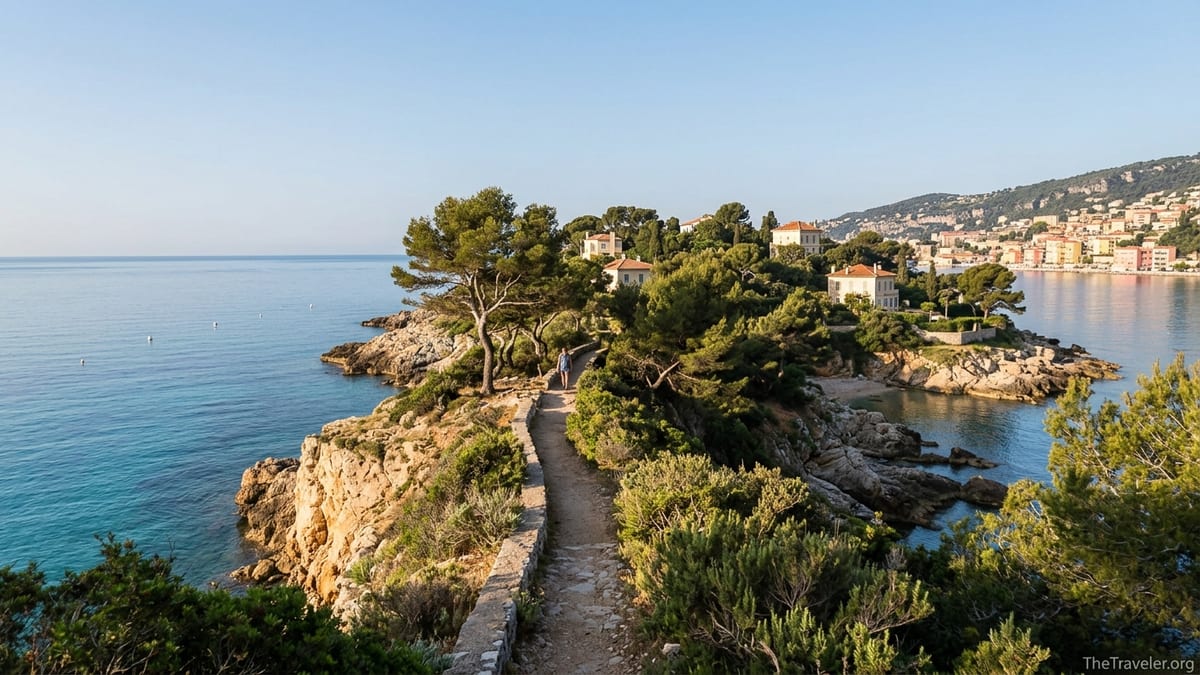
Cap Ferrat is one of the most rewarding stretches of coastline on the French Riviera for walkers. The peninsula’s Sentier du Littoral wraps around the headland with almost uninterrupted views of the Mediterranean, passing rocky coves, Belle Époque villas and fragrant pine groves. The experience, though, changes markedly with the seasons. Choosing the right month and even the right time of day will make the difference between a peaceful panoramic walk and a hazy, crowded trudge in the heat.
Get the latest updates straight to your inbox!
Understanding Cap Ferrat’s Climate and Light
Cap Ferrat sits between Nice and Monaco on a classic Mediterranean climate belt, which means mild, often bright winters and hot, dry summers. Average daytime highs in nearby coastal towns hover in the low teens Celsius in January and climb to the mid‑20s by August, with sea breezes taking the edge off the heat. For walkers, the key factor is not only temperature but also how clear the air feels for long views up and down the Riviera.
In summer, heat build‑up and humidity can create a visible haze over the sea from late morning onward. When you look back toward Villefranche‑sur‑Mer or across to Beaulieu‑sur‑Mer, the pastel facades can seem slightly washed out in the midday light. By contrast, in late winter and spring, the cooler, drier air often produces crisper visibility, so the white lighthouse at the tip of the cape and the terraced hills behind Nice appear sharply defined.
Rainfall peaks in autumn, especially in October and November, but showers are often short and followed by luminous skies. After a storm, the light can be particularly striking, with intensely blue water and fresh, clear air. For photographers, that combination of washed‑clean views and low sun angles in the cooler months can be more rewarding than the postcard‑blue but hazy afternoons of August.
Wind is another consideration. Mistral‑type northerlies are less aggressive here than in western Provence, but breezy days are common in winter and early spring. On the exposed southern side of the cape, gusts can whip up sea spray and make some sections of the path feel wilder. If you value calm conditions over drama, late spring and early autumn usually bring more gentle breezes and stable weather.
Month‑by‑Month: When the Coastal Paths Shine
For most walkers, the sweet spots on Cap Ferrat are April to early June and mid‑September to late October. In April and May, daytime highs typically sit in the mid‑teens to around 20 degrees Celsius, ideal for sustained walking without overheating. Wildflowers and bright green maquis shrubs edge the trail, and the sea is still cool, so fewer day‑trippers linger on the rocks, leaving the path relatively quiet during weekdays.
June and September bring warmer air and much more inviting water temperatures, often above 20 degrees for swimming. These months suit travelers who want to combine the loop walk with a dip at Paloma Beach or a stop at Passable Beach. However, the path is busier, and midday can already feel hot, especially on the limestone sections where the sun reflects off pale rock. Early starts become important if you want both comfortable walking and clear, less hazy views for photography.
July and August are the most popular months on the Riviera, and while the coastal path remains beautiful, it is less forgiving. Afternoon temperatures regularly climb above the mid‑20s, and there is limited shade on long stretches between the lighthouse and Plage de la Pointe Saint‑Hospice. The sea is at its warmest, which pleases swimmers but also packs the small calanques with people. If you visit in high summer, plan your walks for sunrise or the last hours before dusk, when the light softens and the crowds thin out.
From November through March, you trade heat and swimming for solitude and clarity. Many days are bright and cool, and the trail is used by locals out for a brisk coastal stroll rather than holiday crowds. Some beach clubs close for the season and certain services reduce their opening hours, but the main path itself remains accessible in normal weather. For travelers who enjoy quiet landscapes, winter can be an excellent time to follow the peninsula’s contours and enjoy broad, unobstructed views.
Spring: The Ideal Season for Scenic Walkers
Spring is widely regarded as the best overall season for coastal walks on Cap Ferrat. From late March into May, the peninsula feels refreshed after winter. Aleppo pines release a resinous scent in the warming air, and headlands are speckled with wildflowers. The strong Mediterranean sun has returned, but daily highs are usually low enough that you can complete the full loop in comfort, especially if you set out before late morning.
On a typical April day, you might start from the small harbor of Saint‑Jean‑Cap‑Ferrat after a coffee at a quay‑side café and head east toward the Saint‑Hospice chapel. The path quickly opens to wide views across the bay toward the ochre houses of Villefranche‑sur‑Mer, which appear unusually crisp against the pale blue water at this time of year. With fewer visitors around, you can often hear the waves slapping against the rocks and the calls of seabirds rather than beach music.
Spring also lends itself well to combining the walk with cultural stops without feeling rushed. For example, you can follow the Sentier du Littoral around the southern tip of the cape in the morning, then cut inland in the early afternoon to visit Villa Ephrussi de Rothschild and its manicured gardens. In spring, the gardens are actively tended and the cooler temperatures make wandering among the fountains and terraces more pleasant than under the full glare of summer sun.
For travelers focused on photography, spring’s changeable weather can be an advantage. A day that begins with high, thin cloud often clears by late morning, and the angled light creates gentle shadows on the cliffs. Distant snow on the Alps, visible on clear days behind the coastal hills, sometimes lingers into early spring, adding unexpected drama to long‑range shots from exposed viewpoints on the path.
Summer: Early Starts for Heat and Haze
Summer brings long days, warm water and a lively atmosphere, but it demands more planning if you want to enjoy Cap Ferrat’s coastal paths rather than endure them. By late June, exposed rock sections on the southern side can radiate heat well into the evening. Even fit walkers find that a mid‑afternoon loop around the cape feels much harder than the same walk in April or October, simply because of the accumulated warmth and the absence of shade.
One practical response is to treat the walk like a short hike. Aim to leave your accommodation in Nice, Villefranche or Beaulieu in time to step onto the trail just after sunrise. On a clear July morning, the first hour after the sun comes up offers some of the finest views of the season, with the sea still glassy and the horizon line sharp. Looking back from near the Cap Ferrat lighthouse, you can often see the terracotta roofs of Villefranche clearly before the heat induces haze.
Early starts also help you secure a quieter spot at small coves that fill up later. For instance, if you follow the eastern section first, you can reach Paloma Beach by mid‑morning, swim while the water is still relatively calm and then retreat into the village or a shaded café terrace before midday crowds grow. Many visitors choose to reverse the loop in the late afternoon, returning to the path around 18:00 for a shorter sunset stroll, when the golden light flattens the glare on the water.
Hydration and sun protection become essential in summer. There are stretches where you will not find a fountain or café for an hour or more, especially once you leave the built‑up edges of Saint‑Jean‑Cap‑Ferrat. Walkers commonly carry at least one to two liters of water per person, a hat and high‑factor sunscreen. For views, a lightweight polarizing filter on a camera or polarizing sunglasses can cut through some of the midday haze, but even with gear, the most detailed long‑distance vistas are usually reserved for the first and last hours of daylight.
Autumn and Winter: Quiet Trails and Crystal Views
From late September into October, Cap Ferrat gradually shifts from summer bustle to a more relaxed rhythm. Sea temperatures remain comfortable for many swimmers into early October, yet air temperatures drop enough that walking the entire coastal loop in the middle of the day becomes pleasant again. The path is still active, but the ratio shifts toward local walkers and longer‑stay visitors rather than day‑tripping beachgoers.
Autumn weather can be more variable, with an increased chance of showers and occasional storms. When heavy rain is forecast, authorities sometimes advise against using certain exposed stretches, and you may find temporary signs warning of slippery rock sections. The reward for patience is that, on days after a front has moved through, the light can be exceptionally clear. Standing on the southern cliffs after an October storm, it is not unusual to see the coastline curve all the way past Nice, with individual buildings discernible on the far shore.
Winter, from November through February, is the quietest period on the peninsula. Some days are gray and blustery, and northerly winds can make the exposed southern side feel distinctly cool despite relatively mild air temperatures by European standards. On the other hand, you gain a sense of space and solitude that is almost impossible to find in July. Many locals choose these months for regular morning walks, appreciating the low winter light and the unobstructed sea horizon.
Infrastructure remains adequate for visitors, though with a different flavor. Instead of beach clubs and crowded terraces, you might warm up in a small café in Saint‑Jean‑Cap‑Ferrat after a brisk circuit, watching fishing boats rather than yachts moving in the harbor. If your main goal is contemplative walking and photography rather than swimming or nightlife, late autumn and winter can be a surprisingly rewarding time to experience the cape.
Timing Your Walk: Routes, Crowds and Daylight
The main coastal path around Cap Ferrat is usually tackled as a loop that can take anywhere from two to four hours depending on pace, photo stops and swimming breaks. In the longer, brighter days of late spring and early summer, you have the luxury of time. It is realistic to start mid‑morning, break for lunch in the village and still complete the circuit with daylight to spare. In winter, shorter days make an early start more important so you can enjoy the most scenic sections in full light.
Crowd patterns follow predictable rhythms. In high season, coaches and tour buses often deposit visitors in mid‑morning, with the harbor promenade and nearby sections of path noticeably busier from roughly 10:30 to 16:00. If you prefer quieter conditions, plan to be on the path at opening light or after 17:00. In shoulder seasons, even midday can feel calm, especially on weekdays. Some frequent visitors recommend aligning longer walks with local school terms when beach use drops but services remain open.
For the clearest views, think in terms of where the sun will be rather than only the hour. Walking the eastern side in early morning puts the rising sun behind you, illuminating the cliffs and villas in front. In late afternoon, reversing direction lets you look west toward Villefranche with the sun again at your back, avoiding glare off the water. Many photographers plan two shorter outings rather than one continuous loop so that both sides of the peninsula are seen in their best light.
Whatever the season, it is wise to check a local forecast on the morning of your walk, paying attention to wind speeds and any rain warnings. After very heavy rain, particularly in autumn, small rockfalls or washed‑out steps may temporarily affect narrow passages. While such disruptions are usually addressed quickly, flexibility in your schedule allows you to adjust your route or postpone the more exposed sections to a brighter, drier day.
Practical Seasonal Tips for Clear Views and Comfort
In spring and autumn, a light layering strategy works best. Mornings can start cool, especially in March or November, but you may warm up quickly once on the move, particularly on sheltered western sections. A thin base layer, breathable long‑sleeve top and packable windbreaker let you adjust to changing conditions. Shoes with good grip are advisable year‑round, as sections of the path cross smooth limestone that can be slick after showers or sea spray.
Summer visitors who value clear views should focus on the edges of the day. Bringing a simple breakfast pastry and coffee from a bakery in Beaulieu‑sur‑Mer or Villefranche and eating it at one of the early viewpoints can turn a practical early start into a memorable experience. Later, when heat and haze build, you might retreat inland to shaded streets or schedule indoor visits such as Villa Ephrussi de Rothschild, returning to the coast only when the light softens.
In winter, short cold snaps and wind chill on exposed points make gloves and a light hat surprisingly useful, even though temperatures remain above freezing. Waterproofs are rarely required all day, but a compact rain jacket can save a walk if a passing shower drifts along the coast. Because many seaside terraces reduce their seating in the off‑season, it can be pleasant to pack a small thermos of hot tea or coffee when you set out, particularly if you plan a longer circuit.
Across all seasons, plan your logistics around daylight and local transport. Regional buses and trains linking Nice, Villefranche, Beaulieu and Monaco run more frequently in high season but still offer regular service off‑season. Knowing the time of the last evening connection back to your base takes pressure off the end of the day and allows you to linger over sunset views. For those staying directly in Saint‑Jean‑Cap‑Ferrat, the luxury is being able to step onto the path at different times of day to see how the changing light transforms the same viewpoints.
The Takeaway
Cap Ferrat’s coastal paths reward visitors in every season, but they show different sides of themselves as the year turns. For most walkers who want a balance of comfort, clear views and manageable crowds, April to early June and mid‑September to late October are the standout periods. The air is often crystal clear, temperatures are favorable for sustained walking and the path feels lively without being overwhelmed.
If your priorities lean more toward swimming and beach time, early summer and early autumn add warmer sea temperatures to the mix, at the cost of busier paths and a greater need for early or late starts to avoid heat and haze. Travelers seeking solitude and atmospheric light will find winter surprisingly rewarding, provided they come prepared for cooler breezes and the occasional stormy day.
Whatever month you choose, the essence of Cap Ferrat remains the same: a narrow finger of land where sea, rock and light interact in endlessly changing ways. With a little attention to season, time of day and local weather, you can experience the peninsula at its finest, whether you are watching first light catch the villas above Villefranche or ending the day listening to waves roll against the rocks beneath the lighthouse.
FAQ
Q1. What is the single best month to visit Cap Ferrat for coastal walks?
For most visitors, May offers the best balance of mild temperatures, clear views and moderate crowds, with comfortable walking conditions and increasingly bright, settled weather.
Q2. Is it too hot to walk the Cap Ferrat coastal path in July and August?
It can feel very hot on exposed sections in July and August, but early morning and late afternoon walks are still enjoyable if you carry enough water and sun protection.
Q3. Can I walk the Sentier du Littoral in winter?
Yes, the path is generally accessible in winter, and many locals use it then. Expect cooler temperatures, more wind and occasional closures after heavy storms.
Q4. Are spring views really clearer than in summer?
Often yes. Cooler, drier spring air tends to produce crisper visibility, while summer heat can create haze that softens distant details along the Riviera.
Q5. What time of day gives the best light for photography?
Shortly after sunrise and the last two hours before sunset usually provide the best light, with lower sun angles, warmer tones and less glare on the water.
Q6. How long does it take to walk around Cap Ferrat?
The full coastal loop typically takes between two and four hours, depending on pace, photo stops and any breaks for swimming or visits to sights along the way.
Q7. Is the path shaded or exposed?
Much of the coastal path is exposed, especially around the southern tip. There are some shaded stretches near the village and under pines, but you should plan for strong sun.
Q8. Are there services along the trail year‑round?
In high season you will find nearby beach bars and cafés, particularly close to the village and main beaches. In winter, services are more limited, so bring water and snacks.
Q9. Can I combine the walk with a visit to Villa Ephrussi de Rothschild?
Yes. Many visitors walk the coastal path in the morning, then head inland to tour the villa and gardens in the afternoon when the sun is higher and walking is warmer.
Q10. Do I need hiking gear for the Cap Ferrat coastal path?
Sturdy walking shoes with good grip are recommended, but you do not need technical hiking gear. Comfortable clothing, a hat, water and sunscreen are usually sufficient.