


More news on this day
American Airlines is ending complimentary upgrades from economy into business class on several of its most sought-after domestic routes, a shift that will reshape how AAdvantage elites travel to Hawaii and other popular leisure destinations where the carrier now sells a distinct Premium Economy cabin.
Get the latest news straight to your inbox!
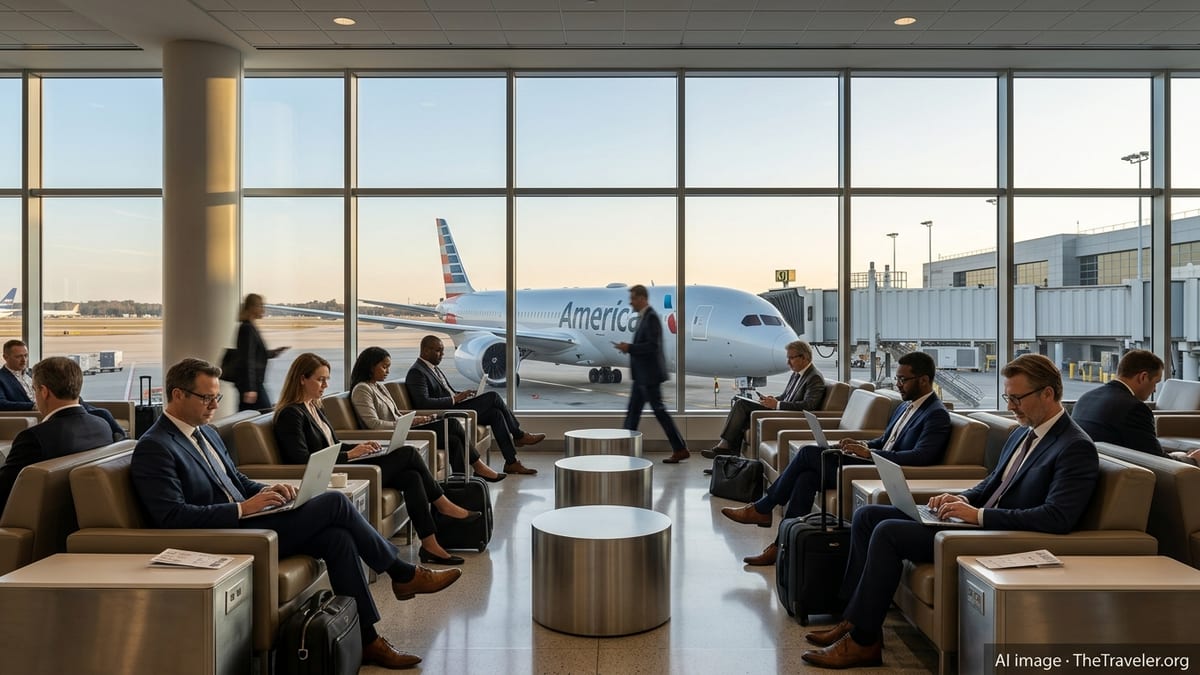
Complimentary Business Upgrades Withdrawn on Select Long-Haul Routes
American’s updated guidance on upgrades for status members indicates that complimentary moves from the Main Cabin now lead into the next higher cabin offered on a given route, which may increasingly be Premium Economy rather than business class. On newly configured widebody aircraft serving Hawaii and select coast-to-coast markets, this effectively removes free jumps into lie-flat business seats for elite travelers holding economy tickets.
According to publicly available information and recent program documentation, complimentary upgrades remain a core AAdvantage benefit within North America, including Hawaii, but are now aligned with cabin structures that feature three distinct products. Where aircraft offer Main Cabin, Premium Economy and Business, complimentary upgrades are being directed into Premium Economy seats, leaving business class primarily for revenue purchases, paid upgrade offers, mileage redemptions and systemwide upgrades.
Discussion among frequent flyers in online forums and traveler communities over the past week points to specific Hawaii routes on widebody aircraft as early examples of this change. Flyers report that complimentary upgrade waitlists which previously cleared into business are now only clearing into Premium Economy, with business cabin inventory held back for separate paid or instrument-based upgrades.
The move brings American closer to policies already common on international routes, where complimentary upgrades to long-haul business cabins have long been restricted. By extending a similar approach to premium domestic and Hawaii services, the airline is signaling that fully flat business seats on these flights are now positioned more firmly as a revenue and high-value redemption product.
Hawaii Flights at the Center of the New Upgrade Hierarchy
Hawaii has become a focal point for American’s evolving cabin strategy as the carrier deploys more widebody aircraft equipped with Premium Economy between the U.S. mainland and islands such as Oahu and Maui. Publicly available materials on recent promotions and upgrade terms show that certain long domestic flights with three cabins, including Hawaii services, are excluded from some systemwide upgrade offers, underscoring how tightly American is managing access to premium seats on these routes.
Reports from travelers on routes like Dallas–Fort Worth to Honolulu and other high-demand services suggest that, while complimentary upgrades from Main Cabin are still being processed, they now stop at Premium Economy. Customers seeking business class on these flights are being nudged toward buying Premium Economy and then using mileage or systemwide upgrades, or accepting targeted paid offers that may appear closer to departure.
For holidaymakers and leisure travelers, the change alters the long-standing dynamic in which a mid- or high-tier elite could occasionally enjoy a surprise lie-flat business seat on a Hawaii vacation purely through complimentary upgrades. The new model creates a clearer hierarchy: Main Cabin to Premium Economy for complimentary moves, and Premium Economy to business only when a separate instrument or cash payment is involved.
Capacity and demand patterns on Hawaii services appear to be a driving factor. With strong leisure bookings and a limited number of business class seats on each widebody aircraft, shifting complimentary demand into Premium Economy allows American to protect more business inventory for customers willing to pay, while still advertising an upgrade experience for its elites.
Transcontinental Premium Routes Also Affected
The impact of the new upgrade logic is not limited to Hawaii. American’s premium transcontinental markets, where it already operates dedicated Flagship Business and, on some routes, Flagship First, have long had narrower upgrade pathways for complimentary moves. Public documentation and traveler experiences show that complimentary jumps directly into these highest cabins are restricted, with many seats preserved for paid tickets and confirmed instruments.
As more domestic routes adopt a three-cabin layout, similar restrictions are increasingly being applied to other long-haul domestic flights beyond Hawaii. Reports indicate that select transcontinental services featuring both Premium Economy and business class now follow the same pattern: complimentary upgrades move travelers from Main Cabin into Premium Economy, but not into business, even when elites previously enjoyed occasional complimentary access to lie-flat seats.
Travel analysts observing these changes note that American is effectively building a consistent structure across its premium domestic network. Three-cabin routes are moving toward a model where Premium Economy becomes the primary outlet for complimentary upgrades, while business class is managed as a mostly monetized space, either through direct sales or higher-value loyalty instruments.
This approach may reduce the variability that frequent flyers have long experienced across different domestic routes and aircraft types. However, it also raises the bar for accessing business class on some of the most competitive domestic services, including key flights linking the U.S. East and West Coasts.
What Changes for AAdvantage Elites
For AAdvantage status holders, the most immediate practical change is a recalibration of expectations. Complimentary upgrades still exist on many domestic flights, but the destination cabin on three-class routes has shifted. Instead of hoping for business, elites booking Main Cabin now have a clearer, if more limited, expectation that a successful complimentary upgrade will place them in Premium Economy.
Public guidance on upgrade eligibility makes clear that complimentary upgrades depend on fare type, operating carrier and cabin configuration. Basic Economy fares purchased since mid-2026 are excluded from upgrade benefits, while higher fare classes maintain access to the auto-request system that checks for available upgrade inventory. On routes with Premium Economy, that inventory is increasingly concentrated in the middle cabin.
Systemwide upgrades, Loyalty Point Rewards and mileage-based upgrades therefore become more important tools for those who consider lie-flat business seats a key part of their loyalty strategy. Recent promotional material shows American positioning these instruments as the preferred way to secure business class on long-haul domestic and international flights, particularly when used from Premium Economy rather than from the Main Cabin.
Some frequent flyers may respond by adjusting their booking behavior. For especially long flights to Hawaii or across the continent, more elites may choose to pay for Premium Economy upfront, treating it as the new baseline for comfort and using upgrade instruments opportunistically to reach business. Others may reevaluate the relative value of status on American compared with carriers that still offer more generous complimentary access to long-haul business class.
A Wider Trend in Monetizing Premium Cabins
Industry observers see American’s policy shift as part of a broader trend across large U.S. airlines, in which complimentary access to top-tier cabins is steadily replaced by a mix of paid upgrades, dynamic pricing and targeted loyalty instruments. Published analyses of upgrade policies at multiple carriers suggest that complimentary domestic upgrades are increasingly concentrated on shorter flights and two-cabin aircraft, while long-haul and three-cabin routes are monetized more aggressively.
On American’s network, this trend coincides with significant investment in onboard products, including the expansion of Premium Economy and the rollout of new long-haul business seats on aircraft such as the A321XLR and updated widebodies. As the product improves and demand for comfort grows, the incentive to protect premium inventory for revenue customers and high-yield redemptions becomes stronger.
For travelers, the end of complimentary business upgrades on select Hawaii and other long domestic routes marks a notable change in how far elite benefits can stretch. While many will still enjoy upgrades to roomier, quieter Premium Economy cabins, the coveted lie-flat business seat on a long Pacific or transcontinental flight is becoming a more deliberate purchase or redemption decision rather than a perk of status alone.
How AAdvantage members adapt to this reality, and whether competing airlines follow with similar restrictions on their own Hawaii and premium domestic services, will help define the next phase of competition in the U.S. premium travel market.