


More news on this day
Dubai International Airport is open and operating today, with scheduled passenger flights arriving and departing, but regional tensions and the aftershocks of this year’s Iran conflict continue to generate delays, reroutings and lingering uncertainty for some travelers.
Get the latest news straight to your inbox!
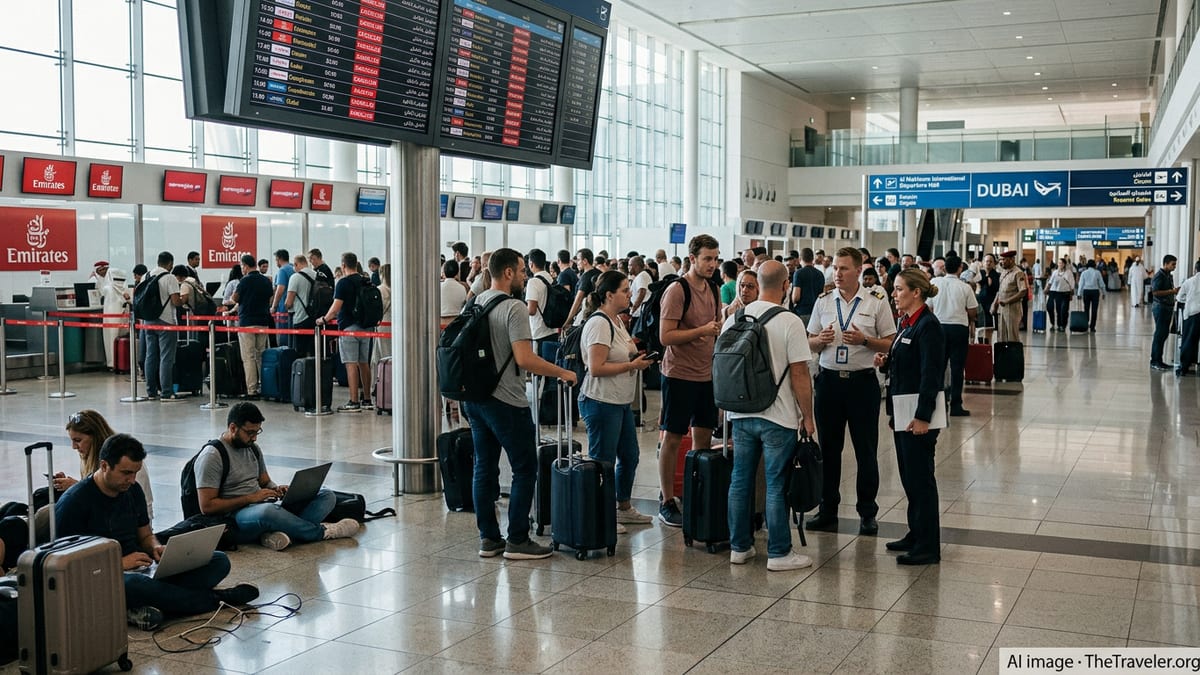
DXB Open on July 13 as Gulf Travel Rebuilds
Publicly available flight-tracking data and airline schedules indicate that Dubai International Airport is accepting arrivals and departures on Monday, July 13, 2026, including long-haul and regional services. Emirates and other major carriers are listing flights as operating from all three DXB terminals, a sharp contrast with the complete shutdown seen at the height of the Iran war earlier this year.
Reports from aviation advisories and logistics bulletins describe both Dubai and Abu Dhabi airports as operational, even as they continue to adjust schedules in response to route changes across the wider Middle East. Recent coverage in regional media also highlights that the United Arab Emirates fully restored its airspace in May after months of restrictions, paving the way for a gradual return to normal passenger volumes.
Travel industry reporting shows that DXB has been preparing for a busy early July, with projections of millions of passengers passing through the hub over the first half of the month. That build-up reflects both pent-up demand for international travel and the airport’s role as a primary bridge between Europe, Asia and Africa.
From Drone Strikes to Full Airspace Reopening
The current operational status at DXB follows a turbulent period in which the airport was repeatedly disrupted by the regional conflict. Earlier in March, international coverage detailed drone incidents near Dubai’s main airport and temporary suspensions of operations, adding to a wave of closures across Gulf hubs as the Iran war escalated.
Analyses of the conflict’s economic impact show that Dubai International was among several major airports hit by missile and drone activity or forced to halt flights due to airspace closures. At the peak of the crisis, thousands of flights across the Middle East were cancelled or diverted as large swathes of regional airspace were declared off-limits to civilian traffic.
By early May, however, the UAE’s civil aviation authorities publicly confirmed the full resumption of air traffic operations in the country. Dubai Airports subsequently reported that airspace within the UAE was fully restored and that DXB was scaling up flight movements, even as overall first-quarter traffic remained below previous-year levels due to the earlier shutdowns.
Delays and Rerouting Persist Amid Renewed Tensions
Although Dubai International is open today, regional security concerns have not completely faded, and travel advisories in several countries continue to flag heightened risk in the Gulf. Online traveler forums and airline updates in recent days reflect a mix of smooth connections and lingering anxiety, particularly as tensions in the wider Middle East flare again.
Risk consultancies and logistics operators tracking the region describe DXB as operational but exposed to disruption risk, with ongoing schedule adjustments and the possibility of short-notice changes if the security picture deteriorates. Airlines have already spent months rerouting flights around sensitive airspace, lengthening flight times and increasing fuel costs, which can ripple through schedules even on days when no new incident occurs.
Some international carriers that suspended Dubai services earlier in the conflict have only recently begun restoring flights, and often at reduced frequency. Industry reporting notes, for example, that certain European airlines have reintroduced Dubai routes on a once-daily basis rather than at pre-crisis levels, reflecting both operational caution and phased capacity management.
What Travelers Can Expect at DXB Today
Passengers traveling through Dubai on July 13 can expect the airport’s core infrastructure, including terminals, check-in halls and security lanes, to be functioning, supported by expanded staffing for the summer rush. Government operations at DXB, including customs and border control, have been operating on enhanced plans as the Hajj return period and school holidays feed additional passenger flows.
However, industry briefings and airline advisories continue to emphasize that departure and arrival times may be affected by factors outside Dubai’s immediate control, such as congestion on alternative air corridors or knock-on effects from disruptions at other regional hubs. Travelers may encounter longer-than-usual queues at peak times as airlines consolidate passengers from rescheduled or retimed flights.
Recent passenger advisories encourage anyone flying via DXB to check flight status repeatedly in the 24 hours before departure and again on the way to the airport. Carriers have also been directing customers toward online and app-based rebooking tools when disruptions occur, in an effort to reduce pressure on airport service desks during busy periods.
Planning a Connection Through Dubai in a Volatile Region
For travelers booking new itineraries that connect through Dubai, the airport’s current open status makes it one of the more reliable hubs in a region still adjusting to post-conflict realities. Analysts note that Gulf mega-hubs such as DXB benefit from significant redundancy in runways, terminals and ground operations, helping them absorb schedule shocks better than smaller airports.
At the same time, the broader pattern of renewed tensions and occasional security incidents underscores that no routing through the Middle East is completely insulated from risk. Travel risk assessments suggest that passengers consider allowing longer connection windows where possible, especially on itineraries that involve multiple airlines or complex onward connections to secondary airports.
Insurance specialists and consumer advocates have also pointed out that some policies treat war-related disruption differently from ordinary delays, which can affect compensation or coverage when flights are cancelled for security reasons. Travelers are being urged to review policy wording carefully and retain documentation of any airline notifications about conflict-related changes.
For now, Dubai International Airport remains open and functioning as the primary gateway between continents, even as the geopolitical backdrop remains unsettled. The combination of restored airspace, rising passenger numbers and cautious airline scheduling means DXB is operating, but not yet entirely free from the shockwaves of this year’s regional crisis.