


Huddersfield rarely makes the front page of glossy UK guidebooks, yet this West Yorkshire town quietly appeals to travelers looking for authentic local life, Victorian architecture and quick access to some of northern England’s best countryside. The question for many visitors is not just whether Huddersfield is worth a stop, but whether it makes sense as a base for wider Yorkshire and Pennine adventures compared with bigger names like Leeds, York or Manchester.
Get the latest updates straight to your inbox!
Getting the Measure of Huddersfield
Huddersfield is a sizeable university town in West Yorkshire, sitting between Leeds and Manchester at the meeting of the Colne and Holme valleys. It is known for its Victorian mill architecture, a compact but handsome town centre and a strong student population linked to the University of Huddersfield. The feel is distinctly local and lived-in rather than overtly touristic, which can be a positive or negative depending on what you want from your trip.
The town’s most striking first impression is often Huddersfield railway station, a grand classical facade fronting St George’s Square. From here, most of the centre is within a 10 to 15 minute walk: the Kingsgate and Packhorse shopping areas, a network of stone-built streets, and the towpath of the Huddersfield Narrow Canal which threads past old warehouses toward the Colne Valley. You do not come here for blockbuster sights on every corner, but for a glimpse of everyday Yorkshire life in a historic setting.
In practical terms, Huddersfield is relatively affordable by UK standards. Recent university accommodation comparisons suggest student housing costs here average well under many other northern cities such as Leeds, York and Manchester, and that price gap often carries over into short-term rentals and midrange hotels. Visitors routinely find central chain hotels or independent guesthouses for noticeably less than equivalents in Leeds or York, especially outside major event weekends.
What Is There to See and Do in Huddersfield Itself?
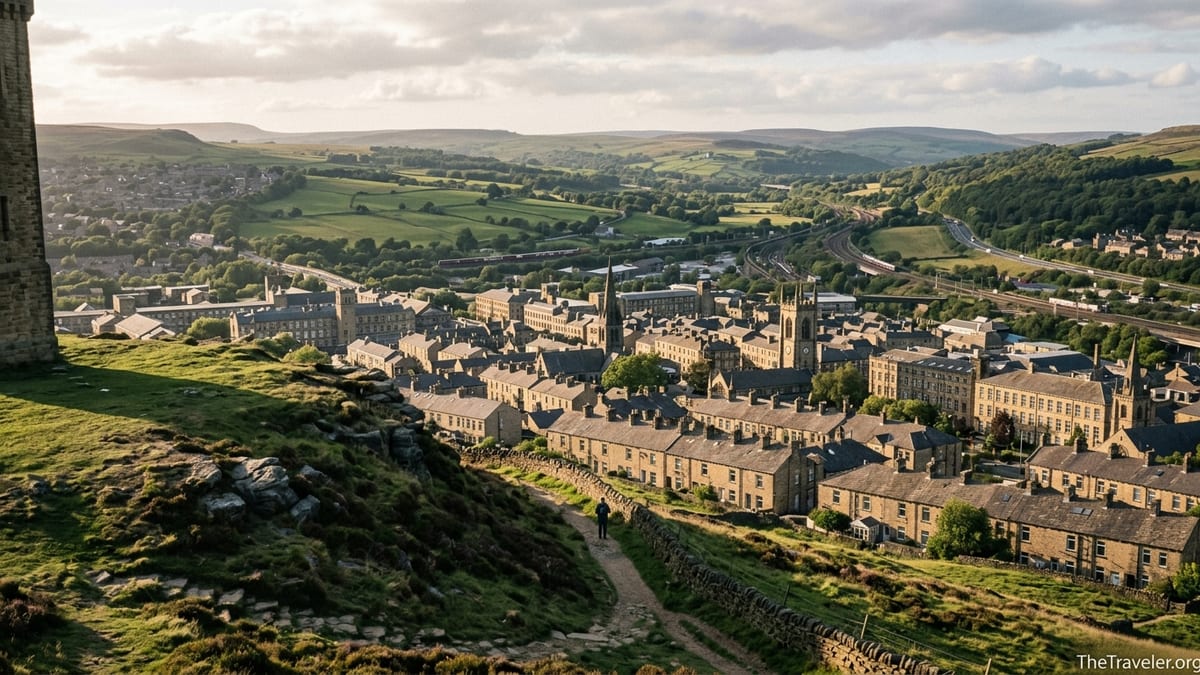
Huddersfield does not compete with York’s medieval walls or Leeds’s nightlife, but it does offer a handful of worthwhile sights and experiences that can comfortably fill a day or two. The town’s signature landmark is Castle Hill and its Victoria Tower, south of the centre. This Iron Age hillfort site topped by a 19th century tower offers wide views over the town, the Colne Valley and across to the Pennines. Reaching it involves either a short drive or a steady uphill walk on public footpaths from neighbourhoods like Almondbury or Newsome, rewarding you with a classic Yorkshire panorama on clear days.
Back at lower levels, the Huddersfield Narrow Canal provides a surprisingly scenic walking or cycling route from the edge of the town centre out through the Colne Valley toward villages like Slaithwaite and Marsden. Writers for regional tourism boards often highlight the contrast along this towpath: former mills converted to studios and flats, stone cottages by the water, and then increasingly rural scenery as you head toward the Standedge Tunnel at Marsden, the deepest canal tunnel in Britain.
Culturally, the Lawrence Batley Theatre occupies a renovated Methodist chapel right in the centre and hosts a busy calendar of drama, comedy, dance and music. For many visitors staying a couple of nights, an evening performance here paired with drinks at one of the surrounding bars offers a relaxed taste of local nightlife. On the heritage side, Tolson Museum in Ravensknowle Park presents Huddersfield’s story from prehistoric finds through its booming textile industry, set inside a Victorian mansion amidst lawns and play areas that suit family visits.
Huddersfield also has a low-key food and drink scene worth exploring if you use it as a base. Expect a mix of traditional Yorkshire pubs serving cask ale, curry houses reflecting the town’s South Asian heritage, and a growing number of independent cafes and bakeries. Prices tend to be friendlier than in Leeds or Manchester; a pub main course and a pint in a central venue commonly comes in below what you would pay in the larger cities, which adds up over a week-long stay.
Huddersfield as a Base: Transport and Practicalities
Huddersfield’s strongest argument as a base is its position on the TransPennine rail corridor. Direct trains typically link the town with Leeds and Manchester in around 20 to 35 minutes in normal conditions, with frequent services through the day. There are also through trains or straightforward connections onward to York, Sheffield and coastal towns, although journey times lengthen as you move further from the central TransPennine spine.
In practice, the picture is a little more nuanced at the moment due to long-running upgrade works on the TransPennine Route. On the Huddersfield to Leeds stretch in particular, there have been periods of extended weekend closures, replacement buses and timetable changes. Local rail users in 2025 and early 2026 report that commuting is still very possible, but some journeys are slower or less reliable while engineering work continues. If you are planning day trips from Huddersfield by train, it is sensible to check for planned disruption on the dates you intend to travel and allow generous connection times.
By road, Huddersfield sits close to the M62 motorway, linking Manchester and Leeds, and A-roads radiate south toward Holmfirth and north toward Bradford. Driving times to central Leeds or Manchester are often in the 35 to 60 minute range depending on traffic and weather, but conditions over the high stretches of the M62 can deteriorate quickly in winter, with fog and snow not uncommon. For visitors renting a car, Huddersfield offers a central, relatively uncongested base with easier parking than in Leeds or Manchester.
Within the town, you can manage comfortably on foot for central sightseeing. The walk from the railway station to the John Smith’s Stadium, for example, typically takes 15 to 20 minutes along level pavements. Buses cover suburban areas and nearby villages, though frequencies in the evenings and on Sundays may be lower than in larger cities. If you plan to stay car-free for several days of regional exploration, check current rail and bus timetables rather than assuming London-style frequency.
Day Trips and Landscapes Within Easy Reach
Where Huddersfield really excels is in giving quick access to different types of landscapes and characterful towns without spending hours in transit. To the west, the Colne Valley villages of Slaithwaite and Marsden are just a short train hop or bus ride away. Marsden in particular is a charming base for Pennine walks on National Trust land at Marsden Moor and for boat trips into the Standedge Tunnel during the main visitor season. Many travelers staying in Huddersfield devote at least one day to walking a stretch of the canal and finishing at a village pub.
South of Huddersfield, Holmfirth is an easy outing by bus or car, famed as a filming location for the long-running TV series “Last of the Summer Wine.” The town’s steep streets, riverside mill buildings and independent shops make it a pleasant half-day wander, and it is a gateway to the moorland roads leading toward the northern edge of the Peak District. A loop drive from Huddersfield through Holmfirth and up onto the high routes toward the Woodhead Pass can give you the feel of wild Pennine scenery without committing to a full hiking day.
If you are willing to spend 30 to 45 minutes on the train, Leeds and Manchester become straightforward big-city excursions. From Huddersfield, travelers commonly head to Leeds for its covered Victorian shopping arcades, galleries and nightlife, or to Manchester for its museums, Northern Quarter cafes and football stadium tours. Return tickets for such trips are usually cheaper starting from Huddersfield than from London or southern England, and you benefit from returning to a quieter, less costly base each evening.
Reaching the more classic “Yorkshire postcard” destinations like York, Harrogate or the Yorkshire Dales is also possible, although this is where basing in Huddersfield involves more time in transit. A day trip to York, for example, typically requires around an hour to reach Leeds and then a further short train ride east, so you will spend close to two hours each way once connection times are factored in. It works, but travelers heavily focused on York’s attractions may find it more convenient to base directly in York for that segment of their itinerary.
Comparing Huddersfield to Other Yorkshire Bases
To judge whether Huddersfield suits you better as a destination or a base, it helps to compare it with nearby options. Leeds, 20 to 30 minutes away by train in normal conditions, offers a denser selection of restaurants, bars, museums and retail, along with direct rail links across the country. Hotel prices in central Leeds have risen in recent years, especially around major events and weekends, so Huddersfield often wins on cost for midrange stays. However, if nightlife, premium dining and museum-hopping are high priorities, Leeds is a more obvious hub.
York, around 60 minutes or more away with a change, is a spectacular city break destination with its Minster, medieval streets and riverside walks. It is, however, one of northern England’s most popular tourist cities, and that popularity shows in higher accommodation prices and busier streets, especially in summer and on weekends. Basing in Huddersfield and day-tripping to York is practical for one or two visits, but anyone wanting to explore York in depth may prefer to split their stay between the two rather than commute back and forth repeatedly.
Compared with Manchester, Huddersfield feels quieter, more compact and more overtly “Yorkshire” in character. Manchester’s international airport and extensive cultural offer make it a strong arrival or departure city, but it is also busier and more expensive in central areas. Some visitors choose a hybrid approach: a couple of nights in Manchester, then move to Huddersfield or a nearby village such as Marsden or Holmfirth for slower-paced walking, pub evenings and valley scenery.
It is also worth comparing Huddersfield with smaller Yorkshire market towns like Hebden Bridge or Skipton. Those places sit directly on gateways to the Yorkshire Dales or the Calder Valley and arguably beat Huddersfield if your priorities are almost entirely rural: walking, canal boats and scenic drives. Huddersfield, by contrast, straddles the line between working town and access point. It offers better-value accommodation and strong transport links, but the immediate setting is more urban than that of classic dales towns.
Who Will Appreciate Huddersfield, and Who Might Not?
Huddersfield tends to suit travelers who value authenticity, budget-conscious stays and a mix of urban and rural experiences over tick-box marquee sights. Independent travelers, slow travelers and those visiting friends or family at the university often find that the town gives them a grounded sense of West Yorkshire life without feeling overrun by tourism. If you like the idea of evenings in local pubs, day walks on the moors and occasional city outings to Leeds or Manchester, using Huddersfield as a base can work very well.
It is also appealing for visitors on longer UK trips who want to keep accommodation costs under control. For example, a couple could spend a week in Huddersfield, take day trips to Leeds, Manchester and Holmfirth, then perhaps shift to York or the Dales for a few nights. Spreading the trip this way balances atmospheric but pricier areas with more economical nights in Huddersfield, without losing access to the region’s highlights.
On the other hand, if your time is short and your must-see list is dominated by icons like York Minster, the Brontë Parsonage at Haworth, Whitby Abbey or the heart of the Yorkshire Dales, Huddersfield may feel like an unnecessary detour. The town itself does not offer that same density of headline attractions, and you will spend more time commuting by train or car than if you based yourself closer to those specific areas.
Travelers who dislike uncertainty in public transport may also find the ongoing TransPennine upgrades frustrating, particularly on weekends when bus replacements are more common. While the work promises faster, more reliable services in future, in the short term it adds a variable to itineraries that rely on tight connections through Huddersfield. If you are planning theater tickets in Leeds or a last train back from Manchester after a concert, build in contingency time or consider staying overnight in the city on those evenings.
The Takeaway
Huddersfield is worth visiting, but mostly in a particular way. It shines less as a stand-alone, must-see destination and more as a comfortable, good-value base that opens up both the Pennine countryside and larger northern cities. You come here for Castle Hill views, canal walks into the Colne Valley, evenings at the Lawrence Batley Theatre and conversations in local pubs, not for postcard-perfect streets on every corner.
As a base, Huddersfield works especially well for travelers who enjoy mixing short urban explorations with walking and village-hopping, who appreciate lower accommodation costs and who are flexible about train times while regional upgrades continue. It is less ideal for those with very limited time focused on York or the Dales alone, or for visitors wanting a single, visually dramatic city break.
The most rewarding approach for many will be to weave Huddersfield into a wider Yorkshire and northern England itinerary: a few days here to experience its everyday character and nearby valleys, combined with stays in Leeds, York or a Dales town. Seen that way, Huddersfield offers exactly what many modern travelers seek: a window into real local life, practical connections and the freedom to design your own rhythm of city and countryside.
FAQ
Q1. Is Huddersfield worth visiting for just one day? For a single day, Huddersfield is best if you combine the town centre with a trip up Castle Hill or a short canal walk, giving you views, heritage and a feel for local life in a compact visit.
Q2. Is Huddersfield a good base for exploring Yorkshire by train? Huddersfield works well as a rail base for Leeds, Manchester and nearby valleys, but ongoing TransPennine upgrade works can affect journey times, so it is wise to check timetables carefully.
Q3. How long should I stay in Huddersfield? Many visitors find that two to three nights is enough to explore the town, walk a stretch of the canal and take one or two day trips, especially if combined with stays elsewhere in Yorkshire.
Q4. Is Huddersfield cheaper to stay in than Leeds or York? Accommodation in Huddersfield is generally more affordable than in Leeds or York, with midrange hotels and rentals often noticeably lower in price, particularly outside major events.
Q5. Can I visit the Yorkshire Dales easily from Huddersfield? Reaching the heart of the Yorkshire Dales from Huddersfield is possible by train and bus or car, but journeys are longer than from towns like Skipton or Harrogate, so expect fuller travel days.
Q6. Is Huddersfield safe for visitors? Huddersfield feels similar to many medium-sized UK towns: central areas are generally fine with normal city awareness, and most visitors experience no problems when using common-sense precautions.
Q7. Do I need a car if I stay in Huddersfield? You can explore the town, nearby villages and cities like Leeds and Manchester without a car, but hiring one gives more flexibility for rural areas, moorland drives and Peak District side trips.
Q8. What is the best time of year to visit Huddersfield? Late spring to early autumn offers the best conditions for canal walks and moorland hikes, while winter can be atmospheric but brings short days and occasional challenging weather over the hills.
Q9. Is Huddersfield suitable for families? Families often appreciate Huddersfield’s parks, Tolson Museum and easy access to countryside; it is a practical, low-key base rather than a high-intensity theme-park destination.
Q10. Should I stay in Huddersfield or in a village like Marsden or Holmfirth? Huddersfield offers more services, transport and accommodation choice, while villages like Marsden or Holmfirth provide a more picturesque, small-scale feel; many travelers enjoy combining both in one trip.