


More news on this day
Tri-Cities Airport travelers expecting a new nonstop link to Chicago O’Hare with United Airlines will have to wait significantly longer than planned, as the long-discussed route has been postponed until October 2027.
Get the latest news straight to your inbox!
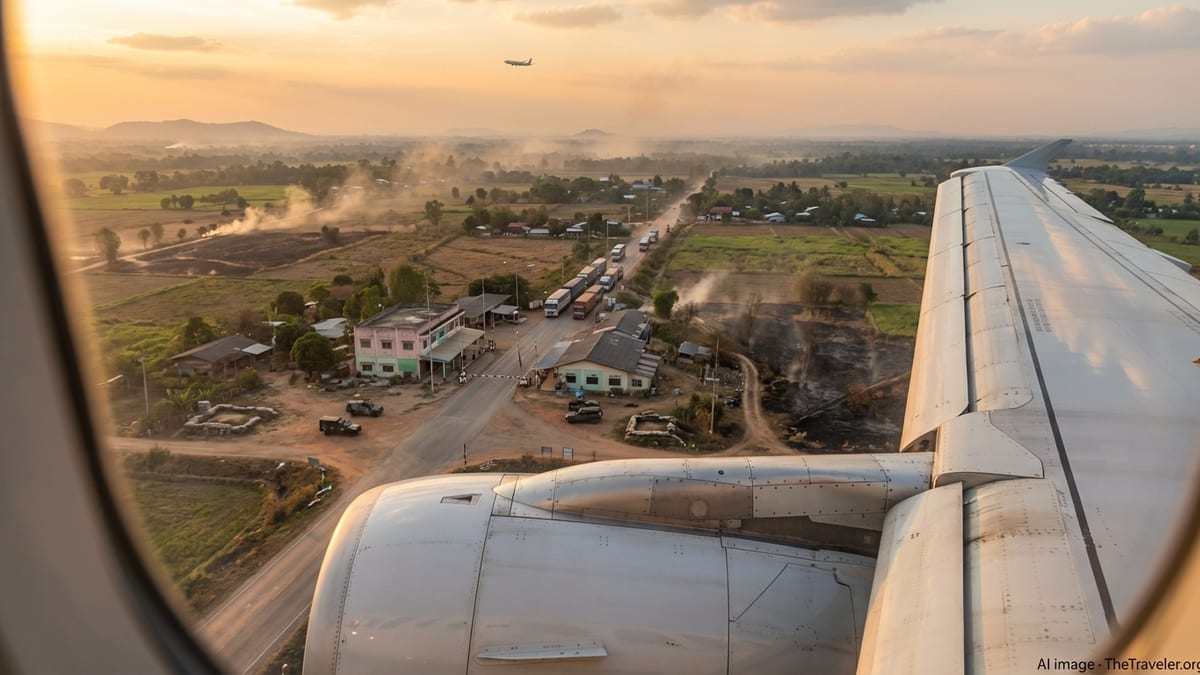
New Chicago connection faces multiyear delay
The planned United Airlines service between Tri-Cities Airport and Chicago O’Hare had been promoted as a key new option for business and leisure travelers, with an anticipated launch in the near term. Updated schedule information now indicates that the start date has been pushed to October 2027, extending the timeline by roughly a year or more beyond earlier expectations.
Publicly available flight-planning details suggest the adjustment is tied to broader capacity constraints at Chicago O’Hare, one of the country’s most tightly scheduled hubs. The service, intended to operate under the United or United Express banner, is now positioned as a longer-range addition rather than an imminent route launch.
The delay alters local expectations for new connectivity to the Midwest and beyond. A Chicago nonstop is often seen by regional airports as a gateway to United’s wider domestic and international network, and the route has been watched closely by business communities, tourism agencies, and frequent flyers across the Tri-Cities.
While the airport’s existing routes remain unchanged for now, the shift in timing for the Chicago flight means regional travelers will need to continue relying on current hubs and connections when planning trips through at least the next summer travel season.
FAA-driven capacity limits at O’Hare shape airline decisions
Industry coverage highlights that flight caps and capacity management at Chicago O’Hare are influencing how carriers schedule new or restored regional routes. O’Hare has long been one of the nation’s busiest airports, and federal directives related to congestion and delay mitigation have periodically limited the number of operations airlines can add at peak times.
According to aviation reporting and government documentation, carriers are being encouraged to prioritize the most time-sensitive and high-demand connections when allocating limited slots. In practice, that often means large hub-to-hub or high-volume business markets are given preference over smaller regional additions.
In this environment, a new Tri-Cities–Chicago service must compete internally with other United route proposals for scarce scheduling opportunities at O’Hare. The result is that smaller communities may see promising routes postponed, reslotted into off-peak periods, or pushed back multiple seasons while airlines adjust to evolving federal guidelines.
The revised October 2027 target for Tri-Cities appears to reflect this balancing act, as the airline positions the service for a later date when more operational flexibility may be available at O’Hare.
Regional travelers reassess their route choices
The delay forces a recalibration for travelers in the Tri-Cities who had been anticipating a new option for reaching the Midwest and connecting onward. Without the planned Chicago nonstop, passengers will continue to rely on existing hubs, which may involve longer itineraries or additional connections for certain destinations.
Travel forums and local commentary often underscore the value of even a single additional hub in improving schedule variety and resilience. A Chicago link can shorten total travel times to cities in the Upper Midwest and Great Plains, and can also offer competitive alternatives for transatlantic and West Coast journeys.
With the new service shifted into the more distant future, corporate travel planners and tourism operators in the Tri-Cities region are likely to keep centering their strategies on current routings. Some may continue to steer travelers to larger nearby airports with established Chicago flights, trading added drive time on the ground for more nonstop air options.
At the same time, the delay underscores the ongoing challenge for many midsize communities that seek broader air access while airlines pursue fleet efficiency and tight capacity management in constrained hubs.
Broader pattern for small and midsize airports
The situation at Tri-Cities fits into a wider national pattern in which small and midsize airports experience schedule shifts as carriers refine regional networks. Across the United States, published records show that routes to major hubs such as Chicago O’Hare, Denver, and Dallas are often added, paused, or relaunched as airlines react to pilot availability, aircraft utilization, fuel costs, and regulatory pressures.
Recent public documents from other communities show similar dynamics, where proposed or newly awarded Chicago routes under the United Express brand are closely tied to federal service programs and negotiated time frames. In several cases, service windows run only through 2027, emphasizing how carefully these flights are structured within a changing regional landscape.
Aviation research also points to a trade-off between expanding access for smaller communities and managing overall emissions, costs, and on-time reliability. When hub airports operate at or near capacity, incremental regional flights can be among the first to be adjusted, even when local demand is supportive.
Tri-Cities Airport’s experience with its postponed Chicago launch is a visible example of how national aviation trends and infrastructure constraints can shape local route maps, sometimes overriding aspirational timelines that resonate strongly at the community level.
What travelers can expect between now and 2027
Until the rescheduled Tri-Cities–Chicago route begins in October 2027, flyers will need to plan around existing options. Travelers are likely to continue favoring current hub connections offered from Tri-Cities, pairing those with ground travel to other regional airports when specific nonstop flights are essential.
Travel-industry reports consistently recommend that passengers originating from smaller markets build extra time into itineraries involving congested hubs, especially when long-haul or international legs are involved. That advice is particularly relevant when a direct Chicago option is not yet available, as more complex routings can amplify the impact of delays or missed connections.
For now, Tri-Cities Airport remains focused on maintaining stable service with its present airline partners while keeping the Chicago link on the longer-term horizon. As airline schedules for 2027 gradually take shape over the coming months and years, local passengers will be watching closely for more precise details on start dates, frequencies, and connection possibilities tied to the delayed United service.