


Most travelers think of Calgary International Airport as a place to change planes, grab a coffee and move on. In reality, YYC is one of the most important gateways to wild landscapes, mountain towns and prairie cities across Alberta. Whether you are flying in from Europe for a week in Banff, connecting from a US hub on your way to Jasper, or arriving from Toronto for a work trip that tacks on a weekend in the badlands, the way Calgary’s airport is built and operated can dramatically shape your experience of the province.
Get the latest updates straight to your inbox!
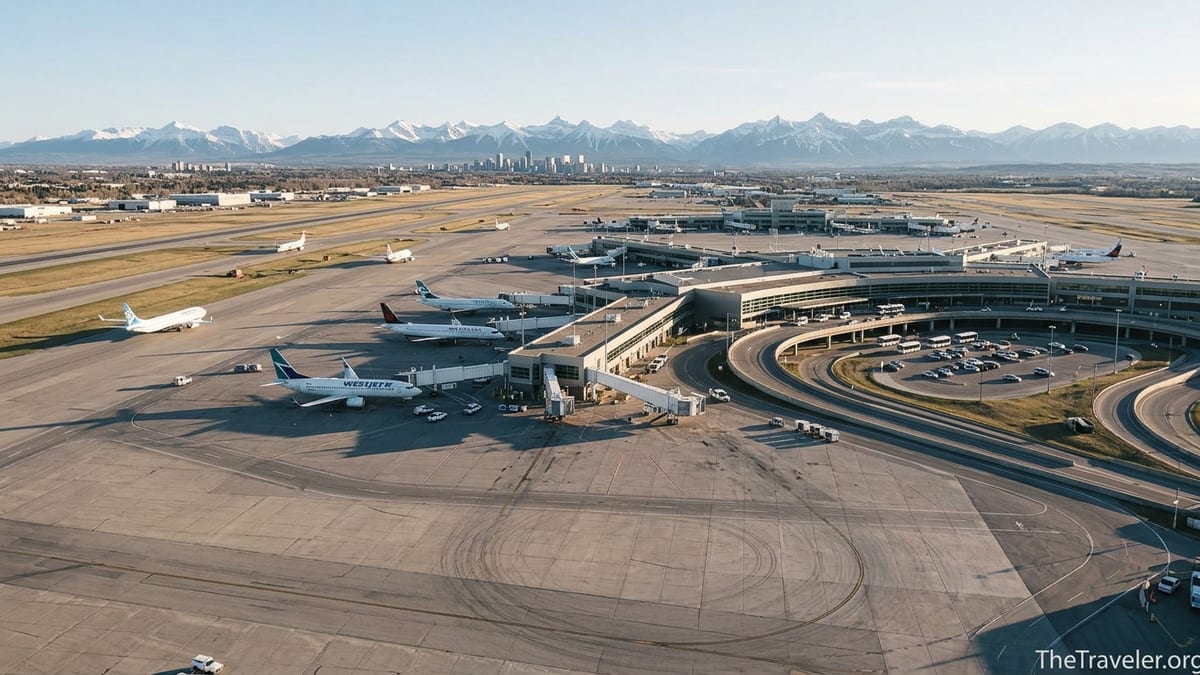
YYC: A Growing Gateway to the Canadian Rockies
Calgary International Airport is now Canada’s fourth-busiest airport and the primary aviation gateway to the Canadian Rockies, including Banff National Park. In 2024 it handled roughly 18.9 million passengers, a record that was surpassed again in 2025, when total journeys climbed to about 19.4 million. That may sound like a lot of traffic, but the airport’s layout and circulation mean it rarely feels overwhelming compared with larger Canadian hubs.
For a traveler planning a first visit to Banff or Lake Louise, this matters immediately. Most international visitors land at Calgary, clear Canadian border formalities, then transfer by shuttle, rental car or tour bus into the mountains. Door-to-door, the journey from the arrivals hall at YYC to Banff’s compact downtown typically takes around 90 minutes to two hours in normal conditions, and about three and a half to four hours to Lake Louise. That short onward trip is one of the reasons many European and American visitors can land in the late morning and still be strolling Banff Avenue by mid-afternoon.
Tourism boards and local operators build itineraries around this convenience. A common one-week plan sold in European markets pairs a Saturday arrival in Calgary with five nights in Banff and Lake Louise and a final night back in the city before departure. Because YYC has grown its international network, those packages can now originate from an expanding list of cities in Europe, the United States and parts of Asia, making the Rockies feel closer than ever.
Crucially, YYC is big enough to offer global connections but compact enough that many travelers still find it manageable on a first visit. The international terminal connects to the domestic concourses by a simple set of walkways and an airside train-style link. That design, combined with continuously upgraded wayfinding signs, means even tight connections are often realistic for able-bodied travelers carrying hand luggage.
WestJet’s Calgary Hub and What It Means for Your Route Options
Calgary’s importance for exploring Alberta is tied closely to WestJet. The airline, headquartered in Calgary, has made YYC its primary global hub and exclusive connecting point for most long-haul international routes. From here, WestJet serves more than 100 destinations across Canada, the United States, Mexico, Central America, the Caribbean, Europe and Asia. For a visitor, that means a surprising number of one-stop options into Alberta, even from relatively small departure cities.
As of mid-2026, you can find WestJet widebody Boeing 787 Dreamliner flights from Calgary to major overseas hubs such as London and Paris, as well as Tokyo in Asia. These Dreamliner services typically operate year-round to at least London and Paris, and seasonally or a few times per week to other long-haul markets. On board, international economy cabins are competitive with other full-service carriers, and premium economy and business cabins offer lie-flat seats on intercontinental routes. That is significant for travelers who want to arrive rested enough to drive safely to the mountains after landing.
For North American travelers, the hub structure can make routing surprisingly efficient. Someone flying from a mid-sized US city such as Nashville or Phoenix might connect through Calgary directly to Tokyo or to a sun destination via onward flights, or use Calgary as a simple jumping-off point for a Rockies road trip. Because WestJet concentrates its long-haul operations at YYC, schedules are typically banked to line up domestic arrivals from across Canada and the western United States with long-haul departures in the evening and overnight.
The hub also benefits those exploring beyond the Rockies. WestJet and its regional affiliates link Calgary to many smaller Alberta communities, either directly or via nearby airports in British Columbia and Saskatchewan. Travelers can combine a week in Banff with a few days in places like Grande Prairie, Fort McMurray or Medicine Hat by using Calgary as a pivot point, booking multi-city itineraries that remain on one airline and, in many cases, a single ticket.
From Arrivals Hall to Mountain Trailhead: How YYC Shapes Your First Day
The design of Calgary International Airport may not be the first thing you think about when dreaming of turquoise lakes and alpine meadows, but it can be the difference between a stressful arrival and an easy start. YYC’s international terminal consolidates most overseas arrivals in a single building where Canada Border Services officers, baggage claim and ground transportation counters are close together. After clearing immigration and customs, you emerge into a bright arrivals hall with direct access to shuttle check-in desks and car rental counters.
Many visitors head straight to mountain shuttles. Several companies run scheduled services from YYC to Banff and Lake Louise, typically with multiple departures spread throughout the day. Prices fluctuate, but a one-way ticket from the airport to Banff for an adult commonly falls in the range of 70 to 90 Canadian dollars, sometimes including hotel drop-off. These shared shuttles often meet specific flight windows; for example, a late-morning cluster may serve mid-day transatlantic arrivals, while evening departures pick up travelers coming from domestic Canadian flights.
Others opt for rental cars directly at the airport. The major brands have counters adjacent to the parkade, and renting a compact SUV for a week in summer might cost, very roughly, between 600 and 900 Canadian dollars depending on demand and insurance options. Having your vehicle right at arrivals means you can leave the terminal, stop at a supermarket in northwest Calgary to stock up on snacks and supplies, and reach Banff in time for an early evening walk along the Bow River or a soak in the hot springs.
YYC also affects how much of your first day you can realistically use. For instance, many European flights land in the late morning or early afternoon. If everything goes smoothly, you might clear the airport in under an hour, catch a mid-afternoon shuttle and arrive in Banff in time for an easy hike like Johnson Lake or a gondola ride before sunset. Conversely, if your flight lands late in the evening, staying overnight at an airport or downtown Calgary hotel and catching an early shuttle the next morning can help you avoid arriving in the mountains at midnight after a long travel day.
Using Calgary as a Base to Explore More Than Just the Rockies
Banff and Lake Louise may be the marquee attractions, but Calgary’s airport is equally important for travelers who want to explore Alberta’s prairie cities, badlands and northern landscapes. The route map out of YYC includes frequent flights to provincial destinations such as Edmonton, Fort McMurray, Grande Prairie and Lethbridge, and to nearby regional centers like Saskatoon and Regina. For visitors on tight timelines, flying these legs instead of driving can unlock itineraries that would otherwise be impossible in a week or less.
Consider a traveler from Frankfurt planning ten days in Alberta. They could land in Calgary, spend two nights in the city, then drive to Drumheller to see the dinosaur-rich badlands, loop back through Calgary and head up to Banff and Lake Louise before flying home. With Calgary’s airport as their arrival and departure point, that route already fits nicely. But thanks to domestic connections, they could also add a quick side trip: a return flight from Calgary to Fort McMurray to join a guided tour of the northern lights in winter, or to Lethbridge to visit the Nikka Yuko Japanese Garden and the nearby coulees.
The same logic applies to Canadian and US travelers. Someone from Toronto might fly into Calgary for a conference at the BMO Centre, tack on a weekend in Canmore and Banff, then catch a short flight to Grande Prairie to visit family before flying home. Because YYC is the primary connecting point for many of these domestic routes, you often do not need to backtrack through other Canadian hubs. That saves hours that can be reallocated to actual travel experiences.
Seasonal services also come into play. In winter, extra flights to ski-focused destinations and sun spots increase options for multi-stop trips. A skier from Dallas, for example, could connect through Calgary to spend four days at Sunshine Village and Lake Louise, then connect onward to Vancouver or to a beach destination via the same hub. The airport’s role as a crossroads lets travelers think in terms of combinations and loops, rather than simple out-and-back journeys.
YYC’s Role in Smoother Connections and Less Travel Stress
One reason Calgary International Airport matters more than many people realize is its balance between scale and simplicity. With just a few concourses and clearly defined domestic, transborder and international zones, connections at YYC often feel more straightforward than at sprawling mega-hubs. For domestic-to-international connections on a single ticket, you typically remain airside, transferring directly between gates without needing to reclear security or customs in Calgary.
This relative efficiency influences how confidently travelers can book shorter layovers. While every journey is different and disruptions do happen, many WestJet itineraries sold through Calgary feature connecting times of about 60 to 90 minutes. For instance, a traveler flying from Victoria to Reykjavik in summer might be ticketed on a 50-minute domestic-to-international connection at YYC. Provided the inbound flight is on time and the passenger can move briskly between gates, this can be realistic in Calgary in a way it might not be at far larger hub airports.
YYC has also been investing in infrastructure to smooth the experience during peak periods. The reopening of the west runway and the launch of centralized security screening phases were highlighted in recent annual reports as measures aimed at reducing delays and creating more predictable travel days. For passengers, the practical impact is shorter taxi times on the ground and more consistent queue lengths at security, especially early in the morning when many domestic departures leave in waves.
For those worried about navigating an unfamiliar airport, Calgary’s terminals offer extensive signage and staff who are used to assisting first-time international visitors. The indoor connections between terminals protect passengers from the often sharp winter temperatures, and covered walkways plus curbside canopies make it possible to transfer to shuttles and taxis without standing in blowing snow for long. These small conveniences shape the overall mood of the first and last days of any Alberta trip.
Access to Ground Transport, Tours and Park Transit From YYC
Calgary International Airport is tightly woven into Alberta’s wider transportation network, and that has direct consequences for how easy it is to get from the runway to trailheads, viewpoints and small towns. In addition to the airport-to-Banff and Lake Louise shuttles, several tour operators pick up directly at YYC. A visitor landing in winter can join multi-day packaged trips that include airport pickup, transfers to Banff, guided ice walks in Johnston Canyon, snowshoe excursions and drop-off back at the airport, all bundled under a single booking.
From Banff and Canmore, local and regional transit options extend the reach of what you can do without a car. Roam Transit, for example, operates bus routes linking Banff townsite with the gondola, hot springs, and popular hiking areas, as well as seasonal services to destinations such as Lake Louise and Moraine Lake. Typical local fares within Banff are a couple of Canadian dollars per ride, while regional services cost more but remain far cheaper than taxis. The key point is that without YYC bringing in high volumes of visitors every day, this network of shuttles and buses would be much thinner.
Even budget-conscious travelers can take advantage of this system. While premium door-to-door airport shuttles charge higher fares, there are often more economical options that combine public transit and regional buses. In some seasons, travelers can ride Calgary city transit or airport buses into downtown, then connect to regional buses toward Canmore and Banff at prices that are closer to intercity bus fares than private transfers. Timetables change frequently, so it is wise to check current schedules before planning a tight connection, but the very existence of these layered options stems from the steady traffic funneling through Calgary’s airport.
For those renting cars at YYC, the road network is equally straightforward. Highways from the airport connect quickly to the Trans-Canada Highway heading west to the Rockies or east to the prairies, and to major north-south routes. Drivers can be out of the city and into open landscapes in less than an hour, which is unusually quick for an international gateway serving a metropolitan region of Calgary’s size.
The Airport’s Wider Impact on Alberta Tourism and Communities
Beyond the immediate convenience to travelers, Calgary International Airport plays a central role in how tourism dollars and development are distributed across Alberta. By concentrating international and long-haul traffic at YYC, the province has a reliable corridor of visitors arriving year-round. Hotels in Calgary benefit from pre- and post-trip stays; shuttle companies and tour operators thrive on predictable passenger flows; and communities from Canmore to Jasper see steady streams of guests who might not otherwise make the journey.
Passenger numbers at YYC have been growing steadily. Between 2024 and 2025 alone, total enplaned and deplaned passengers increased by roughly 2 to 3 percent, topping 19 million. International traffic has been rising a bit faster than domestic, with one recent report noting an increase of more than 6 percent in international passengers year-on-year. Those trends encourage airlines to add new routes and frequencies, which in turn make Alberta more accessible as a destination, feeding a virtuous cycle.
The airport’s influence extends to smaller centers as well. Regional air services from Calgary help support local economies in places where long-distance driving or infrequent bus options might otherwise deter visitors. When WestJet or other carriers add flights to smaller airports, it becomes more feasible for tour companies to market itineraries that include both marquee destinations like Banff and lesser-known gems such as Waterton Lakes National Park or Writing-on-Stone Provincial Park, using Calgary as the connecting hub.
Cargo operations at YYC also matter indirectly for tourism. With Calgary serving as a key cargo hub for airlines such as WestJet Cargo, local businesses in mountain towns and remote communities can more easily ship specialty goods, from craft beverages to outdoor gear. Travelers encounter the downstream effects when they find locally roasted coffee in a lodge in Jasper or regionally produced food at a Banff restaurant that relies on predictable air freight to supplement seasonal ground transport.
The Takeaway
For many visitors, Calgary International Airport is just the place where they first set foot in Alberta. Look closer, and it is clear that YYC does far more than that. It functions as the province’s main global gateway, a hub for WestJet’s international and domestic network, and a tightly integrated node in the transportation web that makes Alberta’s national parks, prairie cities and northern communities realistically accessible within a week or two of vacation time.
The airport’s scale, route map and ground connections determine whether you can step off a transatlantic flight and be walking around Banff by late afternoon, or tag a side trip to the badlands or northern lights onto a Rockies itinerary without adding days of driving. It shapes whether small communities see enough visitors to sustain local tours, and whether transit systems in the mountains can run frequently enough to let travelers leave the car behind.
When you plan your next trip to Alberta, pay attention not just to flight prices but to what connecting through Calgary enables. Choosing routes that make smart use of YYC’s hub, timing your arrival to line up with mountain shuttles, and allowing a night in the city on either end can turn a basic visit into a richer, more relaxed journey. In many ways, understanding Calgary International Airport is the first step toward truly exploring Alberta.
FAQ
Q1. How far is Calgary International Airport from Banff, and how long does the trip take?
The distance from YYC to Banff is roughly 130 kilometers. By shuttle or rental car, the journey usually takes about 90 minutes to two hours in normal traffic and weather.
Q2. Is it realistic to land in Calgary and go straight to Banff the same day?
Yes, many travelers do this. If your international flight lands by late morning or early afternoon, you can often clear the airport, catch a mid-day shuttle or pick up a rental car, and reach Banff by late afternoon or early evening.
Q3. What are typical shuttle prices from Calgary Airport to Banff or Lake Louise?
Prices vary by company and season, but as a rough guide, adult one-way fares from YYC to Banff often fall somewhere around 70 to 90 Canadian dollars, with higher prices for private transfers and slightly more for Lake Louise.
Q4. Do I need to rent a car at Calgary Airport to explore Banff and Lake Louise?
No, a car is optional. Airport shuttles can take you to Banff and Lake Louise, and once there, Roam Transit and park shuttles serve key attractions such as gondolas, hot springs and popular lakes, allowing many visitors to get around without driving.
Q5. How big is Calgary International Airport compared with other Canadian hubs?
YYC is one of Canada’s larger airports, handling around 19 million passengers a year, but it is smaller than the busiest hubs in Toronto and Vancouver. Many travelers find it easier to navigate, with fewer concourses and shorter walking distances.
Q6. Which international destinations can I reach directly from Calgary?
The exact list changes over time, but you can generally expect direct long-haul flights from Calgary to major cities in Europe such as London and Paris, to at least one Asian gateway such as Tokyo, and to numerous US, Mexican, Caribbean and Central American destinations.
Q7. Is a one-hour connection at YYC enough time when changing flights?
It can be, especially for domestic-to-domestic or domestic-to-international connections on a single ticket, provided your first flight is on time and you can move quickly between gates. However, travelers who prefer extra buffer often aim for layovers of 90 minutes or more.
Q8. Can I stay overnight near Calgary Airport if my arrival is late?
Yes. Several hotels are located within a short shuttle or taxi ride of YYC, including properties that specifically cater to overnight connections and early-morning departures. Staying near the airport can make an early shuttle to Banff or a dawn flight more comfortable.
Q9. Is Calgary a worthwhile stop for a night or two before heading to the mountains?
Absolutely. Many visitors enjoy spending a day or two in Calgary to visit attractions such as the Calgary Tower, the National Music Centre or the city’s riverside pathways before or after their time in the Rockies.
Q10. When is the best time of year to fly into Calgary for visiting the Rockies?
It depends on what you want to do. June through September offers the most reliable hiking conditions and access to alpine roads, while December through March is ideal for skiing and winter activities. Shoulder seasons such as May and October can be quieter and more affordable but may bring variable weather and limited access to some high-elevation areas.