


More news on this day
Dubai continues to draw record visitor numbers in 2026, yet heightened regional tensions, punishing summer heat and tightly enforced local laws are reshaping what safety means for travellers heading to the United Arab Emirates.
Get the latest news straight to your inbox!
Regional security: how current tensions affect travel
Travel safety in the United Arab Emirates is no longer defined only by crime rates or urban security. In late February 2026, open hostilities between the United States and Iran introduced a new layer of regional risk, with public statements from Tehran mentioning targets linked to US interests in Gulf states. Publicly available information indicates that this has included locations in the UAE, prompting warnings about the possibility of drone or missile attacks and disruption to civil aviation.
The latest United States travel advisory, updated on August 29, 2026, places the UAE at Level 3, advising travellers to reconsider travel because of terrorism and armed conflict. The advisory notes ongoing threats aimed at sites associated with the United States and highlights that government personnel require special authorization to visit certain facilities. Similar advisories from other countries highlight that airspace over the UAE could be restricted or temporarily closed with little notice, which may affect flight schedules at Dubai and Abu Dhabi airports.
For leisure travellers, these notices do not translate into a blanket ban on tourism, but they do signal a more volatile backdrop than in previous years. Travellers are urged by multiple national advisory services to monitor official updates from their own governments, stay alert to developments in the wider Gulf region and consider flexible booking options in case of sudden changes to flight operations.
Security experts who track aviation and maritime risks describe the current situation as one where the likelihood of a direct incident affecting an individual tourist in Dubai remains low, but the potential impact of a wider regional escalation on travel plans could be significant. This distinction between personal safety in the city and strategic risk in the surrounding region is driving the more cautious tone of current advisories.
On-the-ground safety: crime, urban security and tourism pressures
Within Dubai itself, publicly available indices and tourism data continue to present a picture of a city that is comparatively safe by global standards. Dubai’s Department of Economy and Tourism reported a record 19.59 million overnight visitors in 2025, a 5 percent increase on 2024, underscoring sustained international confidence in the destination. Separate benchmarking compiled for the department’s 2024 visitor report placed Dubai among the world’s top five safest cities, drawing on external crime and safety indices.
Crime statistics for the wider UAE indicate relatively low levels of violent crime compared with many large metropolitan areas. Urban security is reinforced by extensive surveillance, a visible police presence in tourist districts and strict enforcement of public-order laws. Petty theft does occur, particularly in crowded areas and on public transport, but rates remain below those reported in many other high-traffic tourism hubs.
The cost of this security environment is a legal system with limited tolerance for behavior that might be considered minor elsewhere. Public intoxication, aggressive driving, disorderly conduct and social media activity that is seen as insulting to individuals or institutions can lead to arrest, fines or deportation. Travellers who are unfamiliar with local expectations around modest dress, public displays of affection and photography of government or military sites may inadvertently breach regulations if they do not prepare.
Despite these constraints, travel forums and consumer reviews from 2025 and 2026 continue to describe Dubai as feeling safe for families, solo visitors and business travellers, including at night in major districts. For many tourists, the main practical safety considerations are not crime related but tied to health, law and regional geopolitics.
Health, climate and seasonal risks in the UAE
Extreme heat is one of the most immediate risks for anyone planning a visit to Dubai, particularly between late spring and early autumn. Guidance from the US Centers for Disease Control and Prevention on travel to the UAE, updated on August 25, 2026, highlights heat-related illness as a serious hazard and notes that heat stroke can be fatal without prompt treatment. Daytime temperatures above 40 degrees Celsius are common in summer, with high humidity amplifying the risk.
UAE policy documents submitted to international climate bodies describe the country as highly vulnerable to heat stress, including increased mortality and morbidity linked to heat stroke. Domestic regulations require employers to pause outdoor work at midday during the hottest months, underscoring that even acclimatized residents are considered at risk during peak conditions. For visitors, this translates into a need to limit outdoor activity in the middle of the day, drink water regularly and seek air-conditioned environments.
Health authorities also highlight respiratory and cardiovascular risks associated with dust, sandstorms and air pollution episodes, particularly for people with pre-existing conditions. Travellers are advised to carry any regular medications in original packaging, ensure comprehensive travel insurance that covers medical evacuation and check local forecasts for air quality and temperature before planning day trips or outdoor excursions.
Routine travel vaccinations and preventive measures recommended for the UAE remain broadly similar to previous years, focusing on food and water hygiene, injury prevention and avoidance of mosquito bites. Large private healthcare providers and hospitals are widely accessible in Dubai, but treatment can be costly without adequate insurance, making policy checks another key step when assessing whether a trip feels “safe enough.”
Entry rules, visas and airport conditions
From an immigration and logistics standpoint, travel to Dubai in 2026 is comparatively straightforward, though rules differ by nationality. The UAE government’s official portal confirms that gulf citizens may enter without a visa, while many other nationalities are eligible for visas on arrival or can secure tourist visas in advance. Passport validity of at least six months from the date of entry is generally required, and travellers are urged to verify their personal status using official portals before departure, as country lists and eligibility categories are updated periodically.
The Federal Authority for Identity, Citizenship, Customs and Port Security has introduced new visit visa categories and, as of June 2026, expanded eligibility for certain short-stay visas to additional nationalities, reflecting a strategy of controlled openness to tourism and business visitors. Government FAQs emphasize that visitors must hold appropriate health insurance and respect length-of-stay limits to avoid fines for overstaying.
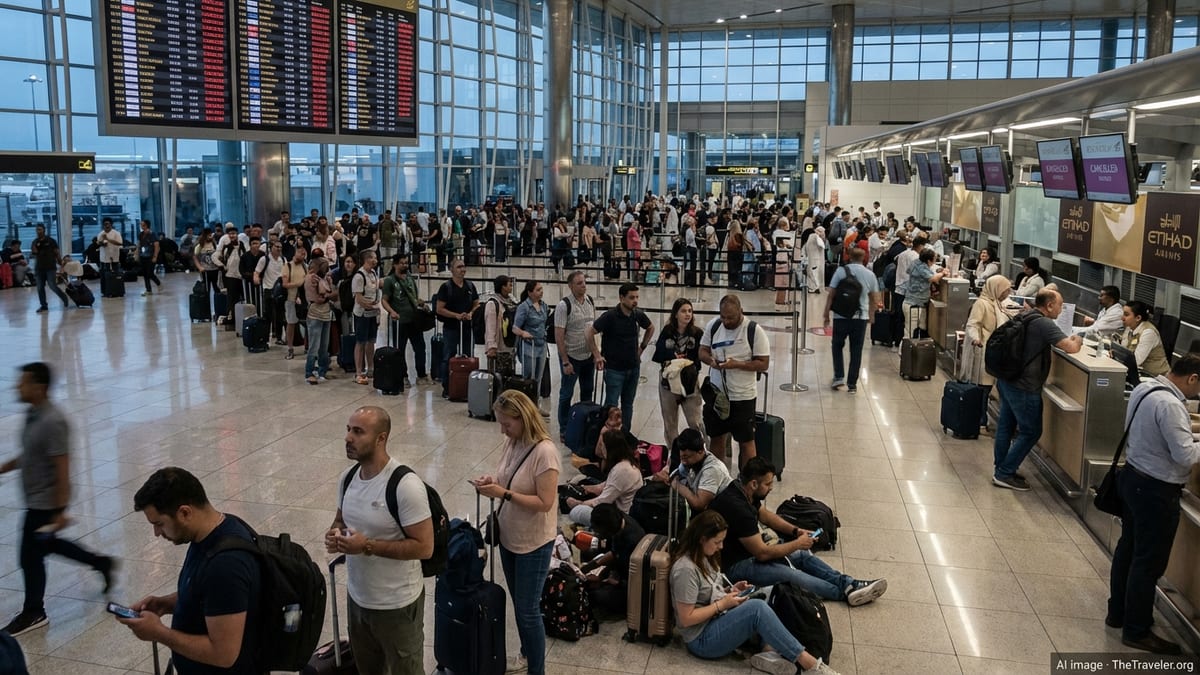
Dubai International Airport remains one of the world’s busiest aviation hubs, handling a record 95.2 million passengers in 2025 according to airport and media data. The volume of transit and origin-destination traffic means that, even during periods of regional tension, airlines and airport authorities have strong incentives to maintain intensive security screening and contingency planning. However, foreign ministries caution that airspace restrictions linked to the wider regional situation could still cause delays or rerouting, making it prudent to allow extra connection time and stay in touch with airlines.
COVID-19-related entry requirements that once defined travel to the UAE have largely been rolled back, with current guidance focusing instead on general health preparedness and any temporary screening measures introduced in response to global outbreaks. Travellers are nonetheless encouraged to carry documentation for any recent vaccinations and to check airline requirements shortly before travel, as carrier policies can differ from state rules.
Balancing benefits and risks when planning a trip
For prospective visitors weighing whether it is safe to travel to Dubai right now, the picture is nuanced. On one hand, the city continues to receive tens of millions of international visitors annually, tourism infrastructure is operating at record capacity and independent indices consistently rank Dubai among the world’s safest large cities in terms of crime and urban security.
On the other hand, regional tensions have elevated strategic risk, and foreign ministries now frame the UAE within a category where travellers are advised to reconsider travel or exercise a high degree of caution. These assessments are driven not by conditions in Dubai’s hotels, malls or beaches, but by concerns about potential missile or drone activity and associated impacts on aviation and critical infrastructure.
Individual risk tolerance, timing and purpose of travel therefore play a central role in decision-making. Travellers who choose to proceed are encouraged by official advisories to register with their consular services, maintain flexible bookings, follow local news, and be prepared for schedule changes. Those concerned primarily about personal safety on the streets will find a city that remains heavily policed, commercially focused and accustomed to hosting large numbers of international guests, but with environmental and legal contexts that demand careful preparation.
Understanding this combination of low day-to-day crime, significant heat and health considerations, strict legal norms and elevated regional security risk is essential for anyone assessing whether a trip to Dubai in late 2026 meets their own definition of “safe.”
Sources: U.S. Department of State – United Arab Emirates Travel Advisory; Dubai Department of Economy and Tourism – Tourism Performance Report 2025; UAE Government Portal – Visa and Entry Permit Information; US CDC – Travelers’ Health: United Arab Emirates; Australian Government Smartraveller – United Arab Emirates Advice