


Lapland has quietly become one of Europe’s most intriguing winter playgrounds. High above the Arctic Circle, Finnish and Swedish Lapland offer a very different kind of ski holiday to the Alps or Rockies: shorter days, snow-laden forests, reindeer on the roadside and, if you are lucky, the Northern Lights swirling above the slopes. But Lapland is not cheap, and the conditions can be extreme. So is it really worth traveling this far north just to ski? Here is a clear-eyed look at what makes Lapland special, where it falls short and the kind of traveler who will get the most value out of the experience.
Get the latest updates straight to your inbox!
How Lapland Skiing Compares to the Alps and Rockies
Set expectations first. Lapland’s ski hills are smaller than the big-name resorts of the Alps or North America. The largest Finnish resorts, such as Levi and Ylläs, offer around 40 to 60 marked slopes and vertical drops of roughly 300 to 460 meters, compared with well over 1,000 meters in places like Chamonix or Whistler. You will not come to Lapland for huge vertical, high-alpine bowls or extreme off-piste couloirs. Instead, the appeal lies in gentle fell landscapes, tree-lined runs and the Arctic atmosphere.
On the flip side, Lapland’s snow reliability and season length are excellent. Resorts such as Ruka, in eastern Finland, typically open in October and ski into May, giving them one of the longest seasons in Europe. In northern Lapland and Swedish Lapland, snow cover usually arrives between mid-October and late November and lingers well into April, often with reliable conditions into early May. For travelers tied to school holidays or those who prefer quieter late-season skiing, that extra flexibility can make a Lapland trip more attractive than chasing shaky spring snow in lower European resorts.
Price-wise, Lapland is not a budget destination, but lift passes are not dramatically higher than in major alpine resorts and can even be cheaper. For the 2025–2026 season, an adult six-day pass at Levi is around 258 euros, with four days at roughly 194 euros. That undercuts many large Alpine domains where six-day passes often sit comfortably above 300 euros for the same period. When you add that many Lapland resorts include perks such as ski bus access with your pass, the core skiing itself is reasonably priced given the remoteness.
The trade-off is that flights, accommodation and excursions can push the total cost above a typical week in the Alps. Direct seasonal flights from many European cities run to Rovaniemi, Kittilä and Kuusamo, while travelers from North America generally connect via Helsinki or Stockholm. Once there, high demand in peak winter and the extra logistics of operating in Arctic conditions drive up prices. For travelers who value big vertical and extensive lift networks above all else, that calculus may not add up. For those who see skiing as just one part of a broader Arctic adventure, it often does.
Where to Ski: Key Lapland Resorts and What They Offer
Each Lapland resort has a distinct personality, and choosing the right one is central to whether your trip will feel worth the effort. Levi, near Kittilä in Finnish Lapland, is the country’s most popular ski resort, recording several hundred thousand skier days each winter. It hosts a FIS World Cup slalom race on its Levi Black course, giving it international credibility despite its modest size compared with Alpine giants. Levi works well for visitors who want a “complete” resort: varied slopes for all levels, a pedestrian village with restaurants and bars, spa hotels and plenty of off-slope activities.
Ylläs, a little farther west, markets itself on space and nature. It has one of the largest vertical drops in Finland, a wide network of slopes and a strong reputation among cross-country skiers thanks to extensive groomed trails through Pallas–Yllästunturi National Park. Travelers who prioritize peaceful surroundings, long gliding runs and cabin-based stays over nightlife often pick Ylläs over Levi.
Further north, Saariselkä and Inari appeal to those who want more wilderness and Northern Lights potential with gentler ski terrain. Saariselkä’s ski hill is compact and beginner-friendly, while the real draw is the surrounding Arctic fell landscape, easy access to Urho Kekkonen National Park and glass-roofed cabins or igloo-style accommodations where you can watch the aurora from bed on clear nights. Families with young children and older travelers often gravitate here for shorter days on the hill and quieter evenings.
On the Swedish side of Lapland, resorts such as Riksgränsen offer a very different twist. Located roughly 200 kilometers north of the Arctic Circle, Riksgränsen is famous for its late-season skiing under the midnight sun, running lifts into June in good years and offering a unique chance to ski in full daylight at midnight. Many visitors combine a few days there with time in nearby Abisko for aurora watching earlier in the season. If you are chasing bragging rights and unusual experiences rather than perfect grooming, this kind of itinerary can feel like excellent value.
Costs on the Ground: What You Actually Spend
To judge whether skiing in Lapland is worth it, you need a realistic sense of what you will spend once you land. Using Levi as a benchmark, current resort data suggests an adult one-day lift pass is around 58 euros, with three days at about 154.50 euros and six days at 258 euros in the 2025–2026 season. Children aged 6 to 11 pay notably less, and kids under six typically ski free if they wear a helmet and share a parent’s pass. Compared with premium Alpine areas, you may find the lift component surprisingly reasonable, especially if you buy in advance online.
Accommodation takes a larger slice of the budget. In peak weeks from late December through February, expect to pay a premium for well-located hotels and cabins. In Levi and Rovaniemi, mid-range hotel rooms in winter often land in the 150 to 250 euros per night range for two people, with higher prices for resort-style properties that bundle in spa access, half-board meals or aurora-view rooms. Private cabins with saunas, common in Ylläs and Saariselkä, can represent good value for groups or families if you fill all the beds.
Food and drink follow general Finnish price levels, which are higher than in Southern Europe and on par with or slightly above Scandinavia as a whole. A simple lunch of soup and bread at a slope-side café might cost around 12 to 18 euros per person, while a main course in a mid-range restaurant in Levi or Rovaniemi typically sits in the 20 to 35 euros range. Alcohol is expensive; a draft beer might run to 8 to 10 euros in a resort bar, so many visitors buy wine or drinks at state alcohol shops in town and enjoy them in their cabins to trim costs.
The wild card in your budget is activities beyond skiing. A two-hour husky sledding trip, a classic Lapland experience, often costs in the region of 120 to 180 euros per adult, with child discounts. Reindeer sleigh rides, short snowmobile safaris and Northern Lights tours slot into a similar price band. For some travelers this is where Lapland really shines and why the trip feels worth it: they build a once-in-a-lifetime week packed with these excursions and accept the cost. Others prefer to spend money on a longer stay or upgrade their accommodation instead. Deciding which camp you fall into before booking will help you avoid sticker shock.
The Magic Ingredients: Why Travelers Fall in Love with Lapland
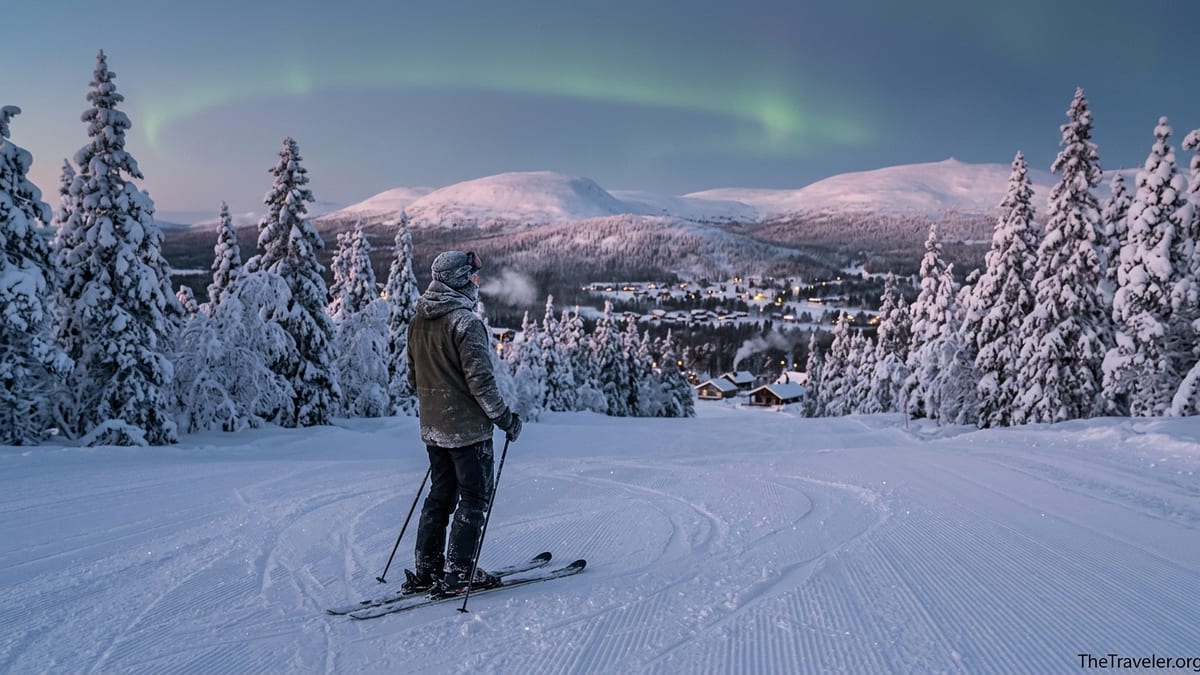
The strongest argument in favor of skiing in Lapland is emotional rather than technical. Many travelers describe their first sight of a snow-covered fell glowing pink in the low Arctic sun as almost otherworldly. Between December and early January, the sun barely rises above the horizon, bathing the landscape in prolonged twilight known locally as the “blue hour.” Skiing floodlit slopes between frosted trees under a deep indigo sky, with the village lights twinkling below, feels fundamentally different from a bright, high-mountain afternoon in the Alps.
Then there is the possibility of the Northern Lights. While no trip can guarantee aurora sightings, Lapland’s latitude and relatively low light pollution give you a solid chance on a clear, dark night between roughly late August and early April. Travelers book ski trips to Levi, Ylläs or Saariselkä not just for the runs but for the idea that, after dinner, they might clip on snowshoes or hop on a snowmobile to chase green and purple arcs of light rippling across the sky. When it happens, it tends to overshadow every turn they made on the hill that day.
Another key appeal is how seamlessly skiing blends into a wider palette of winter activities. In many resorts, you can ski a few hours in the morning, switch to a guided fat-bike ride on packed trails in the afternoon, then warm up in a lakeside smoke sauna before plunging into an ice hole like the locals. Cross-country trails unfurl for hundreds of kilometers across the region, often lit in the evenings, so downhill skiers curious about Nordic technique can rent skinny skis and try something new. In places like Ylläs and Iso-Syöte, these trails are as central to the winter experience as the downhill slopes.
Finally, there is a cultural texture to Lapland that sets it apart. Encounters with Sámi culture, from visiting reindeer herders to seeing traditional handicrafts in Inari, give context to the landscape you are skiing through. Visitors often combine resort time with a day trip to a husky farm run by a local family or an overnight stay in a simple wilderness hut maintained by Finland’s forest administration. This mix of nature, sport and culture is what many travelers cite when they say their Lapland ski holiday was “more than just skiing” and worth every euro.
Conditions, Cold and Practical Challenges
Loving Lapland also means accepting its extremes. In mid-winter, temperatures in Finnish Lapland can drop well below minus 20 degrees Celsius and occasionally toward minus 30 or lower. On a windy day on an exposed chairlift, that can feel brutal, particularly for children or anyone not used to deep cold. Sensible layering is essential: moisture-wicking base layers, insulating mid-layers, windproof outer shells, insulated mittens rather than thin gloves, face protection and good-quality ski socks. Many visitors underestimate the cold on their first day and end up buying extra gear locally, which is effective but rarely cheap.
The shortness of daylight in early winter is another factor. In December in Levi or Rovaniemi, you might have only a few hours of civil twilight around the middle of the day. Resorts compensate with extensive floodlighting, so you can ski in what feels like permanent dusk, but if you dream of sunny terrace lunches, book later in the season. By March and April, days are pleasantly long, with bright sunshine on good days and plenty of time after skiing for snowshoeing or photography before dusk.
Travel logistics can also be more complex than a straightforward flight to a major Alpine airport. From many parts of Europe, reaching Lapland involves a flight to Helsinki followed by a domestic hop to Rovaniemi, Kittilä, Ivalo or Kuusamo, and then a transfer by bus or taxi to your resort. Winter weather can cause occasional disruptions, and connections may not run daily to smaller airports. Travelers coming from North America usually add another connection in a European hub. If you have only a short break, the travel time may eat into your days on the mountain more than you would like.
Lastly, environmental impact is increasingly on travelers’ minds. Reports in European media have highlighted how tourism development, including luxury glass-igloo resorts and new infrastructure, is expanding deeper into previously untouched Arctic areas. Conscious skiers may want to choose operators that prioritize local employment, small-group excursions and lower-impact activities such as cross-country skiing and snowshoeing, and consider offsetting or reducing flights by combining shorter trips into one longer Arctic stay.
Who Gets the Most Value from Skiing in Lapland
Given the costs and challenges, skiing in Lapland is not for everyone. The travelers who tend to come home feeling it was absolutely worth it usually share a few traits. First, they care as much about atmosphere and unique experiences as they do about the skiing itself. For them, a day that mixes a few relaxed hours on quiet pistes, a husky safari through silent forests and an evening soaking in an outdoor hot tub under the aurora is the ideal holiday, even if they never ski more than 20 kilometers of runs.
Families with younger children also often rate Lapland highly. The terrain at resorts like Levi, Ylläs, Saariselkä and Iso-Syöte is generally beginner-friendly, with wide, forgiving slopes and dedicated kids’ areas. Ski schools are well organized, and many instructors speak excellent English and other European languages. Off-slope offerings such as meeting Santa in Rovaniemi, visiting a reindeer farm or sledding right outside your cabin can keep children engaged even when the cold or darkness shortens their on-snow time.
Intermediate skiers and snowboarders looking to refine technique on well-groomed pistes, rather than push extreme terrain, also do well here. Lapland’s relatively modest gradients are ideal for carving, practicing switch riding or building confidence after a break from the sport. Many visitors who feel intimidated by the steepness and speed of big Alpine resorts find that a week in Lapland restores their enthusiasm and skills.
On the other hand, strong expert skiers who live for long off-piste descents, big vertical and lively late-night après-ski may find better value elsewhere. While Levi hosts World Cup racing and some resorts offer short black runs and freeride areas, the terrain cannot match the scale of places like Verbier, St. Anton or Jackson Hole. For these skiers, Lapland may be better as a shorter side trip focused on aurora hunting and Arctic adventures rather than the centerpiece of the season.
The Takeaway
So, is it worth it to ski in Lapland? For travelers who want a conventional big-mountain ski week with maximum vertical and bustling nightlife at the lowest possible cost, probably not. The hills are smaller, the logistics more involved and the overall price tag can rival or exceed a trip to the Alps or Rockies once flights and excursions are factored in.
For a different kind of traveler, though, Lapland can feel not just worthwhile but unforgettable. If you dream of skiing through snow-frosted forests in a violet twilight, stepping into a smoke sauna as the thermometer dips below minus 20, or watching the Northern Lights unfurl above a silent frozen lake after a day on the slopes, this is one of the few places in the world where all those elements come together in a single week.
The key is to be honest about your priorities and plan accordingly. Choose a resort that matches your style, whether it is lively Levi, nature-focused Ylläs, family-friendly Saariselkä or remote Riksgränsen. Budget realistically for activities beyond skiing, pack seriously warm clothing and time your visit for the kind of light and conditions you prefer. Do that, and skiing in Lapland becomes less a simple calculation of cost per kilometer of piste and more an investment in a rare Arctic experience that will stay with you long after your tracks have vanished from the snow.
FAQ
Q1. When is the best time to ski in Lapland for good snow and some daylight?
The most balanced period is from late February to mid-April, when snow is typically deep, days are much longer and temperatures, while still cold, are more manageable than in mid-winter.
Q2. Is Lapland skiing suitable for beginners and young children?
Yes. Resorts such as Levi, Ylläs, Saariselkä and Iso-Syöte have wide, gentle slopes, magic carpets, dedicated kids’ areas and ski schools with English-speaking instructors, making them very beginner-friendly.
Q3. How expensive are lift passes in Lapland compared with the Alps?
Lift pass prices are generally comparable or slightly lower than many major Alpine resorts. As an example, a six-day adult pass at Levi is around 258 euros in the 2025–2026 season.
Q4. Can I see the Northern Lights during a ski trip to Lapland?
You have a reasonable chance between roughly late autumn and early spring on clear, dark nights. Many visitors combine skiing with guided aurora tours by bus, snowmobile or snowshoes to improve their odds.
Q5. How cold does it really get on the slopes?
In mid-winter, daytime temperatures can drop below minus 20 degrees Celsius, and colder snaps are possible. Windchill on chairlifts can make it feel significantly colder, so proper layering and face protection are essential.
Q6. Is Lapland a good choice for advanced or expert skiers?
It depends on what you seek. Strong skiers who enjoy carving and occasional short, steep runs will be happy, but those craving huge vertical and big off-piste terrain may prefer the Alps or Rockies.
Q7. How do I get to the main Lapland ski resorts?
Most travelers fly to Helsinki or Stockholm, then connect to regional airports such as Rovaniemi, Kittilä, Ivalo or Kiruna, followed by a transfer by bus, train or taxi to the resort.
Q8. Do I need to book activities like husky safaris and snowmobile tours in advance?
In peak weeks from late December through February, pre-booking is strongly recommended, especially for popular experiences such as husky sledding, reindeer visits and evening Northern Lights safaris.
Q9. What kind of accommodation is typical in Lapland ski areas?
You will find everything from standard hotels and self-catering apartments to wooden cabins with private saunas and glass-roofed igloo-style suites designed for aurora viewing.
Q10. Is skiing in Lapland worth the cost for a once-in-a-lifetime trip?
For many travelers, yes. If you value Arctic scenery, the chance of seeing the Northern Lights and a mix of winter activities as much as the skiing itself, the overall experience often justifies the higher total cost.