


Lapland has become one of Europe’s most sought-after winter destinations, combining reliable early and late-season snow with Northern Lights, reindeer safaris and Santa experiences. If you are planning a ski-focused trip to Finnish Lapland in winter 2025–2026, you will find a mix of compact, family-friendly resorts and surprisingly extensive ski areas, many with seasons running from roughly late October or November through late April or even mid May. This guide looks at the standout Lapland ski resorts and the kinds of packages currently on offer from major operators, so you can match the right base, budget and style of holiday to your plans.
Get the latest updates straight to your inbox!
Understanding the Lapland Ski Season and Travel Basics
While European alpine resorts often peak between Christmas and March, Finnish Lapland’s ski season is both longer and more flexible. Resorts such as Levi have announced winter 2024–2025 seasons stretching from early October to mid May, giving skiers more than seven months of lift-served skiing. Other Lapland areas typically open from mid or late November, depending on snow and snowmaking conditions, and stay open until late April or early May. This extended season makes it possible to ski under polar night twilight in December, in the brighter spring sunshine of March and April, or even during long evenings in May.
From the United Kingdom and much of Europe, Lapland is usually reached via direct seasonal flights into regional airports like Kittilä, Ivalo, Kuusamo or Rovaniemi. Many ski packages include charter flights that line up closely with resort transfer schedules, so you are often on the slopes or at your cabin within a few hours of landing. From North America, the most common route is to fly via Helsinki, then connect north on a domestic flight to your chosen resort airport. Package holidays from UK operators commonly bundle flights, transfers and accommodation, while skiers from the United States and Canada more often book flights independently and then add accommodation plus ski extras through resort or specialist agencies.
In terms of climate, the trade-off for Lapland’s snow reliability is genuine Arctic cold. Midwinter temperatures can drop well below minus 20 degrees Celsius, and resorts will sometimes reduce lift operations during extreme cold snaps. At the same time, wind exposure is often lower than in high alpine resorts, and pistes are generally well maintained. A typical visitor should budget extra for proper layering, face protection and insulated footwear rather than renting or improvising on arrival, where resort pricing for winter clothing can be noticeably higher than at home.
Pricing for a one week Lapland ski package in peak school holiday periods can be significantly higher than equivalent weeks in the Alps, especially when Santa and Northern Lights excursions are included. However, if you avoid the Christmas and New Year period and choose early December, mid January or late March, it is possible to find more moderate prices. Many operators promote short three or four night Lapland packages that include several excursions and limited skiing; skiers who want more time on the slopes usually do better with a full week package that includes lift passes and equipment discounts.
Levi: The All Rounder for Skiers and Nightlife
Levi, near Kittilä airport in Finnish Lapland, is one of the region’s most developed ski resorts and consistently popular with international package holidaymakers. The ski area spreads over multiple faces, with an extensive network of pistes, terrain parks and beginner slopes that make it attractive for mixed ability groups. For winter 2024–2025, Levi’s announced season runs from early October through mid May, underlining just how snow sure and well equipped the resort is with snowmaking. For visitors looking ahead to winter 2025–2026, it is reasonable to expect a similar long operating window, with the main core of the season in December through April.
The village itself has a compact but lively center with bars, restaurants and shops, more akin to a small alpine town than a remote outpost. You will find everything from simple self catering apartments near the lifts to higher end hotels and spa properties. Many UK and European tour operators feature Levi as their primary Lapland ski base, so it is straightforward to book packages that include flights to Kittilä, shared transfers and accommodation for either three or four night Lapland breaks or seven night ski holidays.
Pricing varies widely by departure date, but as a rough guide a family of four travelling from the UK on a seven night package in mid January, including flights, transfers and self catering accommodation, might expect starting prices in the lower to mid four figure range in pounds sterling, with ski passes, rental equipment and excursions extra. In peak school holiday weeks around Christmas and New Year, the same trip can increase considerably due to demand. Travelers booking independently can sometimes find better value by combining scheduled flights to Helsinki and onward domestic flights to Kittilä with locally booked chalets or cabins, particularly if they are willing to stay a short shuttle bus ride from the central slopes.
Levi is a sensible choice if you want a broad range of on snow options, reliable grooming and a nightlife scene that extends beyond a single hotel bar. Snowboarders and freestyle skiers particularly appreciate the terrain parks and half pipe when they are fully built. Off the slopes, Levi offers the standard range of Lapland experiences: snowmobile safaris, husky sledding, reindeer farm visits and Northern Lights excursions, many of which can be prebooked as part of a package or added on arrival through local activity providers.
Ylläs and Pyhä: Quieter Skiing and Great Cross Country
Ylläs, located within the Pallas Yllästunturi National Park, is often recommended by locals and repeat visitors as one of the best all round bases for cross country skiing combined with alpine runs. The downhill ski area is spread across two main base villages, Äkäslompolo and Ylläsjärvi, connected by ski buses in winter. A published ski bus timetable for the 2024–2025 season shows services running throughout the downhill skiing period, typically from around mid November through early May, which gives a practical sense of how long the area expects to operate lifts when snow conditions are normal.
Accommodation at Ylläs is dominated by cabins and apartments tucked among the forests, often with their own saunas and easy access to cross country trails. For many visitors the main attraction is the extensive Nordic ski network that radiates out from the villages, with groomed tracks for dozens of kilometres when fully open. Downhill skiers will find a good mix of intermediate pistes and some steeper runs off the higher lifts, but the vertical is modest compared to the Alps. Ylläs works well for skiers who are happy to alternate days of alpine skiing with snowshoeing, winter hiking or cross country touring.
Pyhä, situated a few hours further east by road, is a smaller and more intimate resort built around a compact ski hill and a cluster of chalets and hotels near the lifts. It is often mentioned in discussions alongside Ylläs as a quieter alternative to Levi, with a strong appeal for families and those seeking a more local atmosphere. While international package coverage is not as extensive as Levi’s, some Nordic specialist agencies and Finnish tour operators offer bundled accommodation and transfers. Independent travelers can base themselves in cabins or apartments around Pyhä and use rental cars or arranged shuttle transfers from nearby airports such as Rovaniemi.
In both Ylläs and Pyhä, prices for accommodation and ski passes are broadly comparable with other Finnish Lapland resorts, but you may find better value outside the peak Santa and school holiday weeks. A couple staying in a one bedroom cabin or apartment in late February or early March, with self catering and shared airport transfers, can often keep total costs below what they would pay for a comparable half board hotel week in an Austrian or French mega resort, while gaining access to a less crowded and more relaxed ski environment.
Ruka and Kuusamo: Long Seasons and World Cup Level Slopes
Ruka, located near Kuusamo in eastern Finland, is sometimes debated geographically because it sits just outside the strict administrative boundaries of Lapland, yet in winter it shares much of the same Arctic character. The resort has one of the longest ski seasons in Finland, typically opening in October and running well into late April or early May, thanks to extensive snowmaking, a northerly latitude and committed slope management. Ruka regularly hosts FIS freestyle and cross country World Cup events on its competition slopes, which says a lot about the quality and reliability of its terrain.
For holiday skiers, Ruka offers a dense network of groomed pistes descending directly into the village, with convenient ski in ski out hotels and apartments around the central pedestrian area. The lifts and runs are laid out in a way that makes navigation simple even for less experienced skiers, while more advanced visitors can seek out the steeper World Cup runs and park features. Night skiing under floodlights is common in the darker months, extending slope time even when the sun barely rises.
Package wise, Ruka is well represented in the portfolios of UK and European ski tour operators, who sell week long or shorter breaks that pair charter flights into Kuusamo with shared transfers and accommodation close to the lifts. It is common for these packages to be promoted not only on the strength of the skiing, but also based on their Northern Lights potential and access to winter activities in the surrounding forests and frozen lakes. For a family of four traveling from the UK outside of the absolute peak holiday dates, an indicative budget for a seven night package including flights, transfers and self catering accommodation in Ruka would likely sit somewhere in the low to mid four figure range in pounds sterling, before adding lift passes and excursions.
Because Ruka’s skiing extends so deep into the spring, it can be an excellent choice for those who prefer longer days, milder temperatures and softer snow. Late March and April often bring more sunshine and more daylight hours than midwinter, while still preserving very good snow conditions. Spring weeks also tend to be more attractively priced than Christmas and New Year, making them popular with experienced skiers who are less focused on meeting Santa or experiencing the polar night and more interested in pure ski time.
Saariselkä: Northern Lights, Skiing and Wilderness Feel
Saariselkä, often described as Europe’s northernmost ski resort, lies well above the Arctic Circle in Finnish Lapland, with its village surrounded by rolling fells and wilderness landscapes. The downhill ski area itself is relatively compact, spread over the twin hills of Kaunispää and Iisakkipää, but the setting is impressive and the cross country skiing options are extensive. Recent season information for Saariselkä indicates that the resort’s winter operations typically run from late November through early May, dependent on weather, with daily lift opening hours extended around the Christmas and New Year period and shorter outside peak times.
For many travelers, Saariselkä is less about racking up vertical and more about combining gentle alpine skiing with aurora hunting, snowshoeing and snowmobile tours into the surrounding national park areas. The village has a cluster of hotels, holiday apartments and traditional style cabins, along with a small selection of restaurants and cafes. It is also close to well known glass igloo and cabin properties where guests can watch for Northern Lights from bed, which are frequently featured in Lapland adventure itineraries sold by major operators.
Tour operators specialising in Lapland adventures often highlight Saariselkä as a strong choice for Northern Lights focused trips, since its latitude and relatively dark skies can offer good conditions when the aurora is active. Some UK based companies combine flights to Ivalo airport with three or four night short breaks that feature a mix of skiing, husky safaris, reindeer experiences and guided Northern Lights excursions. Pricing for these more experience heavy packages can be similar to or higher than a standard ski package of similar length in Levi, even though the downhill skiing is more limited, because the cost includes multiple guided activities and specialist clothing rentals.
Independent travelers considering Saariselkä should pay close attention to season timing. In early season November, the resort may have only partial piste openings depending on snowmaking and natural snowfall, and daylight hours are very short. From late January to early March, daylight improves while snow conditions remain excellent, creating a good balance for those who want to ski by day and chase the aurora by night. As spring advances into April, sun exposure increases and the village can start to feel more like a high latitude sun holiday with skiing attached, particularly appealing to families and those sensitive to very cold temperatures.
How to Choose and Book the Right Lapland Ski Package
A key decision for Lapland ski travelers is whether to book a fully integrated package or assemble the trip independently. Large UK operators and specialist ski agencies work closely with Lapland resorts, offering ATOL or equivalent protected packages that typically cover flights, airport transfers and accommodation, with the option to prebook lift passes, equipment rental and excursions. Examples include operators that bundle three, four or seven night Lapland adventure holidays with a menu of activities such as husky sledding, snowmobile trips, reindeer sleigh rides and Santa visits. For many first time visitors, especially families, this fully packaged approach simplifies planning and gives a clear picture of the total cost.
Independent skiers and experienced travelers may prefer to book scheduled flights, then arrange accommodation and ski services directly with resorts or local agencies. This route can be particularly effective if you are traveling from outside Europe, combining a long haul flight into Helsinki with a domestic connection to Kittilä, Ivalo, Kuusamo or Rovaniemi, and then using rental cars or private transfers. Booking direct can open up a wider range of accommodation types, including remote cabins, boutique lodges and small scale hotels that are not always featured in big brochure style packages.
Regardless of booking method, it is worth paying attention to what exactly is included in the advertised price. Some Lapland ski packages that market themselves primarily as Santa or Northern Lights trips include limited ski time, with no lift passes or rental gear bundled by default. Others are closer to traditional ski holidays, including or heavily discounting ski passes and equipment when you add them during the booking process. It is also common for winter 2025–2026 promotions to offer small per person discounts on ski hire or bundled excursions when booked in advance rather than on arrival.
From a budgeting standpoint, remember to factor in costs such as winter clothing rental if you do not already own cold weather gear, as well as food and drink in resort, which can be relatively expensive compared to many alpine destinations. Self catering accommodation can significantly reduce restaurant spending, and many cabins and apartments include private saunas that provide a major comfort upgrade at no extra daily cost. Travel insurance that covers winter sports and possible disruption from weather related flight or lift closures is also an important line item, especially given the remoteness and conditions of these high latitude resorts.
The Takeaway
Skiing in Lapland offers a very different experience from the Alps or Rockies, blending modest but enjoyable downhill terrain with a strong emphasis on winter atmosphere, Arctic landscapes and off slope adventures. Resorts like Levi and Ruka provide the most complete ski infrastructure, with long seasons, varied pistes and well developed village centers. Quieter destinations such as Ylläs, Pyhä and Saariselkä trade some vertical drop and nightlife for easier access to wilderness, excellent cross country skiing and strong Northern Lights potential.
For winter 2025–2026, travelers can reasonably expect Lapland’s main ski areas to operate from late autumn or early winter through late April or early May, subject to weather, with package holidays that bundle flights, transfers and accommodation already on sale or in preparation from major tour operators. Whether you opt for a short, experience rich three night Lapland adventure or a full week focused on skiing, it pays to book early for peak dates, read package inclusions carefully and choose a resort whose character matches your priorities.
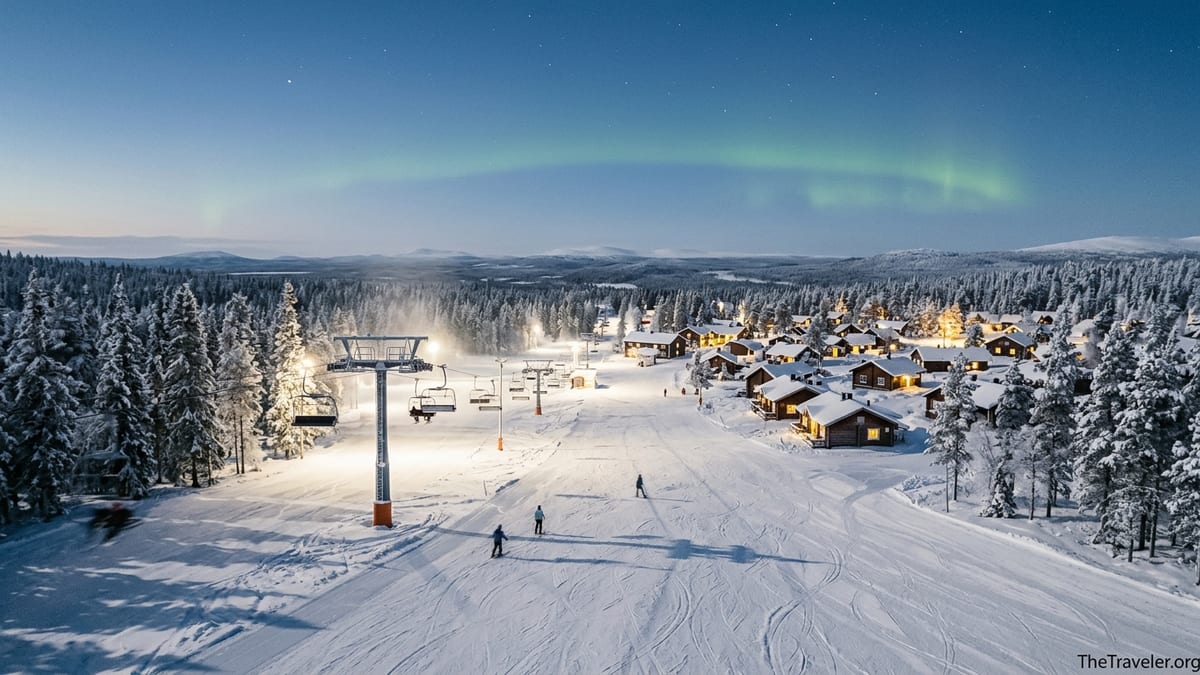
If your vision of a winter holiday involves gliding through silent forests at midday twilight, then relaxing in a private sauna before heading out under crisp stars to watch for the aurora, Lapland’s ski resorts come remarkably close to the archetypal snow globe fantasy. With thoughtful planning and realistic expectations about costs and climate, this winter could be the season when you trade crowded Alpine lift queues for quiet Arctic slopes and discover why so many visitors return to Lapland year after year.
FAQ
Q1. When is the best time to ski in Lapland for good snow and some daylight?
The core ski period with reliable snow and usable daylight typically runs from late January through late March. December has a strong festive atmosphere but very short days, while April offers more sunshine and milder temperatures, especially in resorts such as Levi, Ylläs and Ruka.
Q2. Which Lapland resort is best for a first time family ski trip?
Levi and Ruka are often the most practical choices for first time families, thanks to their well organised ski schools, variety of beginner friendly slopes and broad accommodation choices close to the lifts. Saariselkä, Ylläs and Pyhä can also work very well for families who value quieter surroundings and are happy with smaller downhill areas combined with other winter activities.
Q3. How expensive is a Lapland ski package compared to the Alps?
On a per week basis, Lapland ski packages that include Santa or Northern Lights excursions and peak holiday flights can cost more than many standard Alpine packages. If you travel outside Christmas and New Year, choose self catering accommodation and focus on skiing rather than a full slate of excursions, it is possible to keep overall costs closer to those of a mid range alpine holiday.
Q4. Do I need to book a package, or can I organise Lapland skiing independently?
You can do either. Fully packaged holidays that bundle flights, transfers and accommodation are convenient and common from the UK and parts of Europe. Independent travelers often fly to Helsinki and connect to regional airports before using rental cars or local transfers, booking cabins, hotels and ski services directly with the resorts.
Q5. Are Lapland ski resorts suitable for advanced skiers and snowboarders?
Lapland’s vertical drop is modest compared with the Alps or Rockies, so it is not a destination for huge off piste descents. However, advanced skiers and snowboarders can still find challenging black runs, World Cup style slopes and terrain parks in areas such as Levi and Ruka, and often enjoy the quiet pistes, long season and novelty of skiing under polar twilight.
Q6. How cold does it get on the slopes in winter?
In midwinter it is normal for daytime temperatures to sit well below freezing, and cold snaps can take readings below minus 20 degrees Celsius. Resorts may reduce lift operations in extreme conditions. Good layering, windproof outerwear, insulated gloves, face protection and warm footwear are essential, and many visitors find it worthwhile to invest in proper Arctic rated clothing before travelling.
Q7. Can I see the Northern Lights during a Lapland ski holiday?
Yes, many visitors combine skiing with aurora hunting. Resorts such as Saariselkä, Levi and Ylläs are well placed for Northern Lights viewing when conditions are right. Your chances are best on clear, dark nights between roughly late September and late March, away from strong artificial light, and many operators offer guided aurora excursions by minibus, snowmobile or snowshoes.
Q8. Is Lapland a good destination for cross country skiing?
Lapland is exceptional for cross country skiing, with extensive groomed trail networks in resorts like Ylläs, Saariselkä, Levi and Ruka. Many visitors come primarily for Nordic skiing and treat downhill skiing as a secondary activity. Cabins and apartments often have trail access within a short walk, and rental shops provide classic and skate equipment for all levels.
Q9. What kind of accommodation is typical in Lapland ski resorts?
You will find a mix of hotels, self catering apartments and stand alone cabins or chalets, many with private saunas. In more developed resorts like Levi and Ruka, there are ski in ski out hotels and apartment complexes near the lifts. In Ylläs, Pyhä and Saariselkä, forest cabins and low rise lodges are more common, creating a quieter and more dispersed village feel.
Q10. How far in advance should I book a Lapland ski holiday?
For Christmas, New Year and peak school holiday weeks, it is wise to book at least nine to twelve months in advance to secure preferred flights, accommodation and activity slots. For January, February and spring weeks outside school holidays, you may find good availability closer to departure, but booking several months ahead still gives you more choice and time to spread out payments.