


Nice has become one of Europe’s most talked‑about city breaks, but many travelers still wonder whether the city itself is worth several days, or if it simply makes a practical base for exploring the rest of the French Riviera. With record passenger numbers at Nice Côte d’Azur airport in 2025 and more visitors than ever fanning out to Monaco, Cannes, Antibes and hilltop villages, the choice matters. This guide breaks down what Nice offers in its own right, and when you are better off treating it primarily as a launchpad for the coast.
Get the latest updates straight to your inbox!
Nice as a Destination in Its Own Right
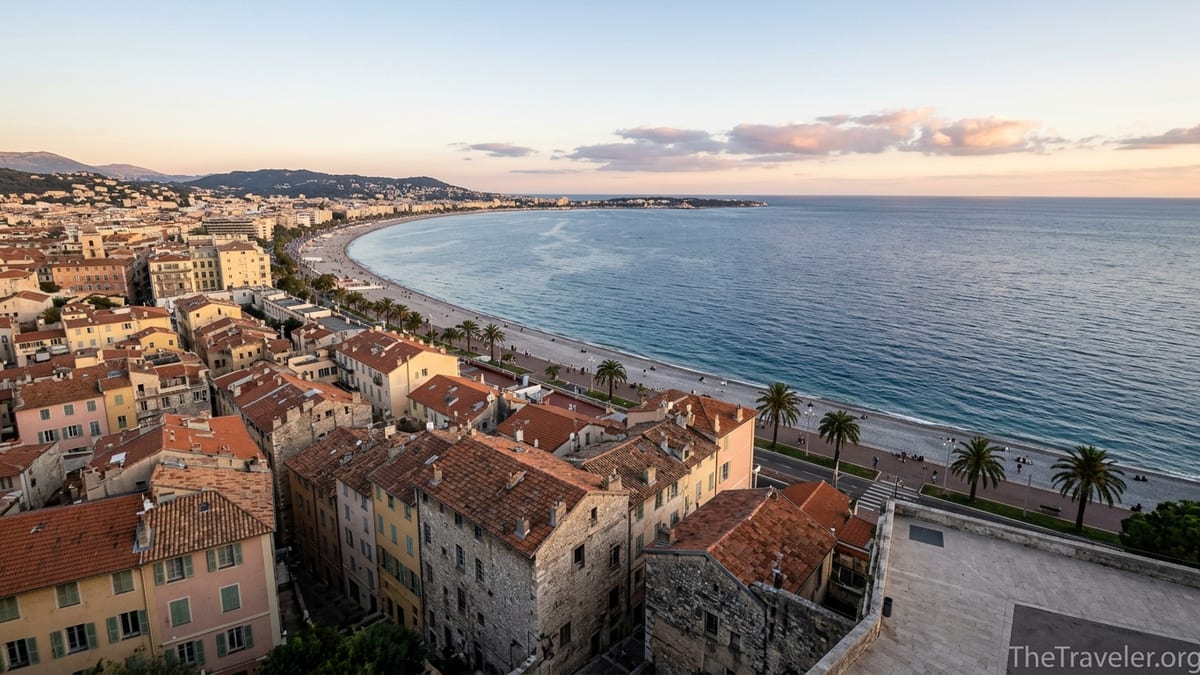
Nice is not just an airport stop. It is a mid‑sized Mediterranean city framed by the Baie des Anges, with a long seafront promenade, an atmospheric old town and enough museums and markets to keep a first‑time visitor busy for at least two or three full days. The compact Vieux Nice, with its ochre facades and narrow lanes, feels distinctly Italian in places, a nod to the city’s history before it became French in the 19th century.
For many visitors, the daily rhythm is what makes Nice worth visiting. Mornings might start with coffee and a slice of socca at the Marché du Cours Saleya, where flower stalls and produce vendors fill the square, followed by an hour at the Matisse Museum in Cimiez or the Museum of Modern and Contemporary Art. Late afternoon can be as simple as joining locals on the Promenade des Anglais, watching joggers, families and rollerbladers pass as the sky softens over the bay.
Culture lovers will find that you can easily build an itinerary that barely leaves the city. In addition to the Matisse and Chagall museums, there are smaller institutions such as the Palais Lascaris with its baroque interior and the Massena Museum housed in a 19th‑century villa along the waterfront. Add in the city’s growing restaurant scene, from classic Niçoise bistros around Place Garibaldi to contemporary spots in the Libération district, and Nice starts to look less like a mere base and more like a Mediterranean city break that happens to have exceptional access to the rest of the Riviera.
However, expectations matter. Nice is a working city as well as a resort. The beachfront is built up, traffic on the main avenues can be busy in peak season, and some neighborhoods feel more functional than charming. Travelers coming in search of a perfectly preserved small town sometimes find the scale and energy of Nice surprising, especially in July and August.
Why Nice Works So Well as a Base
Where Nice truly excels is logistics. The city’s airport is the second busiest in France, with direct flights from across Europe and seasonal long‑haul services, which means you can often land by mid‑morning and be checked into a hotel on the seafront within an hour. For travelers trying to fit the Riviera into a broader France itinerary that might include Paris or Provence, that convenience alone can tip the balance toward basing in Nice.
Once you are in the city, public transport does much of the heavy lifting. Regional TER trains link Nice to Antibes and Cannes to the west and to Menton and the Italian border to the east. On a typical day, there are dozens of trains between Nice and Cannes, with travel times that can be as short as around 30 minutes, while Nice to Antibes can be about 20 minutes and Nice to Monaco around 20 to 25 minutes. In practice, this means you can finish breakfast in Nice and be wandering past the yachts in Monaco’s Port Hercule before many other visitors have even left their hotels.
Buses fill in the gaps, particularly for hilltop villages. Local services run from Nice up to Èze‑Village and on to La Turbie, or out around Cap Ferrat. Fares are usually just a few euros, and combined with the tram that runs from the airport through central Nice, it is entirely realistic to spend a week on the Riviera without ever renting a car. For solo travelers and couples used to relying on trains and buses in Europe, this level of connectivity is a strong argument for staying in Nice.
The accommodation stock also favors using Nice as a hub. You will find everything from budget chain hotels near the station to mid‑range boutique properties in the Carré d’Or and high‑end seafront addresses along the promenade. For example, a simple three‑star room within walking distance of the old town might run at a moderate nightly rate in shoulder season, while in peak summer the same room can creep significantly higher, but still often undercuts comparable rooms in Monaco or luxury resorts in Cap Ferrat. For long stays, furnished apartments in neighborhoods like Musiciens or Libération give you a kitchen and access to local food markets, making it easier to balance restaurant splurges with home‑cooked meals.
Experiences You Only Get by Staying in Nice
Some of Nice’s best moments unfold at times of day that are hard to experience properly if you are staying elsewhere. Sunrise on the Promenade des Anglais is a case in point. If you are based in the city, you can step out just after dawn and see the first light catch the pastel buildings while the bay is almost empty, save for a few swimmers and early runners. Travelers commuting in from Cannes or Antibes for the day rarely see this side of Nice.
Evenings also reward those who sleep in the city. After day‑trippers have returned to their bases, the old town’s lanes fill with locals heading to dinner or drinks along Rue de la Préfecture or around Place Rossetti. Summer festivals and free concerts on the seafront can run late, and staying nearby allows you to walk back to your hotel rather than navigating late trains. If you happen to be in town during the Nice Carnival in February, basing in the city means you can experience both the daytime flower parades and the illuminated evening processions without worrying about long transfers.
Staying in Nice also gives you time to explore beyond the most obvious streets. Many visitors on short day trips never make it to neighborhoods like Libération, where a large daily market and more residential atmosphere offer a glimpse of everyday life, or to the hill of Cimiez with its Roman ruins and olive groves. When you are not racing the clock to catch the last train home, you can linger in less touristed corners, whether that means a quiet stretch of the coastal path around Mont Boron or a casual wine bar far from the seafront.
Finally, choosing Nice as more than a base lets you adjust your pace according to the weather and your energy. On a hot August afternoon, you might decide to skip a crowded train to Monaco and instead spend a few leisurely hours on the pebbly city beach or at a private beach club along the promenade. In shoulder season, a cloudy morning can be the cue for a museum day, followed by a late walk along the shore when the light turns dramatic. That kind of flexibility is harder to enjoy when you are commuting in.
When Another Town Might Be a Better Base
Nice is functional, connected and full of life, but it is not the best base for every traveler. If your ideal Riviera stay revolves around a quiet sandy beach, a smaller town like Antibes or Juan‑les‑Pins can be more appealing. Antibes has an atmospheric old town overlooking a marina, plus sandy coves within walking distance. For visitors who plan to spend most days on the beach rather than sightseeing, waking up steps from the sand can matter more than being at a transport hub.
Romantic travelers or those seeking a village feel sometimes prefer Villefranche‑sur‑Mer, just east of Nice. The town tumbles down to a deep natural harbor, with pastel houses and a small curve of beach that feels more intimate than the broad bay in Nice. From there, you can still reach Nice or Monaco by train in minutes, but your evenings will be spent on a quieter waterfront with fewer crowds and a more concentrated restaurant scene.
Farther along the coast, Menton near the Italian border offers a softer, slower version of the Riviera, with gardens, Belle Époque facades and a microclimate that keeps lemons and other citrus thriving. Travelers focused on gardens, photography and relaxed walks sometimes find Menton a better base than Nice, especially if they are willing to accept slightly longer train rides to reach Cannes or Antibes.
On the flip side, some visitors who base in Nice never really warm to the city, finding it too busy or feeling that the pebbly beach does not match their idea of a classic seaside resort. If you know you prefer compact historical centers to big‑city energy, or if you strongly favor sandy beaches, it can be worth splitting your time: a few nights in Nice for easy arrival and departure, followed by a few nights in a smaller coastal town.
Day Trips That Justify Using Nice as a Hub
Nice’s central position on the Riviera makes day trips both simple and varied. One classic loop combines Èze and Monaco. You might leave Nice in the morning on a bus up to Èze‑Village, spend a couple of hours wandering its steep lanes and visiting the hilltop exotic garden, then continue by bus or train down to Monaco for the afternoon. After seeing the Prince’s Palace, the old town and perhaps the famous casino, you can be back in Nice in time for a late dinner.
Another straightforward outing is a day in Antibes and Cannes. From Nice‑Ville station, you can ride west to Antibes for a morning in the old town, perhaps visiting the Picasso Museum in the former château. After lunch, you continue to Cannes, where you can walk the Croisette, see the Palais des Festivals and spend some time on the sandy city beach before returning to Nice by train. Regular services and short journey times mean you are rarely more than an hour from your hotel.
For a change of pace, you can head inland from Nice on organized minivan tours that combine hill villages such as Saint‑Paul‑de‑Vence, Grasse and Gourdon. These excursions typically leave from central Nice and cover multiple stops in one long day, allowing you to experience perched villages, perfumeries and panoramic viewpoints without needing to navigate rural roads. Travelers who might be uncomfortable driving in France often choose these tours specifically because Nice provides so many departure options.
Even simple half‑days can be rewarding. A short train ride east takes you to Villefranche‑sur‑Mer for lunch on the waterfront and a swim, while a tram plus bus journey west can bring you to the quieter end of the bay toward Cagnes‑sur‑Mer. In each case, you return to Nice in time for an evening stroll, turning the city into a familiar, convenient base that anchors a string of varied experiences along the coast.
Practical Considerations: Costs, Crowds and Safety
In terms of costs, Nice sits in the middle of the Riviera spectrum. It is generally more affordable than Monaco or luxury enclaves like Saint‑Jean‑Cap‑Ferrat but more expensive than many inland French cities. A simple sit‑down meal in the old town or near the promenade can be comparable to what you would pay in other major French destinations, though seafront terraces and beach clubs command a clear premium. Public transport, by contrast, remains relatively good value, with local bus and tram tickets typically costing just a few euros and regional train fares between Nice and nearby towns often in the mid‑single‑digit euro range per journey.
Crowds peak in July and August, when the promenade, old town and city beaches can feel very busy from late morning through evening. If you are using Nice as a base in high summer, it pays to plan early starts for popular day trips and to book restaurants ahead, especially on weekends. Shoulder seasons from late April to June and September to October deliver a better balance of warmth and space, making it easier to enjoy both the city and the wider coast without feeling overwhelmed.
As with any urban destination that sees large numbers of visitors, you should take routine precautions in Nice. Opportunistic pickpocketing can occur on busy trams and around crowded tourist spots, so keeping bags zipped, avoiding back pockets for phones and wallets, and staying alert on public transport are sensible measures. Most visitors experience no serious issues, but it is worth treating Nice as you would any other popular European city rather than as a secluded resort.
Finally, think about how your own energy level and style interact with the city. Travelers arriving after a packed week in Paris may find the bustle of Nice energizing, with its late‑opening restaurants and constant movement along the promenade. Others may discover they are more in the mood for quiet harbors and early nights, in which case a shorter stay in Nice combined with time in a smaller town can balance things out.
The Takeaway
So, is Nice worth visiting in itself, or is it better used simply as a base for exploring the Riviera? In practice, it is usually both. The city offers enough culture, food and atmosphere to justify at least two or three full days devoted purely to its own neighborhoods, museums and seafront. At the same time, its unmatched transport links and wide range of accommodation options make it one of the most practical hubs on the Mediterranean.
If you enjoy cities, like to walk and are happy with a pebbly beach rather than soft sand, treating Nice as a primary destination and base works extremely well. You can settle into a neighborhood, get to know local cafés and markets, and still hop easily to Monaco, Antibes, Cannes or Menton whenever you choose. For many travelers, especially first‑timers to the Riviera, this combination of urban life and easy day trips delivers exactly the mix they are hoping for.
If, on the other hand, your priorities lean toward quiet evenings, smaller‑scale charm or long days on sandy beaches, consider splitting your stay. Use Nice at the beginning or end of the trip for its airport, museums and restaurants, then spend the remaining nights in a smaller coastal town that better matches your idea of a classic seaside escape. Framing the decision this way helps ensure that Nice enhances your time on the Riviera, whether as a vibrant home city or a well‑connected gateway to the coast.
FAQ
Q1. Is Nice worth visiting if I am not planning many day trips?
Yes, Nice can stand alone as a city break. You can fill several days with its old town, seafront, museums, markets and restaurant scene without leaving the city limits.
Q2. How many days should I stay in Nice if I want to use it as a base?
For a mix of city time and day trips, many travelers find four to six nights ideal, giving at least one or two full days in Nice itself and several days for excursions.
Q3. Is it better to stay in Nice or Cannes?
Nice generally offers better transport connections, more varied accommodation and a larger dining scene, while Cannes has sandy beaches and a more compact, polished resort feel. Your choice depends on whether you prioritize logistics or a classic beach‑resort atmosphere.
Q4. Are the beaches in Nice good for swimming and relaxing?
The water is usually clear and inviting in season, but the beaches are made of large pebbles rather than sand. Many people use beach clubs with loungers, while others bring water shoes and towels to manage the stones.
Q5. Do I need a car if I base myself in Nice?
Not necessarily. Trains, buses and trams cover most common routes between Nice and Monaco, Antibes, Cannes, Menton and nearby villages, so many visitors comfortably rely on public transport and occasional organized tours.
Q6. Is Nice a good base for visiting Monaco and Èze in one day?
Yes. A common route is to go up to Èze‑Village in the morning by bus, then continue to Monaco by bus or train and return to Nice in the evening, making full use of the short travel times.
Q7. Is Nice safe for solo travelers?
Nice is generally considered safe for solo visitors, including women, provided you take normal city precautions such as staying aware in crowded areas, watching your belongings and avoiding poorly lit streets late at night.
Q8. When is the best time of year to use Nice as a base?
Late spring and early autumn offer warm weather with more manageable crowds and prices. July and August are lively but busy and hot, while winter is quieter and cooler with some sunny days.
Q9. Is Nice too expensive for budget travelers?
Nice can be done on a moderate budget if you choose simpler accommodation away from the seafront, use public transport, picnic with market food and focus on free activities like walks, viewpoints and public beaches.
Q10. Should I split my time between Nice and a smaller Riviera town?
If you like both urban energy and village charm, splitting your stay works well. Many travelers spend a few nights in Nice for arrival, departure and big‑city amenities, then move to a quieter town like Antibes, Villefranche‑sur‑Mer or Menton for the rest of their trip.