


Ocean City, Maryland has long marketed itself as a classic East Coast family beach town, with generations returning for boardwalk rides, fries in paper cups, and days on a wide Atlantic beach. Yet in recent years it has also leaned into festivals, nightlife, and watersports that attract couples, groups of friends, and bachelor or bachelorette parties. If you are planning a trip and wondering whether Ocean City is worth visiting or simply too family focused for your style of travel, the answer depends on when you go, where you stay, and how you like to spend your time.
Get the latest updates straight to your inbox!
What Kind of Place Is Ocean City Today?
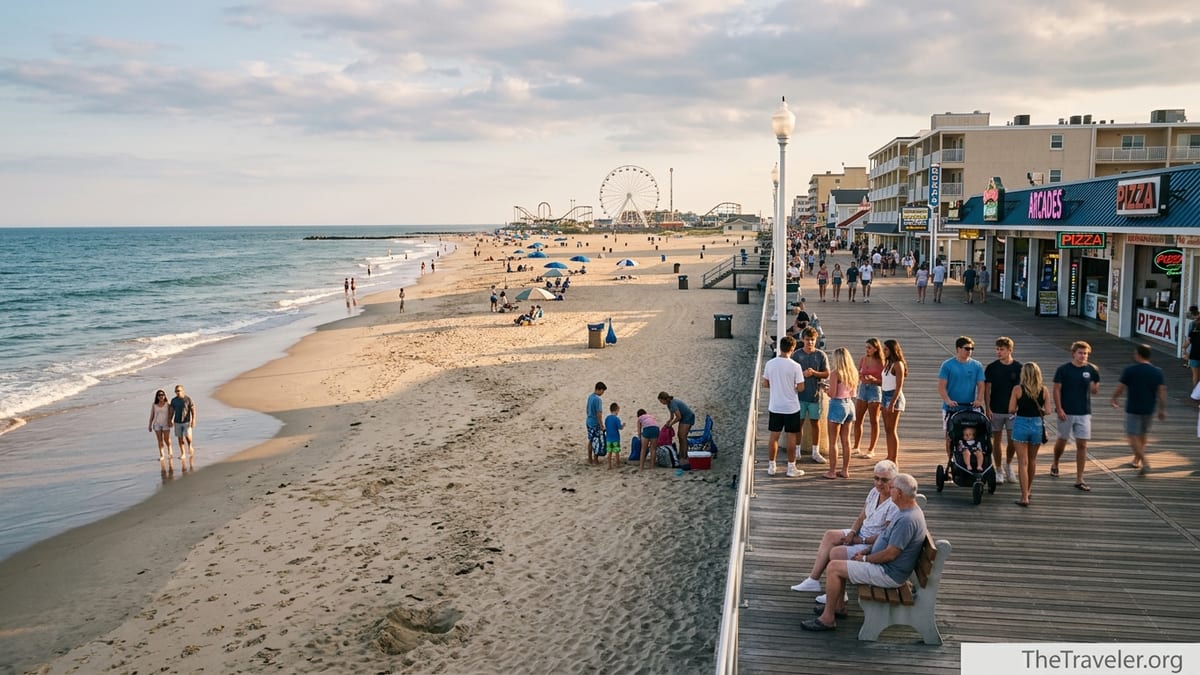
Ocean City stretches along roughly 10 miles of beachfront on a barrier island off Maryland’s Eastern Shore, with a three-mile wooden boardwalk at the southern end packed with arcades, pizza windows, souvenir shops, and amusement rides. Local tourism marketing still emphasizes a “family friendly beach and boardwalk experience,” and the town’s 2025 planning documents talk openly about protecting that image as its core brand. At the same time, the midtown and north-end corridors are lined with beachfront high-rises, bayside bars, and marinas that cater as much to adults on quick getaways as to kids building sandcastles.
The result is not a party town in the mold of Miami or Myrtle Beach, but a busy resort that shifts character by block, by time of day, and by season. Stand at the inlet around 10 a.m. on a July Saturday and you will see families pushing strollers toward Trimper’s Rides and the Jolly Roger pier. Walk around the same area after 10 p.m. and you are more likely to pass groups of twenty-somethings with Thrasher’s fries in hand, heading between bars and late-night arcades. For many visitors, deciding whether Ocean City is a fit starts with choosing which version of the town they want to meet.
Ocean City’s calendar also shapes the crowd. Large shoulder-season events like Springfest in late April and early May and Sunfest in the fall now bring multiple days of live music, craft vendors, and food stalls to the inlet parking lot, while newer concerts and beach festivals draw thousands of adults for weekend trips. A June midweek stay will feel notably calmer and more family focused than a big-event weekend or a peak July Saturday night.
How Family Focused Is the Boardwalk, Really?
Ocean City’s boardwalk is the heart of its family identity. There are old-school rides at Trimper’s Rides by the inlet, a classic 1902 carousel under a pavilion, and a Ferris wheel and small roller coasters at the Jolly Roger pier. Families with young children can easily spend an entire evening between rides, candy shops, and soft-serve stands without ever stepping into a bar. During the day, beach access points along the boardwalk are busy with umbrellas and coolers, and kids line up for hand-cut fries or caramel popcorn.
That said, the boardwalk is not exclusively a children’s zone. As night falls in high season, it becomes a dense stream of teenagers, college kids, and adults out for people-watching, live music at bars fronting the boards, and late-night snacks. It is common to see multi-generational families and groups of friends weaving past each other, and the energy can feel crowded and loud rather than purely wholesome. Recent visitors often advise families with very small children to enjoy the boardwalk earlier in the evening and then shift back to quieter stretches of beach or to the northern part of town once it gets late.
If you are sensitive to noise, choosing lodging just off the boardwalk can make or break your experience. A motel directly on the boards around 1st to 4th Street will put you in the thick of it, with music and foot traffic audible past midnight in peak season. Moving just a few blocks bayside or booking a hotel around 30th Street or higher can deliver much quieter nights while still letting you dip into the boardwalk scene when you want it.
Nightlife, Bars, and the Grown-Up Side of Ocean City
For a town sometimes dismissed as “only for families,” Ocean City has a surprisingly robust nightlife and bar scene, especially between late May and early September. The midtown bayfront is where it is most visible. Seacrets, a sprawling waterfront venue on 49th Street, blends multiple bars, a nightclub, live music stages, and tables set right in the shallow bay, with people floating on rafts and sipping rum cocktails in the water throughout the afternoon. It has been expanding since the late 1980s and is now a full “Jamaica in the U.S.”-style complex that drives a lot of the adult party traffic in town.
Nearby, places like Fager’s Island on 60th Street, Macky’s Bayside Bar & Grill, and other bayfront spots offer late-afternoon happy hours, live bands at sunset, and standing-room-only crowds when the weather is good. These venues skew heavily toward adults and are popular for bachelorette groups and friends’ weekends. During summer 2026, visitors report cover charges at the more in-demand venues on weekend nights, particularly at Seacrets when national or regional touring acts are playing.
If you prefer a more laid-back evening, you can steer away from the biggest clubs and seek out brewery patios and quieter restaurants. Local craft-beer events, like winter and early spring festivals at bayfront venues, attract a mix of young locals and visitors without an all-night club vibe. North Ocean City and nearby Fenwick Island tend to be calmer after dark, with more emphasis on tiki bars, casual seafood spots, and mini-golf than on thumping dance floors. The key takeaway is that Ocean City absolutely has an adult nightlife scene, but it is concentrated in specific strips and venues. You can lean into it or avoid it altogether with careful planning.
What Will Your Budget Really Look Like?
Prices in Ocean City rise and fall sharply with season and location. Travelers discussing June and July 2026 trips commonly find basic motels or older condos near the beach for around 150 to 250 dollars per night if they book ahead, especially in midtown or on the bayside rather than directly oceanfront. Newer or branded properties on the ocean, such as full-service chain hotels with balconies and pool decks, can jump to 500 or more per night during prime weekends in July and early August.
For a three-night long weekend in high summer, a couple might realistically spend 600 to 900 dollars on lodging at a mid-range hotel, plus daily parking if their property does not include a space. Add meals at mid-priced restaurants, boardwalk treats, and a few bar tabs, and a reasonable working budget for two might hover around 250 to 350 dollars per day, not including gas or tolls to get there. Families of four or more often save by renting a small condo a few blocks off the beach or in West Ocean City, cooking breakfast and some dinners, and focusing spending on rides, mini-golf, and occasional restaurant splurges.
Ocean City does still offer value options compared with some East Coast alternatives. Visitors with flexible schedules can find weekday deals in June or late August and early September, when nightly rates ease and crowds thin but the water is still swimmable. Lower-cost motels under 200 dollars per night in those shoulder windows are not unusual within a short walk of the sand, provided you are comfortable with older, no-frills properties. Traveling without kids opens up those off-peak dates, which can make the town feel far less family dominated and gentler on your wallet.
Beyond the Beach: Activities for Adults and Mixed Groups
If you are not interested in riding a carousel or spending half your day in a kiddie pool, Ocean City still delivers a reasonable variety of things to do. On the water, outfitters along the bayside offer stand-up paddleboards, kayaks, and pedal boats for rent, letting you spend a quiet morning exploring Assawoman Bay away from the boardwalk crowds. Some companies base themselves on back bays or canals where the water is calmer, which appeals to first-timers and more relaxed paddlers who care more about scenery than thrills.
Fishing charters operate out of the inlet and the commercial harbor, ranging from half-day inshore trips to full-day offshore excursions for tuna and billfish in season. Golfers can choose from multiple courses on the mainland within a short drive, and mini-golf is nearly omnipresent if your group likes low-key competition after dinner. For a break from sun and sand, the Life-Saving Station Museum at the south end of the boardwalk presents the town’s maritime history, while small local museums in nearby Berlin and Snow Hill offer a quieter, more artsy counterpoint to Ocean City’s crowds.
Couples and groups often build their days around a simple rhythm: beach or bay time in the morning, a casual lunch of crab cakes or steamed shrimp at a bayside spot, some shopping or a nap in the afternoon, then a sunset drink on the bay followed by dinner. You can thread in boardwalk rides one night and a concert at a festival another. Because many major events and shows cluster on the inlet lot or at specific venues, it is relatively easy to plan around them if you prefer a calmer stay. Checking the town’s official events calendar before you book is essential if you want to avoid, or deliberately target, big weekends.
Seasonality: When Ocean City Feels Most “Family” and When It Doesn’t
Ocean City’s family focus is most intense from late June through mid-August, especially around Independence Day and regional school breaks. During those weeks, the beach is full of multigenerational groups, the boardwalk is packed from late morning until well after dark, and restaurant waits can be long, particularly at popular family-oriented spots with playgrounds or bayside sand areas. The vibe is busy, colorful, and decidedly geared toward children and teens, though nightlife still blossoms in midtown and beyond once the younger crowd heads back to hotels.
For adult travelers, the shoulder seasons often strike a better balance. Late April and early May bring Springfest and the unofficial start of summer, with cooler evenings, lighter beach crowds, and more affordable hotel rates. September and early October are arguably the sweet spot: the ocean is still relatively warm, many seasonal businesses remain open, and families have largely returned home for school. Fall festivals like Sunfest and newer music events transform parts of the beach and inlet area into concert grounds, attracting adult visitors for long weekends without swamping the entire town at once.
Winter is quiet, with a limited selection of restaurants and attractions open full-time, so it is best suited to travelers who simply want bracing walks on a nearly empty beach and low rates at oceanfront hotels. If your main concern is avoiding a heavy family focus, targeting late spring or early fall midweek stays will give you a feel for Ocean City that is more relaxed, more adult in tone, and generally more affordable than the height of summer.
Who Will Love Ocean City, and Who Might Not?
Ocean City is especially appealing if you like a classic, slightly nostalgic American beach-town atmosphere and do not mind crowds. Travelers who grew up along the Mid-Atlantic often return because it feels familiar: paper cups of fries on a bench, neon-lit arcades, beach carts selling funnel cakes, and crowded but friendly stretches of sand where you can people-watch for hours. Couples who enjoy this sort of atmosphere, or who want to split their time between laid-back beach days and one or two big nights out at a bayfront club, tend to leave satisfied.
It also works well for mixed groups where some members want to hit the boardwalk and water slides, while others crave a cocktail at sunset or a late-night show. A family reunion, for example, can base itself in a condo tower in the 90s streets, where older relatives get quieter evenings and younger adults can Uber or drive down to the boardwalk or Seacrets for nightlife. Groups that enjoy casual dining, from all-you-can-eat crab houses to modern seafood restaurants with outdoor decks, will find plenty of choice.
On the other hand, Ocean City may not be for everyone. If you dream of secluded dunes, refined boutiques, and quiet, upscale waterfront dinners, you might be happier in smaller regional towns like Bethany Beach, Rehoboth, or parts of Cape May. Travelers who strongly dislike crowds, chain restaurants, and car-dependent strips of hotels and mini-golf will likely find Ocean City overwhelming. Likewise, visitors looking for a true cosmopolitan food and culture scene, with cutting-edge restaurants and galleries, may see Ocean City as limited compared with larger coastal cities.
The Takeaway
So is Ocean City worth visiting, or is it too family focused for your trip? For many travelers, it is worth it as long as expectations match reality. This is first and foremost a busy, broadly middle-market beach town that welcomes children and multi-generational groups, but it also offers a parallel track of nightlife, watersports, festivals, and bayfront hangouts geared toward adults. Whether you lean into the boardwalk carnival energy or retreat to quieter parts of town, you can shape the experience around your own comfort level.
If you choose your season carefully, stay in a neighborhood that matches your tolerance for noise, and budget for summer resort prices, Ocean City can deliver a satisfying mix of simple pleasures and late-night fun. If, however, you crave either a truly tranquil coastal escape or a fully urban, sophisticated scene, it may be more honest to treat Ocean City as a nostalgic day trip rather than the centerpiece of your vacation. In short, Ocean City is not “too” family focused so much as it is unapologetically a family-forward beach resort, with enough grown-up edges to keep many adults coming back year after year.
FAQ
Q1. Is Ocean City, Maryland only worth it if you have kids?
Ocean City is popular with families, but many couples and groups of friends enjoy it for the wide beach, bayfront bars, watersports, and seasonal festivals, especially in spring and fall.
Q2. Which part of Ocean City feels less family focused?
Midtown and north-end areas, especially around the 40s to 90s streets and bayside, tend to feel more adult at night, with popular bars and quieter beaches compared with the boardwalk zone.
Q3. When is the best time for an adult-focused trip to Ocean City?
Late April to early June and September into early October usually offer fewer kids, lower rates, and a more relaxed vibe, while still providing warm-enough weather and open businesses.
Q4. Is the boardwalk too crowded and noisy for a romantic getaway?
In peak summer evenings the boardwalk can be very crowded and loud. For a more romantic trip, many couples stay away from the immediate boardwalk area and visit it briefly rather than basing their whole stay there.
Q5. Can you find good nightlife in Ocean City without going to huge clubs?
Yes. In addition to big venues, there are smaller bayside bars, brewery events, and casual restaurants with live music that provide a social atmosphere without a full nightclub scene.
Q6. How expensive is Ocean City compared with other East Coast beaches?
Ocean City is generally mid-range. Summer weekends can be pricey at newer oceanfront hotels, but older motels and condos, especially midweek or in shoulder seasons, can be more affordable than some New Jersey or New York beaches.
Q7. Is it easy to avoid families if you mainly want quiet beach time?
You will always see families in summer, but booking in shoulder seasons, choosing a hotel away from the boardwalk, and using less central beach access points can make your stay much quieter.
Q8. Are there cultural or historical attractions beyond the beach and boardwalk?
Yes. The local Life-Saving Station museum, small maritime and local-history exhibits, and nearby historic towns like Berlin offer low-key cultural outings away from the crowds.
Q9. Is Ocean City a good choice for a bachelor or bachelorette weekend?
It can be. Many groups build trips around bayfront venues, live music, and beach time, as long as they are comfortable with a resort that still has a strong family presence during the day.
Q10. Would a quiet couple be happier somewhere else on the Mid-Atlantic coast?
Possibly. If you prioritize calm, low-rise towns and smaller crowds over boardwalk energy, nearby destinations like Bethany Beach, Rehoboth, or parts of Cape May may suit you better.