


More news on this day
Severe storms sweeping the U.S. East Coast are triggering a sharp spike in flight cancellations and delays, disrupting peak summer travel and rippling through airline networks nationwide.
Get the latest news straight to your inbox!
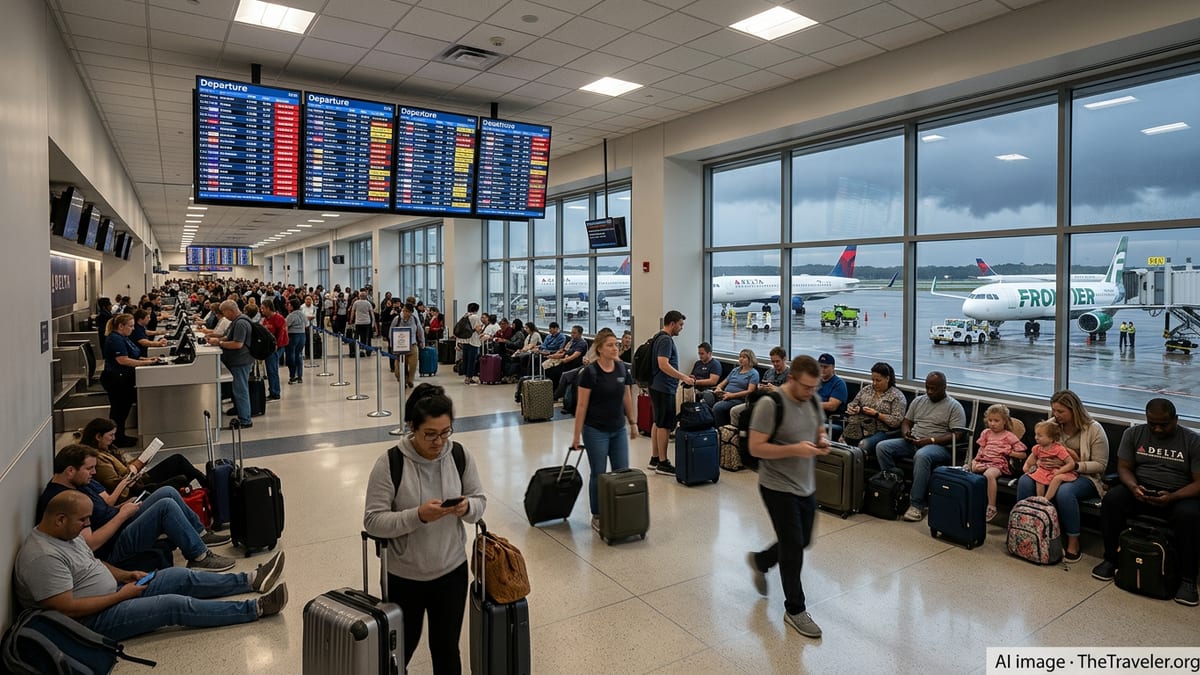
Thousands of Flights Disrupted Across Major East Coast Hubs
Publicly available tracking data indicates that major East Coast hubs such as New York, Boston, Philadelphia and Washington have recorded elevated levels of flight cancellations and lengthy delays as thunderstorms and heavy rain move through the region. The disruptions are affecting both departures and arrivals, with aircraft and crews knocked out of position across airline networks.
Reports from passengers and aviation forums describe hours-long waits on tarmacs and in terminals as weather cells repeatedly trigger short-notice ground stops and flow restrictions. Some travelers recount boarding only to be held at the gate before being taken off the aircraft again when crews reach duty limits or storms intensify in key corridor airspace.
According to published coverage citing national delay boards, the bulk of cancellations are concentrated at the busiest East Coast airports, including the three major New York area facilities, while knock-on delays have appeared as far afield as Los Angeles, Dallas and Chicago as airlines work to recover disrupted schedules.
Convective Storms, Congested Airspace and Crew Limits Drive the Chaos
Meteorological analyses highlight a familiar summer pattern behind the latest wave of disruption. Lines of slow-moving thunderstorms forming over the Appalachians and Mid-Atlantic are tracking directly across heavily used flight paths along the Interstate 95 corridor. When these storms align with peak afternoon and evening departure banks, air traffic managers reduce departure rates and reroute traffic to keep aircraft clear of the most severe weather cells.
Aviation specialists note that East Coast airspace is among the most congested in the world, leaving little spare capacity when storms close key arrival and departure fixes. Even modest ground delays at multiple hubs can quickly compound into large-scale disruptions as aircraft miss scheduled turns and crews approach duty-time limits.
The latest disruptions are also colliding with peak summer demand, when flights routinely depart nearly full and spare seats for rebooking are limited. Analysts point out that this combination of intense convective weather, saturated schedules and tight crew availability makes it more difficult for airlines to absorb even short-lived weather events without extensive knock-on impacts.
Boston, New York and Mid-Atlantic Airports Face Prolonged Strain
Travelers through Boston Logan, the New York area airports and key Mid-Atlantic hubs have reported some of the most persistent problems in recent days. Accounts shared on passenger forums describe repeated rolling delays at Boston, with some flights pushed back multiple times due to storms, ground congestion and fuel system constraints.
In New York and northern New Jersey, travelers have reported sequences of delays followed by late-day cancellations as storms rebuild over the region and traffic management programs throttle arrivals. Airlines serving Newark, LaGuardia and John F. Kennedy airports have issued travel waivers at various points this summer, allowing customers to move trips away from the most heavily affected days without additional change fees.
Further south, airports in Philadelphia, Baltimore and the Washington region have also experienced spikes in delays when storm systems sag into the Mid-Atlantic. Air traffic updates and public flight data suggest that even when these airports avoid the highest cancellation counts, arrival and departure queues can stretch for hours while controllers sequence aircraft around storm cells and saturated taxiways.
Nationwide Ripple Effects Reach Beyond the Storm Zone
The current disruptions are not confined to airports directly under the storm bands. Because East Coast hubs serve as critical connection points in national and international networks, cancellations and extended delays in the corridor have produced ripple effects across the country.
Travelers in the Midwest, South and on the West Coast report full replacement flights and limited rebooking options as aircraft that were scheduled to cycle through storm-affected hubs remain out of position. In some cases, aircraft and crews scheduled to operate later flights from non-affected cities are unavailable after earlier segments into the East Coast were delayed or cancelled.
Industry observers note that this cascading effect is typical of summer weather events, but is amplified this year by tight aircraft utilization and higher passenger loads. Once flights begin to cancel in large numbers, it can take days for airlines and airports to fully restore normal operations, even after storms have cleared the immediate region.
What Travelers Can Expect in the Coming Days
Meteorologists tracking the current weather pattern indicate that additional rounds of thunderstorms are likely along portions of the East Coast in the short term, particularly during afternoon and evening peak hours. While conditions are expected to fluctuate from day to day, the setup suggests that intermittent ground stops, flow restrictions and last-minute schedule changes may continue at major hubs.
Airlines are responding with a mix of schedule adjustments and travel waivers, according to publicly posted advisories. Some carriers have trimmed peak flights in vulnerable time periods, while others are encouraging passengers with flexible plans to move trips away from the most storm-prone windows.
For travelers who must fly, aviation analysts advise building in additional connection time, traveling earlier in the day when possible and monitoring flight status closely, as schedules may change with limited notice when storms flare along key routes. As the latest East Coast system demonstrates, even relatively routine summer weather can quickly escalate into widespread disruption when it intersects with the most heavily trafficked air corridors in the United States.