


More news on this day
An alleged leader of a transnational crime ring has been arrested while attempting to board a cruise ship in Italy, according to multiple European media reports and publicly available law enforcement statements, in a case that underscores how passenger vessels are increasingly monitored in global efforts to track suspects trying to move across borders.
Get the latest news straight to your inbox!
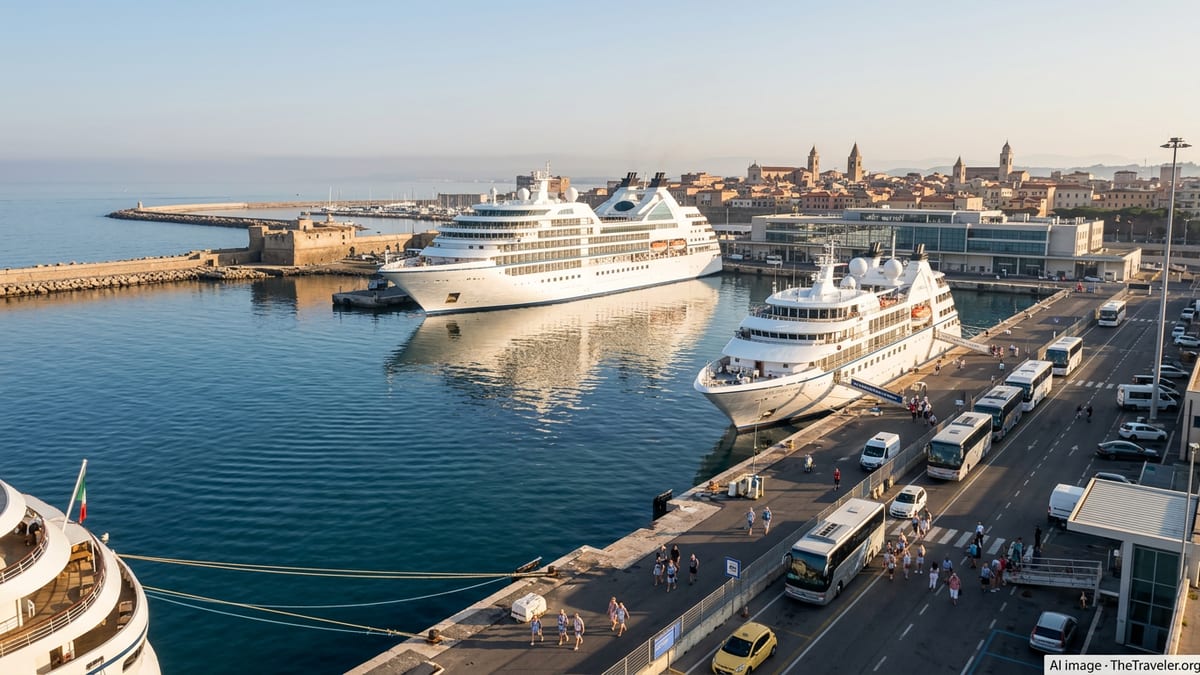
Arrest at Italian Cruise Terminal Draws International Attention
Initial reports from Italian and wider European coverage indicate that the suspect, described as a key figure in an organized crime network, was intercepted at a major Italian port as cruise passengers were preparing to embark. Publicly available information suggests that officers acted on pre-existing warrants tied to financial and organized crime investigations, timing the intervention to coincide with the suspect’s appearance at the terminal.
Italian ports have long served as hubs for both tourism and trade, and the incident has attracted attention partly because it unfolded in full view of holiday travelers. Passengers interviewed in various media accounts described a visible security presence at the port in the hours surrounding the arrest, reflecting how routine embarkation procedures can quickly shift when a high-profile suspect is believed to be present.
Although specific personal details of the detainee have not been widely released, published reports link the case to broader probes into complex financial schemes and cross-border criminal structures. The decision to wait until the suspect attempted to board the cruise ship is being interpreted by commentators as a calculated move to limit potential risks and ensure the individual could not easily leave Italian jurisdiction by sea.
Part of a Wider European Push Against Organized Crime
The arrest comes amid a period of intensified law enforcement activity against organized crime across Europe, with recent operations in Italy focusing on networks implicated in fraud, drug trafficking, and money laundering. Public documentation from European and Italian agencies over the past months outlines multiple large-scale investigations into alleged criminal groups that are believed to exploit the movement of goods and people across borders.
Observers note that Italian investigators, often working in tandem with European partners, have increasingly targeted the financial backbone of such organizations, including suspected carousel fraud and other complex tax schemes. In some cases, publicly available records show that suspects have been detained at airports when attempting to depart for destinations outside the European Union, a pattern that provides context for the latest interception at a cruise port.
Legal analysts following organized crime cases in Italy point out that maritime routes share many characteristics with air corridors, offering both legitimate travel opportunities and potential avenues for fugitives seeking to relocate quickly. The arrest at a cruise terminal is therefore seen as part of a broader strategy that treats ports, airports, and land crossings as interconnected checkpoints within a single enforcement framework.
Cruise Travel Under Closer Security Scrutiny
The incident is also shining a spotlight on how cruise travel is monitored when individuals suspected of serious offenses are believed to be on the move. Recent coverage of law enforcement activity around cruise ports, from the Mediterranean to the Atlantic, has described a growing reliance on passenger manifests, advance information sharing, and targeted operations when specific names are flagged.
Commentary from maritime security specialists, reflected in trade and policy publications, notes that cruise terminals in Italy and elsewhere now function as tightly controlled border spaces, where cooperation between national police, customs, and international partners is becoming more routine. In the Italian context, financial and border control bodies have reported a series of coordinated operations involving both commercial shipping and passenger traffic.
For travelers, most of these efforts occur behind the scenes, but high-profile arrests can bring the operational side of port security into public view. The latest case, involving an alleged crime ring leader, illustrates how a leisure journey can intersect directly with complex criminal investigations when individuals under scrutiny attempt to blend in with ordinary tourist traffic.
Legal Proceedings and Cross-Border Implications
According to open court documents and prior case histories involving similar suspects, individuals identified as organizers or leaders within criminal structures often face a combination of domestic charges and potential cooperation requests from other jurisdictions. Commentators expect that prosecutors will examine whether alleged offenses linked to the suspect extend beyond Italy’s borders and whether other European states or international bodies may seek access to evidence gathered during the investigation.
Italian legal procedure generally provides for detention measures when there is a perceived risk of flight or interference with evidence, factors that analysts say frequently arise in complex economic and organized crime matters. In cases previously described in official communiqués, suspected leaders of criminal groups have seen assets frozen and business interests scrutinized, with investigators seeking to trace financial flows across multiple countries.
The cruise terminal arrest may therefore represent the opening of a longer judicial process rather than the conclusion of the case. Legal observers anticipate that additional information about the alleged network, including any accomplices who may have attempted to travel separately or remain abroad, could emerge as filings become public in the weeks and months ahead.
What the Case Signals for Future Cruise Passengers
For the travel industry, the episode is a reminder that high-volume tourist infrastructure can occasionally become the stage for significant law enforcement actions. While there is no indication of a broader threat to cruise tourism in Italy, analysts following port security policies suggest that successful interceptions of high-profile suspects may encourage continued or enhanced checks on specific sailings when risk indicators are present.
Travel advisors commonly recommend that passengers allow additional time for embarkation at major European ports, given the layered security measures that now characterize cruise check-in, especially when ships operate complex itineraries through multiple jurisdictions. The Italian arrest reinforces the idea that these procedures serve not only customs and immigration purposes but also form part of a wider network of controls against serious crime.
Industry watchers expect that cooperation between cruise operators and law enforcement bodies will remain a discreet but important element of port operations in Italy. As more details of the alleged crime ring leader’s case become available through official channels, the episode is likely to be studied as an example of how seemingly routine tourist departures can intersect with high-stakes efforts to dismantle organized criminal networks.