


Most travelers arrive in Pisa laser focused on one thing: the photo with the Leaning Tower. Yet just across the grass in Piazza dei Miracoli is one of Italy’s most unusual small museums, the Museo delle Sinopie, housing the ghostly red underdrawings of medieval frescoes from the Camposanto cemetery. Whether this quiet, scholarly space deserves a slot in your already packed Pisa itinerary depends on what you value most in a visit. Here is a clear, practical look at when the Sinopie Museum is worth your time and ticket money, and when you might choose to skip it.
Get the latest updates straight to your inbox!
What Exactly Is the Sinopie Museum?
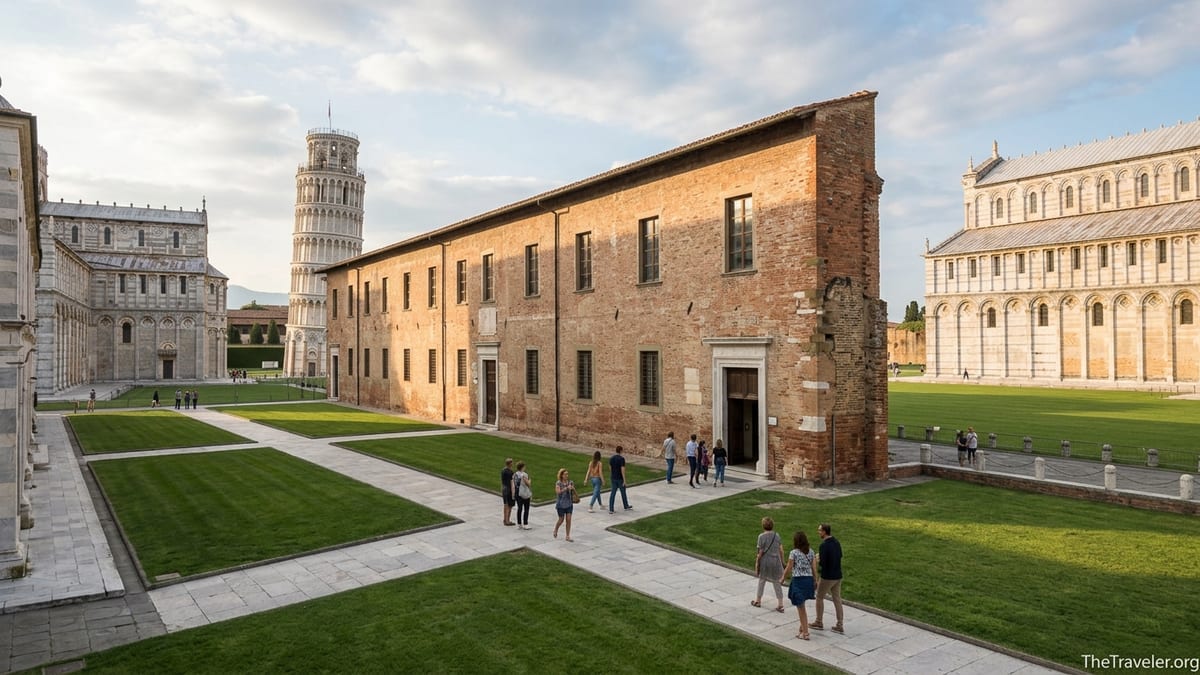
The Sinopie Museum sits on the south side of Pisa’s Piazza dei Miracoli, in the long brick building that once served as the medieval Spedale Nuovo, or New Hospital of the Holy Spirit. Today, its halls are dedicated to sinopie, the reddish-brown preparatory drawings that artists sketched directly onto plaster as guides for the grand frescoes that once covered the walls of the Camposanto Monumentale. After a devastating fire in 1944 damaged the Camposanto frescoes, restorers detached them from the walls, revealing these hidden drawings beneath and eventually moving them into this museum for conservation and display.
Inside, you walk through large, softly lit galleries where entire walls are covered with these sinopie, many at their original monumental scale. They show scenes of the Last Judgment, biblical stories, and allegories of life and death that once animated the cemetery cloister. The lines are loose and fluid, more like an artist’s notebook than a finished painting. For many visitors, this is the fascination: you are not looking at polished masterpieces, but at the scaffolding of genius, the first draft of artworks that defined Pisan medieval art.
The building itself adds atmosphere. The old hospital’s high ceilings, exposed brick, and long corridors make it feel removed from the crush of tourists outside. On a busy summer afternoon when the lawn around the Leaning Tower is crowded with selfie sticks, the Sinopie Museum can feel like stepping into another world, quiet enough to hear your footsteps and study the drawings at your own pace.
Location, Tickets, and How It Fits into a Piazza dei Miracoli Visit
Practically speaking, the Sinopie Museum is one of several ticketed sites managed together in Piazza dei Miracoli. The complex typically offers a combined ticket system: you pay a base fee for one monument, such as the Baptistery or Camposanto, and can add others, including the Sinopie Museum and the Cathedral Museum, for a modest increase. The Leaning Tower is always a separate, higher-priced ticket with timed entry and limited capacity, while entry to the cathedral itself is usually free with at least one other paid monument on your ticket. Exact prices and combinations change periodically, so it is wise to check current options at the official ticket office on the square on the day of your visit.
For a typical traveler planning half a day in Pisa, a realistic route might be: morning climb of the Leaning Tower, a visit to the cathedral and Baptistery, lunch nearby, then Camposanto and one of the museums in the afternoon. In that scenario, the Sinopie Museum is often the final or next-to-final stop, because it is compact, covered, and relatively calm. If a summer thunderstorm hits or the midday sun becomes intense, its air-conditioned galleries offer an appealing indoor break while still keeping you inside the UNESCO World Heritage complex.
The museum’s size also makes planning easy. Many visitors spend around 30 to 45 minutes inside, occasionally stretching to an hour if they read every panel or have an art-historical background. That time commitment is small compared with climbing the Tower or navigating the long security lines that can build up for the main monuments at peak hours. If you have purchased a combination ticket that already includes the Sinopie Museum, dropping in often feels like a natural extension of your visit rather than a major separate excursion.
Who Will Appreciate the Sinopie Museum Most?
The Sinopie Museum is especially rewarding for travelers with an interest in art, architecture, or the craft behind great monuments. If you have ever taken a fresco workshop in Tuscany, studied Renaissance art, or simply enjoy standing close to an artist’s hand-drawn lines, you are firmly in the target audience. The sinopie reveal how teams of painters planned large compositions, adjusted figures, and sometimes changed their minds. You can trace the arc of a robe or the positioning of a saint and imagine how the final painted version must have looked on the Camposanto walls.
It also appeals to anyone curious about conservation and war history. The story of how these drawings were uncovered during World War II restoration efforts, after artillery fire set the Camposanto roof ablaze and molten lead ran down the walls, adds emotional weight. Walking through the museum gives a tangible sense of both the vulnerability and resilience of cultural heritage, which can be especially moving if you have just come from the partially reconstructed Camposanto next door.
Travelers who prefer quieter, contemplative experiences will likely find the Sinopie Museum a highlight. While the Tower and Baptistery can feel rushed due to ticket times and crowds, the museum is rarely packed. Couples visiting in shoulder season often recount having entire rooms to themselves, and families with older teens interested in drawing or design sometimes use the stop as a chance to sketch details they see in the sinopie. If that sounds like your travel style, the museum is well worth fitting into your Piazza dei Miracoli circuit.
Who Might Want to Skip It?
On the other hand, the Sinopie Museum is not for everyone. If you are traveling with very young children who are already restless, adding another quiet museum with fragile works and minimal interactive elements may test everyone’s patience. The sinopie are essentially brown-red line drawings on pale plaster; there are no bright colors, animations, or large multimedia installations to hold the attention of kids who just want to run on the grass outside and admire the leaning tower from every angle.
Travelers on a very tight schedule or strict budget may also choose to skip it. If you only have two or three hours in Pisa and must choose between an extra monument and a sit-down meal or gelato stop, many will reasonably prioritize climbing the Leaning Tower, seeing the cathedral interior, and visiting the Camposanto. The cemetery’s surviving frescoes and marble tombs already give a taste of the art that once covered its walls. In that situation, the Sinopie Museum can feel like a deep dive that you do not strictly need on a first, whirlwind visit.
Finally, if you know that your interest in art is limited to quick impressions and photos rather than careful looking, the museum may leave you underwhelmed. Many online reviews describe it as fascinating and atmospheric, but a noticeable minority find it repetitive or “too specialized” when they had hoped for more finished masterpieces. Being honest with yourself about your attention span and priorities before you enter will help you feel satisfied with whatever choice you make.
Comparing the Sinopie Museum with Other Pisa Highlights
To decide if the Sinopie Museum is worth it, it helps to see how it compares with the other major sites in Piazza dei Miracoli. The Leaning Tower is the undeniable icon, offering both the famous tilted exterior and a memorable staircase climb with views across Pisa. The cathedral showcases glittering mosaics, a richly carved pulpit, and a soaring Romanesque interior. The Baptistery impresses with its acoustics and layered arcades, while the Camposanto is a tranquil cloister lined with tombs and remaining fresco fragments.
In that company, the Sinopie Museum occupies a niche role. It does not compete on spectacle or grandeur; instead, it offers context. After seeing the Camposanto fresco fragments in situ, stepping into the museum lets you compare them with the underdrawings that guided the painters’ hands. This tandem visit can be especially rewarding. For example, after walking along the Camposanto wall that once held the massive “Triumph of Death,” visitors who then examine the related sinopie in the museum often notice compositional changes and details that are easy to miss in the damaged fresco.
By contrast, if you must choose between the Sinopie Museum and the Cathedral Museum on a combination ticket, your decision may hinge on your interests. The Cathedral Museum houses original sculptures and treasures from the complex, such as carved capitals and medieval reliefs that once stood outdoors, as well as liturgical objects and the famous bronze griffin. Travelers who enjoy sculpture and church history often favor the Cathedral Museum, while those curious about the painting process and wartime restoration gravitate toward the Sinopie Museum. If time allows, seeing both gives the fullest sense of how much art once adorned the square.
Practical Tips: When and How to Visit
The Sinopie Museum generally keeps similar hours to the other monuments in Piazza dei Miracoli, opening in the morning and closing in the late afternoon or early evening, with variations between seasons. In high season, last admission tends to be late afternoon, with the ticket office closing earlier, so it is best not to leave it until the final minutes of your day. Aim to enter at least one hour before closing if you prefer an unhurried browse.
A smart strategy is to pair the museum with your visit to the Camposanto. Since the drawings came from the cemetery walls, seeing the cloister and its frescoes first gives important visual reference. Many visitors schedule Camposanto immediately after the peak midday attractions and then walk across to the Sinopie Museum, using it as a quiet interlude before heading back toward the station or exploring central Pisa. Because the museum is indoors, it is also a good backup plan if unexpected rain makes climbing the tower less appealing at your scheduled time.
Photography policies may vary slightly but are often moderately permissive for non-flash, personal use. Even if you can take pictures, the low-contrast lines of the sinopie rarely photograph as well as they appear in person. Plan to spend more time looking than shooting. If labels are primarily in Italian during your visit, carrying a basic art-history app or guidebook can help, but many visitors simply appreciate the drawings visually without detailed commentary.
Realistic Expectations: What You Will Actually See Inside
Setting clear expectations is key to enjoying the Sinopie Museum. Do not expect a large, multi-floor institution filled with iconic masterpieces. Instead, you enter a relatively compact sequence of halls, where the main attractions are long strips of plaster mounted on the walls, many taller than a person, lined with reddish outlines of figures, architecture, and landscapes. Scenes may be incomplete, with gaps where losses occurred during the transfer process, but the surviving sections often have surprising energy.
As you move through the space, you may encounter a few explanatory panels, diagrams showing where each sinopia originally sat inside the Camposanto, and occasional displays related to the restoration methods used after the 1944 fire. Some rooms include enlarged details that highlight expressive faces or hands, helping you connect with the humanity behind the lines. The lighting is usually subdued to protect the fragile surfaces, which contributes to the hushed, almost chapel-like atmosphere.
Most visitors find that the experience is less about checking off specific masterpieces and more about absorbing a mood and a story. You might stand close to a sinopia of a prophet, tracing the confident stroke of the artist’s hand, or step back to imagine how an entire wall of figures once surrounded the burial ground. If you have just come from the bright lawns and crowds outside, this slower rhythm can feel like a welcome reset before continuing your travels across Tuscany.
The Takeaway
So, is the Sinopie Museum in Pisa worth visiting during a trip to Piazza dei Miracoli? For many travelers, the answer is yes, provided you have at least half a day on site and a moderate interest in art or history. The museum is inexpensive when included in a combination ticket, rarely crowded, and offers a distinctive perspective on the monuments around it. It transforms the Camposanto from a photogenic cloister into a living canvas where you can trace the evolution of monumental frescoes from first sketch to final image.
However, it is not essential for everyone. If your time in Pisa is very limited, if you are traveling primarily with young children, or if your main goal is to see the Leaning Tower, cathedral, and Baptistery and then move on, you may decide that the Sinopie Museum is a worthwhile extra but not a priority. In that case, simply noting its presence as you walk by and perhaps saving it for a future, slower visit is a sensible choice.
Ultimately, your decision should align with your travel style. If you enjoy stepping behind the scenes of famous places, peeking at sketches and restoration stories that most visitors overlook, the Sinopie Museum delivers exactly that kind of quiet depth. Step inside for half an hour, let your eyes adjust to the subtle red lines, and you will leave with a richer understanding of the art and history that make Pisa’s Piazza dei Miracoli more than just a backdrop for a tilted photo.
FAQ
Q1. How long does a visit to the Sinopie Museum in Pisa usually take?
Most visitors spend about 30 to 45 minutes in the Sinopie Museum, occasionally up to an hour if they read every panel or have a strong interest in art and restoration.
Q2. Is the Sinopie Museum suitable for children?
The museum is quiet and focused on delicate drawings, so it is best suited to older children and teens who are interested in art or history. Very young children may find it less engaging than the Leaning Tower or the grassy piazza outside.
Q3. Should I visit the Sinopie Museum before or after the Camposanto cemetery?
Most travelers prefer to visit the Camposanto first to see the remaining frescoes in situ, then go to the Sinopie Museum to understand how those frescoes were planned and how the underdrawings were revealed during restoration.
Q4. Is the Sinopie Museum included in combination tickets for Piazza dei Miracoli?
Yes, the Sinopie Museum is typically one of the monuments that can be included in combination tickets sold for the Piazza dei Miracoli complex, although the exact ticket structures and prices can change over time.
Q5. Can I visit the Sinopie Museum without climbing the Leaning Tower?
Absolutely. The Leaning Tower has its own separate ticket and timed entry, while the Sinopie Museum is accessed with the broader monument tickets. You can choose to visit the museum, cathedral, Baptistery, or Camposanto without booking the tower climb.
Q6. Is the Sinopie Museum air-conditioned and good for a break from the heat?
Yes, the museum’s indoor, climate-controlled galleries make it a pleasant stop during hot or rainy weather, offering a calm break from the crowds and sun in the open piazza.
Q7. Are explanations in the Sinopie Museum available in English?
There are usually some explanatory panels and summaries in English, though not every label may be translated. Many visitors still enjoy the museum by focusing on the drawings visually, even with minimal text.
Q8. Is photography allowed inside the Sinopie Museum?
Policies can vary, but non-flash photography for personal use is often permitted. Flash is typically prohibited to protect the fragile surfaces of the sinopie, so it is best to check posted signs on arrival.
Q9. How crowded does the Sinopie Museum get compared with the Leaning Tower?
The Sinopie Museum is generally much quieter than the Leaning Tower and other headline attractions. Even in peak season, it rarely feels packed, making it appealing for travelers who like to explore in a calmer environment.
Q10. Is the Sinopie Museum accessible for travelers with limited mobility?
The museum is housed in a historic building, but the interior is relatively flat and modernized compared with some older monuments. Access arrangements can evolve, so travelers with specific mobility needs should confirm current conditions at the ticket office or visitor information point in Piazza dei Miracoli before visiting.