


Perched on a volcanic bluff above the Bay of Pozzuoli, Rione Terra is one of the most atmospheric corners of greater Naples. Once the ancient Roman port of Puteoli, today it is a partly restored historic quarter and archaeological site that many visitors still overlook when planning a trip to Naples. With ongoing seismic activity in the wider Campi Flegrei area and a constantly evolving visitor offer, travelers often ask whether Rione Terra is really worth the detour. The answer depends on what you look for in a day trip. Here is what you need to know right now.
Get the latest updates straight to your inbox!
What Exactly Is Rione Terra?
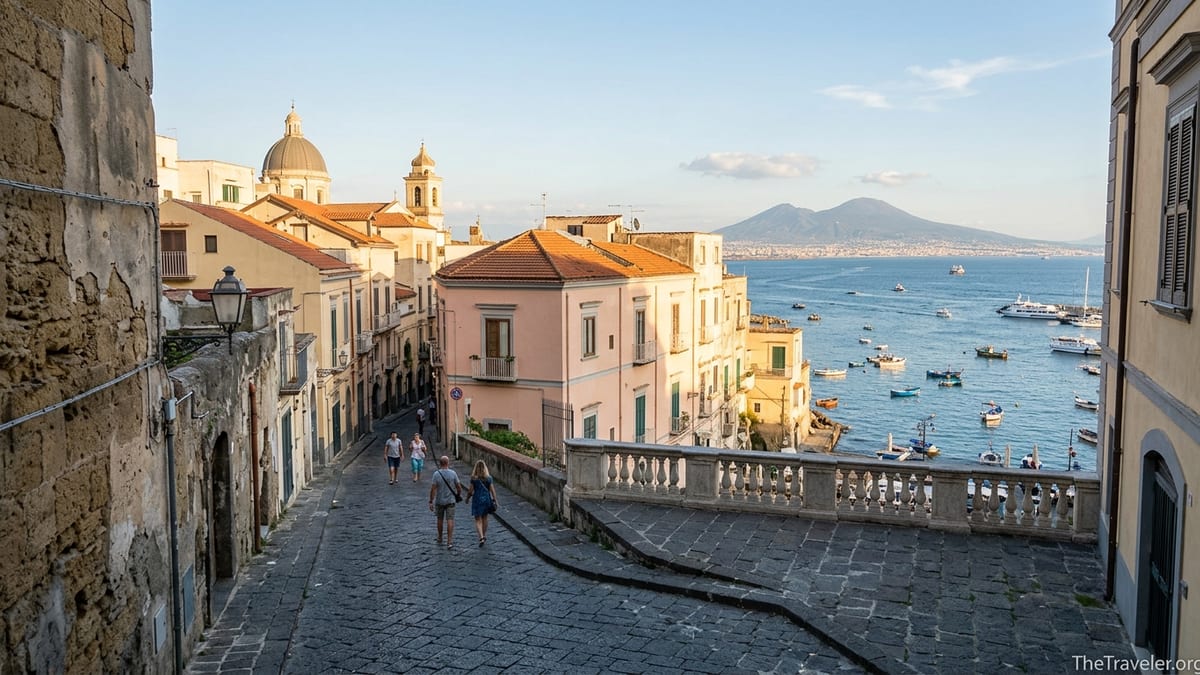
Rione Terra is the oldest inhabited nucleus of Pozzuoli, about 30 minutes west of central Naples by regional train. Archaeologically, it corresponds to the acropolis of the Greek colony of Dikaiarkhia and later the Roman port city of Puteoli, founded in the 2nd century BC. Today, the headland is a compact walled quarter that rises steeply from the waterfront, with narrow lanes, pastel facades and sweeping views over the bay, the island of Ischia and, on a clear day, the outline of Vesuvius across the water.
The district has had a turbulent modern history. In 1970, after decades of ground uplift linked to the Campi Flegrei volcanic system, the Italian authorities evacuated the residents and declared the area unsafe. Entire streets were abandoned. Over the following decades, extensive stabilization, restoration and archaeological excavation transformed Rione Terra from a ghost neighborhood into a curated urban and underground site that reopened gradually to visitors from 2014 onwards.
Today, when you step through the main gate, you move through several layers of time at once: remnants of Roman streets and shops preserved in the basements, a cathedral literally wrapped around a Roman temple on the summit, and reconstructed residential blocks that echo the twentieth century neighborhood that stood here before evacuation. The combination of lived-in city, ruin and museum makes Rione Terra very different from a conventional archaeological park such as Pompeii.
The scale is compact. You can wander the upper streets in under an hour, but most visitors combine this with the underground archaeological route and the cathedral, turning it into a substantial half‑day excursion from Naples or a full day when paired with other Pozzuoli or Campi Flegrei sights.
Highlights: What You Will Actually See
The main draw is the underground archaeological route, a guided walk through the buried Roman city beneath the modern quarter. Access is usually only possible on a guided tour organized through the local cultural agencies or booked at the on‑site infopoint inside the gate. The route brings you along a decumanus (main street) of ancient Puteoli, past the remains of tabernae (shops), warehouses and courtyards. In several places, you can clearly see how later buildings were constructed directly on top of Roman walls, giving a tangible sense of how the headland has been reused for two millennia.
Above ground, the star attraction is the Cathedral of San Procolo, also called Pozzuoli Cathedral. It occupies the footprint of the former Temple of Augustus, whose colonnade and cella were incorporated into a Baroque church in the seventeenth century. Inside, sections of glass flooring reveal the original Roman marble pavement and column bases, while side chapels display paintings by Neapolitan masters. For many visitors used to seeing temples and churches as separate monuments, this fusion of pagan and Christian architecture is a revelation.
As you explore the narrow alleys and belvederes, you will find several viewpoints that alone justify the visit. From the western terraces you can look down over the harbor, with ferries shuttling to Procida and Ischia, while the circular outline of the nearby Flavian Amphitheatre emerges among modern apartment blocks. On clear afternoons, photographers capture the sun dropping behind Cape Miseno and the islands, with the pastel houses of Pozzuoli framing the foreground.
There is also a newer practical feature that makes Rione Terra easier to include in a day of sightseeing: an elevator, opened in 2023, links the cliff‑top quarter with the lower city and waterfront. This saves the stiff climb via staircases such as those near Porta Napoli and makes the site more accessible for visitors who are less mobile or traveling with small children.
How to Visit from Naples: Logistics, Time and Costs
From central Naples, most travelers reach Pozzuoli by regional train. The Cumana and Metro Line 2 services both run from stations such as Montesanto or Napoli Piazza Garibaldi to Pozzuoli in roughly 25 to 35 minutes, with relatively frequent departures on weekdays. From Pozzuoli station, it is about a 10 to 15 minute walk through the modern center to the base of Rione Terra, where you can either climb the steps or use the elevator up to the main gate.
The above‑ground streets of Rione Terra can generally be entered freely during daytime hours, similar to walking into a historic quarter. The underground archaeological route and access inside the cathedral, however, usually require a guided tour. As of 2025, tours are often scheduled on weekends and selected weekdays, with advance booking recommended during high season. Tour prices tend to be moderate by European standards, typically comparable to the cost of a museum ticket in Naples, and sometimes include both the underground path and the cathedral in a combined visit.
In practical terms, visitors staying in Naples can comfortably allocate a half day door‑to‑door for Rione Terra. A common pattern is to depart Naples mid‑morning, explore Rione Terra late morning to early afternoon, then have a leisurely lunch in one of Pozzuoli’s seafood trattorias along the waterfront before returning to Naples. Another option is to combine Rione Terra with the nearby Flavian Amphitheatre or the Solfatara area, though access to Solfatara itself has been restricted in recent years for safety reasons.
For budget planning, it is sensible to factor in train fares from Naples to Pozzuoli, which are usually only a few euros each way, plus the cost of the guided visit. Travelers on a tight schedule might opt simply to stroll the quarter and enjoy the views at no cost, but this would mean missing the underground layers that make the site unique. If you have to choose, prioritize funding the guided route, as the free exterior walk can usually be fit in around it.
Is It Safe to Visit? Understanding the Campi Flegrei Context
Rione Terra lies within the broader Campi Flegrei (Phlegraean Fields) volcanic area, which has experienced renewed ground uplift and frequent small earthquakes since the mid‑2000s. Scientific studies in recent years describe this as a phase of “bradyseism,” a slow rise and sometimes fall of the ground caused by pressure changes deep below the surface. Research published between 2024 and 2026 notes that the bradyseismic phase has continued, with uplift concentrated around Pozzuoli and the Solfatara‑Pisciarelli hydrothermal field.
For residents, this means periodic shaking and a strong focus on civil protection planning. For visitors, the key point is that the Italian Civil Protection Department and the national volcanology institute continuously monitor seismic activity, gas emissions and ground deformation. Alert levels and evacuation plans are managed at a regional and national level. When you visit Rione Terra or any other site in Campi Flegrei, you are entering an area whose risks are studied intensively and communicated through official channels.
As of mid‑2026, the main identified risk is seismic rather than an imminent large eruption, but the system is dynamic and conditions can evolve. Travelers should therefore take a pragmatic approach: before planning a visit, check recent news coverage from reliable Italian or international outlets and consult civil protection communications for any changes in alert status or access restrictions. Local tour operators and hotel staff in Naples and Pozzuoli can also provide up‑to‑date practical information; they are used to responding quickly when authorities adjust safety protocols.
On the ground, you may notice signage explaining evacuation routes or see information boards about the volcanic context. These are part of long‑term risk education efforts and should not necessarily be read as signs of immediate danger. If you are particularly anxious about volcanic hazards, you might prefer to prioritize less exposed day trips such as Caserta or the Amalfi Coast. But for most visitors, a well‑informed visit to Rione Terra within current safety guidelines is considered an acceptable risk, comparable to visiting other cities located near active volcanic systems.
Who Will Find Rione Terra Worth the Trip?
Rione Terra is especially rewarding for travelers with a strong interest in archaeology, urban history and off‑beat cityscapes. If you have already visited Pompeii or Herculaneum and are curious about how an ancient port evolved into a layered modern town, this site offers a more intimate, three‑dimensional experience. Walking through the underground decumanus while knowing that today’s pastel houses stand just above you is a powerful illustration of continuity and change that you rarely feel in a more “frozen” ruin.
Photographers and slow travelers tend to love the mood of Rione Terra. The tight lanes, sun‑bleached walls and frequent glimpses of the sea make it a fertile ground for street photography and architectural details, especially in late afternoon light when the stone takes on warm tones. Compared with the crowds at central Naples viewpoints such as Castel dell’Ovo, the terraces at Rione Terra are often much quieter, so you can linger over compositions without constantly jostling for space.
Culturally inclined visitors appreciate the way the cathedral reuses the Temple of Augustus, a concrete example of how Roman imperial cult architecture was reinterpreted by Christian builders. You can stand under the coffered nave and look past Baroque altars to see surviving Roman columns and entablature, making the building itself a mini lesson in how religious and political power shifted in the region over centuries.
On the other hand, if your priorities in Naples are primarily food, nightlife and classic postcard sights, and you only have two or three days in the city, Rione Terra may not be essential. You might find more immediate satisfaction in wandering the historic center, taking a day trip to Pompeii, or heading down the coast to Sorrento. Rione Terra comes into its own for travelers who have at least one extra day to explore the wider Bay of Naples beyond the standard circuit.
Practical Tips for a Smooth Visit
The experience at Rione Terra can vary depending on timing and expectations, so a bit of planning pays off. Many visitors report that morning tours of the underground route tend to be quieter than midday or late afternoon, particularly at weekends. If your schedule allows, aim to arrive in Pozzuoli by late morning, secure your tour slot at the infopoint if you have not already booked, and then explore the streets and viewpoints while you wait.
Footwear is important: the underground paths involve uneven stone floors, occasional steps and some slightly confined passages. Comfortable closed shoes are strongly recommended over sandals. In summer, temperatures in the tunnels can feel cooler than the outside heat, but humidity is often high, so light layers you can adjust are ideal. Above ground, there is limited shade on some of the open terraces, so sun protection and water are essential from late spring to early autumn.
Language is a practical consideration. While the site’s official information panels are often bilingual, the availability of fully English‑language guided tours can change from season to season depending on staffing and demand. Some visitors report mixed‑language groups in which the guide alternates between Italian and English. If you do not speak Italian, it is worth asking when booking whether your tour will include explanations in your language or whether audio guides are available.
Because Pozzuoli is a living town rather than a resort, services such as supermarkets, pharmacies and cafes are readily available a short walk from Rione Terra. For lunch, many travelers choose seafood restaurants along the waterfront or simple trattorias in the streets around Piazza della Repubblica. A typical meal of fried local fish, a pasta dish and house wine will often cost less here than in the tourist‑heavy quarters of central Naples, making a Rione Terra day trip comparatively good value.
The Takeaway
So is Rione Terra in Pozzuoli worth visiting during a trip to Naples? For travelers interested in the deep history of the Bay of Naples, the answer is generally yes. The quarter offers a rare blend of archaeological depth, dramatic coastal views and a lived‑in atmosphere that complements rather than duplicates the experience of Pompeii or the Naples city center. The underground route and the temple‑cathedral alone make it stand out among Italian small‑scale sites.
However, Rione Terra is not a must‑see for everyone. If you only have a couple of days in Naples and have not yet seen the headline sights, you may reasonably choose to focus your limited time elsewhere. The site also sits within a volcanically active area, so it demands a willingness to stay informed about current seismic conditions and to accept that access plans could change at short notice.
If you have at least three full days in the region, enjoy slower, more atmospheric places and are curious about how ancient and modern Naples fit together, building a half day in Rione Terra into a Pozzuoli excursion is a thoughtful way to expand your understanding of the area. Arrive with realistic expectations, a bit of research on current conditions and a flexible schedule, and you are likely to find the experience both memorable and quietly absorbing.
FAQ
Q1. How long do I need to visit Rione Terra from Naples?
Most visitors should allow about half a day door‑to‑door. This typically includes 30 to 40 minutes each way on the train between Naples and Pozzuoli, time to walk up to the quarter or use the elevator, a guided visit of the underground route and cathedral, and some unstructured time to wander the streets and enjoy the views. If you also plan to visit the Flavian Amphitheatre or have a long lunch on the waterfront, you can comfortably fill a full day.
Q2. Do I have to book a guided tour in advance?
Access to the underground archaeological route and, in many cases, the cathedral interior is generally organized through guided tours with limited group sizes. Advance booking is strongly recommended in high season and on weekends, when slots can sell out. Outside peak times, you may still be able to sign up at the infopoint inside Rione Terra on the day, but this depends on current schedules and staffing. If the underground route is a priority for you, securing a place before traveling is wise.
Q3. Is Rione Terra suitable for children and people with limited mobility?
Families often enjoy the mix of tunnels, viewpoints and visible layers of history, but the underground paths involve uneven surfaces, steps and some narrow passages, which can be challenging with strollers or for visitors with reduced mobility. The modern elevator between the lower town and the headland eases the steep climb, and the upper streets are relatively short and manageable, though still paved with stones and slight slopes. If mobility is a concern, it is sensible to check current accessibility details with the site managers or tour organizers before booking.
Q4. What should I wear for a visit to Rione Terra?
Comfortable closed shoes with good grip are the most important item, as you will be walking on uneven stone floors both above and below ground. In summer, light clothing, a hat and sunscreen are recommended for the exposed terraces, while a light layer may be useful in the cooler, sometimes humid underground sections. Because you may visit the cathedral, bringing clothing that covers shoulders and knees or a simple cover‑up is a respectful choice in line with local customs for religious sites.
Q5. Can I visit Rione Terra on the same day as Pompeii?
It is technically possible but not ideal. Pompeii alone can absorb a full day of energy, especially in warm weather. Adding the trip out to Pozzuoli and Rione Terra on the same day would mean several hours of combined train travel and risk turning both visits into a rushed checklist. If your time is limited to one or two days, most travelers are better off choosing either Pompeii or a Pozzuoli and Rione Terra day, rather than combining them.
Q6. Are there good places to eat near Rione Terra?
Yes. One of the advantages of visiting Pozzuoli is the concentration of seafood‑focused restaurants along the harbor and in streets just below Rione Terra. Menus commonly feature local catches prepared simply, along with Neapolitan classics such as spaghetti alle vongole and fried calamari. Prices are often slightly lower than in the most touristy parts of central Naples, and you can choose between casual trattorias and more polished dining rooms depending on your budget.
Q7. Is it safe to visit given the current Campi Flegrei activity?
As of mid‑2026, the Campi Flegrei area, including Pozzuoli, is under close scientific and civil protection monitoring because of ongoing bradyseism and frequent small earthquakes. Authorities adjust alert levels and local measures as needed. For a typical visitor, the practical approach is to check recent official information and news before traveling, follow any on‑site instructions or restrictions, and be aware that plans may change at short notice. Many tourists and residents go about their daily lives in the area, but each traveler should assess their own comfort level with the background risk.
Q8. Will I find English spoken at Rione Terra?
In Pozzuoli and Rione Terra, you are more likely to encounter Italian as the default language than in central tourist districts of Naples, but staff at the infopoint and guides for organized tours often have at least basic English. The availability of fully English‑language tours can vary by season. If language is a concern, asking specifically about English explanations when booking or choosing tours advertised as bilingual will help ensure you get the most from your visit.
Q9. When is the best time of day and year to go?
Spring and early autumn are generally the most pleasant seasons, offering milder temperatures and softer light, which is kinder for both photography and long walks. In high summer, morning visits are preferable to avoid peak heat on the exposed headland. Late afternoon can be beautiful for views and photos, but tour schedules for the underground route may be more limited later in the day, so it is important to check current timetables.
Q10. How does Rione Terra compare to other nearby sites like Baia or Cuma?
Rione Terra is more compact and urban in character than the larger archaeological complexes of Baia or Cuma. Where Baia impresses with sprawling bath complexes and submerged ruins, and Cuma with its acropolis and coastal vistas, Rione Terra offers the experience of a historic neighborhood layered directly above its Roman predecessor, complete with a functioning cathedral and lived‑in surroundings. If you are particularly drawn to cityscapes and the idea of past and present coexisting in a tight space, Rione Terra will likely appeal; if you prefer wide open ruins and countryside settings, Baia and Cuma might rank higher for you.