


On the Bay of Naples, two very different historic hearts compete for travelers’ attention: the vast, lived-in streets of Naples’ UNESCO-listed centro storico and the compact acropolis of Rione Terra in nearby Pozzuoli. Both promise ancient stone, tight alleyways and sea air, yet the feeling on the ground could not be more different. Understanding those differences is key if you have limited time and want the experience that will feel most unique to you.
Get the latest updates straight to your inbox!
Two Ancient Worlds a Short Train Ride Apart
Naples’ historic center stretches across more than a thousand hectares and has been continuously shaped over roughly 2,700 years of history. Walking along Spaccanapoli or Via dei Tribunali, you are literally following the grid laid out by the Greeks and later overbuilt by Romans, medieval dynasties and Baroque church builders. The UNESCO designation covers an area dense with palaces, monasteries and everyday apartment blocks, all piled on top of older layers that still surface in courtyards, crypts and underground tours.
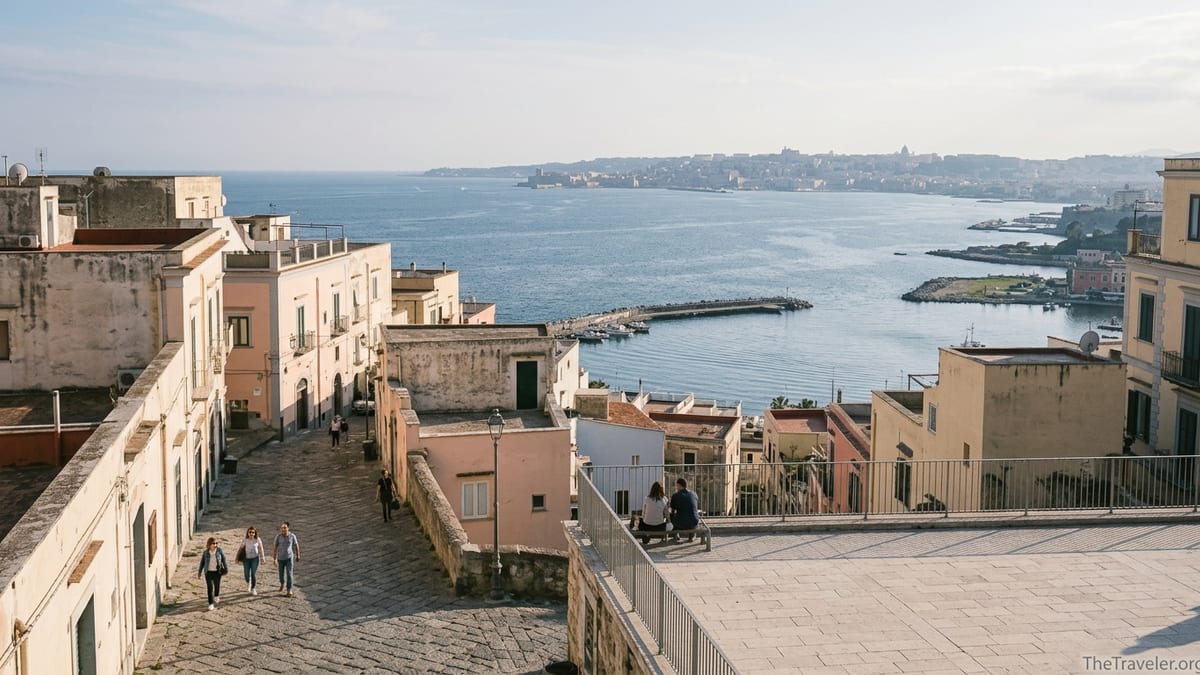
Rione Terra, by contrast, is tiny and sharply defined. It is a fortified promontory that was the original core of Pozzuoli, inhabited since at least the 2nd century BC. Today the upper level is a quiet, rebuilt borgo crowned by the cathedral, while beneath it runs an archaeological maze of Roman streets, workshops and warehouses from ancient Puteoli, preserved and opened to visitors as a guided underground itinerary.
In practical terms, that means Naples’ center feels like a sprawling, chaotic city that happens to be historic everywhere you look, while Rione Terra feels like entering a single, self-contained archaeological citadel. If you stay in Naples, you can reach Pozzuoli on the Cumana or Metro Line 2 in around 30 minutes, then walk uphill from the harbor to the Rione Terra gate, so it is feasible to experience both in one day and decide which atmosphere speaks more to you.
Travelers often combine Rione Terra with a visit to Pozzuoli’s Flavian Amphitheater or a late lunch on the seafood terraces along the harbor, then return to Naples for an evening wandering past San Gregorio Armeno or Piazza Bellini. The contrast between places on the same day can be striking: one minute you are in a hushed underground Roman street in Pozzuoli, the next in a packed Neapolitan alley where scooters and church bells compete with pizza ovens and buskers.
What Feels Unique About Rione Terra
The single most distinctive feature of Rione Terra is its layered verticality. You stand on a modern stone lane lined with freshly restored pastel buildings, then descend by stair or elevator into a shadowy Roman city frozen beneath your feet. The guided underground route threads past tabernae, storerooms, paved streets and the remains of an Augustan temple whose podium supports the current cathedral above. The sensation of moving through a compact slice of ancient Puteoli, perfectly aligned with the current street grid, is hard to find elsewhere.
Because the quarter was evacuated in the 1970s due to seismic instability, it was left in limbo for decades and only gradually reopened to visitors after major consolidation and restoration work. As a result, unlike the lively but crowded streets of central Naples, Rione Terra often feels uncannily quiet. On a weekday morning, you might hear only the sound of gulls and distant church bells as you look out over the Bay of Naples toward Capri and the islands of the Phlegraean Gulf. That eerie stillness, combined with the visible scars of past abandonment, gives the place an atmosphere that is more contemplative than urban.
Another unique aspect is how curated the experience is. Entry to the underground itinerary is normally by timed, small-group tour with a local guide. Expect to pay a modest fee per person, often similar to what you would pay to enter a mid-sized Italian archaeological site. The guide will typically point out details you might miss alone: grooves from chariot wheels in the basalt paving, soot traces on shop ceilings, reused architectural fragments embedded in later walls. You are not simply walking around ruins; you are taken along a precise storytelling path from Roman commercial hub to Christian bishopric and beyond.
Above ground, the acropolis feels almost stage-like, but in a way that serves the sense of place. The cathedral façade integrates the remains of the Roman temple, and the main terrace near the former Palazzo Migliaresi opens onto a panoramic belvedere over the harbor and volcanic coastline. At sunset, this terrace can feel like a private balcony on the Bay of Naples, with far fewer people than the crowded lookouts in the city.
What Feels Unique About Naples’ Historic Center
If Rione Terra is a curated acropolis, Naples’ centro storico is the raw, noisy opposite: a lived-in city where history is embedded in daily life. UNESCO singled it out not only for its monuments but also for the way the ancient street layout is still used and inhabited. You experience that most vividly on Spaccanapoli and Via dei Tribunali, where narrow lanes are packed with laundry lines, shrines, tiny produce shops, and queues at famous pizzerias. It feels less like an “attraction” and more like being dropped into an ongoing story.
Uniqueness here comes from density and contrast. Within a 10-minute walk you can pass Gothic Santa Chiara with its cloister, the Baroque explosion of Gesù Nuovo, an artisan workshop carving nativity figures on Via San Gregorio Armeno, and a doorway that leads down to the tunnels of Napoli Sotterranea, where cisterns and war shelters lie under the same streets. Few European centers let you stack that many layers in such a short wander.
The food culture of the historic center is another point of difference. You can grab a folded pizza a portafoglio from a street stand for just a few euros, sip an espresso at the counter of a standing-only bar, then sit down for a plate of pasta alla genovese in a simple trattoria that looks unchanged since the 1960s. Between these staples, stalls sell fried cuoppo cones of seafood or vegetables, and bakeries offer sfogliatelle still warm from the oven. Even compared with other Italian cities, the concentration of inexpensive, high-quality street food in these medieval streets is distinctive.
Finally, the sense of being in a place that is both gritty and magnificent is part of what many travelers find uniquely Neapolitan. Crumbling stucco, graffiti and chaotic traffic sit next to marble altarpieces, opera posters and students spilling out of university buildings. It is not a polished, museum-like center. That very lack of polish, together with locals using the same streets you do, sets it apart from more manicured historic districts elsewhere in Italy.
Atmosphere, Crowds and Pace: Which Feels More Special?
From an experiential point of view, the biggest difference is intensity. The historic center of Naples is intense almost by definition. Expect crowded sidewalks around Via Toledo and Piazza Dante, scooters squeezing past you in backstreets, noise from markets like the Pignasecca, and regular jostling whenever you queue for a popular pizzeria or gelato shop. For some visitors this energy is thrilling and feels like the most memorable part of their trip; for others, it can be overwhelming after an hour or two.
Rione Terra feels like a pressure valve in comparison. Visitor numbers are naturally limited by the guided-tour format underground and the small size of the upper borgo. Even when several groups are scheduled on the same morning, you are unlikely to feel packed in as you might in a major museum. The pace is deliberate: you follow the guide, pause at explanatory points, emerge for sea views, then drift lazily back down into Pozzuoli for a plate of fresh fish or a coffee overlooking the harbor.
If you are sensitive to crowds or traveling with young children or older relatives, that calm, bounded environment may make Rione Terra feel more special, almost like a private discovery. The lack of souvenir shops within the acropolis and the relative scarcity of big tour groups enhances that sense of being slightly off the main tourist conveyor belt.
On the other hand, if your idea of a unique trip involves being swept up in local life, hearing Neapolitan dialect shouted across balconies, and watching football celebrations spill into narrow streets, the centro storico delivers that in a way Rione Terra cannot. Its uniqueness lies precisely in that mix of living city and antiquity.
Practicalities: Access, Logistics and Costs
Access is another dimension where the two experiences diverge. Naples’ historic center surrounds you as soon as you step out of many central metro stations or walk from the main train hub. Staying near Piazza Dante, Museo or Università stations puts you within an easy stroll of most major churches, underground tours and food spots. Because you do not need tickets simply to walk around, the main cost is what you choose to spend on sites and food. Underground tours like Napoli Sotterranea or the Bourbon Tunnel charge moderate admission fees, but wandering the streets is free.
Reaching Rione Terra requires a bit more planning. From central Naples, you can take the Cumana or Metro Line 2 toward Pozzuoli and walk from the station through the modern town up to the acropolis. Once there, you generally need to reserve a visit for the underground itinerary, often via a local tourist office or booking platform, particularly on weekends and in high season. The tour price is typically comparable to or slightly less than what you might pay to enter a famous archaeological park in the region.
Opening hours in Rione Terra can be more limited than in the city center, often concentrated in mornings or early afternoons. That matters if you are structuring a day trip: many travelers visit the underground route in late morning, have lunch at one of the seafood restaurants lining Pozzuoli’s seafront, then either explore the nearby amphitheater or head back to Naples. The more constrained schedule means your time there naturally becomes a focused “event” in your itinerary, which can add to its perceived uniqueness.
Costs on the ground also differ subtly. In Naples’ historic center, you will find everything from one-euro espresso and affordable slices of pizza to more expensive dining rooms popular with food media. In Pozzuoli, particularly along the harbor below Rione Terra, seafood menus can be good value compared with central Naples, especially at lunch, though prices rise at places with the best views. For budget-conscious travelers, a day that mixes Rione Terra with a simple seaside meal can feel like good value relative to a full day of paid attractions in the city.
Types of Travelers: Who Will Value Which Experience Most?
Archaeology enthusiasts and travelers who love narrative, guided experiences often find Rione Terra the more unique of the two. If you have already seen Pompeii or Herculaneum, the appeal here is not scale but intimacy and vertical layering: an entire Roman quarter hidden beneath a later town, with a clear explanation of how the layers fit together. The quiet acropolis and the visual of the cathedral standing on a Roman temple podium make it especially memorable for visitors interested in how pagan and Christian eras intersected.
Photographers and travelers who prioritize dramatic views may also favor Rione Terra. The vantage points from the upper terraces take in the curve of Pozzuoli’s waterfront, the outlines of volcanic cones in the Phlegraean Fields and, on clear days, wide sweeps of the Bay of Naples. Because there are fewer crowds and less visual clutter from traffic, it is easier to capture uncluttered shots of stone walls, sea and sky than in the dense streets of the city.
By contrast, travelers seeking a sense of urban authenticity and nightlife will probably consider Naples’ historic center the more unique experience. Evening in the streets around Piazza Bellini, for example, brings out a mix of students, locals and visitors spilling into the open air, with live music and bars tucked into historic buildings. The sense that you are in a functioning southern Italian city, rather than a district preserved mainly for visitors, is strongest here.
First-time visitors to Italy who want a single place that embodies the country’s contradictions may also find the centro storico more essential. Between its churches, street shrines, market chaos and affordable food, it gives a concentrated taste of the broader region. Rione Terra then works best as a second-layer discovery for those who have the time or curiosity to explore beyond Naples itself.
Safety, Comfort and Accessibility Considerations
For many travelers, perceived safety and comfort shape what feels truly enjoyable. In Naples’ historic center, you will need to be alert for petty theft around crowded areas, metro stations and busy shopping streets. This usually means taking standard big-city precautions: keeping bags zipped and in front of you, avoiding displaying expensive watches or phones in dense crowds, and being cautious if strangers engage you insistently on the street. Most visitors who follow this advice report feeling safe, even when walking after dark along well-trodden routes.
Rione Terra, because of its contained layout, usually feels calmer and more controlled. Access to the underground route is supervised, there are fewer people moving through, and most of them are on the same guided visit you are. The upper level, while open, is small enough that you are always close to an exit and staff presence feels visible on tour days. For solo travelers who are nervous about large, chaotic crowds, this can make the experience feel more relaxed and secure.
In terms of physical accessibility, Naples’ centro storico can be challenging: narrow sidewalks, cobblestones, uneven pavement and frequent steps. Some churches and underground sites have lifts or adapted routes, but spontaneity is limited if you use a wheelchair or have serious mobility issues. Rione Terra also involves cobblestones and stairs, especially in the underground portion, so it is not an easy-access site, but the guided nature of the tour means staff can often advise in advance whether a particular visitor will be comfortable with the route.
Weather plays a role too. In the hot months, the shaded, cool underground passages of Rione Terra can be a welcome relief compared with standing in queues or sun-exposed piazzas in Naples. Conversely, in heavy rain or on days with limited tour schedules, the flexibility of the city center and its abundance of indoor options, from churches to small museums, makes it a more forgiving choice.
The Takeaway
If you measure uniqueness by intensity, density of sights and immersion in a living southern Italian city, Naples’ historic center is hard to beat. It concentrates centuries of architecture, religion and everyday life into a walkable grid that feels endlessly layered and full of surprises, especially for first-time visitors. The food, the noise and the juxtaposition of sacred and secular make it one of Europe’s most vivid urban experiences.
If, however, you define a unique experience as one that feels slightly secret, tightly framed and highly interpretive, Rione Terra in Pozzuoli may stand out more in your memory. The sensation of walking under a town through Roman streets, then emerging onto quiet terraces above the sea, gives it a distinct character even within a region rich in archaeological sites.
For travelers with enough time, the most rewarding choice is not to pick one over the other but to use them as counterpoints. Spend a day immersed in Naples’ centro storico, tasting its street food and ducking into churches, then escape to Rione Terra for a half-day focused on vertical history and coastal views. Experiencing both lets you understand that the Bay of Naples is not just a backdrop but a mosaic of very different historic hearts, each unique in its own way.
FAQ
Q1. Is Rione Terra worth visiting if I am already seeing Pompeii or Herculaneum?
Yes, because Rione Terra offers a different experience: a compact underground Roman quarter directly beneath a later town, combined with sea views from a small acropolis. It feels more intimate and curated than the large open-air ruins at Pompeii or Herculaneum.
Q2. How much time should I plan for Rione Terra compared with Naples’ historic center?
Most visitors spend about two to three hours at Rione Terra, including the underground tour and a short walk around the upper borgo. Naples’ historic center can easily fill a full day or more, as the area is large and packed with churches, markets and food stops.
Q3. Can I visit Rione Terra as a day trip from Naples without a car?
Yes. You can reach Pozzuoli from central Naples by regional train or urban rail lines and then walk up to Rione Terra from the station or harbor. Many travelers combine it with lunch on the Pozzuoli waterfront before returning to Naples in the afternoon or evening.
Q4. Which area is better for first-time visitors to Italy?
For a first trip to Italy, Naples’ historic center is usually the better base, because it offers more accommodation choices, major sights, food options and transport links. Rione Terra is then an excellent half-day excursion once you are comfortable navigating the region.
Q5. Is one of the two areas noticeably safer than the other?
Both areas are generally safe for visitors who use normal big-city precautions. Naples’ historic center is busier and attracts more petty theft, so you should be especially careful with bags and phones in crowded streets and on public transport. Rione Terra feels calmer and more controlled due to its small size and guided-tour format.
Q6. Do I need to book Rione Terra in advance?
It is wise to reserve ahead for the underground itinerary, especially on weekends and in peak season, because access is often via timed, small-group tours. The upper borgo may be open for free wandering, but the most distinctive part of the visit is the guided route beneath the surface.
Q7. What kind of footwear and clothing are best for these areas?
For both Rione Terra and Naples’ historic center, choose comfortable, closed shoes with good grip due to cobblestones and uneven paving. Layers are useful because the underground areas at Rione Terra and in Naples can feel cool even in summer, while surface streets may be hot and sunny.
Q8. Are there good food options near Rione Terra and in the historic center?
Yes. Around Rione Terra, the seafront of Pozzuoli is lined with restaurants serving local seafood and simple Campanian dishes, often at good value. In Naples’ historic center, you will find famous pizzerias, street-food stalls and traditional trattorias within a few minutes’ walk of most major sights.
Q9. Which experience is better for families with children?
Families who want space to wander and flexible meal times may find Naples’ historic center more convenient, thanks to playgrounds, gelato stops and many casual eateries. However, children who are fascinated by underground passages and “hidden cities” often enjoy the guided visit at Rione Terra, provided they can manage the stairs and duration of the tour.
Q10. If I have only one day in the area, should I choose Rione Terra or Naples’ historic center?
If you have just one day and have never been to Naples, the historic center is usually the more comprehensive and iconic choice, giving you a full picture of the city’s character. If you have already seen central Naples or strongly prefer quieter, more structured archaeological visits, dedicating that day to Rione Terra and Pozzuoli can feel like a more distinctive, off-the-beaten-path experience.