


Rome has never been more popular. The city set tourism records again in 2024, with more than 22 million arrivals and over 51 million overnight stays, and 2025 is on track to be just as busy. Crowds at the Colosseum and Trevi Fountain have exploded compared with a decade ago, and frustrated residents increasingly speak of living in a theme park. Yet at the same time, Rome continues to offer moments of profound beauty and everyday life that feel untouched by mass tourism. So is the Eternal City still worth visiting, or has tourism changed the experience too much?
Get the latest updates straight to your inbox!
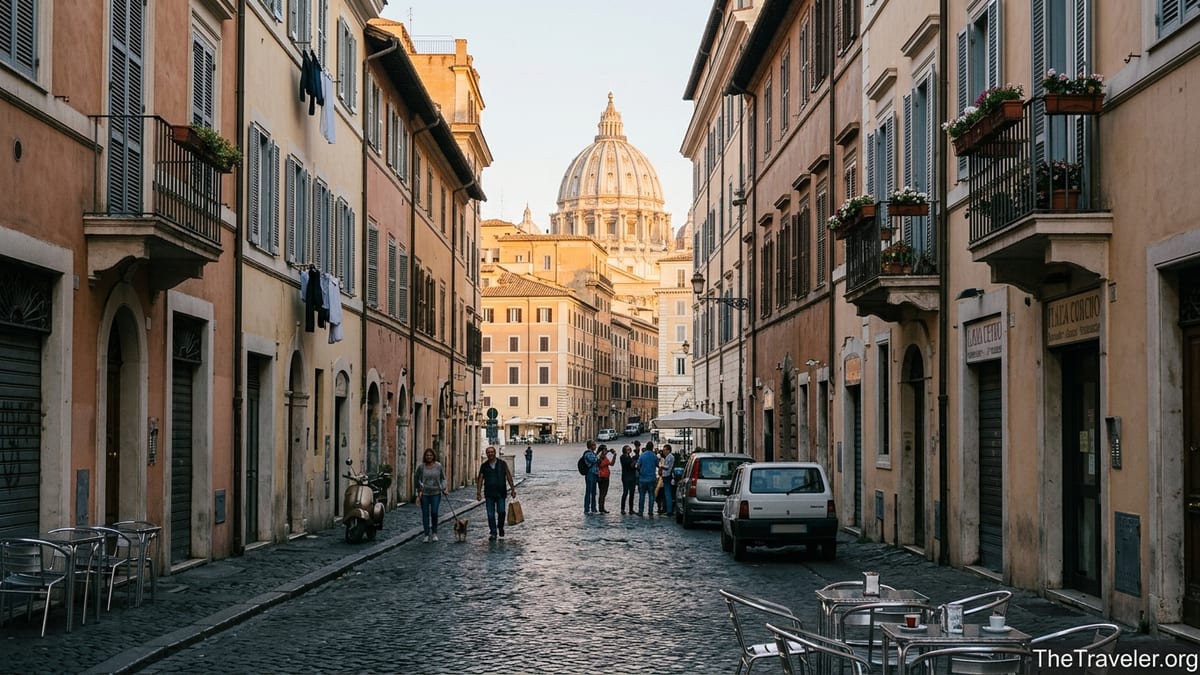
The Scale of Tourism: What Has Actually Changed in Rome
Tourism in Rome has not just recovered from the pandemic; it has surpassed previous records. Local tourism bodies report that 2024 was a historic high, with roughly 22 million visitors and over 51 million overnight stays in the city’s accommodation sector. That is several million more than the previous record set in 2019, and the trend has continued into 2025. For individual landmarks, the growth has been even more dramatic. The Colosseum archaeological park, which includes the amphitheater, Roman Forum and Palatine Hill, counted close to 15 million visitors in 2024 compared with about 5 million in 2012, a threefold increase over just a dozen years.
This surge is not evenly spread across the city. Instead, it concentrates in a handful of hyper-famous sites. Midday in high season, you are likely to find shoulder-to-shoulder crowds around the Trevi Fountain, Piazza di Spagna, Piazza Navona and the streets leading to the Pantheon. On summer afternoons, Via dei Fori Imperiali can feel like a slow-moving river of tour groups following colored flags. Meanwhile, entire neighborhoods just a 15-minute tram ride away still see relatively few foreign visitors, and even in the historic center, residential side streets can feel surprisingly calm once you turn away from the main monuments.
Rome’s tourism economy also now runs year-round, with only a brief lull in January and early February. Christmas markets, New Year’s festivities and the Catholic Jubilee that began in late 2024 have stretched high season deep into winter. For visitors, that means it is no longer safe to assume that “November will be quiet” or “midweek will be empty” in the old center. Many travelers who last visited Rome 10 or 15 years ago are surprised by how much busier it feels at almost any time of year.
Alongside the numbers, the character of tourism has changed. Group travel from North America and East Asia has rebounded strongly, budget airlines have multiplied weekend breaks from all over Europe, and short-term rental platforms have turned once-residential apartment blocks into de facto hotels. The result is a city center whose streets, shopfronts and even grocery stores increasingly cater to visitors rather than locals, especially in the narrow lanes around Campo de’ Fiori, Via del Governo Vecchio and the streets between the Pantheon and Trevi.
Overtourism on the Ground: Where It Feels Worst
The effects of overtourism are most visible in a few central zones. The area between the Trevi Fountain and the Spanish Steps has become one of the most crowded corridors in Europe in peak months. In the afternoons from roughly April through October, it can take 10 or 15 minutes to cover what would normally be a five-minute walk, as guided groups, selfie-takers and street vendors clog the narrow pavements. Queues form just to reach the edge of the Trevi’s basin for a photo, and residents now avoid using nearby streets as a simple way to get across town.
Rome has responded with new rules aimed at managing behavior rather than drastically cutting numbers. Sitting on the Spanish Steps is prohibited and can bring a fine of around 250 euros. Wading or sitting on the edge of the Trevi Fountain is also banned, with local police frequently patrolling to move people on. City politicians have even publicly floated the idea of limited, timed access or a small fee to reach the Trevi Fountain area, after scenes of dangerous overcrowding during the hottest weeks of summer. Around major events and during ongoing maintenance tied to the 2025 Jubilee, barriers and one-way flows have periodically been introduced to keep the crush of people moving.
Trastevere, once a mostly working-class neighborhood across the Tiber, shows another face of mass tourism. The squares around Piazza Trilussa and Piazza di Santa Maria in Trastevere now fill with bar terraces, souvenir stands and pub crawls most evenings. Residents and local newspapers regularly complain about late-night noise, public drinking and unlicensed short-term rentals, and police carry out periodic crackdowns, closing bars that violate rules or sanctioning dozens of irregular guesthouses in a single sweep. For an unsuspecting visitor staying in a charming apartment right above the main piazza, this can mean music and shouting outside your window until two or three in the morning on weekends.
Similar transformations are visible near Campo de’ Fiori, where a historic produce market has shrunk and the square feels more like an open-air bar district after dark, and in parts of the Monti district above the Colosseum, where once-local trattorie have shifted toward English-only menus, “Italian food” signboards and prices that target short-stay visitors rather than regulars. These changes do not make Rome unsafe, but they do alter the texture of daily life and can leave repeat visitors with the sense that the city has become more homogenous and commercial around its most famous corners.
What Rome Is Doing About It: Rules, Enforcement and Missed Opportunities
Compared with cities like Amsterdam or Barcelona, Rome’s response to overtourism has been cautious and incremental. There is no hard daily cap on visitors to the historic center, nor a citywide tax on day-trippers entering by coach. Instead, authorities have focused on targeted rules and symbolic measures. In addition to bans on sitting on the Spanish Steps and misbehaving at fountains, there are city ordinances against dragging wheeled suitcases down certain historic staircases, eating messy take-away food directly on monuments, or dressing in historical costumes and demanding money for photos without a license.
Enforcement is real but inconsistent. During summer 2024, local police visibly patrolled the Trevi Fountain area, Spanish Steps and Piazza Navona, issuing fines to people climbing into fountains or ignoring “no sitting” signs. Periodic blitz operations in Trastevere and near Termini station have led to the closure of non-compliant bars and the seizure of counterfeit goods from street vendors. Yet at the same time, visitors will still encounter aggressive rose sellers in restaurants, unofficial “gladiators” posing for photos near the Colosseum, and touts promoting bus tours in front of major basilicas.
On the accommodation front, Rome has introduced a city tax on overnight stays and a registration requirement for short-term rentals, but it has not gone as far as Venice, which has tested entry fees and strict caps on visitor numbers in certain periods. Complaints from local residents about being priced out of the center continue, and entire stairwells around Piazza Navona, the Ghetto and Trastevere now host more holiday apartments than full-time inhabitants. For visitors, this means a huge choice of places to stay, but also higher prices in peak months and fewer truly local neighborhoods inside the historic walls.
At the same time, the city is investing in infrastructure related to the Catholic Jubilee, from new underpasses near the Vatican to pavement repairs and refreshed lighting on several central streets. Short term, the construction has meant scaffolding at key sites and occasional frustration for tourists arriving in late 2024 and 2025 to find parts of the Trevi Fountain basin or sections of the Via della Conciliazione under wraps. Longer term, those projects aim to make walking routes safer and more pleasant. As a traveler, the key is to be prepared for temporary barriers or detours around some monuments and to treat them as evidence of a living city rather than a museum frozen in time.
Where Rome Still Feels Magical: Authentic Neighborhoods and Quiet Corners
Despite the crowds, much of Rome remains deeply rewarding if you know where to look and when to go. The same visitor who battles hundreds of people at the Trevi Fountain at 3 p.m. may, an hour later, find themselves nearly alone in the orange gardens of the Giardino degli Aranci on the Aventine Hill, looking out over church domes to St Peter’s. A few minutes’ walk away, the keyhole view of the dome through the gate of the Knights of Malta can still be enjoyed in relative calm if you arrive just after sunrise.
Whole neighborhoods offer a more balanced mix of residents and visitors. Testaccio, south of the Aventine, is a long-standing Roman working and middle-class district with a strong food culture. Here you will find places like the Mercato Testaccio, where stalls sell seasonal artichokes and puntarelle to locals doing their weekly shopping, right alongside casual lunch counters serving pasta alla gricia or cacio e pepe to office workers on their break. Prices tend to be several euros lower per dish than in tourist-heavy streets near Piazza Navona. A plate of carbonara at a traditional osteria in Testaccio might cost 13 to 15 euros instead of 18 to 22 in a similar-looking restaurant by the Pantheon.
In the eastern part of the city, the San Lorenzo district near the university and the emerging Pigneto and Tor Pignattara neighborhoods showcase a younger, more creative side of Rome, with independent cinemas, street art, live music and wine bars frequented mainly by locals. Accommodation here is cheaper than in the centro storico and the vibe in the evenings is more like that of a European student city than a global tourist hotspot. You are more likely to see chalkboards advertising poetry readings in Italian than signs for “happy hour Aperol spritz 2 for 1.”
Even within the historic center, there are pockets of calm. Early in the morning, the narrow lanes of the Jewish Ghetto and the area around Via Giulia often feel like a small town, with residents walking their dogs and shopkeepers sweeping the pavement. The climb up to the Capitoline Hill’s Piazza del Campidoglio and the adjacent viewpoint over the Forum is relatively uncrowded outside late morning. Churches such as Santa Maria in Aracoeli, Santa Maria sopra Minerva or Santa Cecilia in Trastevere remain quiet places to sit and absorb centuries of art and devotion, even when nearby streets are busy.
How Tourism Has Changed Everyday Experiences for Visitors
For travelers, the clearest impact of tourism’s boom is in practical experiences: queues, prices and the type of services on offer. Major sights like the Vatican Museums, the Colosseum and the Borghese Gallery now operate almost entirely on reserved timed tickets, and popular slots sell out weeks in advance between April and October. Turning up at the Vatican Museums without a pre-booked ticket on a June morning can mean joining a line that snakes several city blocks and may not even guarantee entry that day. Guided tours that include early access or special routes can cost 70 to 120 euros per person, prices that would have been unthinkable 15 years ago but are now standard in high season.
Eating out has also shifted. In the blocks between the Pantheon, Campo de’ Fiori and Piazza Navona, the concentration of tourist-oriented restaurants means you are likely to see laminated menus in six languages, spritzes priced at 12 or 14 euros and “service charges” added for outdoor seating. The food can still be enjoyable, but it often lacks the care and value found just a few streets away. Walk ten minutes into Prati, near the Vatican, or across the river into residential parts of Trastevere or Testaccio, and you are more likely to find trattorie where Roman families eat on Sunday, offering generous plates of amatriciana for around 11 to 14 euros and house wine by the carafe for 6 to 8 euros.
Short-term rentals have made it easier to stay in apartments with kitchenettes and terraces, but they have also pushed up prices in central districts. An apartment within a five-minute walk of Piazza Navona that cost 120 euros per night in the early 2010s can now easily list at 250 to 350 euros per night in May or September. Budget hotels and guesthouses near Termini station, which once offered simple doubles for 60 to 80 euros, often start closer to 120 to 150 euros for similar quality. That pressure has nudged more cost-conscious visitors to consider outer neighborhoods on Metro Line B or regional trains, changing the classic idea that “a trip to Rome means a room with a balcony in the centro storico.”
One positive evolution is the growth of more specialized tourism. Food tours focusing on traditional markets, Jewish-Roman cuisine, or regional wines; archaeological walks through less-known sites like the Appian Way; and bicycle tours along the Tiber or out into the countryside have all expanded. While some of these experiences are expensive, they can offer a more intimate and context-rich encounter with the city than a simple checklist of monuments. They also help distribute visitors slightly more widely, especially when they include stops in Testaccio, Ostiense or the suburban aqueduct parks.
Strategies to Experience a More Authentic, Less Stressful Rome
Rome is still profoundly worth visiting, but it is no longer a place where you can arrive in high season with no plan and expect an easy, uncrowded experience at the major sights. The key to enjoying the city today is to accept the reality of mass tourism and then work around it with timing, geography and expectations. One of the simplest tactics is to reverse your daily schedule. Visit headline monuments very early or late, and spend the crowded middle of the day in quieter neighborhoods, museums with timed entries, or long lunches in local trattorie.
For example, you might book the first Colosseum entry slot of the day, often around 8:30 a.m., and be walking along the arena floor before the big tour groups arrive. By 10:30 a.m., when the heat and queues are building, you could already be climbing the Palatine Hill’s shaded paths or heading by bus to Testaccio for an early lunch. Similarly, the Trevi Fountain is overwhelmingly crowded from mid-morning until late evening, but travelers who visit just after sunrise or close to midnight often describe a completely different atmosphere, where individual moments of reflection or photography are still possible.
Choosing accommodation carefully also makes a huge difference. If you want the charm of cobbled lanes without party noise, consider staying on the edges of well-known districts rather than in their central piazzas. A guesthouse in the quieter part of Trastevere uphill toward the Gianicolo, or an apartment along Via dei Banchi Vecchi between Campo de’ Fiori and the Vatican, can give you quick access on foot while shielding you from most of the nightlife. Alternatively, staying in Prati, San Giovanni or even the leafy area around Villa Borghese means you can commute 15 to 25 minutes by metro or bus to the sights but sleep in largely residential surroundings.
Another effective approach is to deliberately include lesser-known sites that offer depth without crush. Walking or cycling along the old Appian Way, where cypress trees line stretches of original Roman paving stones, gives a sense of ancient Rome that no crowd can erase. The catacombs along the same route, the aqueduct parks on the city’s outskirts, the Centrale Montemartini museum with ancient statues set among disused machinery, and smaller basilicas like San Clemente or Santa Sabina all provide memorable experiences with far fewer people than the Vatican Museums. Balancing one or two “big hits” each day with one quieter, off-the-radar visit can keep you emotionally and physically fresher.
The Takeaway
Rome in 2026 is not the same city that many travelers remember from the 1990s or even the early 2010s. Visitor numbers are higher, the central streets are busier, and commercial pressures from tourism are visible in everything from souvenir stands to late-night bars in Trastevere. Certain experiences, such as wandering spontaneously into the Vatican Museums or finding a budget room steps from the Pantheon, now belong more to nostalgia than to present reality.
Yet beneath the weight of tourism, Rome’s essential qualities remain remarkably resilient. Dawn light still washes over the Forum’s columns. Parish priests still say Mass in cool side chapels where only a handful of people gather. Roman families still argue over football at Sunday lunch in trattorie where nobody bothers to translate the menu. The city’s layers of history and daily life are simply too rich to be erased by even the most intense summer crowds.
If you approach Rome with realistic expectations, prepare for the logistics of busy sites, and consciously seek out its quieter corners and more local neighborhoods, the city can still deliver moments that feel deeply personal and transformative. Rather than asking whether tourism has ruined Rome, a better question might be whether you are willing to meet the Eternal City on its current terms: crowded, complicated, sometimes exasperating, but ultimately still extraordinary.
FAQ
Q1. Is Rome still worth visiting given the current level of tourism?
Yes. Rome is busier and more commercial around major sights than in the past, but its art, history, food and everyday neighborhoods still offer exceptional, often moving experiences if you plan carefully.
Q2. When is the best time of year to visit Rome to avoid the worst crowds?
The quietest periods are typically mid-January to early March and parts of November, outside major holidays or events. Late October and early April can be good compromises, with fewer crowds than high summer but still pleasant weather.
Q3. Which areas of Rome should I avoid if I do not like nightlife noise and tourist crowds?
If you want to sleep early, avoid staying directly on or immediately around Piazza Navona, Campo de’ Fiori, Piazza di Santa Maria in Trastevere, Piazza Trilussa and the streets right next to the Trevi Fountain and Spanish Steps.
Q4. Is it still possible to see the Trevi Fountain and Spanish Steps without huge crowds?
Yes, but timing is crucial. Visiting around sunrise or very late at night dramatically reduces crowds. During the day in peak season, expect dense crowds, periodic barriers and active police presence around both sites.
Q5. How far in advance should I book tickets for the Colosseum and Vatican Museums?
In high season, aim to book timed-entry tickets or tours at least two to four weeks ahead, longer for popular early-morning or after-hours options. In shoulder seasons, a week or two is often enough, but last-minute availability is no longer guaranteed.
Q6. Are there still authentic neighborhoods in Rome that feel relatively local?
Yes. Areas like Testaccio, parts of Trastevere away from the main piazzas, Prati, San Lorenzo and Pigneto retain strong local communities, everyday shops and restaurants where Italians outnumber tourists, especially outside peak summer weekends.
Q7. Have prices in Rome become unreasonable because of tourism?
Prices around headline sights have risen sharply, especially for central accommodation and restaurants on main squares. However, in more local neighborhoods you can still find fair-value trattorie, cafes and family-run hotels with moderate pricing by big-city European standards.
Q8. Is it better to stay in the historic center or in a residential district further out?
Both options work. Staying in the historic center offers convenience and charm but higher prices and more noise. Residential districts like Prati, San Giovanni or areas near Villa Borghese offer quieter nights, slightly lower prices and a more everyday Roman atmosphere, at the cost of a short commute to major sights.
Q9. What can I do to be a respectful visitor in a city struggling with overtourism?
Choose licensed accommodation, follow local rules at monuments and fountains, keep noise down at night, avoid littering, support businesses that serve locals as well as tourists, and consider visiting lesser-known sites and neighborhoods to spread your impact more widely.
Q10. If I have been to Rome before, is it still worth returning?
Yes. Repeat visitors often enjoy Rome more by skipping the busiest interiors and instead exploring different quarters, smaller museums, suburban archaeological parks and day trips to nearby towns, experiencing a side of the city that many first-time visitors never see.