


Ask ten travelers whether Rome or Florence leaves a bigger impact and you will likely hear ten passionate, conflicting answers. Both cities are masterpieces in their own right: Rome is a sprawling, gritty epic where ancient ruins collide with everyday life, while Florence feels like a Renaissance jewel box scaled perfectly for wandering on foot. Choosing between them is rarely about which is "better" and more about which city matches your travel style, your budget, and the kind of memories you want to bring home.
Get the latest updates straight to your inbox!
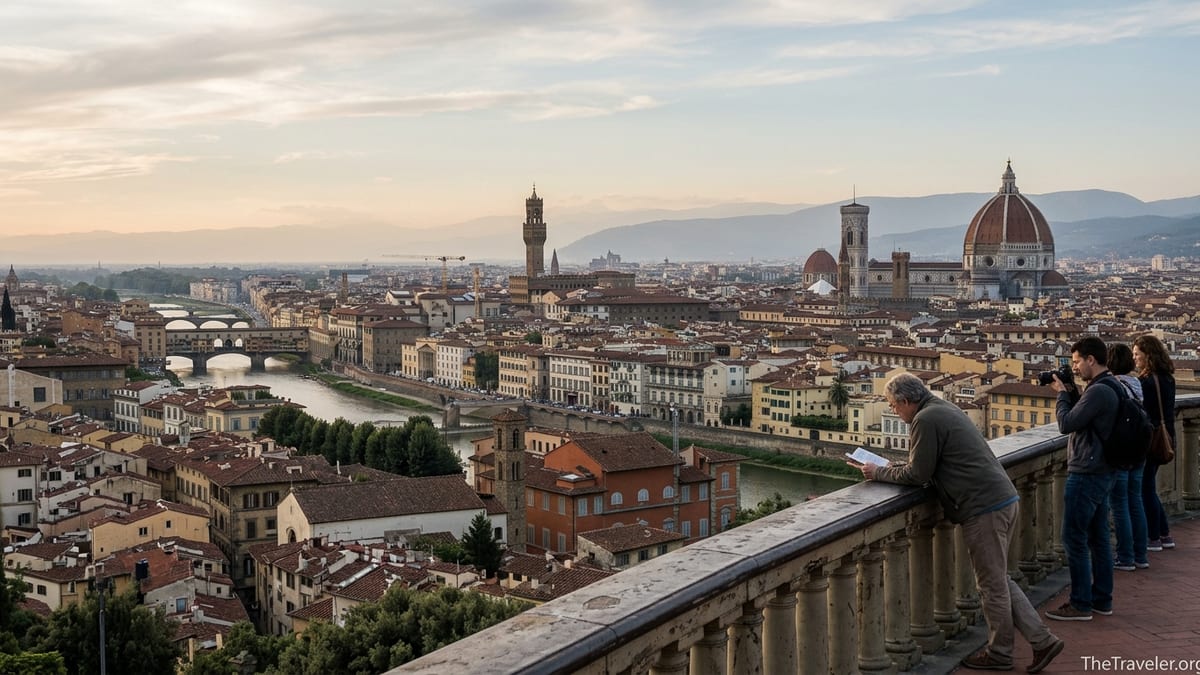
First Impressions: Epic Capital vs Intimate Renaissance City
Landing in Rome, your first impression is usually its sheer scale. The ride from Fiumicino airport into the city sweeps past apartment blocks and traffic-clogged ring roads before suddenly revealing domes, ruins and ochre palazzi. The historic center is walkable, but Rome is still a metropolis of around three million people. You feel that size in the constant motion on Via del Corso, in buses threading past scooters near Piazza Venezia, and in the way ancient monuments sit in the middle of modern life. The Colosseum is ringed by taxi stands and snack carts, and locals still cut across the Roman Forum area on their evening commutes.
Florence immediately feels smaller and more concentrated. Santa Maria Novella station drops you within a 10 to 15 minute walk of the Duomo, the Arno and most major sights. Streets narrow to stone lanes lined with workshops, leather stores and neighborhood bars. You can cross the historic center from the train station to the Oltrarno in under 25 minutes on foot, which means you start building a mental map almost from day one. Many visitors report that Florence begins to feel like "their" city after just a couple of evenings strolling between Piazza della Signoria and Piazza Santo Spirito.
Those first impressions matter. Travelers who love big-city energy, unexpected views and a sense of organized chaos often find Rome more thrilling. Visitors who prefer a slower pace and a place they can grasp in a few days tend to bond more deeply with Florence. If you only have two or three days, Florence usually feels manageable. With the same amount of time, Rome can feel like an exhilarating blur that begs for a return visit.
Cultural Heavyweights: Colosseum vs Uffizi and Beyond
If the impact you seek is cultural, both cities can easily fill an entire trip. Rome offers the Colosseum, Roman Forum and Palatine Hill on a single combined ticket that currently costs around 18 euros when bought at official prices for a basic 24-hour pass. More immersive options that add the arena floor or underground levels rise to the low 20s in euros at official rates, with guided tours sold by agencies costing more. Add the Vatican Museums and Sistine Chapel, often from about 30 to 40 euros for timed tickets via official channels, and you quickly realize that a three day Rome stay can be a deep dive into antiquity and religious art.
Florence’s cultural punch is more concentrated in a few world-class collections. The Uffizi Gallery, home to Botticelli’s "Birth of Venus" and "Primavera," along with masterpieces by Leonardo and Caravaggio, now has peak-season base tickets in the mid 20 euro range when purchased directly. Recent updates for 2026 introduce an afternoon discount where late entry slots after 4 p.m. drop to roughly 16 euros for the official ticket, which can meaningfully reduce costs for flexible travelers. Across town, the Accademia Gallery, where Michelangelo’s David draws heavy crowds, typically prices standard entry a bit below the Uffizi, often in the mid to high teens in euros.
In practice, a culture-focused long weekend in Florence might revolve around the Uffizi, Accademia, the Duomo complex and a few churches like Santa Croce or Santa Maria Novella. In Rome, a similar-length stay could easily include the Colosseum area, the Vatican Museums, St Peter’s Basilica and the Pantheon, with time left for an additional museum such as the Capitoline Museums or Galleria Borghese if you book ahead. The cumulative effect in Rome is breadth: you move from pagan temples to Baroque basilicas in a single afternoon. In Florence the impact is depth: you see how a relatively small city produced an outsized share of Renaissance art and thinking.
Atmosphere & Everyday Life: Gritty Layers vs Polished Charm
Rome’s atmosphere is defined by contrast. You might sip espresso at a stand-up bar near Termini station alongside office workers, then minutes later be walking cobbled alleys in Trastevere that look like a film set at golden hour. Streets can be noisy and traffic aggressive, and some visitors notice more visible graffiti and litter than in Florence. On the other hand, that lived-in feel means you are rarely in a purely tourist bubble. Neighborhoods such as Testaccio or San Giovanni mix supermarkets, schools and apartment blocks with trattorie and historic sites, so it is easy to slip from sightseeing into local life.
Florence has its own contrasts, but within a finer grain. The streets around the Duomo and Uffizi are almost entirely given over to tourism, with gelato counters, souvenir stands and fast-fashion outlets blending into handsome Renaissance facades. Walk 10 minutes into the Oltrarno, however, and you start passing artisan workshops producing leather goods, picture frames, and jewelry. In Santo Spirito, locals still gather in the square in the evenings, and older men lean on bicycles outside simple bars while students share takeaway pizza on the church steps.
In terms of impact, visitors who want to feel immersed in an Italian city that keeps functioning regardless of tourists often come away more moved by Rome. Those who prefer a more curated historic center where nearly every street is photogenic, and where they can quickly identify a favorite piazza or café, frequently fall harder for Florence. Many repeat travelers describe Rome as the place that makes them think about the sweep of history, while Florence is where they imagine themselves actually living for a season.
Cost, Crowds & Practical Logistics in 2026
Costs in both cities have risen in recent years, especially for central hotels and major museum tickets, but there are differences in how that plays out. Recent pricing updates from Rome’s archaeological park list standard combined Colosseum, Forum and Palatine entry at about 18 euros, with booking fees of around 2 euros when bought online through official systems. Third-party agencies often package these tickets with tours or priority access for two to three times that price. In Florence, official Uffizi tickets in 2026 cluster around the 25 euro mark when reserved online during high season, while the new late-afternoon reduced rate can bring that down to roughly 16 euros for travelers willing to visit later in the day.
Accommodation prices shift with demand, but a realistic snapshot for spring or early autumn 2026 might see mid-range hotels in central Rome and Florence starting around 150 to 220 euros per night for a double room if booked a few months ahead. In Rome, you can sometimes shave 20 to 30 percent off by staying slightly beyond the historic center, near Metro stops like San Giovanni or Ottaviano, and relying on public transport. Florence’s compact layout means that staying outside the immediate center, for example around Campo di Marte or near the Cascine park, may save money but adds at most a 20 to 25 minute walk or short tram ride.
Crowd patterns also shape the experience. Travelers are reporting that buying Colosseum tickets directly has become more complicated, with official allocations selling out quickly and some dates snapped up the moment they appear online. That can push visitors toward pricier guided tours if they want to guarantee entry. The Vatican Museums show similar booking pressure during peak months. Florence’s bottlenecks are more spatial: the historic center is small, so at midday the area around the Duomo, Ponte Vecchio and Via dei Calzaiuoli can feel packed even in shoulder season. However, many visitors enjoy how quiet the city becomes at night once day trippers leave, especially in less central squares like Sant’Ambrogio or San Niccolò.
Food, Nightlife & Memorable Moments
Both cities deliver outstanding food, but the experiences they offer feel different. In Rome, classic dishes include cacio e pepe, carbonara, amatriciana and crispy artichokes in the spring. It is still possible to find hearty, local-feeling trattorie at dinner for around 15 to 20 euros per main course, especially in neighborhoods like Testaccio, Garbatella or Prati, with house wine by the carafe keeping bills reasonable. In the historic center near Piazza Navona or the Trevi Fountain, menus are often pricier and more tourist-oriented, but even there, careful research and choosing restaurants set a street or two back from the main sights often pays off.
Florence leans into Tuscan traditions: bistecca alla fiorentina, ribollita, pappardelle al cinghiale and generous house Chianti. A shared Florentine steak for two in a respected trattoria can run from roughly 60 to 90 euros depending on the cut and weight, but pasta and soups remain affordable, typically in the low to mid teens per dish. Street food like lampredotto sandwiches from tiny kiosks near the markets rarely costs more than a handful of euros and gives a glimpse into local culinary habits. Many travelers remember Florence for slow lunches on shaded terraces near the Arno or simple wine bars where a glass of regional red and a plate of crostini becomes an early-evening ritual.
Nightlife also diverges. Rome’s Trastevere, Monti and Pigneto districts stay lively late, with aperitivo bars turning into cocktail spots and music venues. Warm nights can mean entire blocks filled with people talking outdoors until well after midnight. Florence has a student-driven nightlife that concentrates around Santa Croce, Santo Spirito and streets radiating from Via dei Benci, with bars and small clubs that appeal to younger visitors and study-abroad crowds. For many travelers, the most impactful nights are quieter moments: eating gelato on the steps of Piazza del Popolo in Rome as the sky deepens to navy blue, or climbing to Piazzale Michelangelo in Florence for sunset views over terracotta rooftops and the Duomo’s dome.
Getting Around & Day-Trip Potential
Rome’s size means you will likely mix walking with public transport and taxis. The Metro network is relatively small for such a large city, but lines A and B connect key points like Termini, the Vatican area and the Colosseum. Buses and trams fill in the gaps, though first-time visitors sometimes need a day or two to get comfortable with routes and ticketing. That said, much of central Rome, from the Spanish Steps to Piazza Navona, is still best experienced on foot. Be prepared for uneven cobblestones and occasional steep streets, particularly around the Capitoline Hill and Monti.
Florence is fundamentally a walking city. The compact center means you can cover several major sights in a single loop without ever using a tram or bus. Public transport becomes more relevant if you stay outside the historic core or need to reach the stadium or outer neighborhoods. For many visitors, the ease of walking contributes heavily to the city’s impact: they remember the pleasure of simply stepping out the door each morning and drifting between churches, markets and riverside paths without consulting a transit map.
When it comes to day trips, both cities act as strong bases. High-speed trains typically link Rome and Florence in about 1 hour 30 minutes, with advance fares on fast services often starting around 25 to 40 euros each way in second class if booked early. From Rome, popular day trips include Tivoli’s Villa d’Este and Hadrian’s Villa, the hill town of Orvieto, and coastal spots like Sperlonga. Florence puts you within easy reach of Tuscan towns such as Siena, Lucca, Pisa and Arezzo, many of which can be reached by regional trains or buses in 60 to 90 minutes at modest ticket prices. Travelers who want rolling countryside and wine country often find Florence the more impactful base, while those hungry for monumental ruins and big-city variety lean toward Rome.
Which City Stays With You Longer?
Impact is personal, but certain patterns emerge in traveler stories. First-time visitors who have long dreamed of seeing the Colosseum, the Sistine Chapel and the Pantheon often describe Rome as a kind of emotional milestone. Standing in the shadow of the amphitheater or beneath Michelangelo’s ceiling, they feel a sense of having checked off lifelong ambitions. Rome also tends to linger because of its surprises: glimpses of aqueduct arches from a bus window, a tiny bar hidden behind an unmarked door, a casual dinner that turns out to be unforgettable.
On the other hand, many people find that Florence feels more intimate in memory. Because the historic center is small, they can mentally retrace their favorite daily routine long after they return home: crossing a specific bridge at sunrise, stopping at the same café each morning, browsing the market stalls and then wandering back to a familiar square at night. Florence often leaves a deeper impression on travelers who value atmosphere, walkability and the feeling of being briefly woven into the fabric of a smaller city.
If you are choosing between them for a single short trip, ask yourself a few practical questions. Do you want your defining memories to involve vast ruins and a dizzying range of districts, or do you prefer to focus on a perfectly scaled Renaissance core with famous art galleries at its heart? Are you comfortable managing more complex ticketing for Rome’s blockbuster sights, or would you rather concentrate your planning on a handful of big reservations in Florence? Honest answers to those questions usually make the decision clearer than any ranking.
The Takeaway
Rome and Florence are not competitors so much as complements. Rome offers drama, variety and a sense that history is still alive under the city’s surface. Florence delivers coherence, beauty and a human-scale center that rewards slow wandering. Neither is objectively more impactful, but each exerts its pull on different kinds of travelers at different moments in their lives.
For many visitors, the ideal solution is not "Rome or Florence" but "Rome and Florence" linked by a high-speed train ride. With a week or more, you can let Rome astonish you with its scale, then allow Florence to refine the experience with concentrated art, food and slower rhythms. If time or budget limits you to one, know that either choice will give you powerful memories, from tossing a coin into the Trevi Fountain to watching the Arno turn gold at dusk.
In the end, the city that leaves the bigger impact will be the one whose pace, textures and tiny daily rituals feel closest to the version of Italy you carry in your imagination. Listen to that instinct, build in time to simply wander, and whichever city you choose is likely to stay with you long after your flight home.
FAQ
Q1. Is Rome or Florence better for a first-time trip to Italy?
For a classic first trip focused on major "bucket list" sights, Rome often wins because it packs in the Colosseum, Vatican Museums, St Peter’s and the Pantheon. If you prefer a smaller, walkable city where you can quickly feel oriented and less overwhelmed, Florence is often the better introduction.
Q2. Which city is more expensive, Rome or Florence?
Overall costs are similar, but they show up differently. Central hotel prices in both cities can start around the mid-range level in peak season, while Rome sometimes offers more budget options in outlying neighborhoods. Museum tickets skew slightly higher in Florence for art galleries like the Uffizi and Accademia, whereas Rome’s Colosseum and Forum combination tickets are a bit lower, though guided tours can add significantly in both places.
Q3. How many days should I spend in Rome vs Florence?
If you are visiting both, many travelers find that three to four full days in Rome and two to three full days in Florence strike a good balance. Rome’s size and breadth of sights reward extra time, while Florence’s compact center means you can see major highlights in two days and then use additional days for Tuscan day trips.
Q4. Is it easy to travel between Rome and Florence?
Yes. High-speed trains typically connect Rome and Florence in about 1 hour 30 minutes. If you book ahead, second-class fares on fast services often start around 25 to 40 euros each way. Trains run frequently throughout the day, making it feasible to combine both cities in a single itinerary or even attempt a long day trip if your schedule is tight.
Q5. Which city has better food, Rome or Florence?
Both cities are strong food destinations, but with different specialties. Rome is known for pastas like carbonara and cacio e pepe and for fried artichokes in spring. Florence is famous for Tuscan steak, hearty soups such as ribollita and rustic regional wines. In practice, the better city for you is the one whose traditional dishes align more with your tastes, as high-quality meals can be found in both.
Q6. Is Rome really that crowded and chaotic compared to Florence?
Rome does feel busier and more chaotic, especially near major sights and transit hubs, because it is a large working capital as well as a tourist city. Traffic, noise and the sheer number of people can be intense. Florence’s crowds are concentrated in a smaller area around the Duomo and main museums, which can feel very full at midday, but the overall scale is smaller and many side streets and neighborhoods remain surprisingly calm.
Q7. Which city is better for art lovers?
Florence generally has the edge for focused art lovers because the Uffizi and Accademia house such a dense concentration of Renaissance masterpieces within walking distance of each other. That said, Rome offers extraordinary art as well, from the Vatican Museums to Caravaggio canvases in churches you can enter for free. If your passion is Renaissance painting and sculpture, Florence may leave the stronger impression; if you like a mix of art periods alongside archaeology, Rome may be more satisfying.
Q8. Is it easier to get around Rome or Florence without a car?
Florence is easier to navigate without a car because almost all major sights are within a compact, pedestrian-friendly center. Rome is also manageable without a car, but you will likely rely more on the Metro, buses and occasional taxis to cover longer distances. Driving is not recommended in either city’s historic core due to limited-traffic zones and parking difficulties.
Q9. Which city is better as a base for day trips?
Both work well, but in different directions. From Florence you can reach Tuscan towns like Siena, Lucca, Pisa and Arezzo relatively quickly, which appeals to travelers seeking countryside and wine regions. From Rome, day trips tend to focus on historic and archaeological sites such as Tivoli’s villas, Orvieto or coastal areas. If your dream is vineyards and hill towns, Florence is often the better base; if you want monumental ruins and varied landscapes, Rome may suit you more.
Q10. If I only have three days, should I choose Rome or Florence?
With just three days, choose the city whose experiences match your priorities. Pick Rome if iconic landmarks like the Colosseum and Vatican are lifelong goals and you are comfortable with a faster pace. Choose Florence if you want a city you can fully walk, with top-tier art museums and time for leisurely meals and evening strolls along the river. Either way, a well-planned three-day stay can be deeply memorable.