


The United Arab Emirates (UAE) is frequently cited as one of the safest countries in the world, and this reputation is a central factor for families considering relocation. Safety, however, is multi-dimensional. Families must assess not only crime levels, but also road safety, children’s everyday security, exposure to regional risks, and how local laws intersect with their personal habits. This briefing evaluates whether the UAE is safe for families relocating abroad, based on current comparative data and recent developments up to early 2026.
Overall Security Environment and International Safety Rankings
The UAE currently ranks at or near the top of major international safety indices, consistently outperforming many traditional expatriate destinations. Numbeo’s 2025 mid-year Safety Index ranked the UAE as the safest country in the world, with a safety score in the mid-80s out of 100 and the lowest recorded crime index globally. Recent 2026 city-level data place multiple emirates, including Abu Dhabi and Dubai, among the safest cities worldwide, reinforcing a pattern that has held for several consecutive years.
Gallup’s global law and order surveys have also placed the UAE among the highest-ranking countries for public perceptions of safety, with residents reporting very high confidence in local police and low levels of personal victimization. These outcomes are supported by an extensive investment in security infrastructure, including dense CCTV coverage, smart city command centers, and rapid-response emergency services, particularly in major urban areas such as Abu Dhabi, Dubai, and Sharjah.
From a macro-security standpoint, the UAE is not a conflict zone and records very low levels of terrorism-related incidents in global terrorism indexes. For most expatriate families, the everyday risk of exposure to political violence is significantly lower than in many large global cities. This broad security environment provides a comparatively stable backdrop for family life, particularly in master-planned residential communities.
For relocation decision-making, the key takeaway is that the UAE offers a high baseline of physical security in public spaces. Families can reasonably expect low levels of street crime and strong visible policing, especially in major expatriate hubs.
Crime Levels, Policing, and Personal Safety for Families
Recorded crime rates in the UAE are low by global standards. Numbeo’s 2025 Crime Index places the UAE at the bottom of the global ranking, implying one of the lowest crime levels among more than 160 countries. Within the country, Abu Dhabi’s safety index has repeatedly been estimated around the high 80s out of 100, with a corresponding crime index in the low teens, far below the levels seen in many European and North American cities of comparable size.
Violent crime affecting strangers is rare, and incidents of armed robbery, serious assault, or gang-related violence are infrequent compared with many Western urban areas. Petty crime such as pickpocketing and opportunistic theft exists but is limited in scope and is heavily deterred by both visible surveillance and strict legal penalties. Families commonly report feeling safe walking in most urban neighborhoods, including after dark, a sentiment supported by international perception surveys.
Police presence is highly visible in major cities, supported by extensive use of technology such as license plate recognition systems and interconnected CCTV networks. Response times in urban centers are generally rapid, often within a few minutes for priority incidents. This capacity contributes to both effective deterrence and quick resolution of many public-order issues, which in turn sustains high levels of resident confidence.
For relocating families, one consideration is that serious criminal incidents, when they occur, can be met with stringent penalties. While this enhances deterrence, it also means that misunderstandings or minor infractions can escalate into significant legal problems. Families must ensure they understand local laws on issues ranging from alcohol and prescription medications to social media use in order to avoid inadvertently creating risk for themselves.
Domestic, Gender, and Child Protection Considerations
Domestic harmony and child protection are central dimensions of family safety. The UAE has enacted legislation addressing domestic violence and child protection, including laws that criminalize certain forms of abuse and neglect. Schools and large employers often operate safeguarding and reporting protocols, and there is a growing ecosystem of hotlines and official channels to report domestic abuse. However, families should recognize that the legal and cultural framework may differ from Western norms, particularly on matters of evidence, guardianship, and family law.
Women’s safety in public spaces is generally high. Harassment, assault, and public indecency are subject to strict penalties, and many expatriate women report that they feel physically safe using public transport, taxis, and public spaces, including in the evening. The combination of strong law enforcement and conservative social norms tends to limit overt harassment in most urban contexts. At the same time, legal frameworks relating to personal status, guardianship, and certain moral offenses can create vulnerabilities for women who become involved in legal disputes, including cases linked to marital breakdown or extramarital relationships.
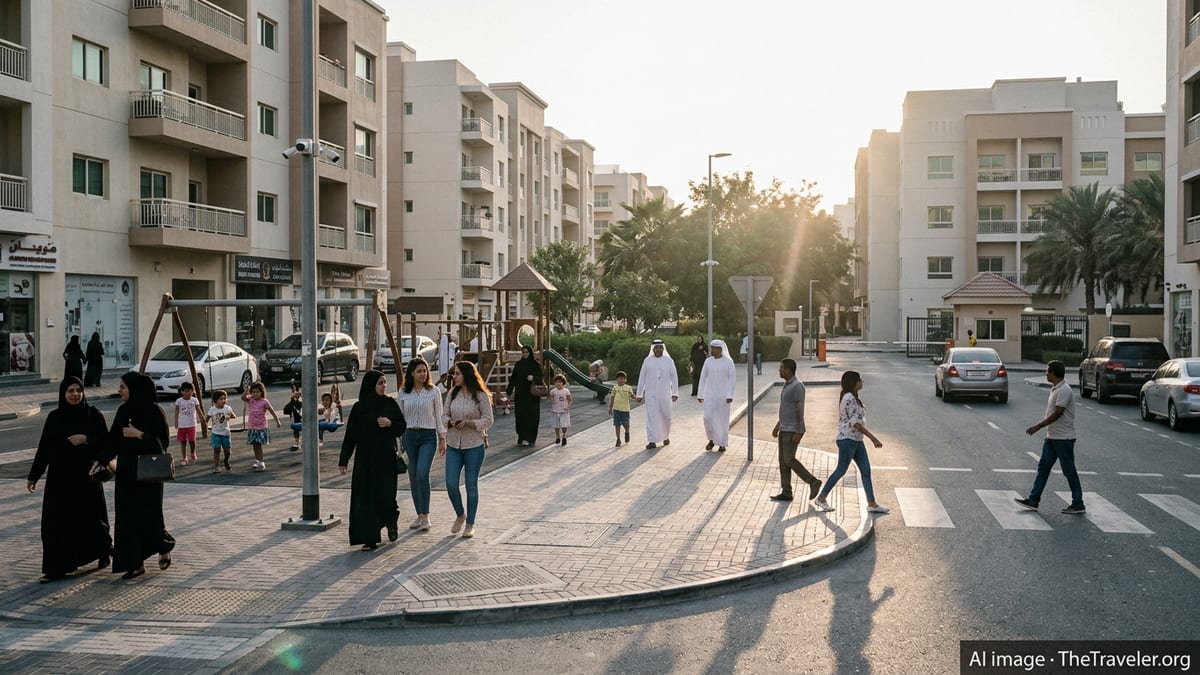
For children, the day-to-day security environment in residential communities, malls, schools, and public parks is generally well controlled. Many family neighborhoods are gated or feature private security, and schools typically implement access control, ID systems, and bus monitoring. Reports of child abduction or violent offenses against children are very rare relative to population size. However, child safety on the internet and social media follows global patterns, and parents remain primarily responsible for monitoring digital risks, including cyberbullying and online exploitation.
Relocating families should pay attention to how child protection is handled within their chosen school and community. Policies on bullying, safeguarding, reporting, and counseling support can vary by institution. Companies offering relocation packages often direct families toward schools with robust safeguarding practices, which can further enhance child safety.
Road Safety and Transport Risks
Road safety is the main area where risk levels in the UAE are notably higher than in many other high-income countries, and this is highly relevant for families. Despite significant improvement since the mid-2000s, the UAE’s road traffic death rate has remained higher than that of several Western European and some Asia-Pacific countries. Recent international transport comparisons suggest the UAE’s road fatality rate has been in the mid-single digits per 100,000 population, an improvement from earlier double-digit figures but still above the best-performing nations.
National data reported a total of approximately 380 road deaths in 2024, a substantial decline from more than 1,000 in 2008 but still a material risk, particularly for younger drivers and passengers, who account for a disproportionate share of casualties. Tailgating, speeding, abrupt lane changes, mobile phone use, and pedestrian non-compliance with traffic rules routinely feature among the main contributing factors. These behaviors can make major highways and some urban arterials feel aggressive or unpredictable to new arrivals, especially those used to stricter enforcement in their home countries.
The UAE has responded with intensive enforcement campaigns, including automated speed and red-light cameras, high fines, black points on driving licenses, and periodic amnesties to encourage better compliance. Road engineering has also improved, with modern highways, clearer signage, and safer pedestrian infrastructure in newer districts. Public transport in cities like Dubai and Abu Dhabi is generally well regulated and considered safe, and metro and tram systems are subject to rigorous safety standards.
For families, risk mitigation requires active strategies. These include prioritizing safe school transport options with reputable operators, insisting on proper child restraints and seat belts, and carefully assessing the driving records of any hired drivers. Parents may also wish to delay older teenagers’ independent driving until they have completed accredited defensive driving or safety training, given the demanding traffic environment on some routes.
Legal Environment, Cyber, and Reputational Risks
One distinctive aspect of safety in the UAE is the interaction between personal behavior and a strict, sometimes unfamiliar legal environment. Laws related to defamation, social media content, public morality, and substances are more stringent than in many Western jurisdictions. There have been high-profile cases in which expatriates faced arrest or prosecution for actions they assumed were minor, such as social media posts, carrying certain medications, or possessing products containing components like CBD oil that may be legal in their home countries but are prohibited locally.
For families, this environment produces a mixed effect. On one hand, strict regulation of online harassment, blackmail, and defamation enhances protection against cyberstalking, extortion, and abuse, which can be serious threats to teenagers and adults alike. On the other hand, the same laws can expose family members, including older children, to legal consequences for impulsive online behavior or insensitive posts related to religion, politics, or individuals.
Cybersecurity awareness is high at institutional level, with banks, schools, and major corporations running regular campaigns on phishing, fraud, and identity theft. Financial fraud, online scams, and data breaches do occur but are actively prosecuted, and penalties are severe. Families who follow standard global best practices on password hygiene, two-factor authentication, and parental controls will generally find the cyber risk landscape manageable.
To reduce legal and reputational risk, relocating families should undertake a structured orientation on local laws and digital conduct. This includes understanding restrictions on photographing certain sites, sharing images of others without consent, criticizing institutions, and importing restricted items. Setting clear household rules about social media behavior and content sharing is particularly important for teenagers accustomed to less regulated online spaces.
Regional Security Context and Emergency Preparedness
The UAE is located in a geopolitically sensitive region, but within that region it has positioned itself as a relatively stable, well-secured hub. While regional tensions and conflicts periodically raise concerns about spillover risk, actual incidents affecting everyday life in the main expatriate centers have remained rare. The country maintains strong security cooperation with international partners, and its airspace, ports, and critical infrastructure are heavily monitored and protected.
Civil defense and emergency response capabilities are comparatively advanced for the region. Urban centers feature modern fire services, emergency medical response units, and centralized control rooms able to coordinate responses to industrial accidents, fires, and weather-related incidents. Large residential communities and schools often conduct regular fire drills and maintain clear evacuation procedures, which support family preparedness.
Natural disaster risk is relatively low. The UAE is not in a major earthquake or cyclone zone, and extreme weather events are typically limited to sandstorms, occasional heavy rainfall, and localized flooding. While such events can disrupt transport and schooling temporarily, they seldom present severe, life-threatening conditions on a large scale. Building standards in modern developments are generally robust, and high-rise towers are subject to fire safety and structural regulations.
Relocating families should still implement basic household emergency planning. This includes knowing local emergency numbers, understanding building evacuation routes, and maintaining a simple family communication plan in case of network disruptions or localized incidents. These measures are low-cost and enhance resilience even in an already safe environment.
The Takeaway
For families evaluating a move to the UAE, the overall safety proposition is strong. International indices consistently rank the country among the safest in the world, with low crime rates, high public confidence in policing, and well-developed physical and digital security infrastructure. Everyday risks of violent crime, street harassment, and political instability are comparatively low in the main expatriate hubs.
The main safety caveat is road traffic risk, which remains higher than in many top-performing high-income countries despite notable improvement over the last decade. Families who rely heavily on private vehicles, long highway commutes, or teenage drivers should treat road safety as a central element of their relocation planning, including choice of neighborhood, school transport solutions, and driver training.
Legal and cyber risks require awareness rather than alarm. The UAE’s strict laws can act as a protective factor, but they also mean that behavior considered minor elsewhere can carry serious consequences. A structured induction into local legal norms and clear household rules on online activity are essential components of a safe relocation.
On balance, the UAE can be considered a safe destination for families relocating abroad, provided that they actively manage road safety, understand the legal context, and choose schools and communities with strong safeguarding practices. For many families, especially those coming from higher-crime environments, the UAE’s security environment represents a significant upgrade in overall personal and family safety.
FAQ
Q1. Is the UAE generally safe for children in everyday life?
Children are typically very safe in residential communities, schools, malls, and public parks, where security and access controls are common and serious incidents are rare.
Q2. How high is the crime rate in the UAE compared with other countries?
International indices place the UAE among the lowest-crime countries globally, with particularly low levels of violent crime and street robbery relative to many large cities worldwide.
Q3. Are women safe moving around alone in UAE cities?
Women generally report feeling safe using public spaces and transport, including at night, due to strict laws, visible policing, and social norms that discourage overt harassment.
Q4. What is the biggest safety concern for families in the UAE?
Road safety is the primary concern, as traffic accident and fatality rates, while improved, remain higher than in many top-performing high-income countries.
Q5. How safe is public transport for families and teenagers?
Metro, tram, and regulated taxi services in major cities are generally considered safe, with surveillance, clear rules, and staff presence helping to deter crime and harassment.
Q6. Are there risks related to regional instability or terrorism?
The UAE is in a sensitive region but experiences very low levels of terrorism-related incidents, and strong security measures mean everyday life in main cities is rarely affected.
Q7. Can social media use create safety or legal risks for family members?
Yes. Strict defamation and cybercrime laws mean that offensive or defamatory posts, including by teenagers, can lead to legal consequences, so clear household rules are important.
Q8. How well is domestic violence and child abuse addressed in the UAE?
There are laws and reporting channels targeting domestic violence and child abuse, but procedures may differ from Western norms, so families should understand local mechanisms and supports.
Q9. Is it safe for teenagers to drive in the UAE?
The legal framework allows licensed young drivers, but aggressive driving and high-speed highways mean families should approach teenage driving cautiously and consider extra safety training.
Q10. Do families need an emergency plan even in a generally safe country like the UAE?
Yes. Basic planning for fire, medical issues, and localized disruptions improves resilience and ensures that all family members know how to respond in an emergency.