


Open any flight or hotel search in 2026 and Trip.com now appears alongside Expedia, Booking.com and Agoda, often with a noticeably lower price. For budget-conscious travelers, the obvious question follows: is Trip.com actually cheaper than other travel booking platforms, or are those eye-catching deals hiding tradeoffs in fees, flexibility or service?
Get the latest updates straight to your inbox!
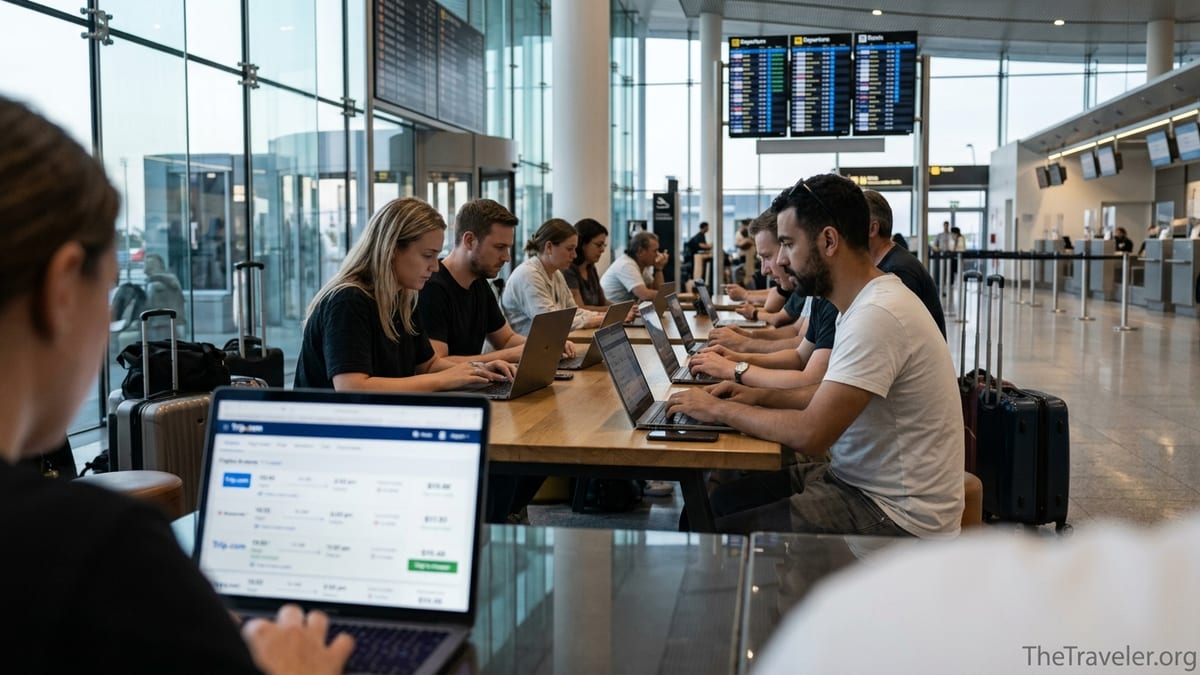
How Trip.com Competes With the Big Travel Platforms
Trip.com is the international brand of Trip.com Group, one of the largest online travel agencies in the world and a dominant player in Asia-Pacific. While Expedia and Booking.com still feel more familiar to many North American and European travelers, Trip.com has quietly become a heavyweight, particularly on Asia-focused itineraries. Its catalog now covers flights, hotels, trains, transfers and activities in more than 200 countries, and it is integrated with major carriers such as British Airways and Iberia for richer flight inventory.
From a price perspective, Trip.com competes in the same way other online travel agencies do: it negotiates wholesale rates with airlines and hotels, then decides how much of that discount to keep and how much to pass on to you. Because Trip.com is especially strong with Asian carriers and local hotel chains, it sometimes has room to undercut Western platforms on routes or properties where it moves a lot of volume. This is why you might see the same Tokyo business hotel 15 percent cheaper on Trip.com than on Booking.com, yet find no advantage at all on a chain hotel in Chicago or a boutique stay in Lisbon.
It is important to understand that no single platform is always cheapest. Prices move constantly, promotions come and go, and each company has different strengths by region and product. The real question for modern travelers is narrower and more practical: in which situations does Trip.com tend to be cheaper than competitors, and when are you better off booking elsewhere?
Where Trip.com Is Often Cheaper: Real Flight and Hotel Examples
Independent comparisons run in early 2026 suggest that Trip.com has a consistent price edge on many Asia-Pacific flights and hotels. One review that tested multiple long-haul and regional routes found Trip.com coming in roughly 5 to 15 percent cheaper than Expedia on a range of transatlantic and trans-Pacific flights. On routes entirely within Asia, the gap can be even wider.
Consider a concrete example a traveler might see today when searching from Los Angeles to Bangkok with a connection in Taipei on a major Asian carrier in economy class. A flexible search across several engines might surface a round-trip fare of about 980 US dollars on Expedia and 1,000 dollars direct with the airline, while Trip.com lists the same dates and flight numbers around 920 to 940 dollars including taxes. That 40 to 60 dollar difference is typical of how Trip.com uses slightly lower commissions and targeted promos to win international bookings.
Short-haul Asia routes can show larger gaps. On a Tokyo to Seoul round-trip in shoulder season, it is not unusual to see Trip.com at around 210 dollars, while Expedia or Booking.com show the same carrier and schedule closer to 240 to 260 dollars. Similar patterns have been reported on Bangkok to Singapore, Hong Kong to Taipei, and Kuala Lumpur to Osaka, particularly when low-cost and regional airlines participate in Trip.com’s promotions more aggressively than in Western systems.
The hotel side tells a similar story in specific geographies. For mid-range business hotels in Tokyo or Seoul, reviewers have highlighted cases where a three-night stay priced at roughly 520 dollars on Booking.com appeared around 430 to 450 dollars on Trip.com for identical room type and cancellation terms. Travelers booking Chinese domestic hotels, Japanese ryokan or Korean local brands often report 10 to 20 percent savings compared with Western online travel agencies, because Trip.com’s relationships in those markets are deeper and its inventory broader, especially outside the main tourist districts.
Where Trip.com Struggles to Beat Rivals on Price
The same price testing that makes Trip.com look strong in Asia also shows clear weaknesses elsewhere. For US domestic flights, comparison articles and frequent flyers alike tend to agree that Trip.com rarely wins. A simple example: on a Dallas to Denver round-trip with a major American airline, you might see 260 dollars on Google Flights and 265 dollars on the airline’s own site, with Trip.com sitting at a similar or slightly higher price once its booking fee is included. In these cases, US-focused competitors or booking direct often match or beat Trip.com without adding another intermediary to your itinerary.
European city hotels are another area where Trip.com is not usually the first choice for savings. Booking.com, founded and based in Europe, maintains exceptionally strong relationships with European properties, including small independent hotels and apartments. For a mid-range hotel in central Rome or Amsterdam, Booking.com might show 600 dollars for three nights, inclusive of taxes, while Trip.com lists a near-identical rate or only a couple of dollars cheaper. Add the occasional Genius member discount or mobile-only promotion on Booking.com, and Trip.com’s advantage disappears or reverses.
Large Western chains with strict rate parity policies, such as Marriott, Hilton and Hyatt, limit how much an intermediary can undercut their direct prices. One Australian comparison of East Asia bookings noted that Trip.com often beat Expedia on local and regional brands, but on big global chains in cities like Tokyo or Bangkok, Expedia matched or slightly beat Trip.com’s rates. In practice, that means your Marriott in Shinjuku or Hyatt in Bangkok is likely to cost roughly the same on Trip.com, Expedia, or the chain’s own site, while a smaller Japanese business hotel or Korean boutique may still be cheaper through Trip.com.
Trip.com can also stumble on complex multi-leg itineraries. For a multi-stop trip like New York to London to Dubai to Singapore, Expedia’s package deals or the airline’s own multi-city pricing sometimes work out cheaper when you factor in flexibility and bundled discounts on hotels. Even if Trip.com looks a few dollars less at first glance, a stricter change policy or customer service friction may make the overall value worse than booking that kind of trip with a platform better optimized for global, multi-leg journeys.
Why Prices Differ: Inventory, Fees and Currency Tricks
To understand whether Trip.com is genuinely cheaper or simply appears that way, you have to look at how booking platforms make money. All major online travel agencies take a commission from airlines, hotels and other suppliers. Sometimes they receive access to special wholesale rates that are lower than public prices; other times they rely on public fares and earn a smaller margin. Trip.com’s strength lies in markets where it has negotiated particularly aggressive wholesale discounts, such as domestic Chinese hotels or certain Asia-focused carriers, and can still profit while offering a visibly lower rate than Western competitors.
Fees are the next layer. A number of Trip.com users have reported service fees being added late in the booking process, particularly on flights. For example, a New York to Paris fare might appear at 540 dollars in the search results, only to climb to 565 or 575 dollars by the payment screen after a booking fee and sometimes a payment method surcharge are applied. Expedia and Booking.com are not immune to fees either, but they are generally more consistent about rolling mandatory charges into the upfront display price, especially in markets with stricter regulations around price transparency.
Currency and exchange rate handling can also create the impression that Trip.com is cheaper. Because the company is deeply rooted in Asia, many fares originate in currencies such as Chinese yuan, Japanese yen or Korean won. Trip.com may apply a favorable internal exchange rate when converting those fares into dollars or euros, making its price look a few percentage points lower than rivals that convert differently. On the flip side, some travelers have seen minor discrepancies between what Trip.com quoted in their home currency at checkout and what ultimately posted on their card statement, usually due to their bank’s conversion and fees rather than deliberate markup by Trip.com.
Finally, promotions and loyalty benefits tilt the scales day by day. Trip.com’s Trip Coins loyalty program typically returns roughly 1 to 2 percent of the booking value as credit for future trips, occasionally more during targeted offers. Expedia’s One Key program and Booking.com’s Genius tiers work differently but can deliver equivalent or better savings if you book frequently or bundle hotels with flights. As a result, a Trip.com booking that looks 3 percent cheaper at face value might be effectively more expensive if you are missing out on a meaningful member discount or free perks on a competitor you use regularly.
Comparing Trip.com to Expedia, Booking.com and Agoda in Practice
For many travelers, the real-world choice is not between Trip.com and booking direct, but between Trip.com and other global platforms like Expedia, Booking.com and Agoda. Each tends to dominate in different niches. A frequent example from Asia-focused travelers is that Trip.com and Agoda often battle it out for the lowest rates on Southeast Asian hotels, with Booking.com close behind and Expedia occasionally higher but with stronger package deals. In contrast, for a Las Vegas resort or New York business hotel, Expedia and Booking.com are usually the price leaders and Trip.com seldom offers a compelling discount.
Consider a specific scenario that plays out often in 2026. A traveler from Sydney searches for a week-long stay in Osaka in November. On a central three-star hotel near Namba Station, Booking.com lists a standard double room at around 720 Australian dollars for seven nights. Agoda shows roughly 690 dollars, while Trip.com appears at about 660 dollars with similar cancellation terms and breakfast included. In this slice of the market, Trip.com’s regional partnerships give it a clear price edge. Switch the search to a four-star international chain hotel in the same area and the picture changes: Expedia and Booking.com may both land around 1,450 dollars, while Trip.com fluctuates between matching that and only shaving off a token 10 or 20 dollars.
A similar pattern emerges with air tickets. Trip.com has been praised by some frequent flyers for undercutting Expedia on flights from Europe or Australia into East Asia, especially with carriers like China Southern, ANA, or Asiana. On the other hand, US-based travelers searching straightforward domestic routes often find that Google Flights plus direct booking with the airline produce equal or better prices than either Trip.com or Expedia, and they avoid the complication of having a third-party agency sitting in the middle if plans change.
Customer service performance rounds out the comparison. Reviews in 2026 consistently describe Trip.com’s support as functional but slower and more rigid than that of Expedia and often behind the perceived accountability of Booking.com in Europe. That dynamic matters when you are weighing a 30 dollar saving against the risk of spending hours chasing a refund or rebooking after a cancellation. Some experienced travelers use Trip.com for simple, low-risk bookings where change is unlikely and the price gap is substantial, while reserving complex itineraries or trips with a higher chance of disruption for agencies or direct bookings known for faster issue resolution.
Price Guarantees, Refunds and the Hidden Cost of Cheap
Trip.com advertises price guarantees on some hotel bookings, promising a refund of the difference if you find a lower qualifying rate elsewhere. However, the fine print is important. The guarantee typically applies only to specific room types and cancellation policies, booked in the same currency and within a limited time window. Travelers have shared mixed experiences: some have successfully received modest refunds after submitting screenshots of cheaper rates, while others have complained that claims were denied on technicalities such as minor differences in room description or inclusions like breakfast or smoking policy.
Other platforms, especially Expedia, promote their own best price guarantees, but they also apply strict criteria about matching room categories, payment conditions and even small differences in amenities. One traveler reported Expedia refusing a price match because the cheaper Trip.com listing for the same hotel did not explicitly list the same safety features and child policies, which the agent argued made the rooms “not identical” under their rules. These episodes illustrate a broader truth: price guarantees are marketing tools first and genuine safety nets second, and none of the big agencies make it easy to cash in on them.
Refunds and changes are another area where a cheaper ticket can end up costing more in time and stress. Complaints about Trip.com in consumer forums often focus on slow or inconsistent handling of airline-initiated cancellations or schedule changes. Travelers describe situations where the airline confirmed that a ticket was fully refundable, but Trip.com initially resisted processing the refund or deducted its own fees before releasing funds. While many of these cases were ultimately resolved, they sometimes required weeks of follow-up and, in extreme instances, chargebacks through the traveler’s bank.
None of this makes Trip.com unique. Third-party bookings on Expedia, Booking.com and other agencies can run into similar friction when things go wrong, because you are always dealing with an intermediary that must negotiate with the airline or hotel on your behalf. The difference is that when you are attracted to Trip.com by particularly low prices, you are often entering more opaque territory: heavily discounted consolidator fares, stricter rules in the background, and support workflows that may not be optimized for quick, generous resolutions.
How to Check if Trip.com Is Truly Cheaper for Your Trip
Given how dynamic travel pricing is, the only reliable way to decide whether Trip.com is cheaper on a given day is to compare it directly with other platforms for the same trip. A pragmatic routine many seasoned travelers follow in 2026 looks like this: use a metasearch or tool such as Google Flights or the airline’s own flexible search to identify the flights or hotel you actually want, then open Trip.com, a second online travel agency such as Expedia or Booking.com, and the provider’s direct site in separate tabs. Carefully replicate the same dates, cabin or room type, and cancellation rules, then compare the final, all-in price on the payment screen rather than relying on the teaser rates shown in the initial results.
It is important to watch how each site handles mandatory fees and extras. If Trip.com initially shows 900 dollars for a flight that appears at 930 dollars on Expedia, but jumps to 955 dollars after adding a service fee near checkout, the apparent saving evaporates. By contrast, if Trip.com still ends up at 890 dollars after all charges, and the airline and competitors remain closer to 930 dollars, you are looking at a genuine discount. The same logic applies to hotels: you need to ensure that taxes, resort fees and cleaning charges are all included in the comparison, and that you are not trading away flexible cancellation or breakfast inclusion for a superficial saving.
Another practical tactic is to factor loyalty value into your price assessment. If you are a frequent Expedia customer earning One Key rewards, a hotel that is 10 dollars cheaper on Trip.com but earns you no meaningful points or free-night credits may not be the better long-term deal. Conversely, if you rarely use any one platform consistently, chasing the lowest upfront price on each trip via Trip.com or its rivals makes more sense. Travelers heavily focused on Asia sometimes find that Trip.com’s Trip Coins accumulate quickly and translate into tangible discounts on future stays in cities like Shanghai, Seoul or Bangkok.
Finally, consider the cost of flexibility. On a non-changeable low-cost flight with no checked baggage and no expectation of altering your plans, the risk of booking through a cheaper intermediary like Trip.com is limited. On a honeymoon, a complex business trip, or any itinerary where you might need to rebook quickly if something goes wrong, paying a little more for a booking directly with the airline or with a platform known for strong support can be the smarter financial decision, even if the headline price is higher.
The Takeaway
Trip.com can absolutely be cheaper than other travel booking platforms, but its advantages are specific rather than universal. In 2026, the platform is particularly competitive on international flights involving Asian carriers and on hotels across China, Japan, South Korea and parts of Southeast Asia, where it frequently undercuts Expedia and Booking.com by somewhere in the range of 5 to 25 percent for comparable products. For US domestic flights, Western chain hotels in major North American or European cities, and complex multi-leg itineraries, Trip.com is rarely the clear winner once fees, flexibility and loyalty value are taken into account.
The company’s growing global footprint, broad inventory and occasionally impressive discounts make it a valuable addition to any traveler’s comparison toolkit. At the same time, its slower customer support, occasional service fees and mixed experiences with refunds mean that the cheapest visible price is not always the best deal. The smart way to use Trip.com is not to treat it as a magic bullet, but as one of several tools: check it religiously for Asia-heavy trips and simple international itineraries, weigh it more cautiously for high-stakes or complex journeys, and always verify that a cheaper rate is truly equivalent in terms of conditions and after-sales support.
If you are willing to invest a few extra minutes to compare final, like-for-like prices across multiple platforms, Trip.com can save you real money in the right scenarios. Just remember that the true cost of a booking is more than the number at the top of the screen. Flexibility, responsiveness when plans change, and the peace of mind that comes from clear, transparent policies are all part of the equation, and they can easily outweigh a modest saving when your trip is on the line.
FAQ
Q1. Is Trip.com usually cheaper than Expedia and Booking.com?
In certain markets, especially Asia-Pacific flights and hotels, Trip.com is often cheaper by roughly 5 to 25 percent, but in North America and Europe it is frequently similar in price or more expensive. Always compare final prices across several platforms for your specific route and dates.
Q2. Why does Trip.com sometimes show much lower hotel prices than other sites?
Trip.com has strong relationships and wholesale contracts with many Asian hotels and local brands, which can give it access to discounted inventory that Western online travel agencies do not always match. It may pass part of that discount on to you, which explains why a hotel in Tokyo or Shanghai can appear dramatically cheaper there than on Booking.com or Expedia.
Q3. Are there hidden fees on Trip.com that make it less cheap than it looks?
Some travelers report service or booking fees appearing late in the checkout process, especially on flights, so an initially cheaper fare can narrow the gap or even become more expensive. To judge whether Trip.com is truly cheaper, you should always compare the final total on the payment page, including taxes and all mandatory charges, with the totals on other platforms and the airline or hotel site.
Q4. Is it safe to book very cheap flight tickets on Trip.com?
Trip.com is a large, established online travel agency and generally safe to use, but very cheap tickets often come with stricter rules and less flexibility. If an airline cancels or changes your flight, you may have to work through Trip.com’s support rather than dealing with the airline directly, which can slow down refunds or rebooking compared with booking direct or through a platform with faster service.
Q5. When is Trip.com not the best choice on price?
Trip.com is rarely the strongest option for US domestic flights, many European city hotels, and large Western hotel chains that enforce strict rate parity. In those cases, Google Flights plus booking direct with the airline, or using competitors like Expedia or Booking.com, often matches or beats Trip.com’s prices and may provide better loyalty rewards and customer support.
Q6. How does Trip.com compare with Agoda for Asia travel?
Trip.com and Agoda both compete aggressively on Asia-Pacific routes and hotels, and each wins on different properties and dates. Some travelers find Trip.com consistently cheaper on Chinese and Korean hotels, while Agoda sometimes beats it in Thailand or Indonesia. Because the landscape shifts constantly, the best approach is to check both, alongside Booking.com or Expedia, whenever you plan an Asia-heavy trip.
Q7. Does Trip.com’s loyalty program make it cheaper over time?
Trip.com’s Trip Coins loyalty program typically returns a small percentage of your booking value as credit that you can use on future trips, which can effectively lower your net cost if you use the platform often. However, rival programs like Expedia’s One Key or Booking.com’s Genius discounts can be equally or more valuable depending on where you travel most and how you book, so loyalty benefits should be factored into your overall price comparison.
Q8. Should I trust Trip.com’s price guarantee to always get the lowest rate?
Trip.com offers price guarantees on some bookings, but they come with strict conditions on room type, currency, cancellation rules and booking window, and not all claims are approved. Treat the guarantee as a potential bonus rather than a guarantee that you will always end up with the absolute lowest possible price, and still compare rates on other platforms before committing.
Q9. Is Trip.com better value than booking flights and hotels directly?
Sometimes Trip.com can beat direct prices, especially on international flights involving Asian carriers or on hotels where it has negotiated special deals. In other cases, particularly with large Western hotel chains or major North American airlines, booking direct may match the price and offer better flexibility, clearer policies and stronger loyalty rewards. The best value depends on the specific trip and how much you value direct support from the airline or hotel.
Q10. What is the smartest way to use Trip.com in my booking routine?
The most effective strategy is to treat Trip.com as one of several tools rather than your only booking site. Use it as a must-check option for Asia-focused trips and simple international flights, compare its final prices with at least one rival platform and with booking direct, and reserve complex or high-stakes itineraries for channels where you are comfortable with the support and flexibility even if the upfront price is slightly higher.